
My articles about motorcycles through the ages
Sort
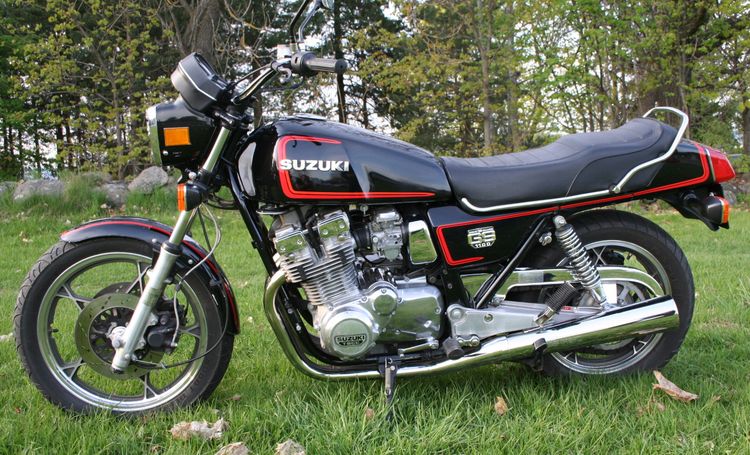
Suzuki GS1100
When Suzuki added an “X” to the GS model designation and launched the new “GSX series,” the stage was set for new technology and design. The 1980s were upon us, and Suzuki wanted to respond to Honda ’s accusations.
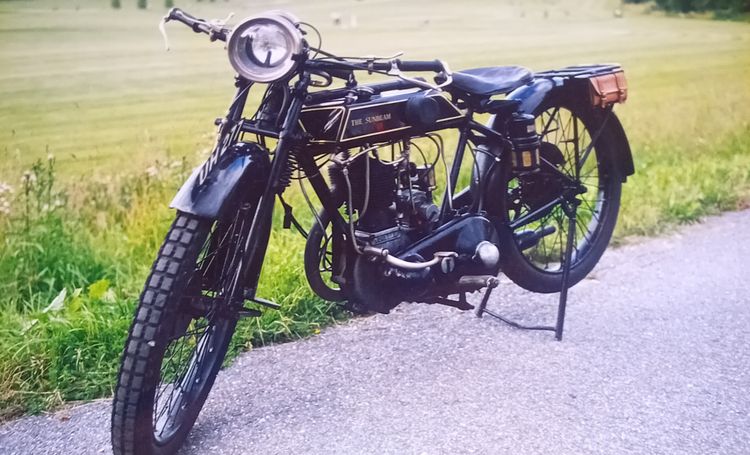
Sunbeam Model 1
English Sunbeam has roots as far back as 1790, but the first motorcycle was not built until 1912. The brand made fairly traditional motorcycles for several decades, and took several victories in the Senior TT on the Isle of Man, among other things.
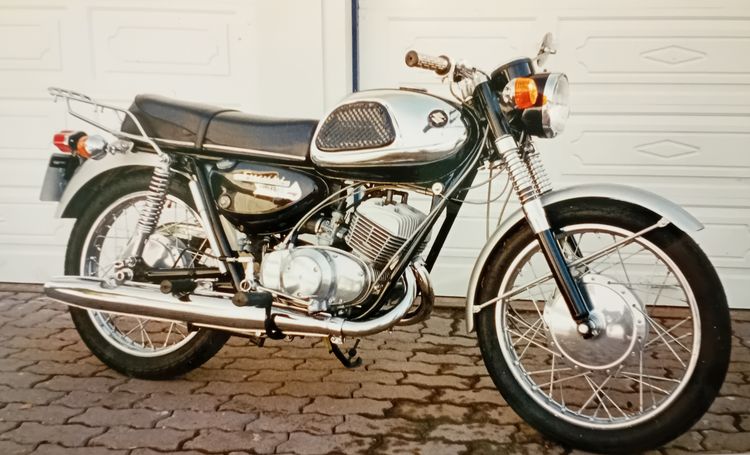
Suzuki T-20
Suzuki T-20 was introduced in the mid-1960s and was in production until 1968. It was also sold under other names such as the X6 Hustler in the US and the Super Six in the UK. Many consider the model to be Suzuki's breakthrough, and in England, 1,000 units were sold in the first month after launch.
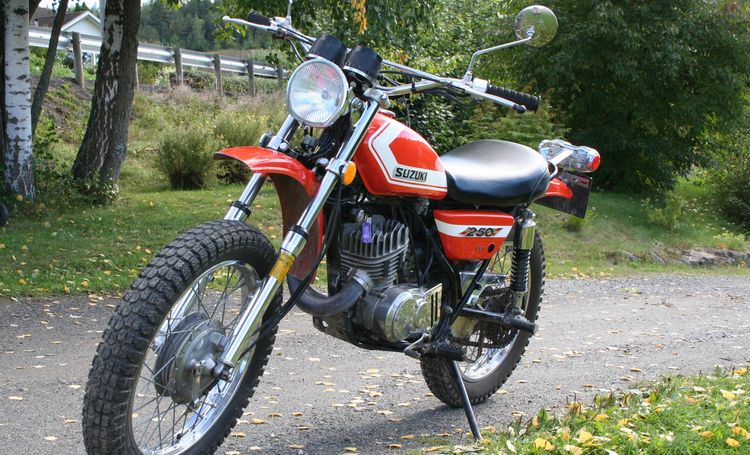
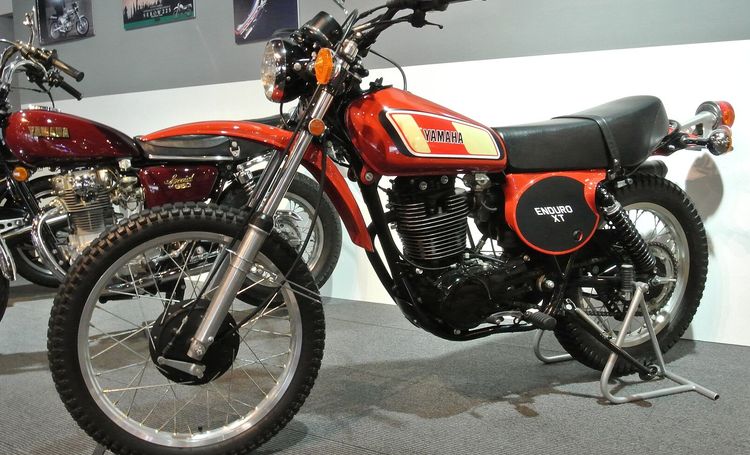
XT500 turns 50
This year marks 50 years since Yamaha set the standard for the modern off-roader with the XT500. The rugged 4-stroke set the tone for a new generation of off-roaders, and Yamaha's success with the DT series 2-strokes continued after the debut of the XT500, a bike that is now highly sought after by collectors. The XT500 was produced from 1976-1981, and in 1982 its successor, the XT550, was released.
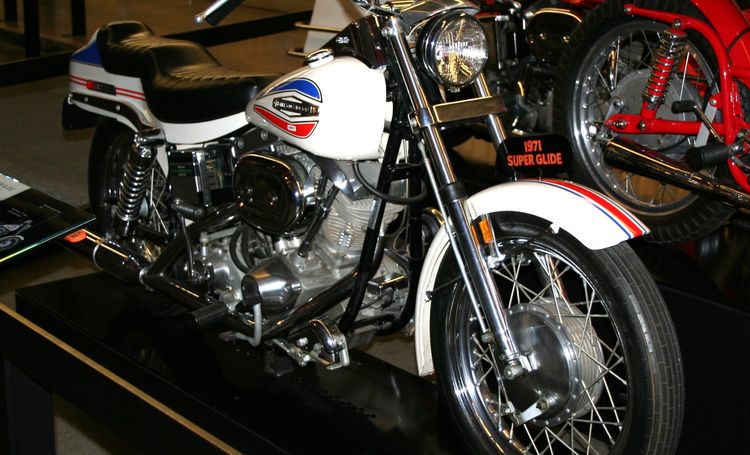
Harley-Davidson FX Super Glide
The 1971 Harley-Davidson FX Super Glide is a very important Harley-Davidson historically.

Honda CB125
In the 1970s, Honda's small 4-strokes could sound like a heavy motorcycle from a distance. Until 1978, the limit for a light motorcycle was 125cc, and Honda 125, with its 2 cylinders, was one of the toughest things a 16-year-old could ride.

Kawasaki H1-500 Mach III
Until Kawasaki unleashed "The Widowmaker" H1-500, the brand was not an unwritten leaf in the motorcycle world. True, they were a bit in the shadow of Honda in particular, but when the 3-cylinder 2-stroke burned the rear wheel rubber at the green light coming out of the traffic lights, Kawasaki was on everyone's lips from then on.

Lambretta 175 TV
Lambretta 175TV/Turisimo Velose, was produced by the Italian Innocenti, and is considered one of the most classic and technically advanced Lambretta models.

Vespa 125 Popolino
When Italian engineer Corradino D'Ascanio designed Vespa scooter, he started by first making a sketch of a person in a sitting position. He then designed the vehicle adapted to the human, and with that he created one of the greatest icons in motoring history.

Brough Superior SS100
Few, if any, motorcycle brands are as legendary as Brough Superior. Perhaps not surprising considering that design, power, performance and price made the brand the motorcycle's answer to Rolls-Royce; highly exclusive and reserved for customers with very deep pockets.

Nimbus 750 Sport
Nimbus was produced in Denmark in the period 1919-1959 by the company Fisker & Nielsen.

Sarolea 37S 500 Super Sport
Sarolea established itself as a weapons manufacturer in Belgium in 1850, and expanded production to include pedal bicycles in 1892. The first motorcycle from Sarolea came in 1901, making Sarolea one of the world's first motorcycle manufacturers.

NSU Prima V175
The Prima V was NSU's alibi in the "scooter genre", and was considered to be among the best German-made scooters. The Prima was very elaborate, The question that then arises is as follows; was it really that Prima?

Harley-Davidson U1200
In 1937, Harley changed the prefix on its side blowers and the Model J became the Model U. The side-ventilated models were available as the 750, 1200 and 1340. These were popular hardtails that were often equipped with a sidecar. I have taken a closer look at one of the 1200cc models, a Model U that belonged to the US Navy.

Yamaha RD400
Yamaha's RD series, which came out in 1973, became very popular, and RD, which stood for Race Developed, became synonymous with fast, easy-to-ride, and smooth-running 2-stroke twins. The largest of these air-cooled models was the RD400, which was a further development of the RD350.

NSU Quickly; a million dollar success
With over 1 million copies produced, NSU's The moped quickly became one of the company's greatest commercial successes. The flimsy but sturdy moped from Neckarsulm literally got Europeans on wheels in the post-war era.

Suzuki GS750
When Suzuki launched the GS750 in 1976, they took the plunge into the 4-stroke segment. The inline-four with double overhead camshafts was considered bulletproof, and with a solid chassis wrapped in great design, the GS became a very popular motorcycle.

Suzuki GT380
Suzuki's 3-cylinder 2-strokes were very popular in the 1970s. With the three models GT750, GT550 and the GT380 offered Suzuki triples in several segments.

Vespa 180 Super Sport
Vespa 180 Super Sport was produced from 1964 to 1968. The model was the successor to the 160 GS, and was the fastest model from Piaggio since the first Vespa rolled out onto the road in 1946, signed by Corradino D`Ascanio.

BMW R75/5
With the new /5 series, BMW upgraded its motorcycles, which was absolutely necessary to meet the competition at the beginning of the 70s. The new generation consisted of the three models R50/5, R60/5 and R75/5, and was ready in 1969.

DKW RT250/2
DKW was established by the Dane Jon Skafte Rasmussen, and made its first motorcycle in 1921. The factory, which was located in Zschopau, later renamed Karl Marx Stadt, enjoyed great success with its small and medium-sized 2-strokes.

Ducati 750 GT
When Arnoldo Milvio and Fredmano Spairani joined the top management at Ducati Meccanica in 1969, the focus was on developing a V-twin that would take the brand into the next decade. The result came in the form of Ducati 750 GT in 1971. The model was Ducati's first series-produced V-twin for street use, and the twin marked the transition from single-cylinder engines to larger and more powerful motorcycles.

JAWA 500 OHC
Jawa 500 OHC arrived in 1952, complementing an already wide range of 1- and 2-cylinder 2-strokes from the factory in what was then Czechoslovakia. The 500cc engine, with its OHC engine, was very advanced compared to other European motorcycle manufacturers.

Jawa Cezeta 175
When the scooter was at its peak in the 1950s, several established motorcycle manufacturers jumped on the bandwagon in the hope of getting their share of the market. In what was then Czechoslovakia, a "roller" was also released, with a slightly unorthodox design, signed Jawa and the CZ factory in Strakonice.

Excelsior 6HP Twin
Excelsior was founded in Chicago in 1907, and purchased by the Schwinn bicycle company in 1912.

Henderson KJ Streamline
Henderson was established by brothers William G. and Thomas W. Henderson in Detroit, Michigan in 1911. The brand became known for its advanced motorcycles with 4-cylinder in-line engines.


Honda CB750LTD
Few events in the motorcycle world have created as much attention as Honda 's stand at the Tokyo Motor Show in the fall of 1968. Then they dropped the bombshell, Honda CB750 Four.
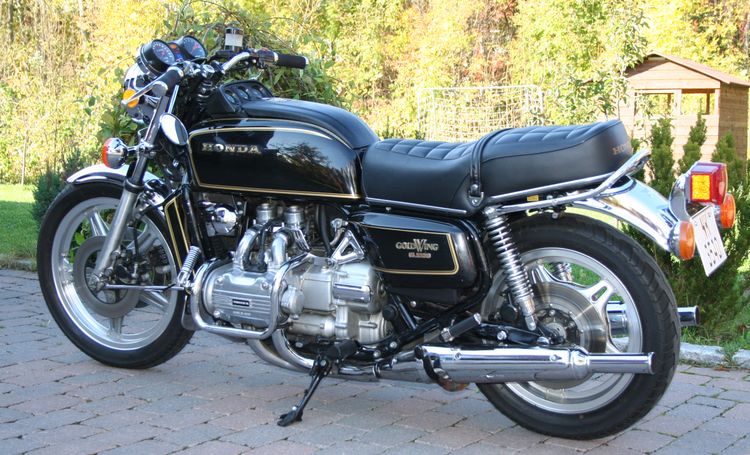
Honda Gold Wing 1000 K3
In 1978, Honda Gold Wing entered its 4th year of production, and the time was ripe for an upgrade. It was time for the K3, and although the main lines were the same, the 78 model offered a number of new features.

Honda Gold Wing GL1000
Roger Jensen from Moss has several Honda classics, but the 1975 Gold Wing is his favorite bike.

Harley-Davidson Fat Boy
"It's nothing personal," growled Arnold Schwarzenegger in the form of the Terminator, before tightening his grip on the shotgun and swinging himself in the saddle of his Harley-Davidson Fat Boy . Talk about a hit in terms of product placement, because Terminator 2: Judgment Day (1991) went on a triumphant run on cinema screens all over the world. For Harley-Davidson This was advertising of almost priceless value.

Norton International 350 OHC
Norton has a long track record in racing thanks to the Manx and International models. The silver and black painted machines took home the most prestigious trophies on the racetracks in the 1930s, 1940s and 1950s.

Harley-Davidson XLCR1000
One of the truly rare models from Harley Davidson is the cafe racer XLCR 1000, from 1977. The model is a very atypical Harley, which has made it a sought-after motorcycle for collectors.

Suzuki RE5 Rotary
Suzuki didn't settle for just producing blue-smoking 2-strokes in the 70s. The Wankel project that was on the drawing board had to be put to the test. Thus, the stage was set for the RE5 Rotary.
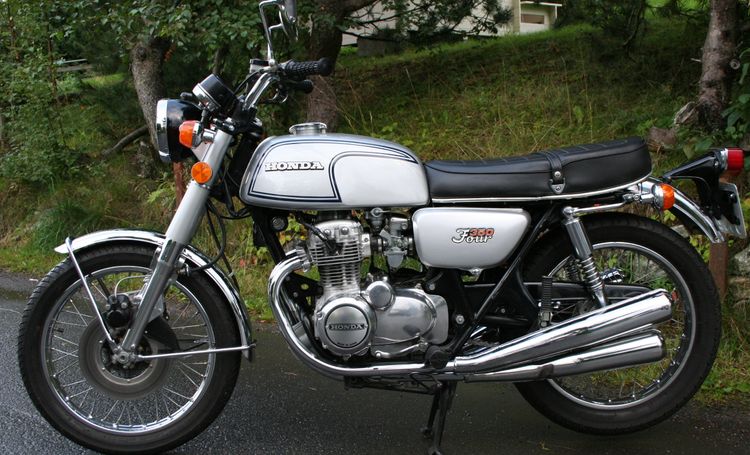
Honda CB350Four
Rumor has it that it was the smallest of the inline fours, the CB350Four, that Soichiro Honda was most pleased with. The model fitted nicely into Honda 's line of 4-cylinder 4-strokes, and went on sale in 1972.

Suzuki GT550
Dag Arne Werner from Maura likes “blue smoke” and 2-strokes. In that sense, the GT 550 is a good choice.

Honda CB500Four
The story surrounding Honda's super four CB750Four, which was shown to the press and public in October 1968, has been sufficiently covered in various periodicals and magazines, so we will largely leave that story aside. However, we must mention it briefly here because without it, the CB500Four would hardly have seen the light of day.

Q7n from the forge in Small Heath
BSA's 500cc Q7 was among the finest models from Birmingham Small Arms around the mid-1930s. Together with models such as the Empire Star, Blue Star, B18 Light de Luxe, the v-twin Y13 and the Sporting Blue Star, they formed a solid range of models in various segments.

BSA A10 Rocket Gold Star 650
BSA A10 Rocket Gold Star (RGS 650) was the last BSA sports bike with a pre-unit engine. The model was produced from 1962-1963, and was built in typical cafe racer style. Only 1584 RGS 650s were built.

Kawasaki GPz1100
With the GPz1100, Kawasaki really let "the good times roll". Now Honda CB900F was to be parked, and a new chapter in the story of the race between the big four from Japan was written. The year was 1981, and Kawasaki was once again one step ahead of the competition.

Vespa Rally 200 Electronic
Vespa Rally 200 Electronic is one of the toughest and fastest models from Piaggio from the classic period. I spotted this 1975 model at Tyrigrava on a Wednesday evening in May, standing shining in the evening sun among American choppers and Japanese R-bikes. The Rally 200 Electronic (electronic ignition) is a somewhat rare Vespa, and with 9 hp it goes fast on small 10-inch wheels.

Husqvarna 283 Guldpilen
Husqvarna is to the Swedes what Tempo is to the Norwegians, a motorcycle brand with high emotional value. The two brands have a lot in common. 1-cylinder 2-strokes in simple, robust frames, made at a time when motorcycles were affordable and an important means of transportation. The Guldpilen was, despite the engine of about 200 cc, legal to ride for 16-year-olds in Sweden in the 1950s due to its weight, which was only 74.5 kg. The limit for lightweights at the time was weight, max 75 kg, not displacement.

Kawasaki Z1000 Turbo
What do you do when your 1000cc bike doesn't feel fast enough and you want some extra "powder" out of the engine? Turbocharging can be the solution, like on this rugged Kawa from the 70s.

NSU 350 OT
NSU was founded in the German town of Riedlingen in 1873, and later production was moved to Neckarsulm. The brand originally started with the production of sewing and weaving machines, and gradually expanded to the production of cars and motorcycles. The first motorcycle from NSU came in 1901, and it had an engine from the Swiss manufacturer "Zedel".

Gilera 50 Trial 5V
“ Gilera mopeds with the big bike appeal” was the slogan in Gilera’s sales advertisements from the mid-1970s. For many 16-year-olds, there was no one above and no one next to their newly acquired Gilera 50 Trial 5V.

Bridgestone 350 GTR
Bridgestone is actually an English term derived from the surname of the founder, Soichiro Ishibashi. Ishi means stone and bashi means bridge. Soichiro therefore split his surname in two, reversed the parts, and translated it into English. Most people associate Bridgestone with the production of tires for cars and motorcycles. That the factory once made some of the best 2-stroke motorcycles available is probably less well known. Bridgestone was well into tire production when they also began producing pedal bicycles in 1946. Japan had been dealt a hard blow by the Allies towards the end of the war, and purchasing power in post-war Japan was poor. People still needed affordable and simple means of transportation, and thus there was a great demand for pedal bicycles. As reconstruction took shape and the economy strengthened, the demand for motorized means of transportation increased. In 1952, Bridgestone began producing motorcycles, and the model range gradually included a series of small 2-strokes of 49, 98, 175, 250 and 350 cc respectively. Bridgestone's motorcycles became known as fast, reliable and technically advanced. No expense was spared, only the best was good enough. Development and production costs were very high, and the price tag was accordingly. What essentially set Bridgestone apart from other Japanese brands was not the technical finesse per se, but the fact that each Bridgestone model was packed with modern technology by the standards of the time. In short, they were fast, advanced and sophisticated.

Tempo Villiers Luxury 125
Tempo Villiers Luksus 125 was a popular, reliable and simple light motorcycle. The engine with the code 10D was reliable, and very economical to operate with a fuel consumption of about 2.5 dl per mile. The electrical system was very simple and consisted of a 6-pole flywheel magneto that provided power to the front and rear lights, as well as to the ignition system. The 6-volt system with a 30-watt light bulb did not exactly dazzle oncoming traffic, but on winding country roads without street lights it provided decent enough visibility in the dark. About 350 examples were produced in the period 1951-1953.

NSU Super Fox
NSU was founded in the German town of Riedlingen in 1873, and later production was moved to Neckarsulm. The brand originally started with the production of sewing and weaving machines, and gradually expanded to the production of cars and motorcycles. The first motorcycle from NSU came in 1901, and it had an engine from the Swiss manufacturer "Zedel".

BMW R90/6
BMW new /6 series was shown to the public and press at the IFMA trade fair in Cologne in September 1973, and consisted of the models R60/6, R75/6 and R90/6. The new series was a step up and forward, both in terms of design, power and performance.

Zundapp GTS 50
Zundapp's mopeds were popular, and among the models from the 1970s and 1980s, the GTS 50 and KS 50 were some of the toughest and most powerful.

Kawasaki Z900RS
When Kawasaki launched the retro model Z900RS in 2017, there was no doubt that the heritage came from the 900cc Z1 from 1972. The Z1 was originally developed to "park" Honda CB750Four, and others that rose up in the fight for the heavyweight throne. With the Z900RS, the old giant is paid homage, and I've taken a closer look at the retro classic.

BMW R67/2
BMW with a sidecar is not an uncommon sight, and not without reason. The old models with swingarm forks, cardan drive and a high-torque boxer engine with a low center of gravity were made for sidecar driving.

BSA Spitfire 650 MK III
The 654cc A65 Spitfire is one of the last great classics from BSA . The bike was produced from 1966-1968, and was the fastest production model from BSA . The Spitfire was, as the name suggests, a very sporty and fast twin. The model was shown at the Brighton Motorcycle Show in September 1965, and replaced the cafe racer-inspired BSA Lightning Clubman 650.

Yamaha LS2 100
For many 16-year-olds, Yamaha's lightweight LS2 was the dream bike of the 70s. From a distance, the 2-cylinder 2-stroke could look like a heavy motorcycle, and not least the sound from the two exhaust pipes could remind you of the same. Two streaks of blue smoke were tougher than a train, and the 100cc with the tiny 2-stroke twin is today a collector's item that has achieved high classic status.

Suzuki GT750
A beloved child has many names, and when the "Water Bus" went on sale in 1971 it became a cherished possession for many die-hard Suzuki fans, but only the Japanese domestic market and the USA had access to the 3-cylinder water-cooled 2-stroke in its first year of production. The rest of the world didn't get access to "The Kettle" until 1972. They say that all good things come in 3's. For Suzuki , the GT750 became just that.

Harley-Davidson EL1000 Knucklehead
Despite the economic depression of the 1930s, Harley-Davidson management made plans for a new 1000cc motorcycle as early as 1931. The company gave itself 4 years to develop the new model, which was scheduled to be launched in 1935. When the model E61 went on sale in March 1936, Harley-Davidson could see a bright future ahead. The new big-twin was Harley-Davidson 's first mass-produced top-vented model, a concept that formed a line for Harley-Davidson from 1936 until the Evolution 1340 in 1984.

Honda CB400Four Super Sport
The Japanese motorcycle manufacturers understood early on the profitability of offering models in different segments and not least in different sizes in terms of displacement. In this respect, Honda was no exception, and we have taken a quick look at one of these, specifically the CB400Four Super Sport.

Honda CB900F
In 1969, sales of Honda CB 750 Four began, the motorcycle that had everything an enthusiast could dream of and then some. The model took the entire motorcycle world by storm, and led Honda to the top both on the racetrack and on the road. After 10 years, the time was ripe for a new model, and at the IFMA trade fair in Cologne in 1978, Honda proudly show off the heir CB 900F.

Honda VF1000R
The motorcycles made in the 1980s now fit neatly into the ranks of veteran machines, and a number of models are on their way to achieving classic status. Among the more sophisticated machines from this period is Honda's groundbreaking V4, the VF1000R. Not only was the model groundbreaking in terms of technology, it also pushed the boundaries of what was possible in terms of top speed for a road machine, and the magical 150-mph mark was passed.

Tempo Fighter 220
Tempo Fighter 220 and Tempo Fighter 230 are among the last motorcycles with Tempo logo on the tank, both great 2-strokes that experienced tough competition for customers from the Japanese motorcycle manufacturers.

Triumph Trident T-150
In the early 1960s, BSA management was constantly reminded of their Japanese competitors, who made small but fast machines. BSA , which owned Triumph factory, saw the need for a larger and more powerful machine. The successful Bonneville model sold well, but would eventually need a replacement. BSA management decided that the development of the new model should be led by Bert Hopwood and Doug Hele. Both Hopwood and Hele had extensive experience in the development and design of motorcycles, and had several successful models on their list of achievements. Mister Triumph , Edward Turner, however, was not convinced that the sketch of the two was life-made. A three-cylinder model did not appeal to Turner, the man who in his time became famous for having developed Triumph's legendary Speed Twin .

Opel Motoclub 500T
Most people naturally associate Opel with car production in Russelheim. Opel is associated with cars, not motorcycles. The fact that there is an Opel motorcycle in Norway is therefore unique, to say the least. Here is a bit of the history behind Opel's motorcycles.

New Imperial 350
The motorcycles that were made in the interwar period are characterized by a lot of mechanics, partly precision mechanics. The New Imperial that was made in England is no exception, on the contrary. These machines are proof of the great craftsmanship behind the production of the motorcycles from this period. I have taken a closer look at a New Imperial from 1935, a brand that stood out in its time in that their 4-stroke engines were so-called unit construction, i.e. that the engine and transmission were in the same block.

Laverda 750 SF-2
The first 750cc motorcycle from Laverda came in 1968. The following year, in 1969, it was upgraded and given the model designation S. The S model showed that Laverda could make motorcycles that matched the speed resources of its competitors very well.

Harley-Davidson WL750 w.Steib
Harley-Davidson WL750 became a very popular model from Milwaukee, and the first vintage of the new 750n was launched in 1937. Keywords describing the newcomer included an upgraded engine and a new, great design.

BMW R 12 S
When I was told that MC-Oslo had received a copy of BMW's new retro classic R 12 S, I became curious. Recreating a legendary motorcycle, such as BMW R90Sport, in retro format is no easy feat. Such a motorcycle should combine modern technology with a design that harks back to the original's DNA. The conclusion after the visit is that BMW has gone "all in" here. I have written several articles and ridden the original R90Sport, and I must say that with the retro R 12 S they have really set the bar high and shot the inner tier. The copy is almost better than the original, at least to look at. Riding it is out of the question. The bike I got to take a closer look at had already been sold, and was in the shop waiting to be picked up by the owner. Whether there will be more is uncertain and unlikely, according to the salesman at MC-Oslo.

Kawasaki Z1000J
The beginning of the 80s marked a turning point for Kawasaki motorcycles in terms of design. The soft lines and rounded shapes that had characterized the models throughout the 70s undoubtedly belonged to "the past". Now it was angles and straight lines that characterized the design. The 1000cc Z1000J set the tone, quickly pulled out of the traffic lights, and took Kawasaki into the new decade.

Kawasaki W1-650
Kawasaki's motorcycle production began when Kawasaki Aircraft Company bought into Meguro in 1960. At that time, Meguro had been licensed to produce a motorcycle that was largely a copy of BSA A7. Meguro's knowledge, expertise and production machinery were therefore of interest to Kawasaki precisely to eventually establish our own motorcycle production.

Moto Guzzi 850 Le Mans II
The Italian lakes north of Milan offer incredibly beautiful scenery, and if you drive along the eastern side of Lago di Como you will eventually reach the small town of Mandello del Lario. Here, at the foot of the Alps, the first model of Moto Guzzi , the Normale 500, was built in 1921.

Benelli 750 Sei
Special motorcycles have always attracted attention and created fascination. MC enthusiasts have had an outlet for their dreams, and designers have nodded in satisfaction when their product has been the subject of superlatives from the press and the public. Italian Benelli belongs to this type of motorcycle. Not so strange considering that Benelli 750 Sei was the world's first series-produced motorcycle with a 6-cylinder engine.
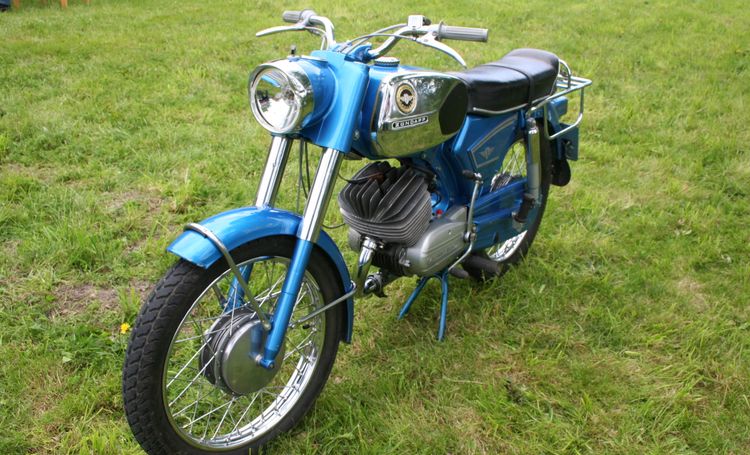
Zundapp KS100
When Zundapp stopped producing heavy motorcycles in the 1960s, it was to focus on producing lightweights and mopeds. Today, there aren't too many of these little German bikes to be seen. However, there are a few of them here in the vintage community, such as this great example of a KS100 from 1970.

Douglas T6
Douglas was established in Bristol in 1882 by William Douglas. However, the first motorcycle to carry the Douglas name on the fuel tank did not appear until 1907. The brand became known for its boxer engines, placed either transversely or longitudinally in the frame, long before other motorcycle manufacturers adopted the same design.

Panther Model 100
Panther sounds pretentious, and the brand used, among other things, a picture of a panther on the gas tank of several of its models. When the first model went into production in 1904, the motorcycles were called "P & M", after the initials of the founders Phelon & Moore.

Harley's Sportster ; a look back
Harley-Davidson's best-selling model throughout the brand's long and proud history, Sportster , is paradoxically the smallest of them all. I've looked back in history and taken a closer look at the development of the XL, the model prefix on the box office success from Milwaukee.
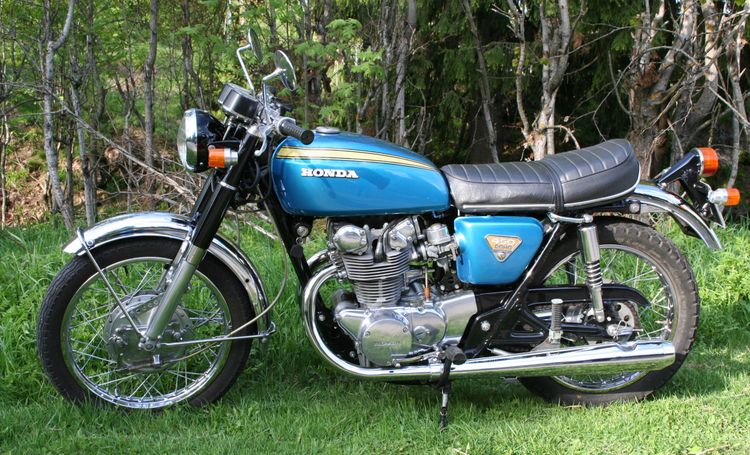
Honda CB450 DOCH
When the CB 450 was launched in 1965, it was the first large twin-cam model from Honda to be used on the road and not on a racetrack. With a displacement of 444 cc and an output of around 45 hp, the newcomer could achieve a power output of around 100 hp per liter of displacement. This was sensational, and for the European motorcycle manufacturers, Honda gradually began to appear as a slightly overly tough challenger.

Morten's California Style
Building a “headturner” out of a classic California-style Harley chopper requires knowledge and skills about history and mechanics. Morten Kvilhaug’s 69` Shovel is just such a bike. We should think and believe that he has succeeded, because when I saw the bike one warm summer evening on Karl Johans gate in the capital, it seemed like pure flypaper to passersby.

"I collect art, like this Indian 8-valve racer"
Steinar Bråthen found his dream bike in this Indian racer from 1913. With a displacement of 996 cc, it is good for a speed of around 150 km/h. However, it lacks both gears, clutch and brakes, and can only be driven on the track. For Steinar, driving it does not mean much because as he says, “Some people collect art, I collect motorcycles because they are art to me”, and points to the redskin in front of him, an Indian H 8-valve.

"The RSn invites you to a sporty driving style"
Kjell Kleiva Snipsøyr from Ørste once owned a silver K100RS a long time ago. The bike he bought at the time was restored and sold, but never forgotten. When an identical RS with the same silver color appeared, he just had to have it. Kjell is no small boy, and measures around 190 at the stocking. There are few bikes that offer ergonomics that allow a day's riding without becoming stiff and stiff due to a bad sitting position. "The fact that the RSn invites a sporty riding style is not a minus either," adds Kjell when describing the bike's features.
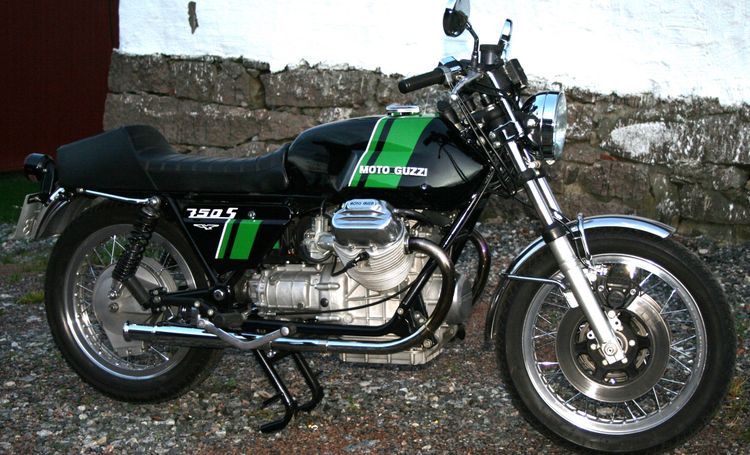
Moto Guzzi 750S
The 1970s were the decade in which Moto Guzzi started producing models in the sports segment. The longest-lived and most legendary of the series for this type of motorcycle is undoubtedly the Le Mans, but before this the factory on the shores of Lake Como produced some sporting machines worth noting. First up was the V7Sport, followed closely by the roadster 750S.

Yamaha R3-350
The 1960s were the heyday of the small 2-stroke, and there were many manufacturers competing for the attention of customers. The European brands Tempo , Jawa and DKW were big players in the 2-stroke segment, until the Japanese motorcycles stormed forward with their fast and modern machines, and almost took over the entire market. One of these small Japs is the now rare Yamaha R3 on 350 cubic.

Moto Guzzi 750-S3
At the beginning of the 1970s, Moto-Guzzi began producing a range of sports machines, and the V7-Sport set the tone. The brains behind the new generation of Guzzi motorcycles were none other than the legendary Lino Tonti. The new machines were long, low, and sleek, like this 750-S3, and led to the legendary Le Mans series.

Zundapp Bella
The 1950s were the heyday of scooters. Although the European economy was on the rise after tough war years, cars were far from being owned by everyone. Most people's personal finances were still too weak for that. However, the need for transportation was great, and cheap means of transportation for two people were in demand. The scooter became the solution for many, and Zundapp Bella R204 was one of these little charmers that helped to solve precisely the need for transportation.

Suzuki AC50
With the exception of Tempo Corvette, there are few moped models that have achieved such popularity among Norwegian 16-year-olds as Suzuki AC50. "AC50" became almost a term in the 1970s, and the little 2-stroke was among the hottest 50cc motorcycles of the 1970s. The hottest ones were the ones without a "seal"!

Laverda 1000 Jota
Laverda is mainly associated with fast and sporty motorcycles. For the uninitiated, however, the company started with the production of agricultural machinery as early as 1873. After World War II, Laverda focused on affordable means of transportation, and the first two-wheeler was a light motorcycle, a small 75 cc 4-stroke. A few decades later, however, Laverda would show its muscles, and in 1976 the superbike 1000 Jota was released. The magical 140 mph limit was now on the decline.

Honda CR750; The Raw Paw from Rickman
Sooner or later, most motorcycles achieve classic status, but fewer become legendary and a very few iconic. In the latter category, the iconic, the needle's eye is narrow. However, some models slip through, and one of these is Rickman's street racer Honda CR750

Ariel Square Four 1000
Few motorcycle models are as unusual as Ariel's 4-cylinder Square Four, the motorcycle that was a curiosity in its time, and the result of Edward Turner's brilliant engineering brain.

Suzuki RG500 Gamma rocket
Some motorcycles appear in the starry sky almost like comets, and disappear almost as quickly as they came. These types of machines are often hyperfast, spectacular and "unreasonable". In this respect, Suzuki's blue and white bomb, the "RG 500", was such a motorcycle comet, and which challenged Yamaha RD500LC. It was more of a GP racer than a street bike, it was lightning fast and last but not least very fuel-hungry. However, those who were lucky enough to experience it will never forget it.

Kawasaki 250 A1 Samurai
Among the smaller Kawasaki models that went on sale around the mid-1960s, we find the 2-stroke with the martial-sounding name "Samurai." Without getting too caught up in metaphors and funny puns, I still dare to see the model as a "sword" against the models of its competitors, especially the European motorcycle manufacturers.

Triumph Bonneville 650 T-120
Triumph's trendsetter, Bonneville T-120, was launched in 1959, and with the sportiest and fastest twin in Triumph's history, they took America by storm. Bonneville , named after the legendary record-breaking race at Bonneville Salt Flats in 1956, became the motorcycle that set a new standard for design and performance. Bonneville became an icon, and a symbol of youthful brutality. I've dug a little into the history behind the sports bike with the legendary name, and which is considered the crowning achievement of Mr. Triumph himself, Edward Turner.

Triumph X-75 Hurricane
Triumph X-75 Hurricane actually started as a lightly customized BSA with a Rocket 3 engine, and the starting point for the model was BSA Rocket 3. The model was produced from 1972-73 with Triumph logo on the tank, but the start of the development of the model occurred in the USA in the late 1960s. The Hurricane, built in a lightly custom style, was the bike that would boost sales for Triumph in the United States.

Kawasaki GPZ900R
When Kawasaki sent the GPZ900R off the assembly line and onto the tarmac, the factory took a step up in the superbike segment. The 908 cc inline-four, with its 115 hp, was good for just over 240 km/h, or just over 150 mph. No previous standard machine could reach such a dizzying top speed, and the bike was also profiled on the big screen around the world with Tom Cruise riding it as one of the main actors in the 1986 feature film "Top Gun". We don't know if Kawasaki took on a role in the film, but one thing is certain; the advertising value was invaluable.

Yamaha DT360
When Yamaha launched the DT series towards the end of the 1960s, it was a deliberate attempt at the American market for light off-road machines, where “free movement” on motorcycles was far more common than here in Europe. American traffic laws were quite liberal, and many people used light off-roaders for off-road use.

MZ ES250/2Trophy
MZ , or Motorraderwerke Zschopau as the abbreviation stands for, is in many ways an icon of the Cold War and divided Europe. The brand is not only a bit quirky in terms of design, it also has a unique history with roots dating back to the post-World War I era.

BMW R100RS
For touring people, BMW has often been the first choice. Now, of course, competitors have sharpened their models in the same segment, and bikes like Honda Gold Wing , Suzuki Cavalcade and Yamaha Venture did their part to capture customers' attention. BMW , with the possible exception of Gold Wing , kept most of the competitors at arm's length, thanks to quality, handling and ergonomics.
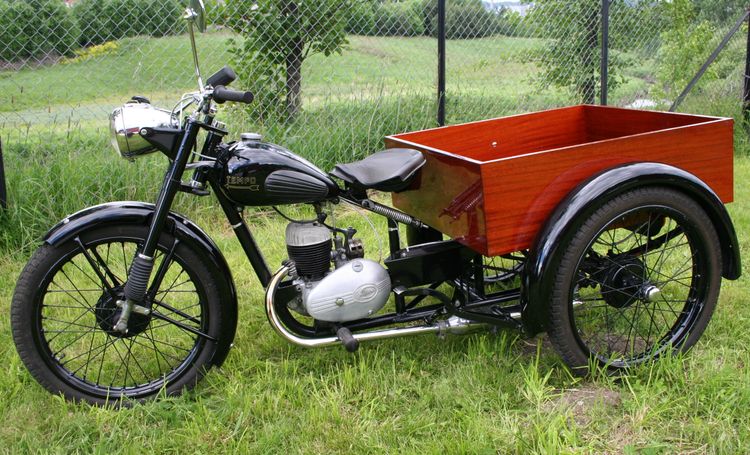
Tempo Transport 30C
Tempo's heyday was definitely the post-war period, and the small 2-strokes laid their blue-smoking blanket over a nation that was rebuilding after five tough years of German occupation. The mopeds and motorcycles from Sandnes put the nation on wheels.


Yamaha XJ900
For many motorcycle enthusiasts, the number “900” is synonymous with Kawasaki’s classic from 1972, the Z900. However, there are several great 900cc bikes, including Honda CB900F, and not least Yamaha’s shaft-driven sports tourer XJ900. The latter became an important model for the Hamamatsu-based group, and with the XJ900 they took a step away from the design and technology of the 1970s, and turned their attention towards the future.

Kawasaki W800
In the series about retro classics, it's now time for what is perhaps one of the most beautiful of them all, specifically Kawasaki W800. The model has its heritage from Kawasaki W1-650 back in the mid-1960s, a model that was incredibly more British in design than the original, BSA A10. I've taken the Kawa retro for a spin, and it was a great experience.

Norton Dominator Sport Special 650
Norton factory on Bracebridge Street in Birmingham has a long track record when it comes to racing. The legendary Manx racers made a clean sweep of the racetracks before and after World War II. If Norton's street bikes didn't exactly make a clean sweep of the roads, they weren't far off. With the twin-engine Dominator Sport Special 650, Norton cemented its reputation as "The Unapproachable", thanks in large part to two ingenious technical solutions; the Featherbed frame and the Roadholder fork!