
Øyvind's Rocket III
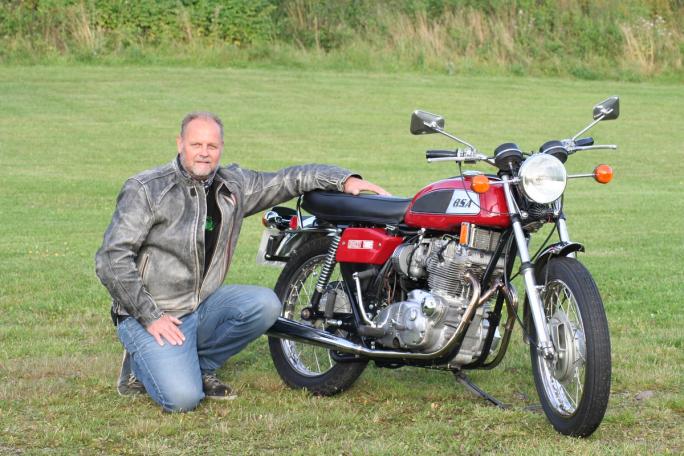
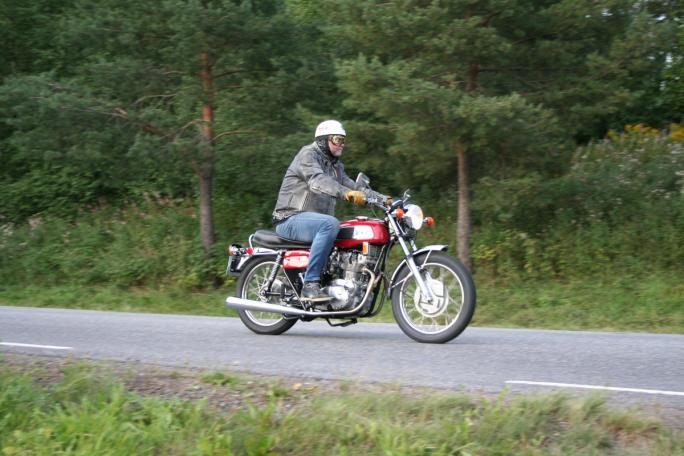
"It's not exactly a rocket as the name suggests, but it's pretty fast for an English car," says Øyvind, and hastens to add that "since it was actually sold new in Norway, I just had to secure it."
Øyvind Ekren has a motorcycle collection that is a bit out of the ordinary. He likes spectacular classics, and the collection consists of many different brands and models. A Kawasaki Z1300 from the 80s, and a Ducati 900 Super-Sport from the 70s are among the motorcycles in the collection. “I like the classic machines, and I like bikes that stood out when they were new,” he says. I believe him, because when your eyes wander around the room, there are far from a dozen items on display.
Erling Sande A.S
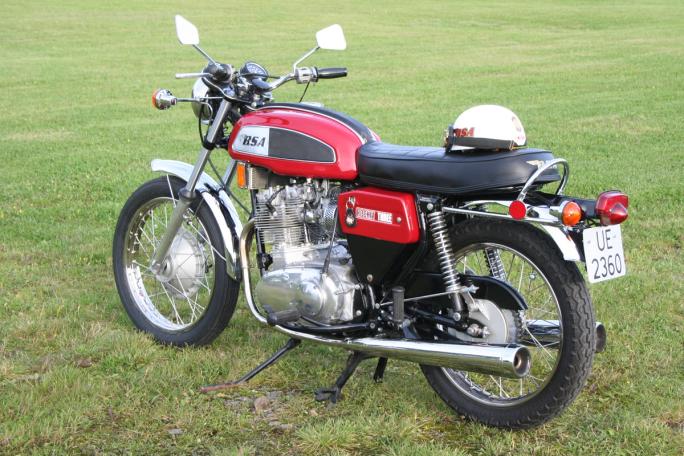
“This exact Rocket III was sold new at Erling Sande A.S in Oslo in 1971, and that’s quite historic,” he says, and asks me if I’ve heard of the company. I nod and confirm that “yes, I actually bought a saddle for a Suzuki GT750 at Sande's in the 90s". "Then you know what I'm talking about" he replies and adds that "Sande was an institution in the motorcycle community, and sold Suzuki , among other things". We talk a little back and forth about the BSA he's riding, a model with an exciting history from the forge in Birmingham.
1968
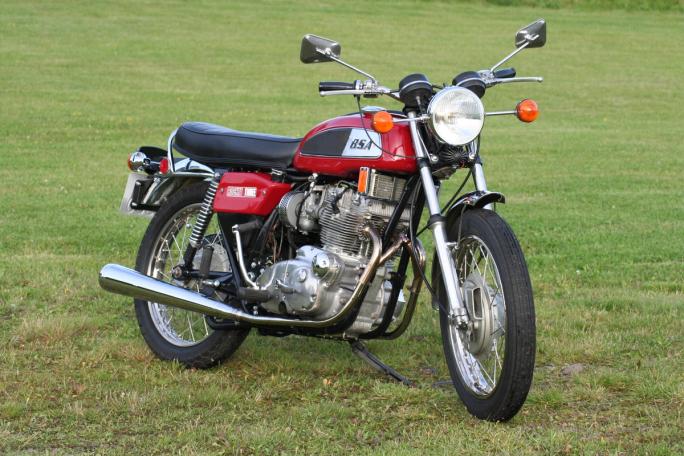
When BSA introduced the new Rocket III triple in September 1968, barely a month before Honda released its bomb CB750 at the Tokyo Motor Show in October, expectations were high in BSA's sales force on both sides of the Atlantic. The hope was that the model would take BSA into the future while also staving off increasing competition from Japan. At BSA factory in Small Heath, several years of development work, originally started by Triumph , had finally paid off. The bike that was to face competition from Japan rolled out of the factory premises in Birmingham.
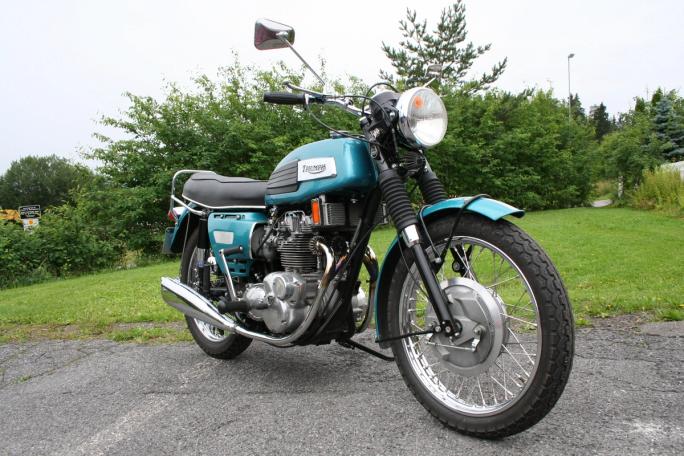
T-150 Trident
BSA and Triumph had now entered into a close collaboration on the new superbike, and the new triple "Rocket III" was also available with Triumph logo on the tank with the model name "T-150 Trident ". The Trident was produced in the factory in Meriden, and in retrospect the group should have consolidated its resources, and focused on a model that should ideally have had, among other things, an overhead camshaft, short stroke and horizontally split engine block.
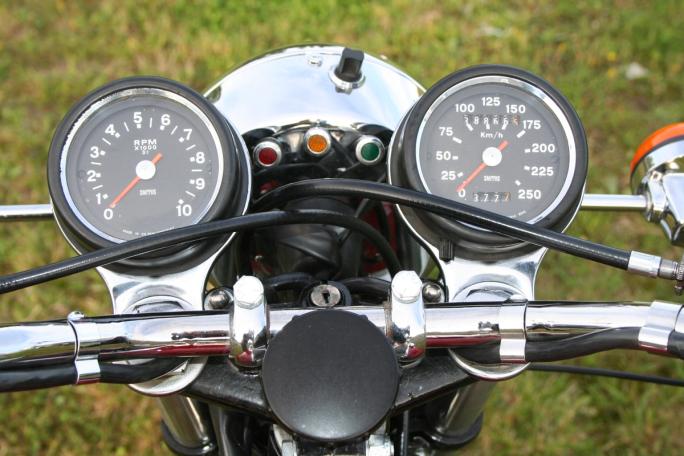
The prototype P1 was ready in 1965
Development of the triple began in the early 1960s, based on Triumph's 500cc parallel twin. The first prototype, the P1, was ready in 1965, and proved potent in terms of performance compared to the old twins. However, the project was postponed, and when the bike was ready three years later, it was decided that the triple would be made in two different versions to preserve the identity of both BSA and Triumph .
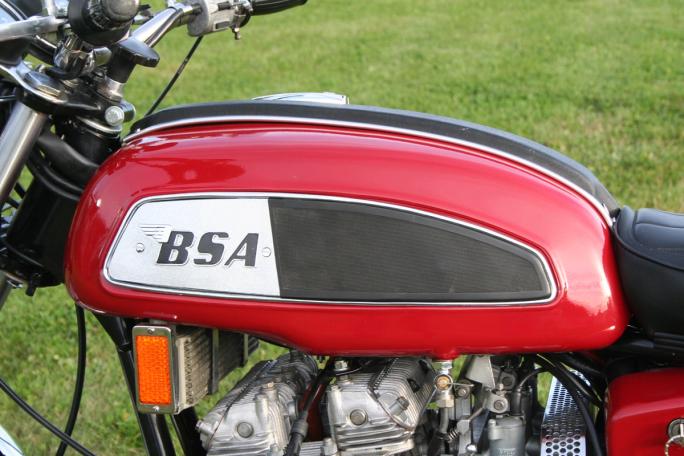
Two of a kind, almost..
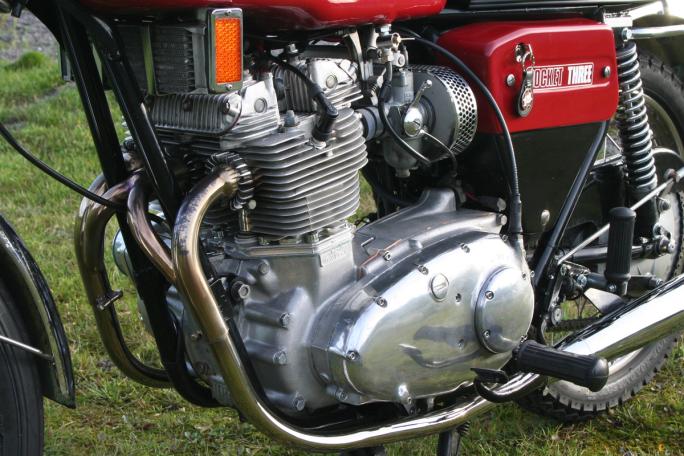
The two models had a number of differences, the most visible of which were the frame construction and the engine mounting. In addition to some minor differences in detail, this cost more than they were worth. The financial muscles of BSA , which owned Triumph , were weakened, the machinery used in production was old-fashioned, and both the Rocket 3 and Trident T-150 suffered technical problems that resulted in relatively extensive warranty costs. A 3-cylinder engine was of course spectacular, but when you know that it was largely a twin with an extra cylinder, of course with some modifications, the construction became hopelessly old-fashioned, and the technical challenges were not absent either. Vertically split engine blocks were difficult to make oil-tight, and multi-cylinder blocks that could not be drilled in line, but where each cylinder had to be drilled out separately, presented precision challenges.
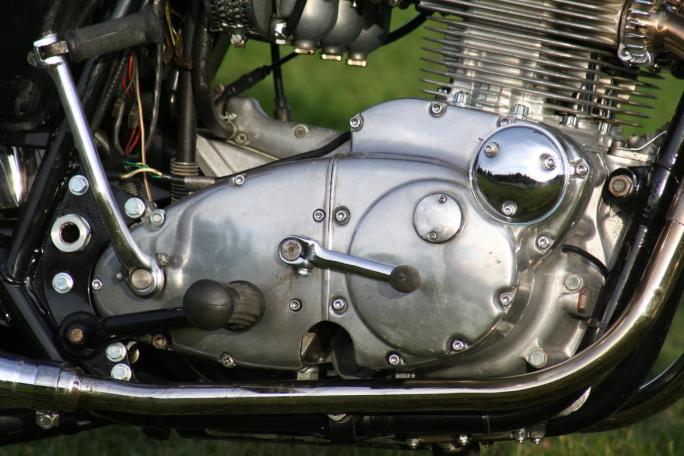
9000 revolutions
Now, it must be said that not everything was negative about the new triple. BSA had invested heavily in the machine used to machine the crankshaft, and the result was an engine with a bottom section that could easily withstand up to 9000 revolutions over time. Another solution worth mentioning is the placement of the alternator. Instead of mounting it on the left side inside the primary housing which was filled with burning oil, it was instead placed on the right side. This gave a longer life for a part that is quite essential on an engine.
Top finish at Daytona in 1971
When the Rocket III was ready for the road in the autumn of 1968, it showed remarkable performance. The 58 hp output provided good thrust, and the top speed was around 185 km/h. In 1971, the model made a clean sweep at Daytona Raceway. Behind this success we find well-known names from the British motorcycle industry such as racing project manager Doug Hele, test rider Percy Tait and not least frame builder Rob North. Their knowledge and experience were behind the racing version of the Rocket III, which with a whopping 85 hp beat all competitors at Daytona itself. 1972 was the last year the Rocket III was in production, and the last models rolled off the assembly line in April. During just under 5 years of production, only 5,897 examples were made.
Too little, too late
The Rocket III was spectacular, as the consulting firm Ogle Design had ensured. The Rocket III had a short but intense life on the road and on the track. The bike is today a sought-after classic that can best be described as a motorcycle that when it arrived in 1968 was "Too little too late". In 1973 BSA was history, and snap, snap, snap and the industrial adventure with the center of gravity in Birmingham was out.
Technical data: BSA Rocket III
Engine: 3-cylinder 4-stroke, OHV
Displacement: 740 ccm
Power: 58 hp
Number of gears: 4 (5 in 1972)
Front tires: 3.25x19
Rear tires: 4.10x19
Tank: 19 liters
Weight: 210 kg