
BMW R100CS
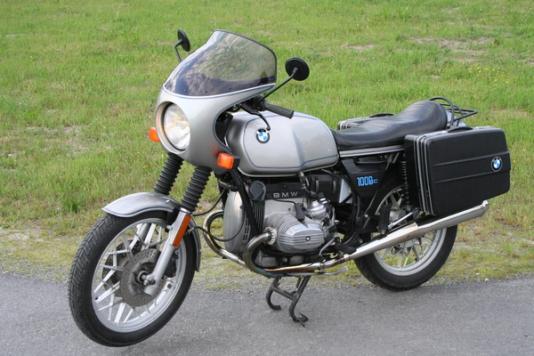
How were the handling characteristics of 1980s bikes? I borrowed a 1982 BMW , a model that is well within the limits of veteran status, to test out what it has to offer on the road, and I was not disappointed at all.
0/0
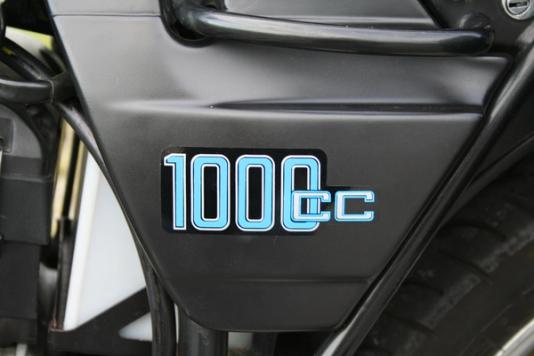
The motorcycles from the 1980s are now well-established veterans, and models that are relatively modern in their technology are now noting the 40-year mark and well and good. What were the machines from the first half of the 1980s really like to ride? I took a ride on a 1000cc from the forge in Bavaria, a model that when it was new was preferred by many for long trips.
Boxer engine or inline engine?
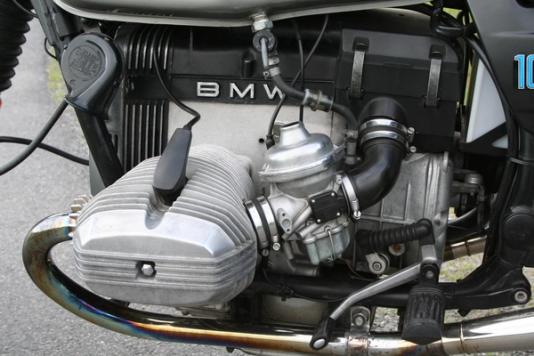
The 1980s represented a period of renewal for many motorcycle manufacturers, and at BMW the boxer concept was almost replaced by the new K-series, which was equipped with inline-fours. History has it that the factory in Germany was almost drowned in complaints from BMW owners all over the world when rumors began to circulate that the R-series was to be discontinued in favor of the new K-series. What is just a rumor and what is truth is not always easy to find out, but one thing is certain; BMW kept the boxer models in parallel with the production of the new generation K75 and K100. One of the last classic boxer models with roots from the 1970s is the 1000cc R-100CS, and when I was offered to borrow such a model from an acquaintance, the opportunity arose for a never-so-small nostalgia trip back to the 1980s.
Sports touring
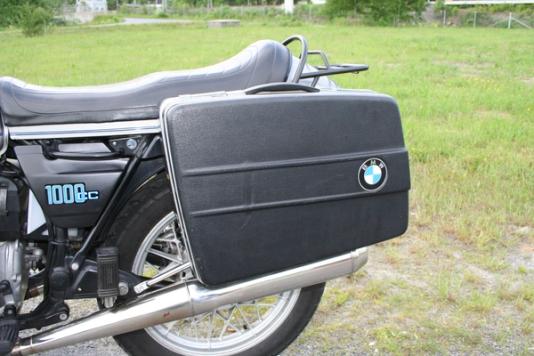
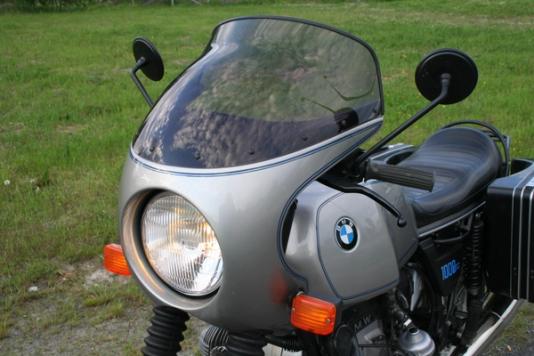
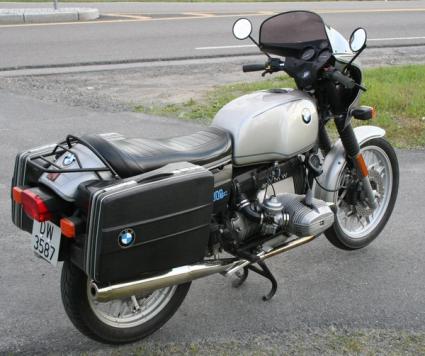
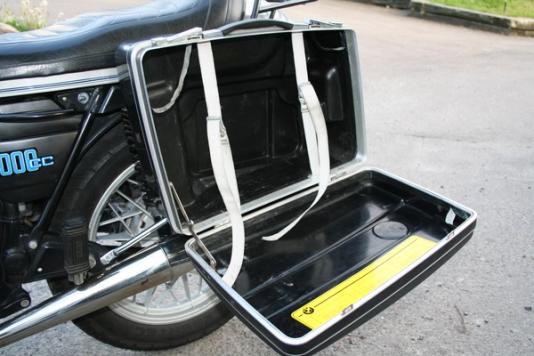
The bike I borrowed is a 1982 model, and is actually astonishingly nice and original, despite the fact that it has almost covered 95,000 km. The bike shows that previous owners have loved it, and the original side bags are still attached, which together with the handlebar cover help to give it a touch of sports touring. This year, BMW was able to offer the 1000cc bike in four model variants; R100, R100RS, R100RT and R100CS. The main difference visually is whether it had a fairing or not, and the size of the fairing, where the RT was equipped with a full fairing, while the RS and CS had smaller handlebar fairings.
Easy to drive and stable
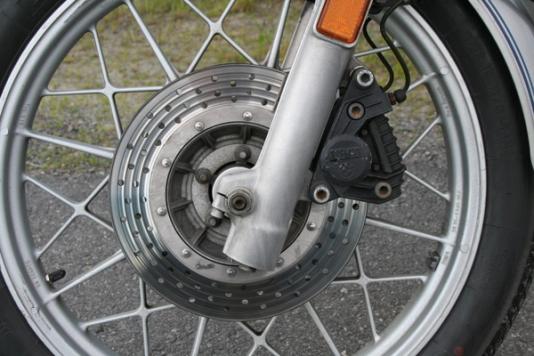
My first associations when I take a closer look at the bike are “reliable touring”, and the people I know who owned this type of bike in the 80s were guys who loved longer trips. After familiarizing myself with the switches and various functions, I put in 1st gear and head north on the E6 out of Oslo. There is little traffic and far between cars, so there is both time and space for a few “throttle strokes”. The boxer purrs like a petted cat, and the response is good. The engine thrives on a low rev range, and small vibrations disappear completely when the needle passes 3000 rpm. At the same time, it is “calm” in the ride, and at 100 km/h in 5th gear the rpm is just over 3000 rpm. The bike feels very directional stable and the handlebar cover easily takes away a lot of the wind pressure. After each, the route is laid east in Akershus on more winding roads. What strikes me is how easy the bike is to ride. It plays through the turns, and immediately responds to steering inputs. Sometimes it can be experienced as a little too compliant, and cuts the curves more sharply than I first thought. After a few miles on winding roads I get used to this, and the turns are taken with a steady track selection. Some sudden braking is necessary, however, and I sense that the fork could have been a little “harder” in its damping characteristics. Out on the E6 it provides nice flow, but when braking hard on winding roads it has a slight tendency to “dive” at the front. Now this can be compensated for with thicker fork oil, possibly replacing the fork springs in favor of progressive springs. There is advice for everything, they say! The brakes, however, are nothing to complain about. Double discs at the front from Brembo provide powerful and well-dosed brakes, and in conjunction with the drum at the rear, the bike stops very effectively. The gearbox on the old boxers is known to be a bit slow in 5th gear, and that's true to a certain extent. However, this is not a big problem as long as the pedal is used firmly and decisively in and out of 5th gear.
A lot of motorbike for the money
After the ride, the impression of the BMW is not bad at all. The frame is torsionally stable, the brakes are effective and the bike combines stability at high speed on the motorway, with good cornering properties. It is understandable that touring enthusiasts often chose between BMW and (very often) Honda's Gold-Wing this decade. I have ridden both and they score highly on riding comfort and ergonomics. A good seating position is a "must" on long day stages, and here BMW has always been at the forefront. We should also not forget the BMW's low centre of gravity thanks to the boxer engine's construction, which provides stability and makes it easy to handle. There is a lot of riding pleasure here. In today's market, a nice and original 1000cc from the 1980s is a sought-after classic, and the prices are accordingly. If you want a nice classic for touring, without you absolutely having to have the latest technology, then an old BMW from the 80s is a motorcycle that provides a lot of riding pleasure.
Technical data: BMW R-100CS 1982 model
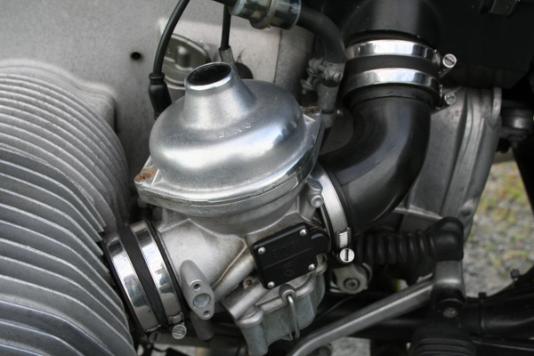
Engine: 2-cylinder 4-stroke boxer engine, OHV
Displacement: 979 cc
Power: 70 hp at 7000 rpm.
No. of gears: 5
Front tires: 3.25 x 19
Rear tires: 4.00 x 18
Tank: 24 liters
0-100 km/h: 4.8 sec.
Top speed: 194 km/h
“Upside”: seating position/ergonomics and brakes
“Downside”: a bit soft fork, and occasionally a bit slow 5th gear