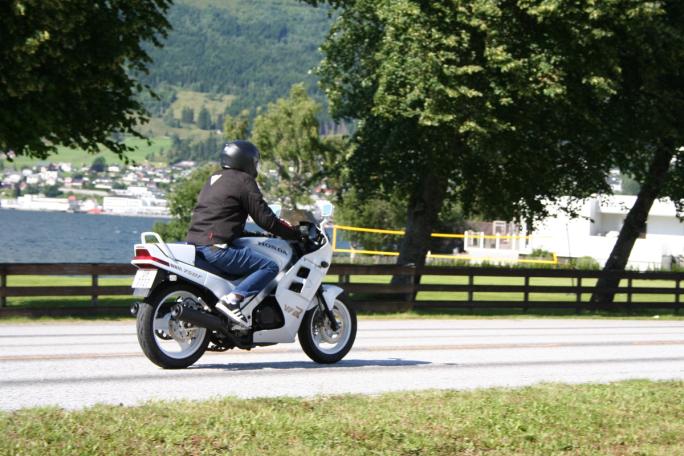
Snipsøyr's Fifty-Seven
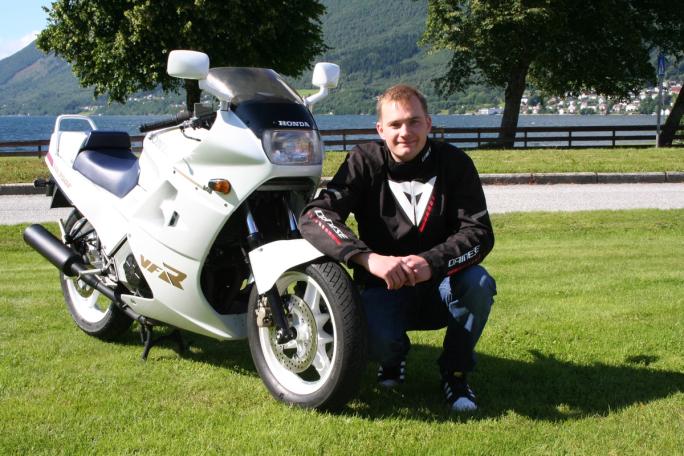
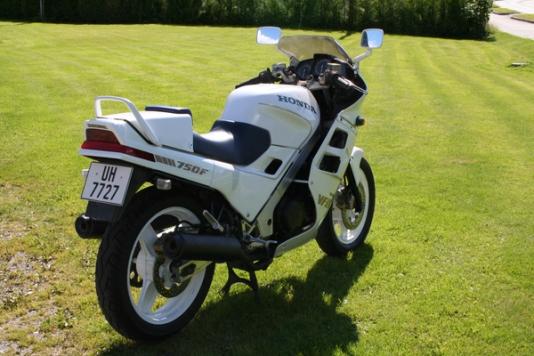
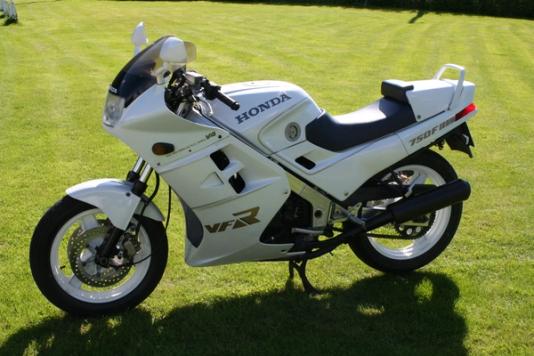
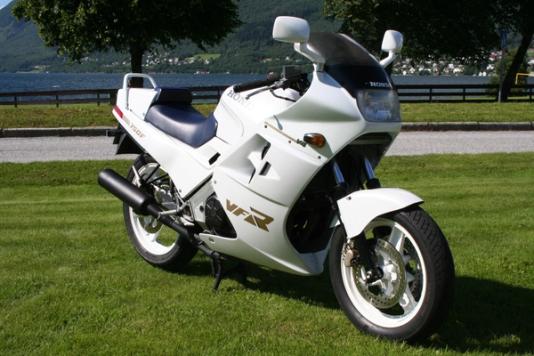
"My godfather had a red VFR like this for many years, and since the first time I saw and heard about it, I had decided that I would have one like this one day," says Mathias Snipsøyr. The young Ørstingen knows how to appreciate his childhood dream, which has now become both complete and polished.
0/0
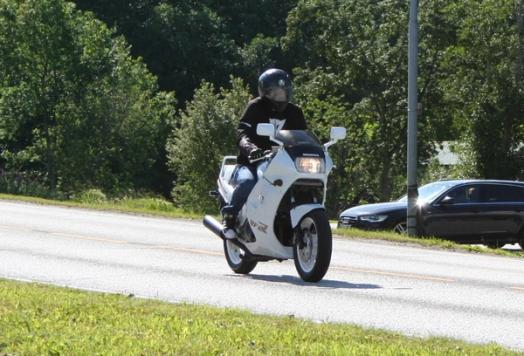
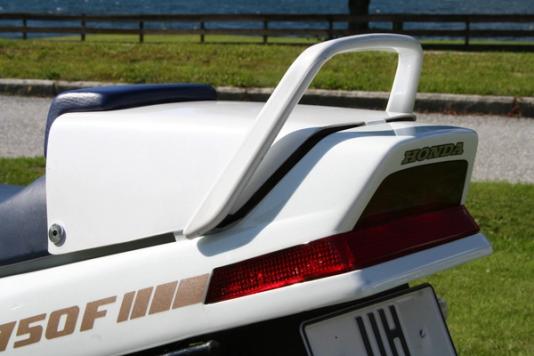
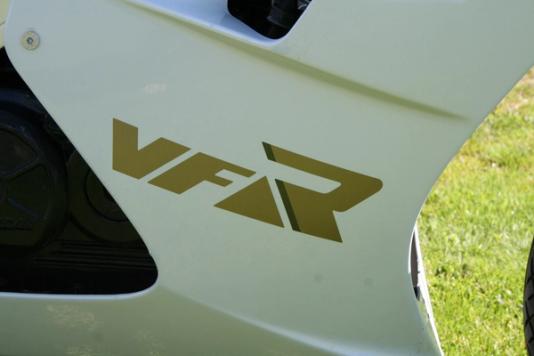
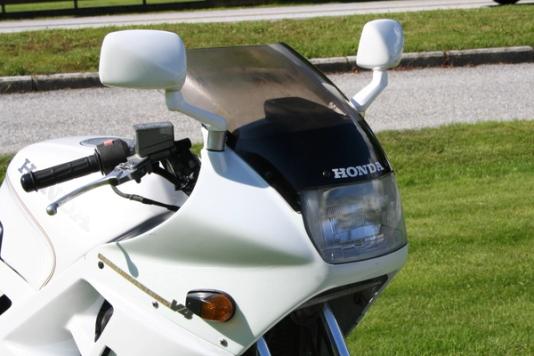
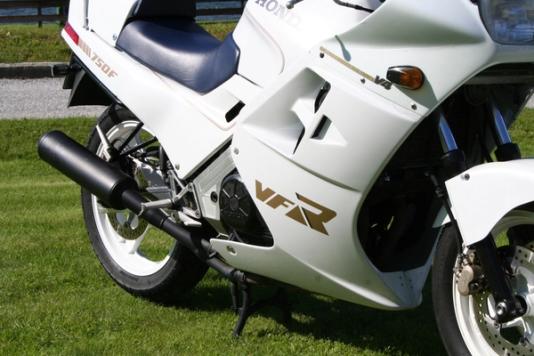
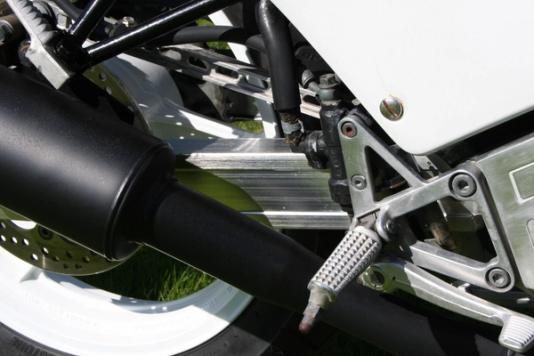
Mathias came across the bike in 2021. At the time, it was well used and needed both parts and work to get back on its wheels. He has invested both time and money in getting the bike in the condition it is in today. The shopping list consisted of, among other things, a saddle, footrests, headlight lenses, tires, clutch, levers, brake pads, and some other small items. In addition, the fairing needed new decals, and not least a coat of paint. Mathias has done all the work himself, with the exception of the paint. The result is a neat and beautiful VFR750 from the first vintage, 1986.
VFR; a term
The following technical solutions were central when Honda Motor Company introduced its new VFR750F sports tourer in 1986: an aluminum frame, anti-dive front forks, gear-driven camshafts and pro-link rear suspension. But there was more, and the model became a trendsetter, not unlike the CB series of its time in the 1970s.
V-engine
Motorcycles with a V-engine were nothing new from Honda when the VFR750F was launched in the fall of 1986. In 1984 the VF series was launched, which consisted of, among others, the VF500, VF750, VF1000F and not least VF1000R, the latter a high-speed locomotive by the standards of the time with a number of "features" in good racing spirit. Now these motorcycles were not an immediate success even though the sales figures were usable.
Oil pressure challenges
This was due to problems with the cylinder heads because the oil pressure was too low. Defective cams and broken camshafts were not what customers had dreamed of when they picked up their new VF from the local Honda dealer. The general perception among motorcyclists was therefore that the VF could not be trusted. Honda resolved the problems through the warranty, but the reputation of the VF series was understandably tarnished. A lot was therefore at stake when the new VFR was ready in 1986. The competitors were breathing down Honda neck, and both Kawasaki GPZ900R, Yamaha FZ and not least Suzuki GSX-R750 were motorcycles that became very popular.
From VF to VFR
With the VFR750F, Honda left most of the problems of the VF series behind. The engine had received necessary improvements to the lubrication system, and a number of technical features that were not found on the old series, with some exceptions on the VF1000R, were now the core of the new sports tourer. The model had an aluminum frame, which saved weight while being torsionally stable. The dry weight was down to only 198 kg. The suspension was improved with a powerful pro-link at the rear and anti-dive at the front.
Drive instead of timing chain
The “power plant” itself, the V4 engine, had a drive transmission between the crank and camshaft, unlike the old VF engine which had a timing chain. The drive transmission was far more precise and required minimal maintenance. The experience with this solution came from the VF1000R, and was thus adopted on what would become a volume seller in the sports touring segment, the VFR750F. On the “outside”, the newcomer was neatly dressed in an aerodynamic full fairing which was important for the handling characteristics at higher speeds.
Sports touring
Comparing the VFR750F to the old VF750F, we are really talking about two different motorcycles, with little in common. The newcomer's chassis, center of gravity and steering geometry placed it in the top echelon of contemporary sport tourers. The brakes and suspension are completely up-to-date, and the full fairing is no exception.
Strong, stable and easy to drive
The wheelbase was shorter than the old VFn, and the VFR proved stable and easy to drive, regardless of speed. With 105 hp, it was good for a top speed of almost 240 km/h, where the brute-force V4 engine offered solid traction throughout the rev range.
Technical data Honda VFR750F, 1986:
Engine: 90 degree V4, 4-stroke, 4 valves per cylinder, liquid-cooled
Displacement: 748 cc
Compression ratio: 10.5:1
Power: 106 hp at 10500 rpm
Carburettors: 4 x Keihin 34.5 mm
No. of gears: 6
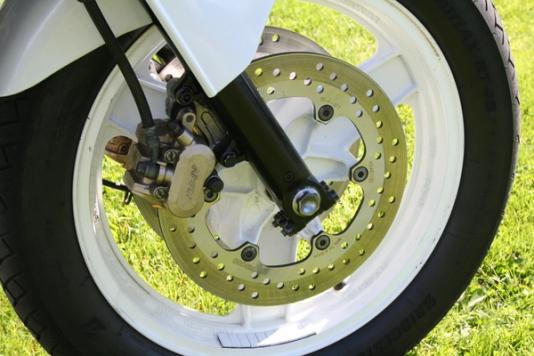
Front brakes: Dual 276 mm perforated discs
Rear brakes: Single 256 mm perforated disc
Front tires: 110/90xV16
Rear tires: 130/80xV18
Tank: 20 liters
Weight: 222 kg
Top speed: 237 km/h