
The Shed in Milwaukee; Harley-Davidson's cradle
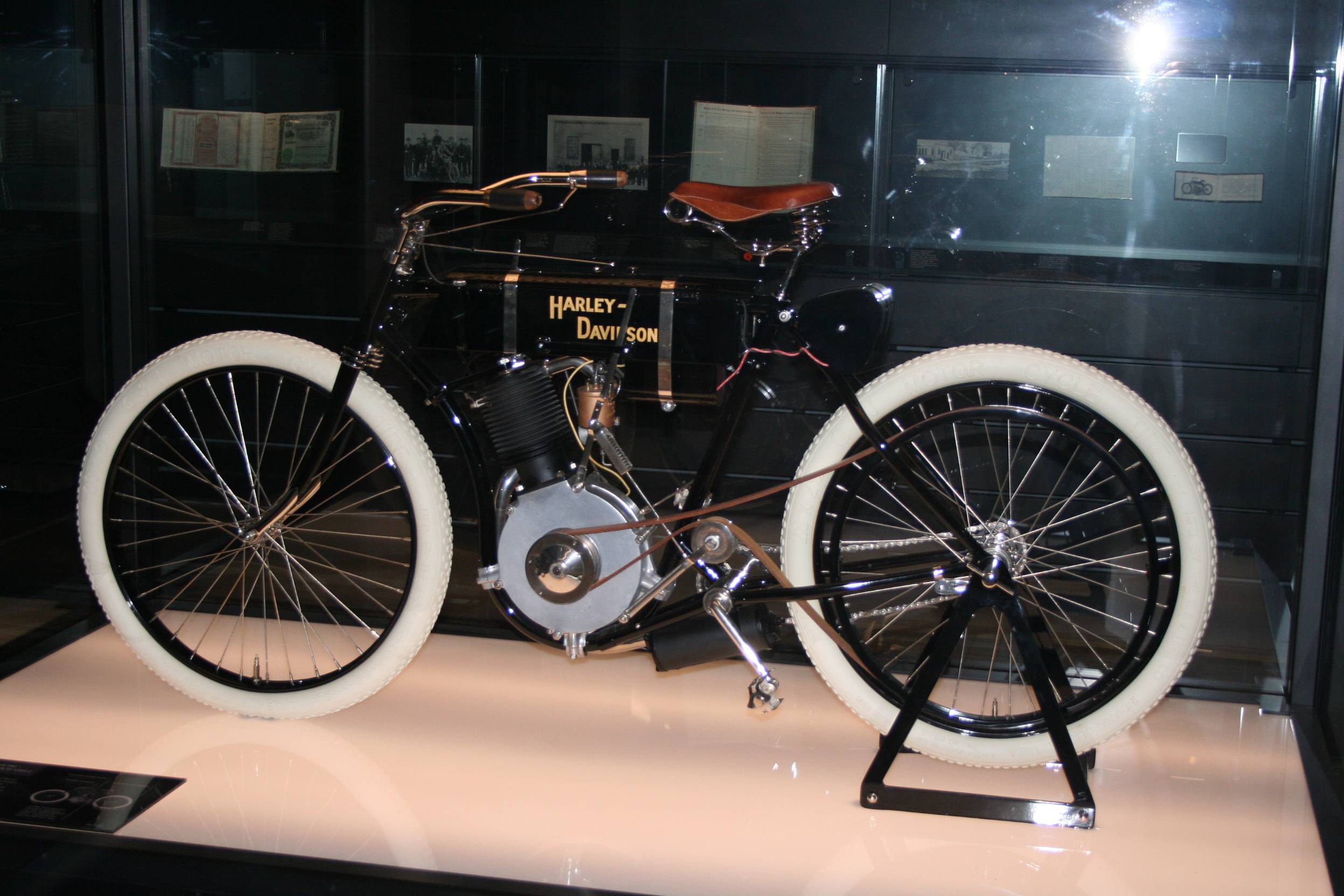
- In 1903, Harley-Davidson's first motorcycle, the Number One, was released. It was equipped with a 405 cc, single-cylinder IOE engine with an output of about 3 hp. It reached a top speed of about 56 km/h. The retail price was $200.
The origin of Harley-Davidson requires insight into the thoughts, ideas and, not least, social conditions that prevailed in America just before the turn of the 20th century.
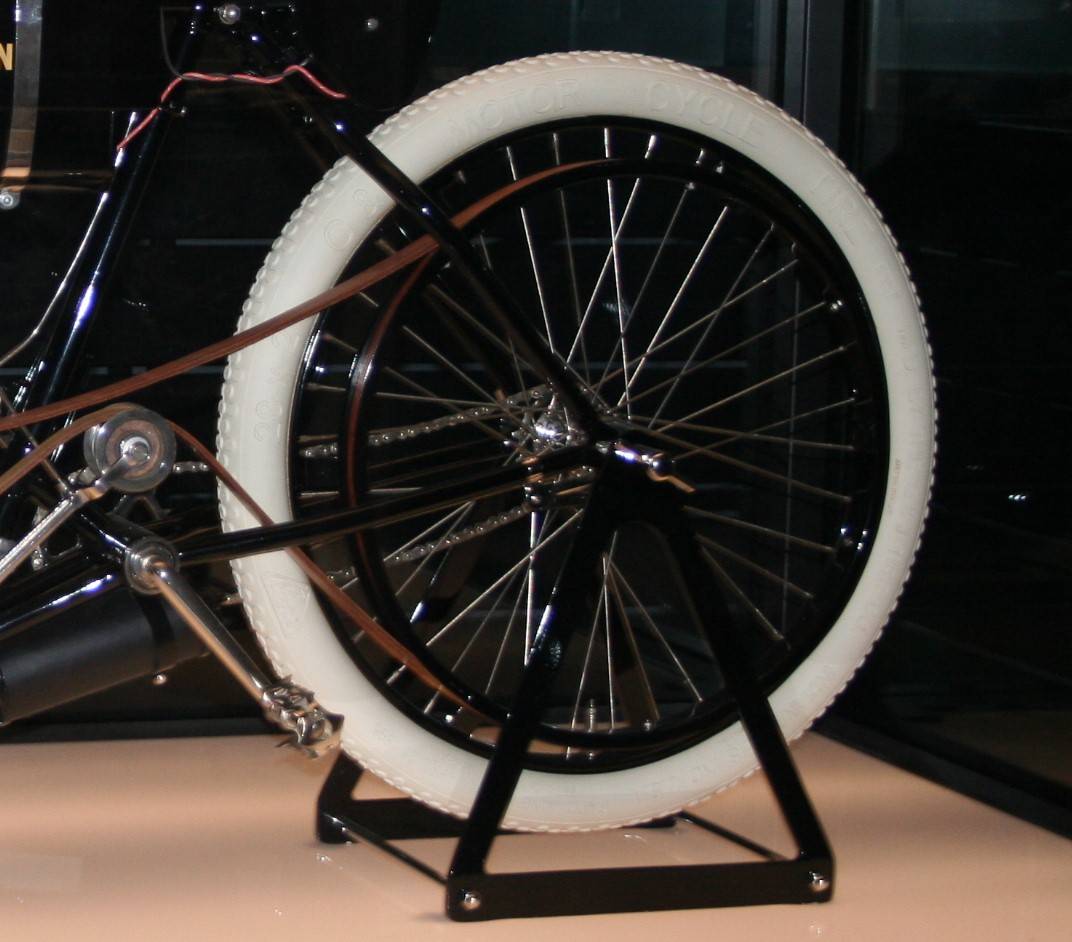
- Pedals with power transmission via chain to the rear wheel showed that the Model One had affinities with traditional pedal bicycles.
The land of opportunities. The American Civil War (1861-1865) cost Americans a lot of suffering, and left its mark on the development of society. When the war was over and slavery was officially abolished, the economy grew steadily, and at the beginning of the new century America was in the industrial leadership seat. The economy, which was a typical agricultural economy, produced a surplus, and paved the way for extensive industrialization. The country had what it needed. Raw materials, resources and risk capital were on the doorstep, and with young people, often descendants of European immigrants, characterized by an entrepreneurial attitude, the conditions were ripe for inventions and subsequent businesses of various kinds.
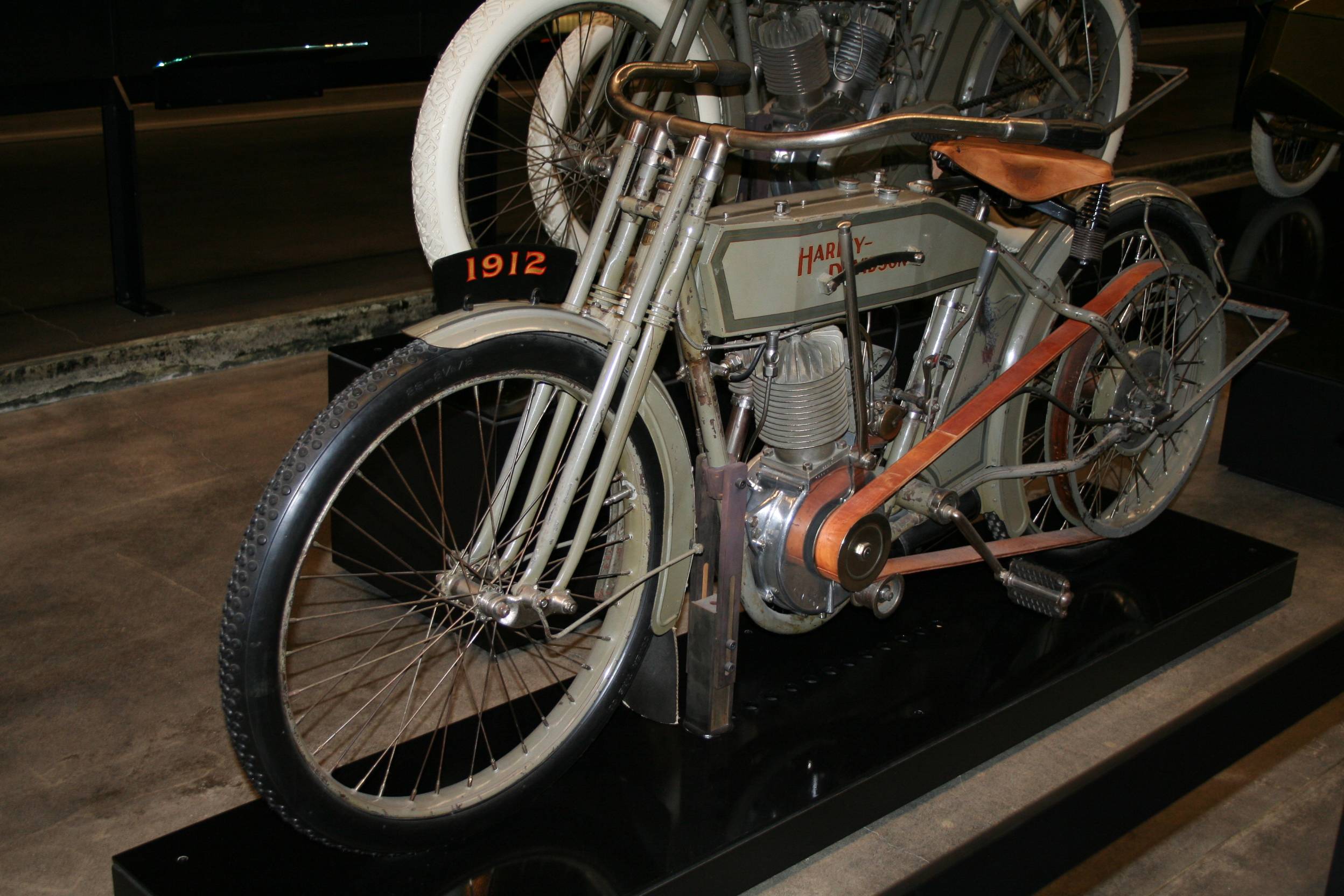
- Harley-Davidson used a belt drive on the rear wheel from its inception in 1903 until 1913 when the first models were equipped with a chain.
From pedal bikes to motorcycles. With a growing working class, and a gradually growing middle class, as well as economic growth, a market for various goods and services emerged. De Dion's gasoline engine, which was now under development, was proof that something was afoot, but mass production of gasoline-powered vehicles was still some way off. Horses and carts had long been the dominant means of transportation, in addition to an increasingly extensive network of railways. For most people in towns and cities, pedal bicycles were also popular, and here lay the key to what would become the motorcycle brand and industrial adventure Harley-Davidson . The motorcycle was a further development of the pedal bicycle, something that the first models that were released shortly after the turn of the century bore the hallmarks of. In many cases, they were pedal bicycles with an auxiliary engine that the owner could assemble himself. Harley-Davidson was, like many of its competitors, a pure motorcycle, but of course very simple in its construction.
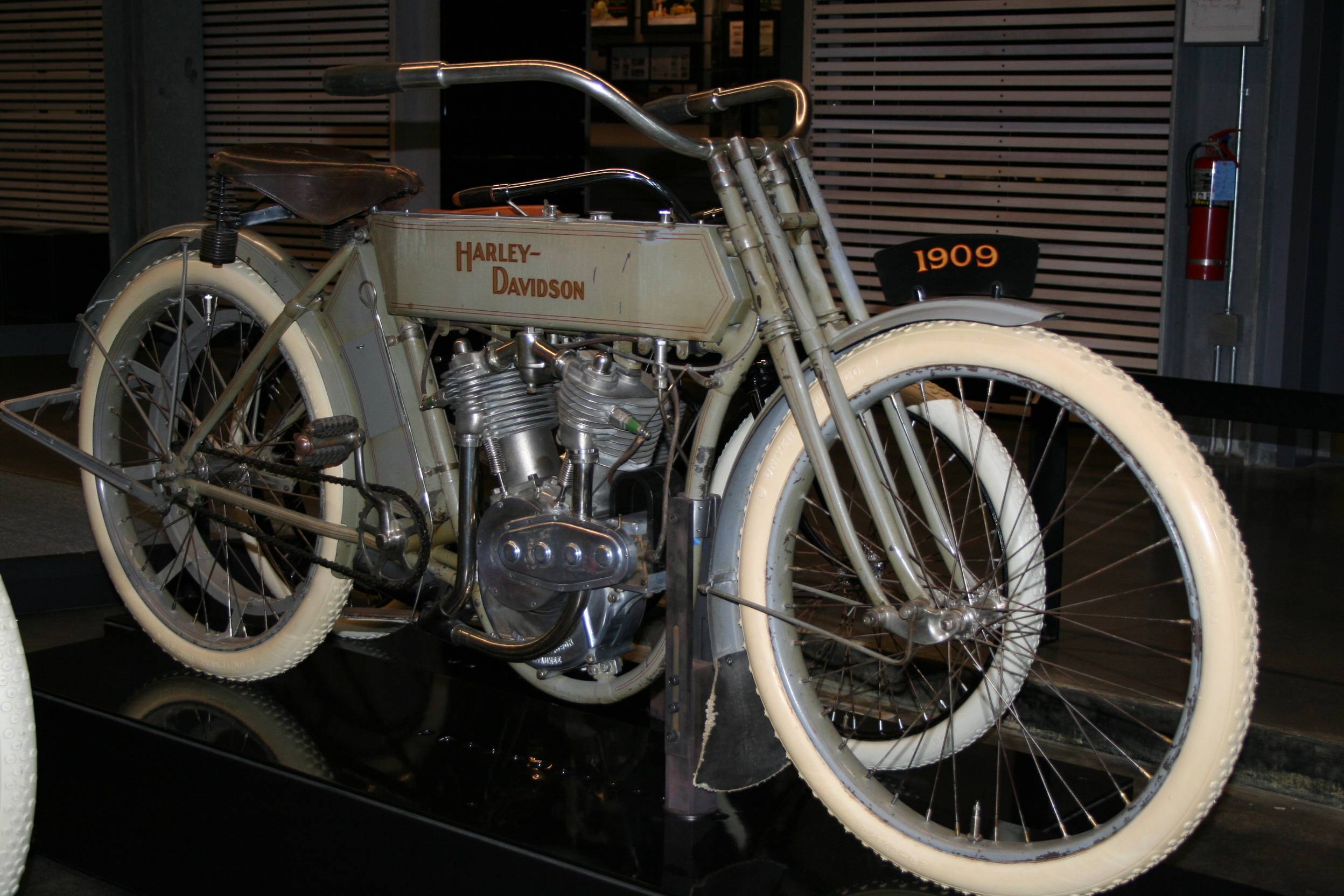
- The first V-twin, the Model 5D, was introduced in 1909. It showed a number of weaknesses, and Harley-Davidson eventually took the model out of production to improve it.
The boy from Gjøvik. Ole Evinrude (1877-1934), or Ole Andreassen Aaslundeie as he was born, was born on a farm in Vardal just outside Gjøvik in 1877. The family emigrated to America in 1882, and settled in Wisconsin. The young Ole showed an early talent for technical devices. He would play a central role in getting Harley-Davidson on wheels, but he is best known for the invention of the outboard motor that made the Evinrude name known to boat owners all over the world. Harley-Davidson was founded in 1903, but two of the founding fathers, William S. Harley and Arthur Davidson, had a prototype ready as early as 1902. However, they were not alone in getting the two-wheeler up and running, and with the help of Ole Evinrude, they solved the carburetor problem. Getting a working mixture of air and gasoline in the correct ratio with the materials and technology of the time was really an achievement in itself. Then Ole Evinrude's name would also become world-famous for the invention and production of outboard motors.
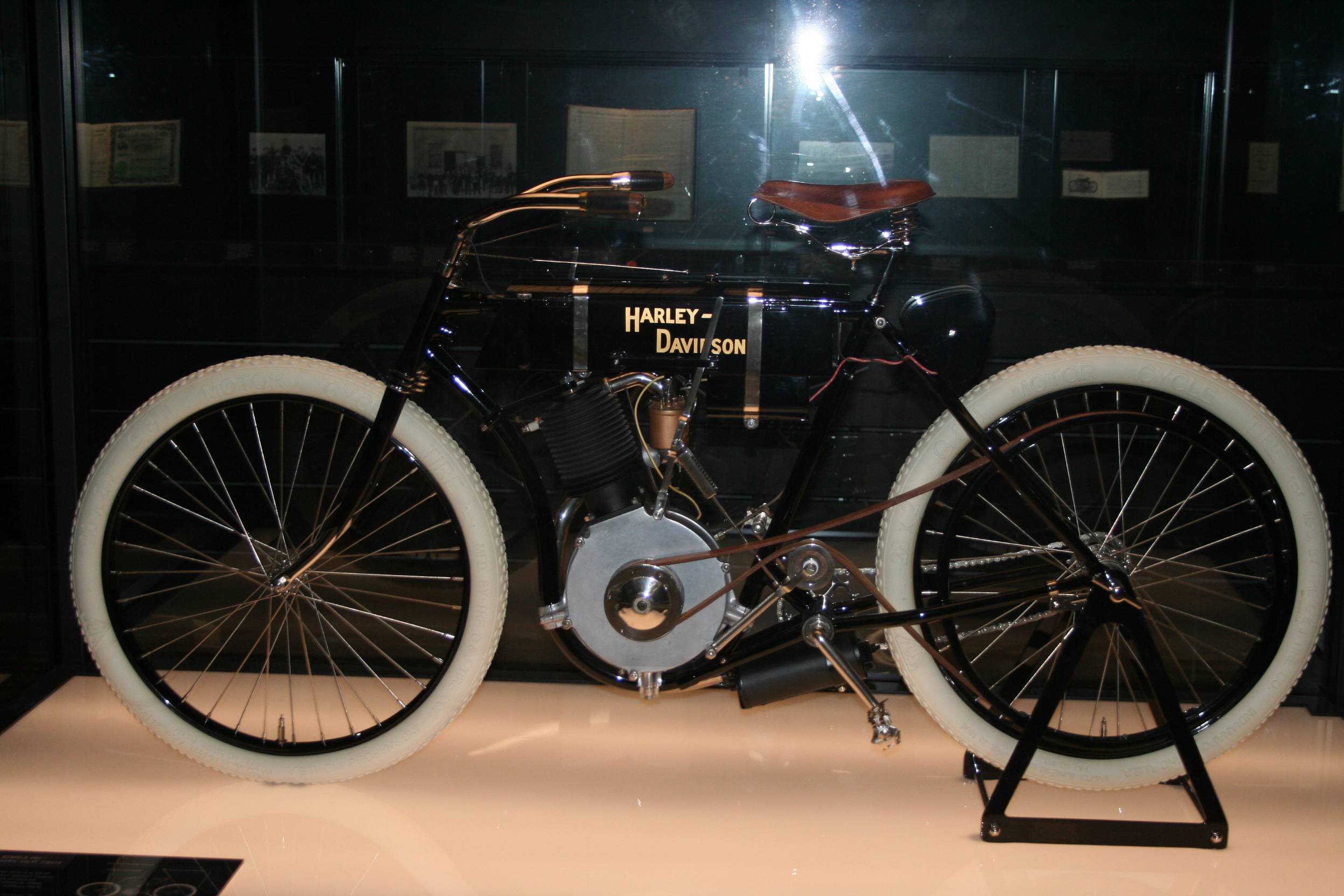
Model One in 1903. Inspired by the work on the prototype and great faith in their success, they led to the founding of Harley-Davidson in 1903, and in the same year the first motorcycle was released, which was given the model designation "Model One". It was very simple in its construction and was powered by a 1-cylinder engine of 405 cc. The famous V-twin that has been almost synonymous with Harley-Davidson and the iconic Big-Twin did not enter production until 1911, because the first twin that saw the light of day in 1908 was quickly found to be too problematic and was thus put on hold.
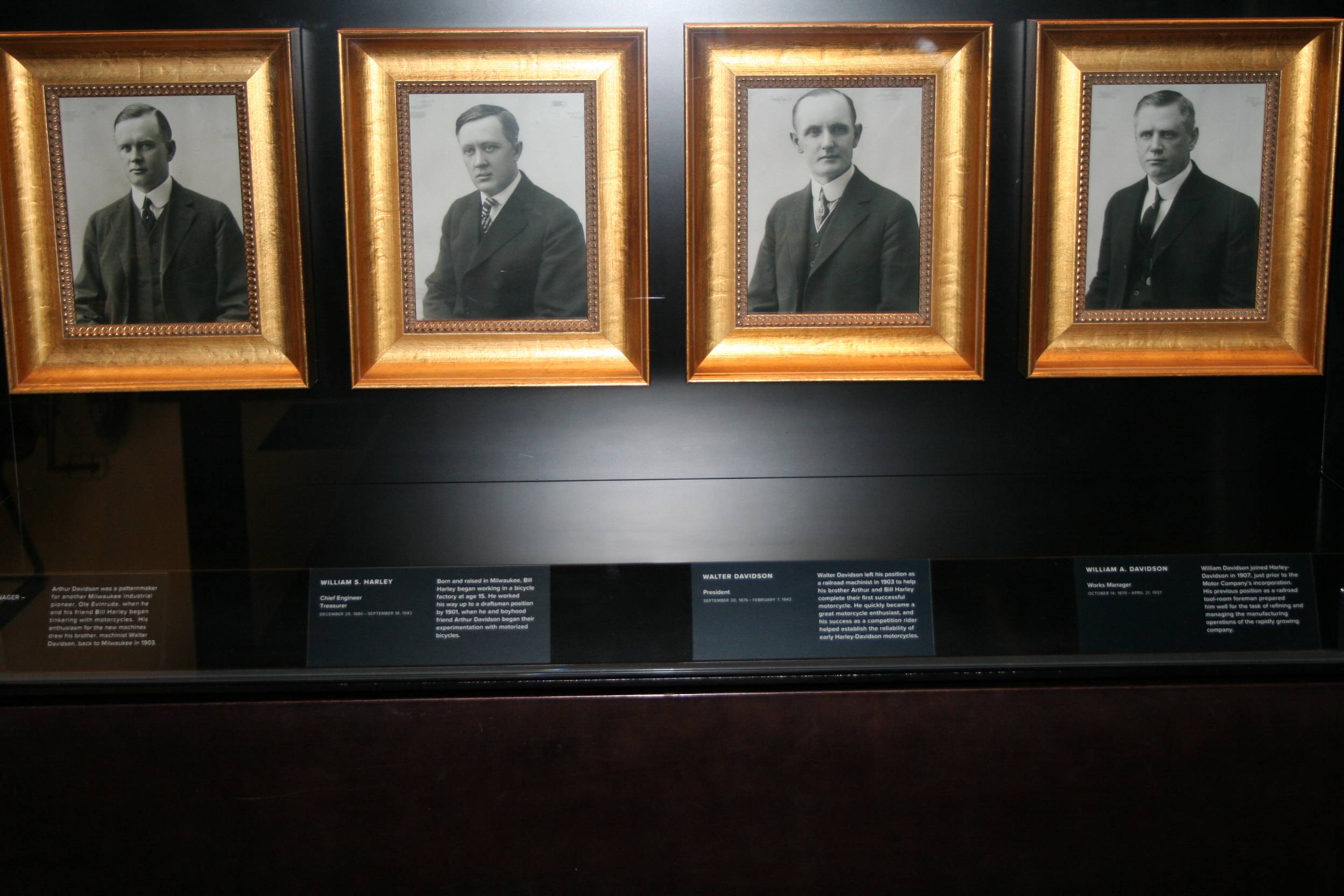
- Founders and pioneers. From left: Arthur Davidson, William S. Harley, Walter Davidson and William A. Davidson
The Four Pioneers. Little did the four founders know that the motorcycle brand they established would become one of the world's most famous brands, achieving almost iconic status. It all started in The Shed, which was a small wooden cabin measuring 3x5 meters, and here the first commercial model, the Model One, saw the light of day. The four founders were Arthur Davidson (1881-1950), William S. Harley (1880-1943), Walther Davidson (1876-1942) and William A. Davidson (1870-1937). All were descendants of immigrants from Europe, and all carried an optimism and creative power that would establish one of the most famous and iconic motorcycle brands of all time. Only 3 copies were produced in 1903 and 3 copies in 1904. The first years in The Shed were characterized by the development and testing of one and the same model, and they had a strong focus on building a reliable motorcycle.
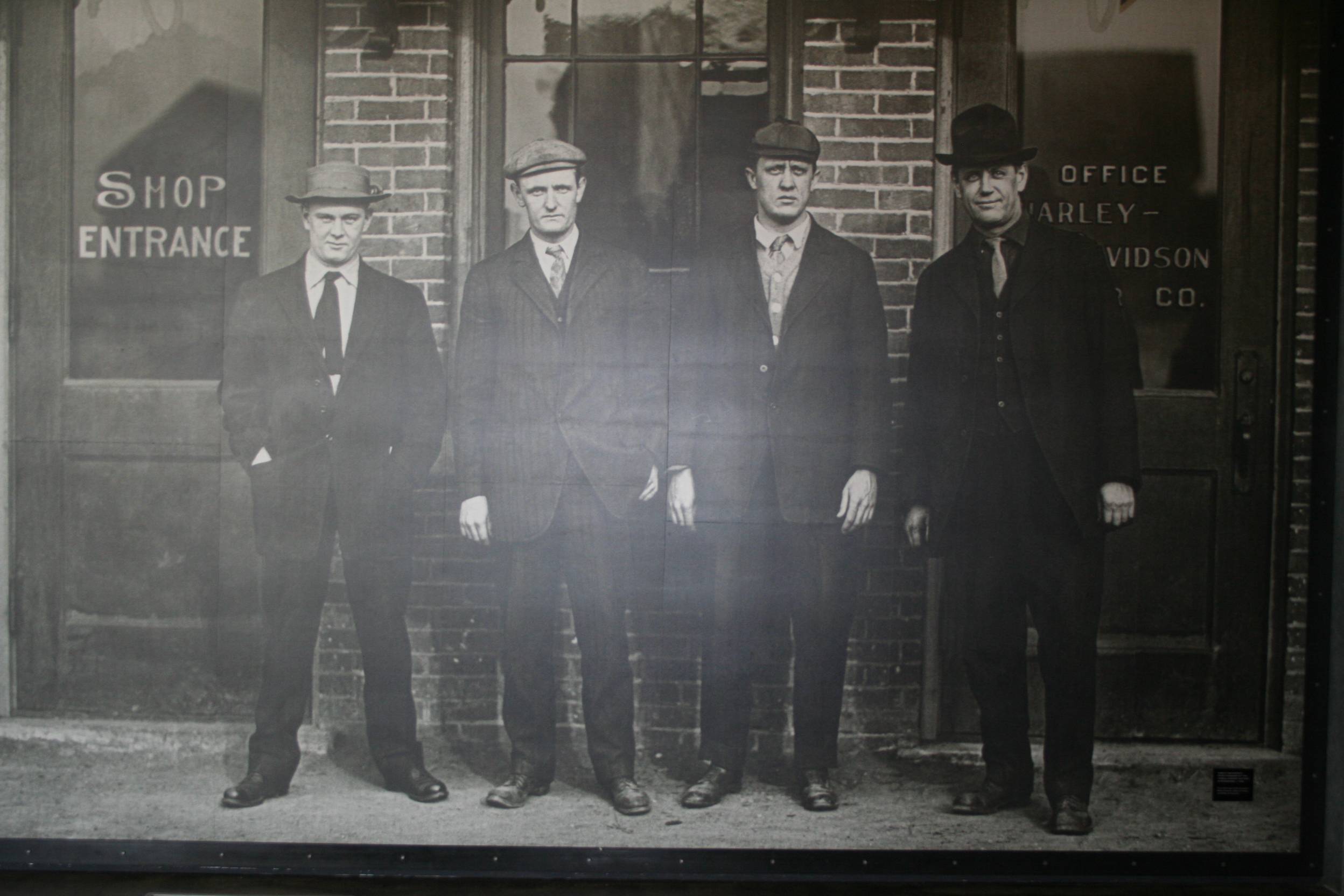
- The four young men who established Harley-Davidson in Milwaukee in 1903
The competitors. The four young men who worked in the small wooden cabin in Milwaukee were not alone in building motorcycles, however. In the surrounding cities along the Great Lakes, a number of motorcycle brands popped up. The fiercest competitor to Harley-Davidson was undoubtedly Indian , which was founded in 1901 and was located in Springfield, Massachusetts. But there were more, and Henderson , Pope, Flying Merkel, Thor, Excelsior , Cyclone were to be counted. The motorcycle was for many an affordable alternative, and even though Henry Ford's Model A was available from 1903, motorcycles were cheaper to purchase and easier to maintain.
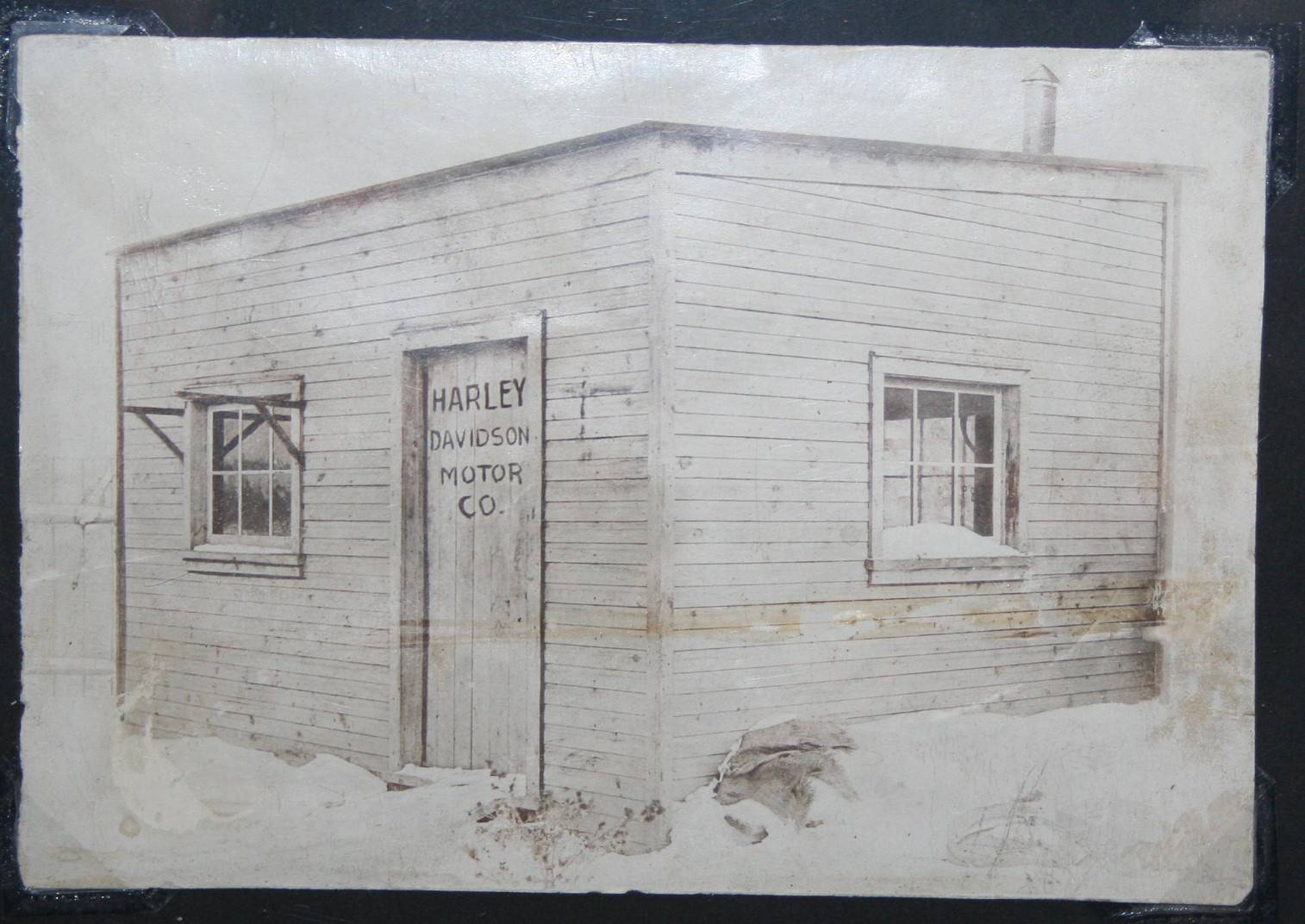
- The Shed was where the first Harley-Davidson model was manufactured. The building measured just 3x5 meters. In the early years, only a handful of motorcycles were built here. In 1906, Harley-Davidson opened a new and modern factory on Juneau Avenue. This was a major boost for the four founders, partly financed by a loan from the uncle of the three Davidson brothers, James McLay
Road, not racing. At the beginning of the 20th century, the velodromes, or "Murderdromes" as they were often referred to in the contemporary media due to the ugly fatal accidents, attracted large crowds. They came to watch bicycle races, which had a high status. Soon, motorcycles would take over the velodromes, and things gradually took off. Several of the motorcycle manufacturers threw themselves into the competition for the most prestigious trophies, but Harley-Davidson was not tempted for the time being. The focus of the four young men was on producing reliable and affordable motorcycles for the common people. Contemporary motorcycles had little sound insulation and made a relatively high noise level. Harley-Davidson wanted to counteract this, and referred to its models as "The Silent Grey Fellow".
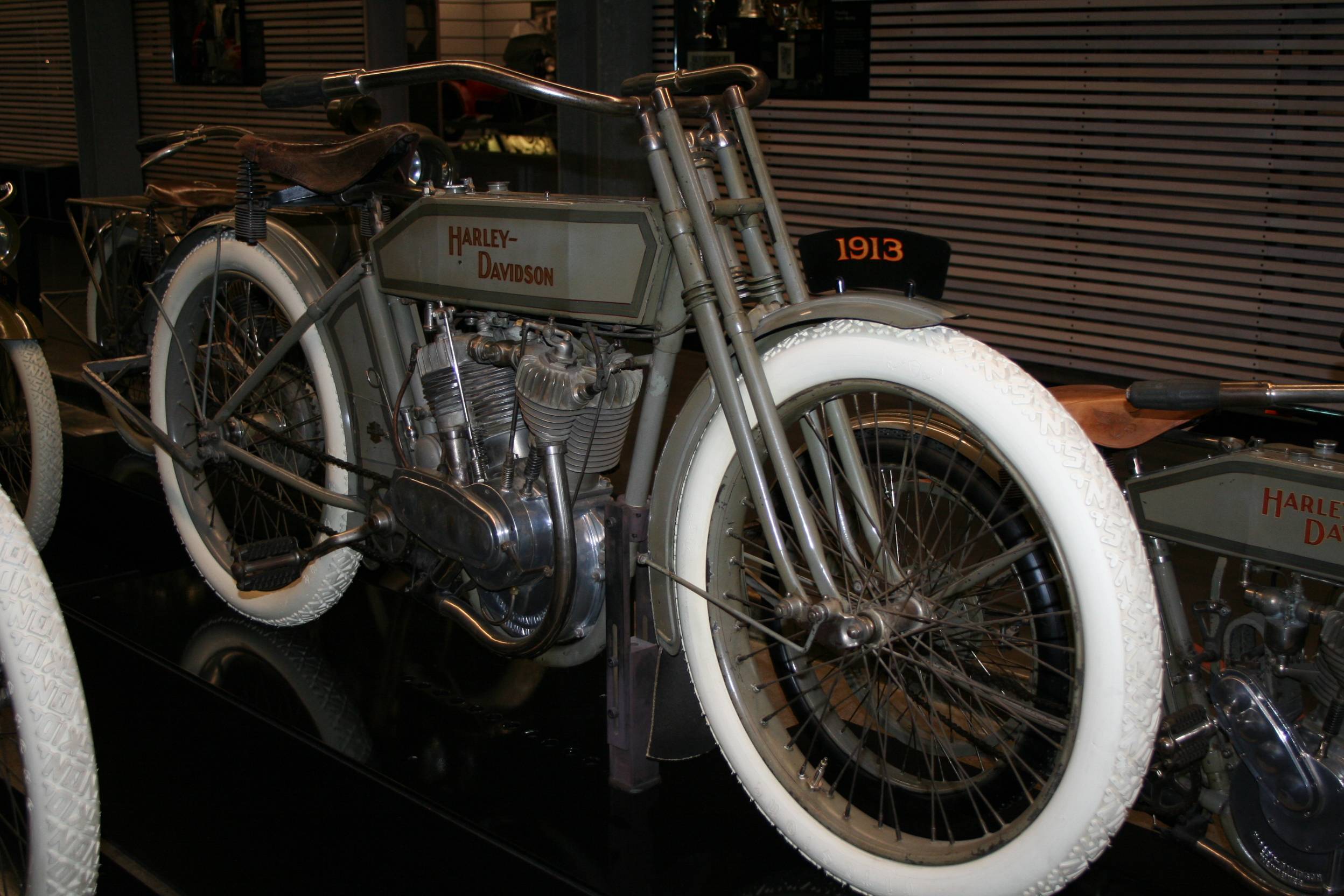
- The Silent Grey Fellow was painted in the color "Renault Grey". Contemporary advertising from Harley-Davidson described it as "clean and quiet. That is, it did not leave oil spills on the ground, and that it made minimal noise with the help of an effective muffler.
The hunt for pr. Eventually, however, the occasional race was run, but it was privately run, not as part of a factory team. Indian on the other hand, saw the value of investing in its own racing team, precisely because the brand received great exposure, and especially if it achieved a podium finish, which it often did.
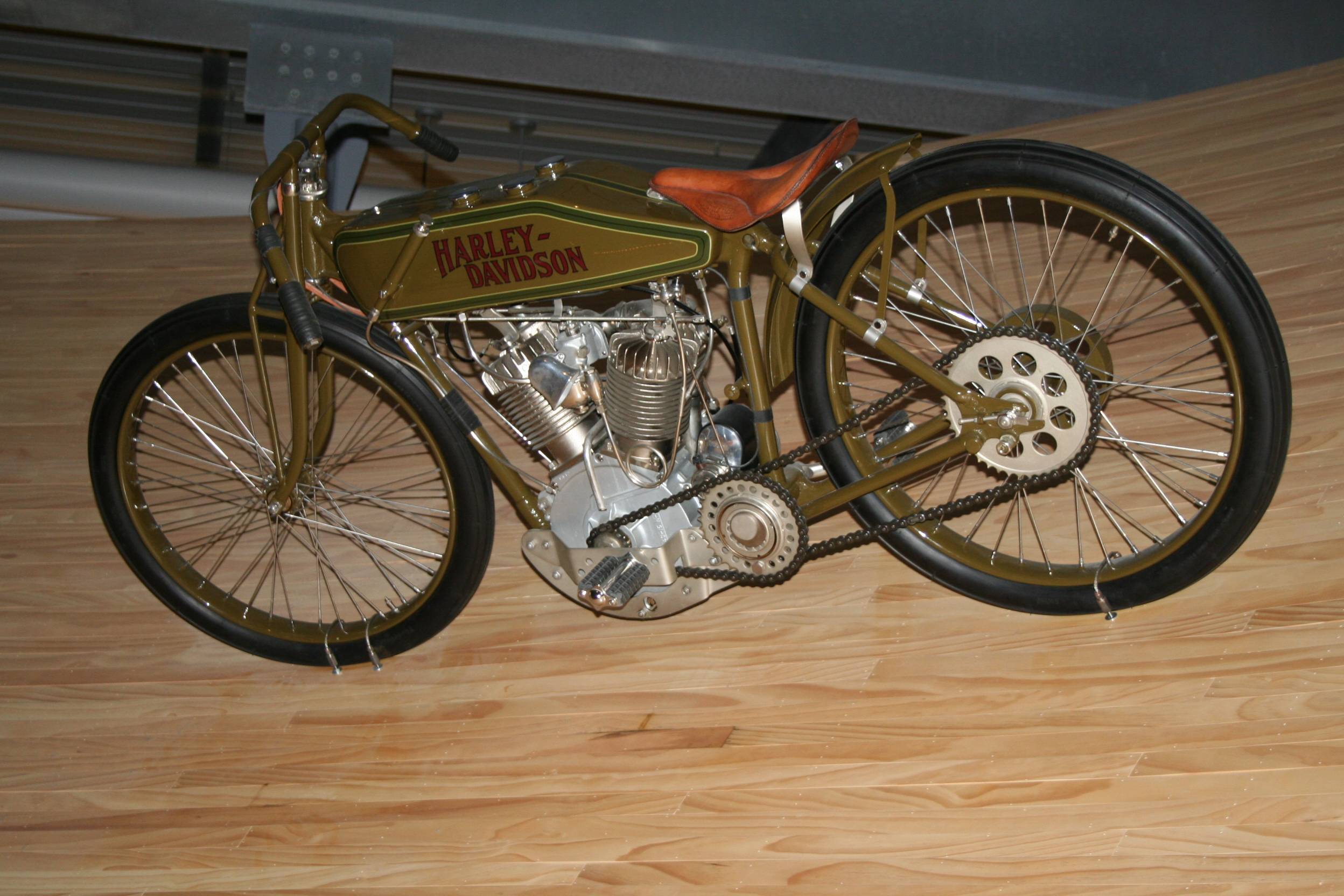
- When Harley-Davidson finally decided to focus commercially on racing in 1915, and established its own factory team, its competitors had a tough challenger. Now Indian in particular was going to have to compete.....
Factory team. In Milwaukee, this eventually became such a big challenge that in 1915 a separate factory team was set up. They literally had to get on the track. Until then, Arthur Davidson had, privately, participated in a number of competitions, and achieved several good positions. Harley-Davidson's home-built racers had what it took to assert themselves at the top, and they simply could not let the publicity of winning on the board track go to waste. In Milwaukee, they now went "all in" and invested heavily in the production of potent and reliable motorcycles, for both road and race. It was ready for the almost unbeatable factory team that went by the spectacular name "The Wrecking Team". The hunt for Indian was on, and the rest is history.