
Yamaha RZ 201 CCR
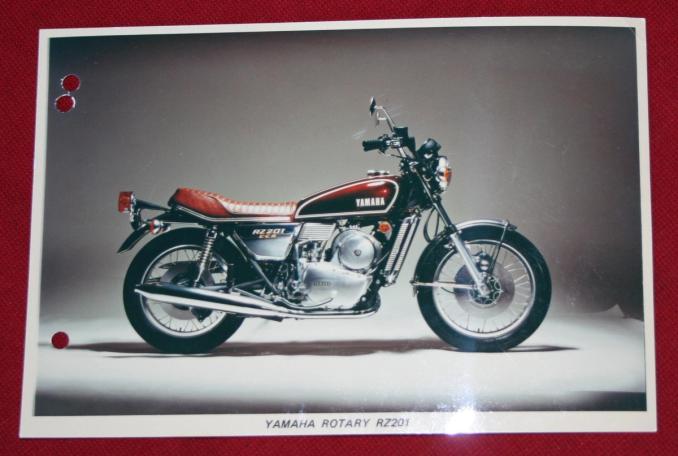
Photo: Yamaha Motor CO LTD
By the early 1970s, building rotary-powered vehicles was not uncommon. Suzuki's rotary-powered motorcycle, RE5 Rotary, was put into commercial production, as was Hercules W2000, and the Van Veen OCR 1000.
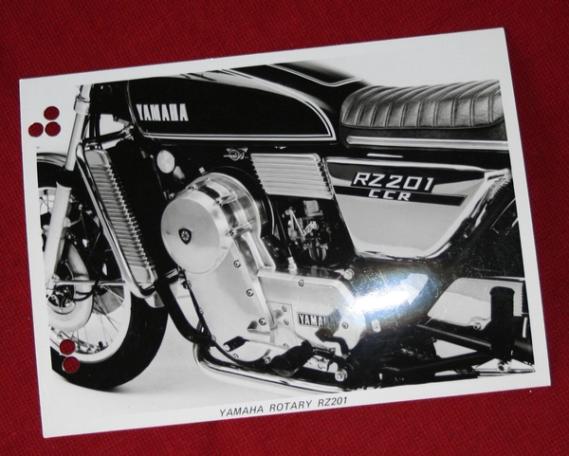
Yamaha , who really had the prerequisites to master Felix Wankel's somewhat demanding patent, only built a few copies of the model, which was called the RZ201 CCR. They did so, but only to show the outside world that they could also master this somewhat odd technology. However, they had no commercial interests in such a motorcycle, even though the press release ahead of the presentation suggested something completely different. The RZ201CCR disappeared as quickly as it appeared.
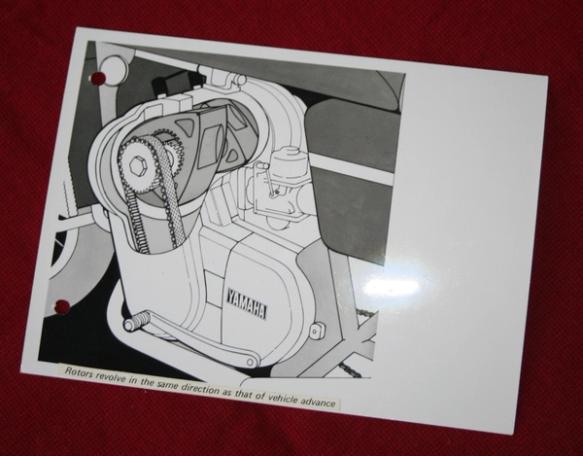
660 cc 2-chamber Wankel engine
Few motorcycles created such a stir as Yamaha RZ201 CCR when it was unveiled at the Tokyo Motor Show in 1972, and the press release that the factory sent out used big words: "At a time when cars with Wankel engines are experiencing a sales boom worldwide, it is only a matter of time before motorcycles with Wankel engines do the same. Now Yamaha Rotary RZ201 has made its sensational debut. The water-cooled, two-chamber Wankel engine that rotates in the direction of the motorcycle's movement is a hallmark of Yamaha 's high technological level. The motorcycle with this sensational technology is now introduced as the RZ201. In retrospect, these were big words from a major manufacturer, but the reality was probably different. It should be said that both Mazda and NSU offered Wankel-powered cars, and there were a few motorcycle manufacturers that also used Wankel engines, including Hercules and eventually Suzuki , which with its twin-chamber Wankel RE5 can be said to be the one who took this technology from the prototype stage to commercial production.
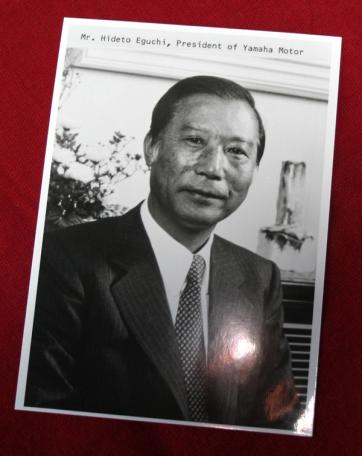
Mr. Hideto Eguchi, President at Yamaha Motor
The project, codenamed YZ587, was so secret that even Yamaha employees were left speechless when they saw the bike on display at the trade show. At the beginning of the 1970s, several different prototypes were made at Yamaha , including a 4-cylinder, water-cooled 2-stroke model called the GL750. The 4-stroke twin TX 750, which passed through the prototype stage and went into production, was also one of the many projects. The TX 750 was a great motorcycle with lines very similar to those found on the RZ201 CCR, and many of the parts found on the TX came from the RZ201 CCR.
The prototype used parts from Yamaha's own twin, the TX750
As previously mentioned, the development work with the RZ201 CCR was kept strictly secret, and the project, which was actually a purely technological "show off", led to Japan's first Wankel-powered motorcycle. Yamaha had entered into an agreement with the German NSU / Wankel in the early 1970s, and could thus use the Wankel principle. The engineers at Yamaha now got to frolic together with the engineers at Yanmar Diesel, a company that had also acquired the rights to produce the Wankel engine through a contract with NSU / Wankel.
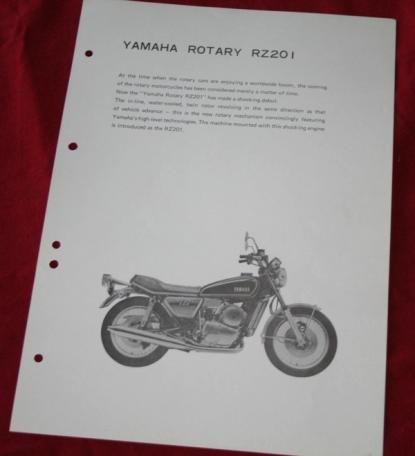
Yamaha's Wankel-powered RZ201 had a lot in common with the TX750 twin
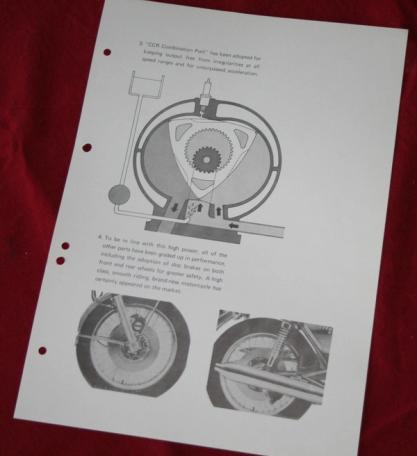
The Wankel engine that the two companies built on the premises of Yanmar Diesel used a number of technically advanced solutions, including both oil and liquid cooling. CDI ignition was a given, as was electric start. The model's full name was RZ201CCR/OCR, where the letters CCR stood for Charged Cooled Rotor and OCR stood for Oil Cooled Rotor. The engine was a so-called two-chamber Wankel, where each chamber, or cylinder if you will, was 330 cc. The rotors moved forward in the direction of the bike's speed, which was beneficial for avoiding unbalanced lateral forces when the throttle was applied. A complicated and technically advanced valve solution contributed to even thrust throughout the entire speed range. Other smart solutions included CCR, or Charged Cooled Rotor, where oil was mixed with fuel and oxygen and then injected into the combustion chamber. This made oil coolers redundant and provided sufficient cooling effect so that the engine could be designed relatively narrow, which was appropriate in a motorcycle.
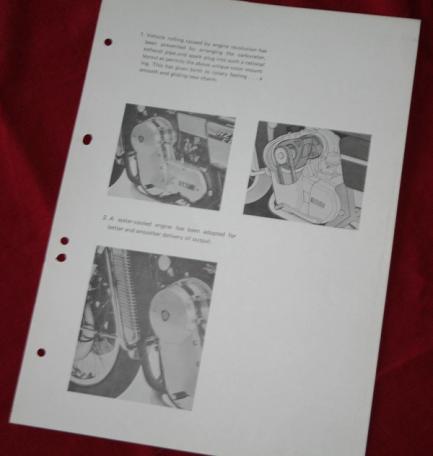
Images from a very unique material; the press kit that was sent out in 1972
The designers at Yamaha worked closely with the engine engineers, and together they created a motorcycle that was considered very successful. The soft rounded lines and not least the proportions were well-coordinated, and although the RZ201 CCR never reached the assembly line, the design was, as previously mentioned, transferred to the production model TX750 which was developed in parallel with the RZ201 CCR. It is worth noting that the design received so many compliments at the Tokyo show that a whole motorcycle press was convinced that the RZ201 CCR was more than a prototype. Surely it was impossible not to produce such a perfect and expensive machine?
Yamaha RZ201 was equipped with both liquid cooling and oil cooling
The answer was as simple as logic. Yes, it was possible not to put it into production, in short, because Yamaha had only one goal in mind with this motorcycle; to show the whole world that they had mastered advanced technology and that their level of knowledge was both high and broad. And, a couple of copies were enough. However, prior to the display of the RZ201CCR, Yamaha Motor Company released this press release, the content of which gave a clear expectation that the RZ201 CCR was immediately ready for production.
"We, Yamaha Motor Company, have been putting all our efforts into developing new types of motorcycles through research and development. In the case of this project, the focus has been to demonstrate that the Wankel engine is appropriate and applicable to motorcycles. Therefore, we have high expectations for the project as stipulated in the agreement signed on September 28th between NSU /Wankel and the head office of Yamaha Motor Company with the aim of developing a full-scale production of Wankel engine motorcycles. The contract was signed by Mr. Hisao Koike, senior director of Yamaha Motor and Dr. G. Henn and Dr. A. Gerber of NSU /Wankel. The content of the contract stipulates the following terms:
- The Wankel engine can only be used in motorcycles.
- The engine power should be between 20 hp and 80 hp.
In light of the contract's content and intentions, we have decided to introduce the prototype equipped with Yamaha Wankel Engine RZ201 CCR at the 19th Tokyo Motor Show. We expect to market the production model in the near future.”
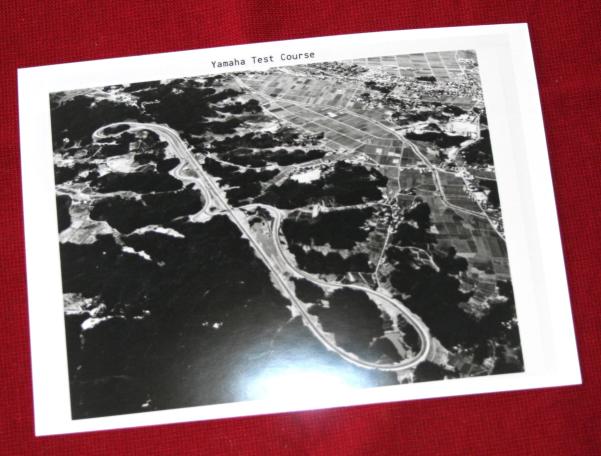
Yamaha's test track
- Technical data Yamaha RZ 201 CCR, 1972 model:
- Engine: 2-chamber Wankel, water-cooled
- Power: 68 hp at 6500 rpm.
- No. of gears: 5
- Ignition system: CDI
- Lubrication system: Autolube
- Front tires: 3.50 x 19 4PR
- Rear tires: 4.00 x 18 4PR
- Length: 2195 mm
- Width: 910 mm
- Wheelbase: 1485 mm
- Weight: 220 kg
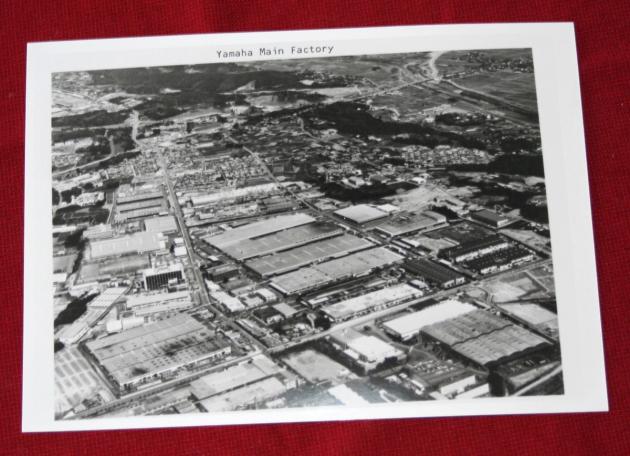
Yamaha's main motorcycle manufacturing plant