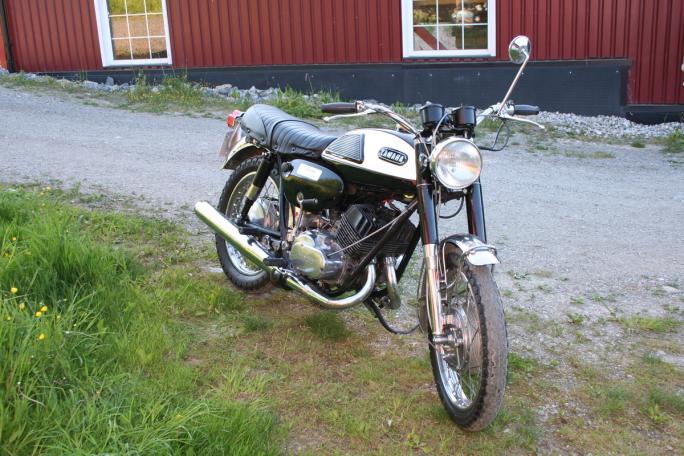
Yamaha R3-350
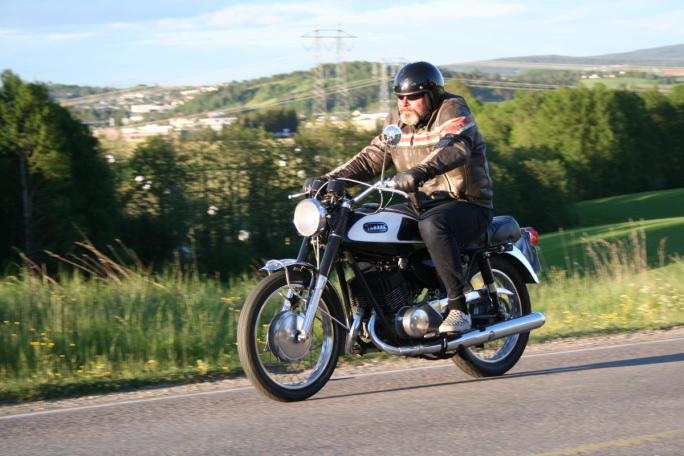
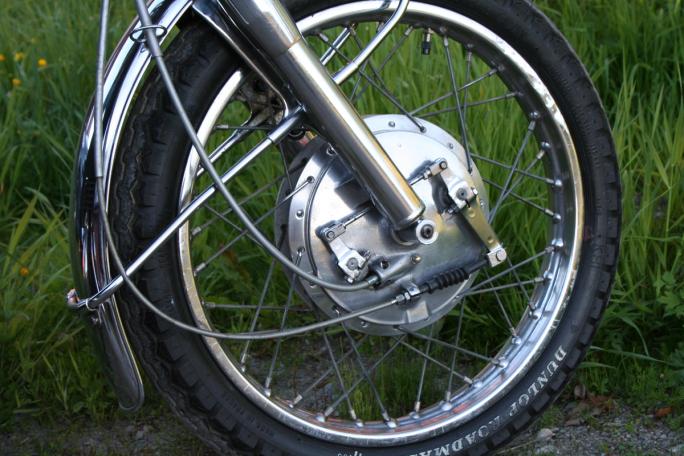
The 1960s were the heyday of the small 2-stroke, and there were many manufacturers competing for the attention of customers. The European brands Tempo , Jawa and DKW were big players in the 2-stroke segment, until the Japanese motorcycles stormed forward with their fast and modern machines, and almost took over the entire market. One of these small Japs is the now rare Yamaha R3 on 350 cubic.
The story behind Yamaha R3 began with Yamaha factory's goal of creating a motorcycle that could compete with Honda's 4-stroke CB72. The 1960s were the age of the twin, and the English motorcycles were still selling well. The Japanese motorcycle manufacturers also focused on the 2-cylinder models, and Suzuki and Yamaha in particular focused on 2-stroke engines. However, there were now some concerns among the various manufacturers of the 2-stroke twins. The concerns did not concern the environmental perspective, which came first after the Yom Kippur War and the oil crisis in 1973, but more about the technical challenges that the 2-strokes could experience.
Heat and vibrations
Large 2-stroke twins struggled with overheating and vibrations, and although DKW had been reasonably successful with its post-war bikes, these had far too little power. Now neither Yamaha , Suzuki nor Kawasaki were intimidated by claims and assumptions, and Suzuki experienced great success with its 250cc T-20. Kawasaki's 350cc A7-Avenger was no slouch in traffic either. These small 2-stroke twins quickly became popular, and could easily compete with European 500cc and 600cc 4-strokes.
Honda CB72
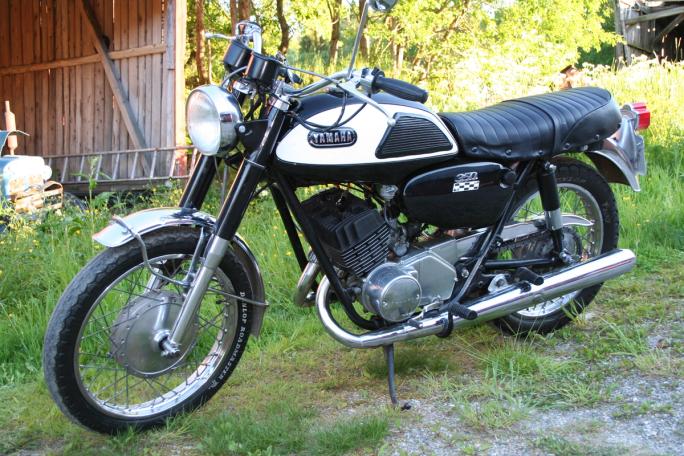
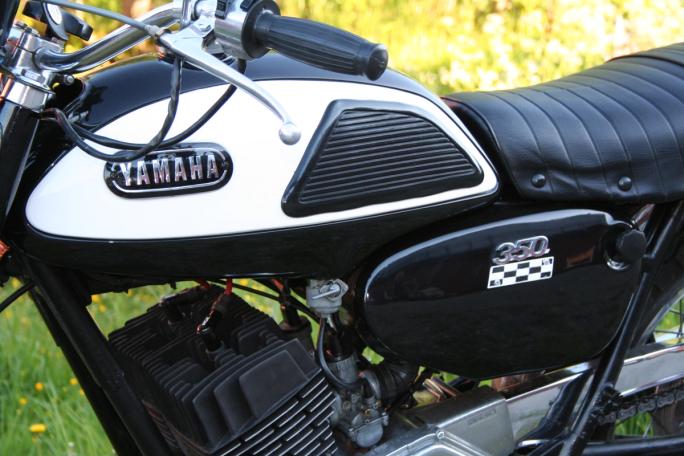
Yamaha's engineers proved to be very ambitious when they set themselves the goal of creating a 2-stroke that would take market share from Honda CB72. The solution was the 350cc R1. However, the model was not as revolutionary as Yamaha had “leaked” to the press in advance, but it proved to be very solid and reliable. The model was based on Yamaha's YDS engine, but was modernized with, among other things, larger cooling fins on the cylinders that were made of aluminum. The entire bike was larger than Yamaha's previous 2-strokes, emphasized by a large fuel tank that combined paint with chrome on the tank sides.
Bridgestone 350 GTR
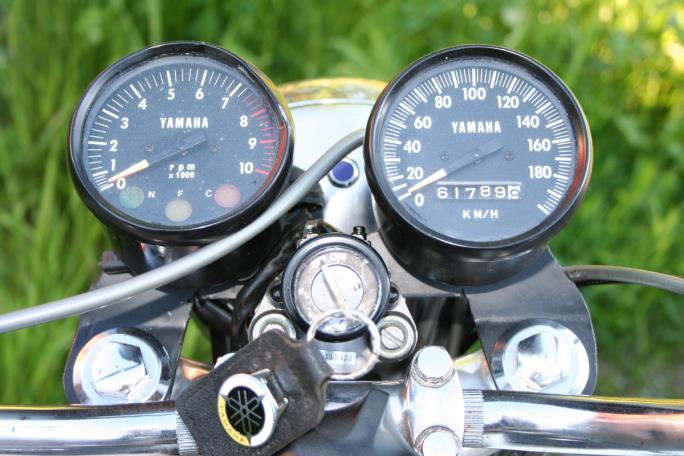
Among the 2-strokes in the 350 segment, only Bridgestone's 350GTR was larger. Bridgestone was a tough competitor, but they disappeared from the market, and thus Yamaha R1 with its 350 cc was one of the fastest in the class. However, there were some "rocks in the sea". Before the launch, Yamaha had hinted to the press that the new model was capable of 125 mph. It never managed that, and the speedometer needle stopped at 165 km/h, good enough for a 350 cc. The design also did not live up to expectations, but since it was solid, reliable and fast, it showed the way. With small upgrades came the R2. This was only sold in the States and the Netherlands. Eventually the R3 came, and this model would become a volume seller. Together with the DS6, Yamaha steadily gained market share, and the brand was now something to be reckoned with.
R, DS, R and RD
Eventually, Yamaha coordinated the production of the R and DS series, and this led to the 2-strokes most of us know well from the 1970s, the classic Yamaha R5, and last but not least Yamaha RD-350.
Technical data Yamaha R3-1969 model:
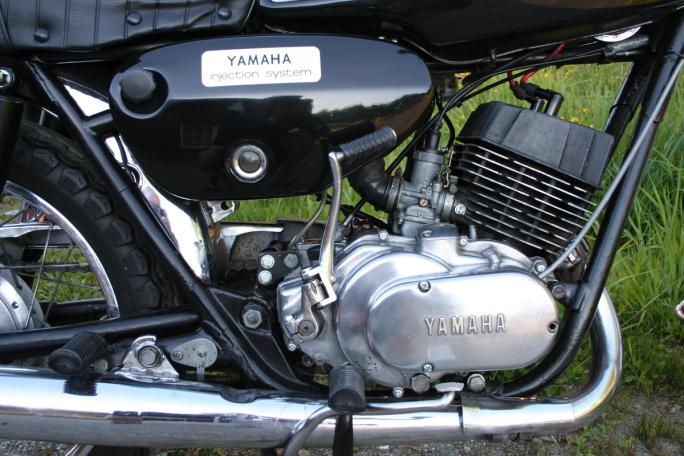
Engine: 2 cylinder 2-stroke
Displacement: 345 cc
Bore x stroke: 61 x 59 mm
Power: 36 hp at 7000 rpm.
No. of gears: 5
Front tires: 3.00 x 18
Rear tires: 3.50 x 18
Tank: 15 liters
Weight: 154 kg
Top speed: 165 km/h