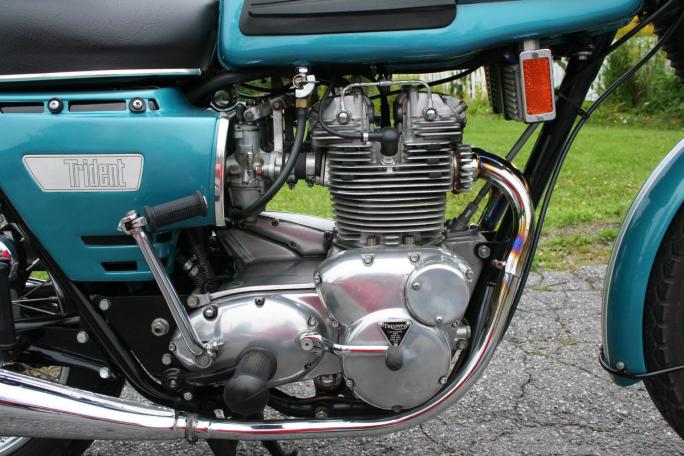
Triumph Trident T-150
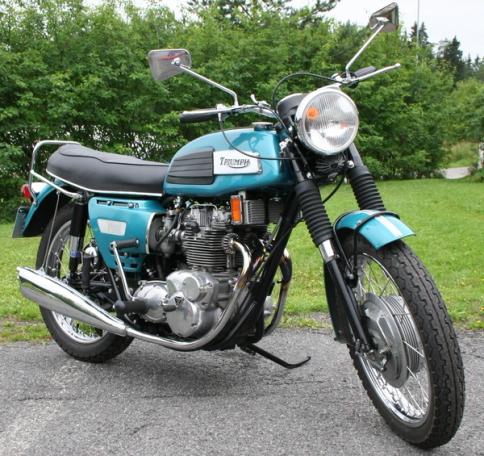
Triumph Trident T-150
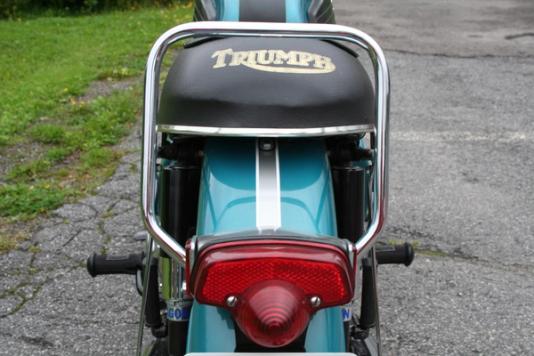
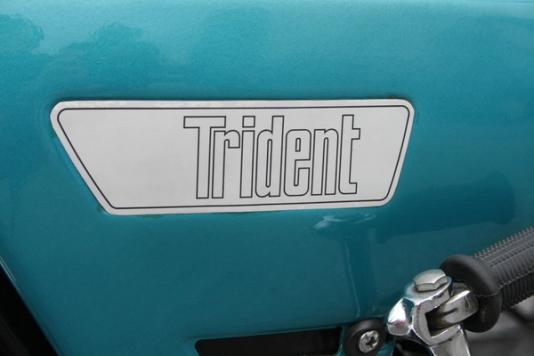
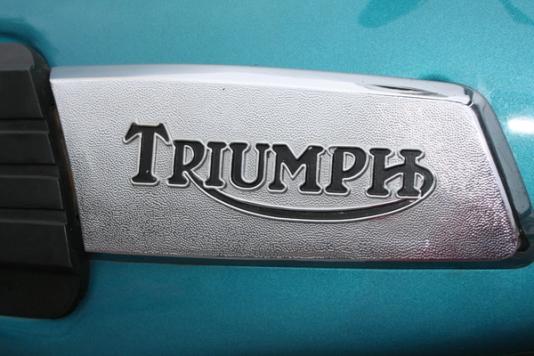
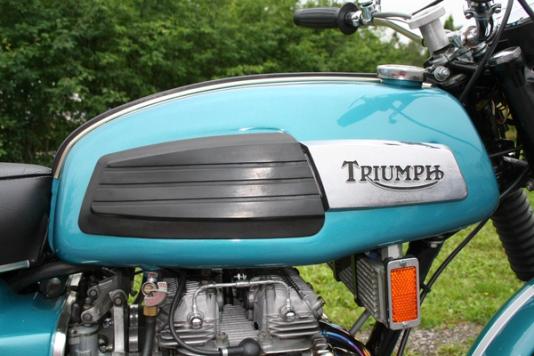
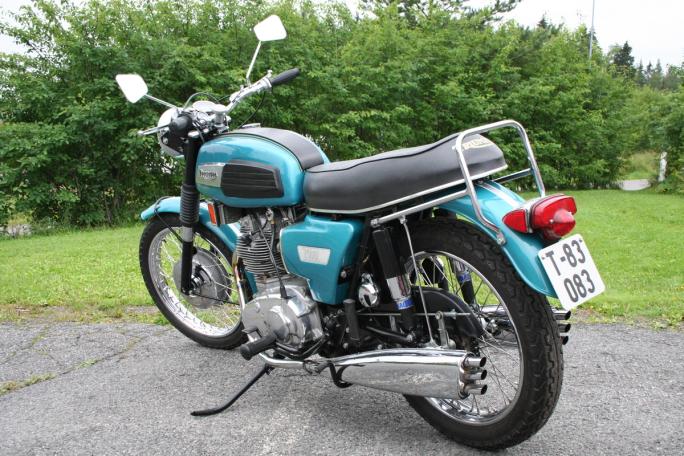
As the 1960s drew to a close, the contours of the new superbikes began to emerge. The 2-cylinder 4-strokes that had been dominant since the 1950s were beginning to recede. The new trend was more cylinders, and more “power”. Both Kawasaki and Honda now had multi-cylinder machines in the works. So did BSA group, and in the autumn of 1968 the new 3-cylinder model Triumph Trident was released, closely followed by BSA Rocket III. The Japanese competitors were not to be left behind so easily!
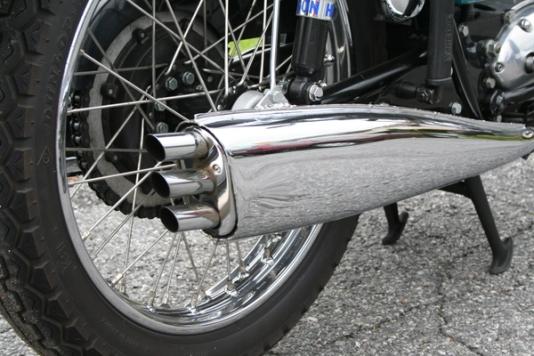
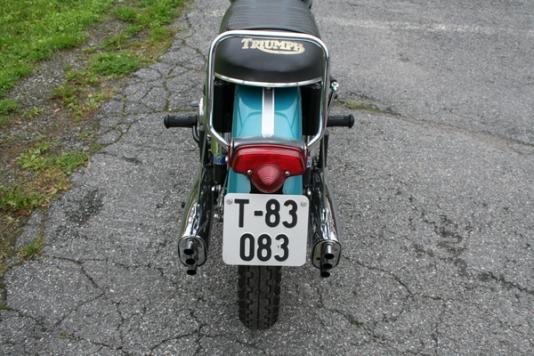
0/0
In the early 1960s, BSA management was constantly reminded of their Japanese competitors, who made small but fast machines. BSA , which owned Triumph factory, saw the need for a larger and more powerful machine. The successful Bonneville model sold well, but would eventually need a replacement. BSA management decided that the development of the new model should be led by Bert Hopwood and Doug Hele. Both Hopwood and Hele had extensive experience in the development and design of motorcycles, and had several successful models on their list of achievements. Mister Triumph , Edward Turner, however, was not convinced that the sketch of the two was life-made. A three-cylinder model did not appeal to Turner, the man who in his time became famous for having developed Triumph's legendary Speed Twin .
3 cylinders, 750 ccm and 60 hp
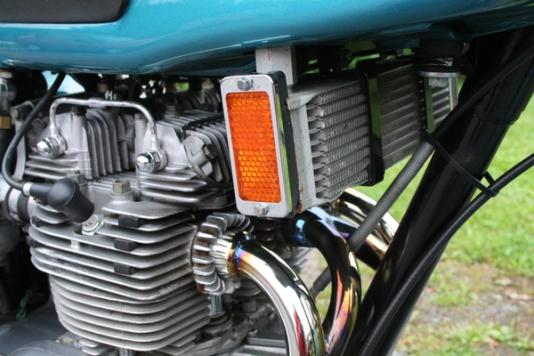
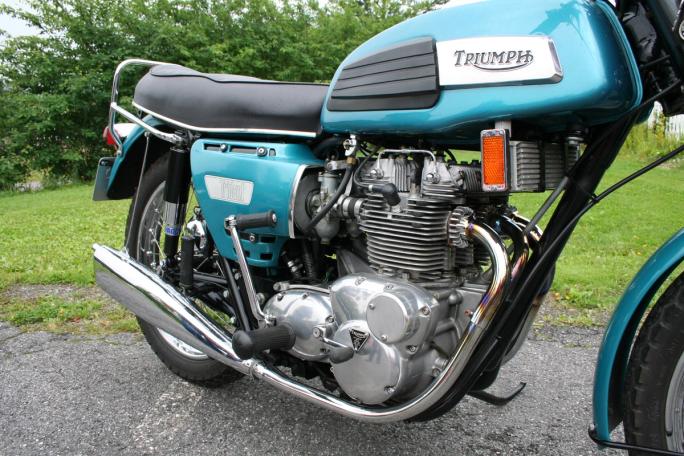
However, in 1964 Turner left, and his successor Harry Sturgeon gave the green light to Hopwood and Hele. This set the pace for development, and the goal was to create an engine of 750 cc and with 60 horsepower. This was a significant increase in power compared to the Bonneville's 46 horses. Although it was rumored that Honda had a four-cylinder machine under development, Sturgeon stuck to the sketch of the three-cylinder four-stroke. Three cylinders, each of 250 cc, fitted perfectly with the idea of creating a new engine based on the old parallel twin of 500 cc. On the sketch pad, a construction was drawn up that was thus reminiscent of a "one and a half" 500 cc twin. Triumph followed the principle of 250 cc per cylinder. Although the triple was spectacular enough, it was largely built on technology from older Triumph models. Overhead valves were a given, but overhead camshafts were still to be expected.
P1
When the first prototype, the P1, was ready for testing, it became clear that certain improvements were required. The primary transmission, which was via gears, had to be replaced in favor of a chain. The gears began to run tight when the engine warmed up, which made a roaring sound. Furthermore, it was decided to use a simple clutch plate like on cars, to avoid the engine becoming too wide. The engine was given a bore-to-stroke ratio of 63 x 80 mm. However, the long stroke produced vibrations that were in excess of what the engine benefited from. As a result, the cylinders were changed to 67x70 mm, and the cylinder block was made of aluminum. The cylinder head was equipped with larger valves and larger carburetors. The modifications changed the character of the engine and the machine now had a very high revving speed without annoying vibrations. The test results from the first test run were surprisingly good and the development team was very optimistic.
Ready for production in 1965
In 1965, the development work had progressed to the point where the Trident was ready for production. However, the top management at BSA factory believed that the bike needed to be given a completely new design. This delayed the launch by several years. The prototype, which actually resembled a Bonneville , with the exception of the 3-cylinder engine, was to be completely redesigned. In retrospect, many believed that Triumph should have brought the bike to the market in 1965/66, precisely in the Bonneville's "dress". Then they could have gained a head start on Honda's CB 750 Four. Trident project instead entered a phase where the design was to be completely changed. The assignment went to Umberslade Hall, where Ogle Design was to have a hand in the game. The appearance was radically changed in favor of straight lines and an angular design. The round, sleek lines that Triumph was known for disappeared. The Trident appeared as a completely new motorcycle, for better or for worse. Triumph needed a new look, but many felt that the Trident's lines were now too radical. It would take nearly three years for the finished machine to be ready, three years that Honda knew how to utilize extremely well.
T-150 vs CB750Four
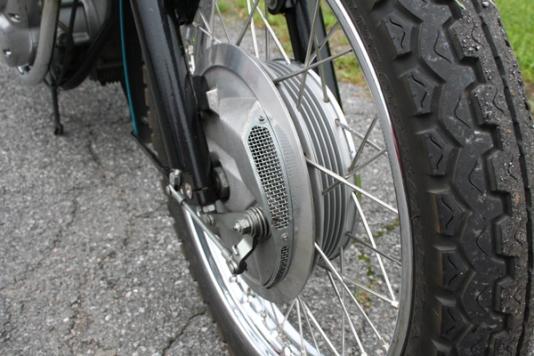
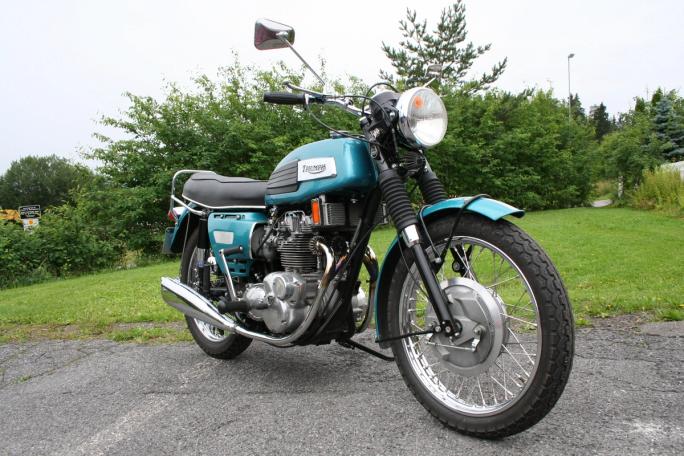
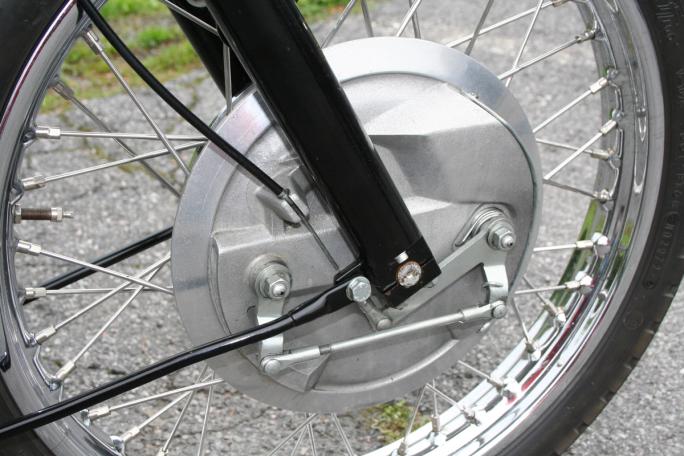
In the autumn of 1968, Triumph Trident was finally ready. Expectations were high and praise was plentiful, especially in the USA. However, criticism of the design subsided significantly after the first test drive. Sensational performance in terms of power and handling took the focus away from the appearance. The Trident received much praise from motorcycle journalists. It was fast in acceleration, stable at high speeds, and the three-cylinder four-stroke engine gave off an incredibly raw sound. The first model, the T-150, was equipped with drum brakes both front and rear. The engine output was stated at 58 hp at 7250 rpm, and with a close-ratio 4-speed gearbox, it kicked off well. Behind the scenes, however, the super four-stroke Honda CB 750 Four was playing tricks on the press and the public at the Tokyo Motor Show in October 1968.
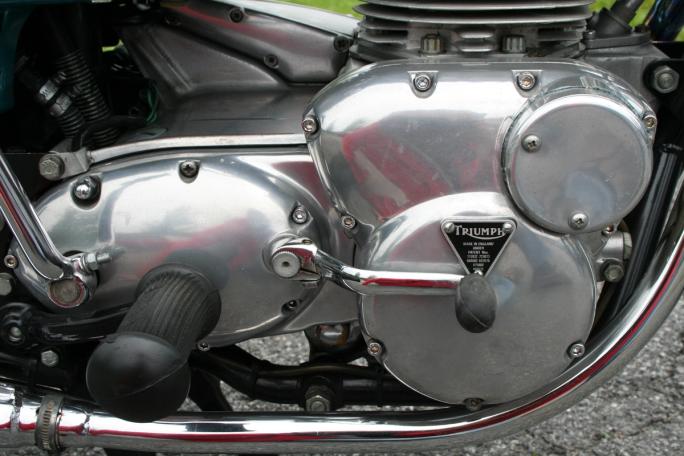
5-speed gearbox and disc brake
The model changed very little in the early years. In 1972 it was given the model designation T-150V, with 5 gears, wider rear tires and larger drum brakes at the front. Electric start and disc brakes were still to come. 1972 was also the last year of production for BSA Rocket III. In 1973 a separate US model was made, where the angular shapes were removed in favor of a design that had clear parallels to the best-selling Bonneville . The drum brakes at the front were now replaced in favor of disc brakes.
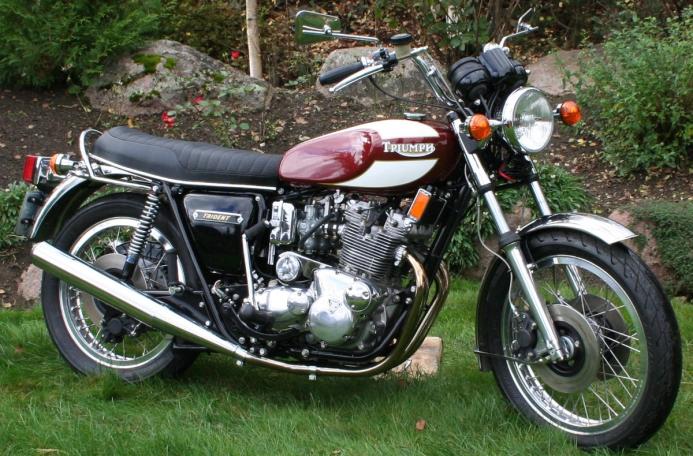
Trident T-160
In 1975 it was decided to give the T-150V a real facelift, and the “new” triple T-160 became Triumph’s latest weapon in the fight for superbike customers. The T-160 received a number of innovations, such as disc brakes both front and rear. The engine was the same as in BSA Rocket III, but with 5 gears, indicators, electric start, and with the gear pedal on the left side. The design was far more classic, with softer and more rounded lines. Trident T-160 was not behind any of its competitors in terms of equipment level. If you compare the production specifications of the T-150 with the T-160, there were about 200 changes on the new model. The price tag of the T-160 thus ended up at 1215 pounds, 200 pounds more than the “arch enemy” Honda CB 750 Four. Not exactly a plus for Triumph !
X-75 Hurricane and BSA Rocket 3
The 1970s were a tough time for BSA group. In 1972, BSA went bankrupt, and Triumph was sold to Norton - Villiers . The Japanese machines were now taking more and more of the market, and the Meriden factory was struggling financially. When the Trident went on sale in the autumn of 1968, a similar model was released, but with BSA logo on the tank. Instead of investing all the resources in one model, two triples were made, one in Meriden and one in Small Heath, the latter with the model designation Rocket III. This was very expensive, not least because the two models were far from identical. This required two different production lines. From a distance, the two 3-cylinder bikes could look like twins, but on closer inspection there were many differences. This cost a lot of money, something BSA group was not exactly generous with at this time. Another project that also weighed on the economy was the American version, X-75 Hurricane, which came out in 1973. This was designed by Craig Vetter in the USA, and was a Trident adapted for the American market. However, production numbers for the English triples were very low. The Hurricane was made in only 1100 copies. Production numbers for BSA Rocket III stopped at around 6000 machines, while the Trident was made in about 22000 copies. In 1976, the last Trident rolled off the assembly line. The superbike that could have become something suddenly became history.
Technical data Triumph Trident T-150, 1969 model:
Engine: 3-cylinder 4-stroke, ohv
Displacement: 740 ccm
Power: 58 hp at 7250 rpm.
No. of gears: 4
Front tires: 3.25 x 19
Rear tires: 4.10 x 19
Weight: 219 kg
Top speed: 198 km/h