
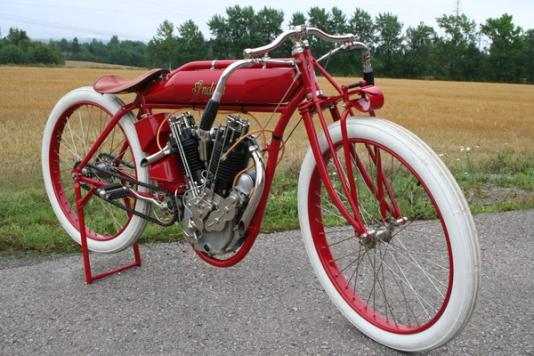
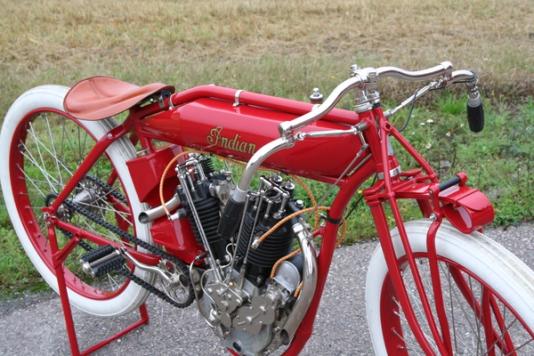
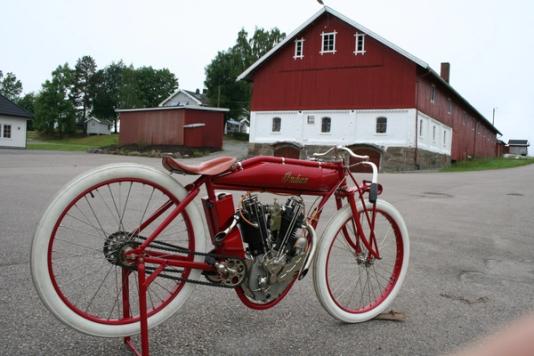
"I collect art, like this Indian 8-valve racer"
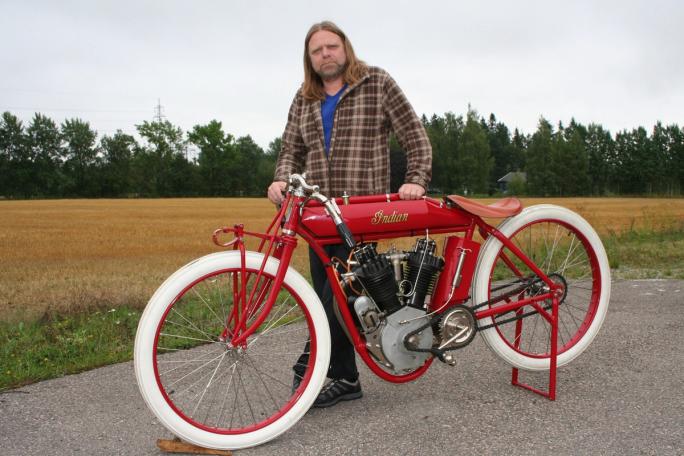
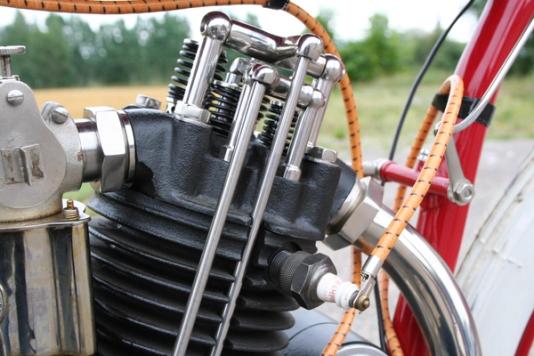
Indian racer with 4 valves per cylinder is good for a top speed of approx. 150 km/h
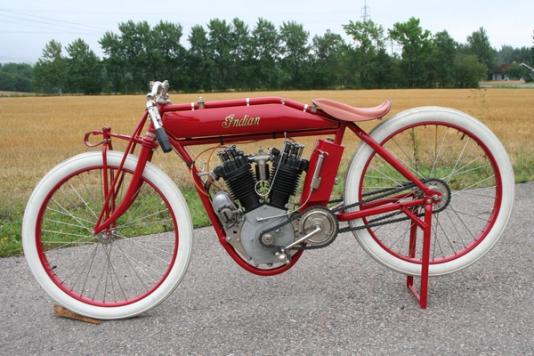
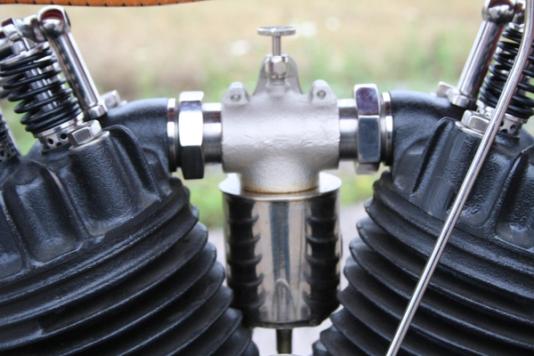
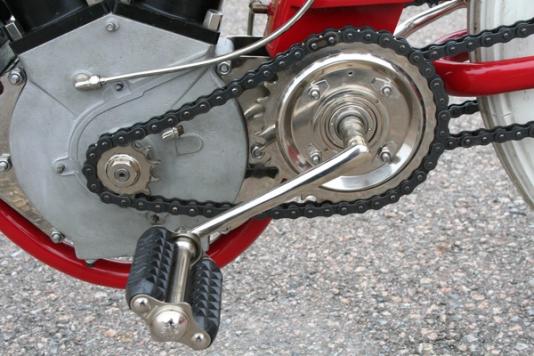
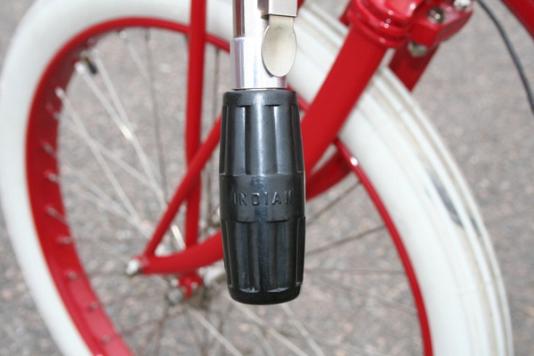
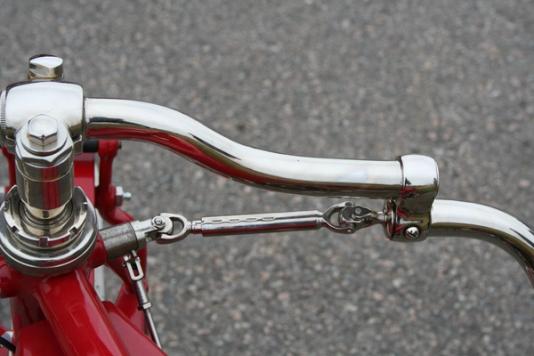
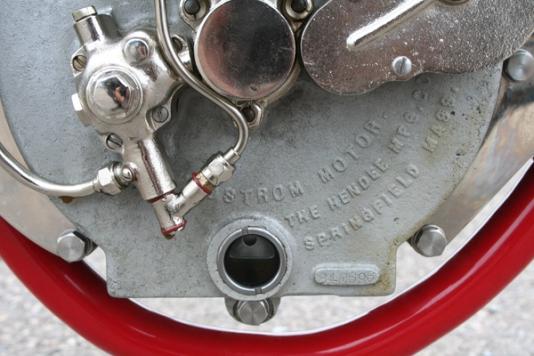
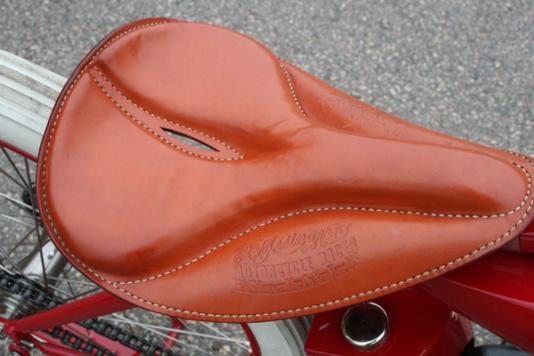
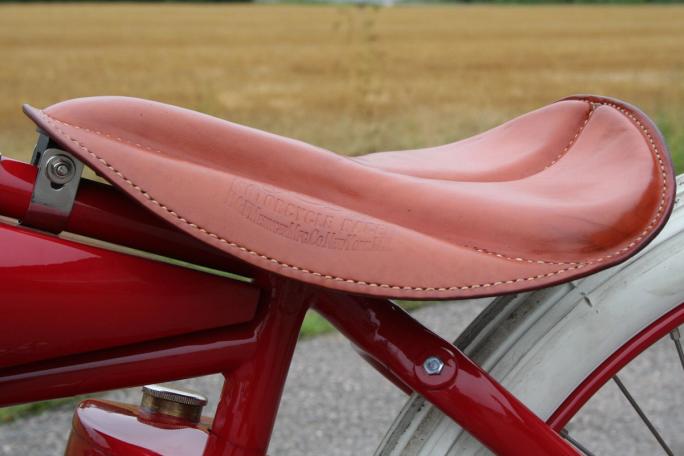
Steinar Bråthen found his dream bike in this Indian racer from 1913. With a displacement of 996 cc, it is good for a speed of around 150 km/h. However, it lacks both gears, clutch and brakes, and can only be driven on the track. For Steinar, driving it does not mean much because as he says, “Some people collect art, I collect motorcycles because they are art to me”, and points to the redskin in front of him, an Indian H 8-valve.

0/0
Motordromes with 80,000 spectators
The first motorcycle races held on the so-called boardtracks in the USA took place after being inspired by bicycle races held on similar tracks around the largest cities there. The number of spectators shows that this type of entertainment was popular. During a convention in Chicago in 1915, there were a whopping 80,000 spectators in the stands. Board tracks were, in short, velodromes built of wooden planks with measured curves up to 50 degrees of inclination. The sport had its heyday from 1910-1920, and it was Indian and Harley-Davidson in particular that dominated the podiums, closely followed by NSU , Excelsior , Thor, Henderson and Cyclone, among others.
Win on Sunday, sell on Monday
Participating in racing was a relatively cheap form of marketing, and it is from this period that the slogan "Win on Sunday, sell on Monday" originated. The stands were full of young men who were inspired and who were happy to buy a motorcycle on Monday, preferably from the brand that won 1st place in Sunday's race.
Total loss
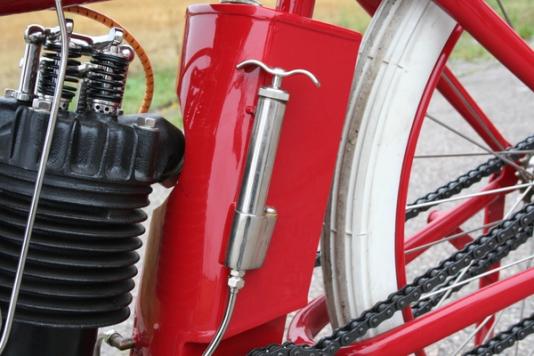
This form of motorsport was, as mentioned, very popular, but also deadly. Safety measures were absent, the driving equipment primitive and the machines very fast. Motorcycle engines of the time did not have a closed lubrication system, but used the open system, often referred to as "Total loss". The engine oil was pumped by hand, circulated under pressure around the engine, and then out into the open air. In practice, this meant that the oil ran down onto the planks, making the track slippery and thus deadly.
Motordromes become murderdromes
Accidents were frequent, often resulting in death. Eventually, contemporary media would refer to the tracks as murderdromes instead of motordromes. By the 1920s, motordromes had disappeared, in favor of the less risky motorsport disciplines of hillclimb and dirttrack. Drivers also died in these races, but to a much lesser extent.
3.2 km boardwalk
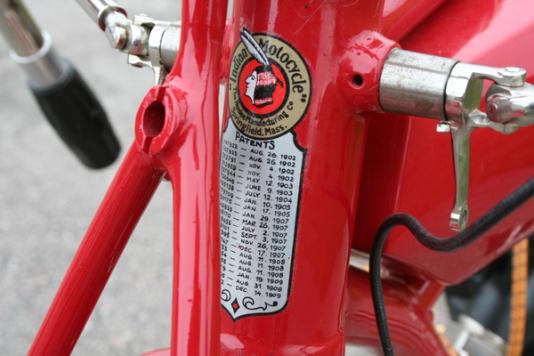
The longest tracks that existed in Cincinnati, Ohio, Tacoma, Washington and Chicago, Illinois measured a full 3.2 km. The first competitions were with pedal bicycles, and it was at such a convention in Madison Square Garden in 1900 that Oscar Hedstrøm and George Hendee got to know each other. At this time, Hendee was engaged in the production of pedal bicycles under the brand name “Silver King”. When he witnessed a motorized two-wheeler that was located in front of the bicycle field to reduce air resistance, he quickly tracked down the designer, and asked him to make an engine for one of the pedal bicycles. The engine designer was none other than Oscar Hedstrøm. The two quickly found the tone, began a collaboration, and in 1901 the first Indian motorcycle was released.
The genius Hedstrøm
Indian was considered by far the best American motorcycle brand until well into the 1920s, and made its mark early on in racing. The red two-wheelers (the first model that came out in 1901 was blue!) were noticed because of their fast and reliable machines. The same year that Bjørn's racer was built, Indian experienced its best year ever, with a total production of 32,000 motorcycles. Much of this sales success is attributed to the brand's quality and performance both on the road and on the racetracks. Fast, sporty and reliable machines, known for being at the cutting edge of technology. The brains behind the technology were Hedstrøm, a man widely known for his technical talent.
Model H 8-valve
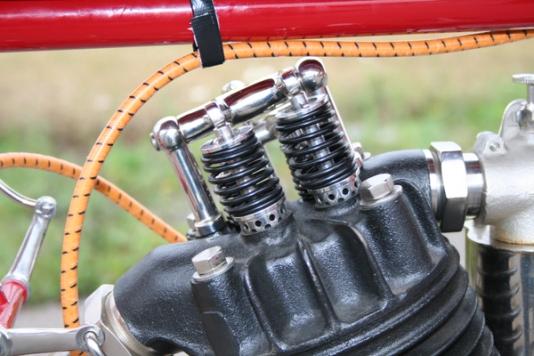
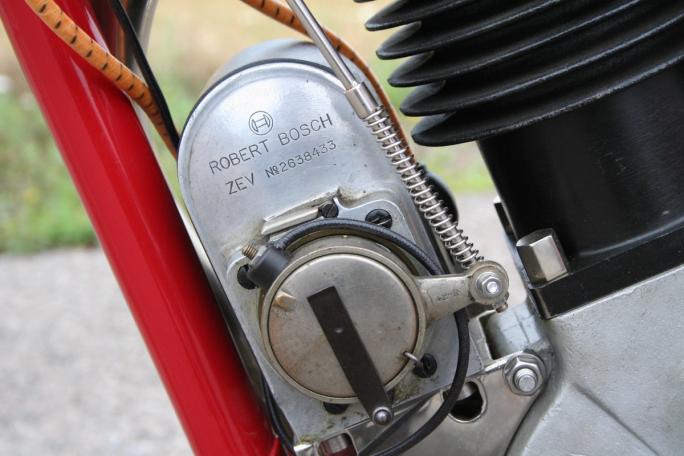
The boardtrackers often had the best of the manufacturers' technology. Steinar Bråthen's Indian racer from Gjerdrum is a "model H 8-valve", which means it has 4 valves per cylinder. Steinar has had a fascination for the really old racers with fine mechanics for as long as he can remember, and when this bike appeared for sale in the Netherlands he was quick to jump on it. This type of bike is extremely rare.
150 km/h
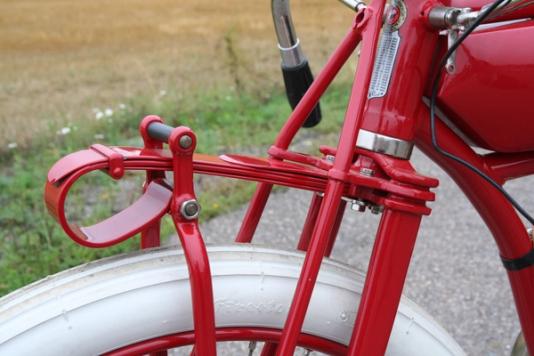
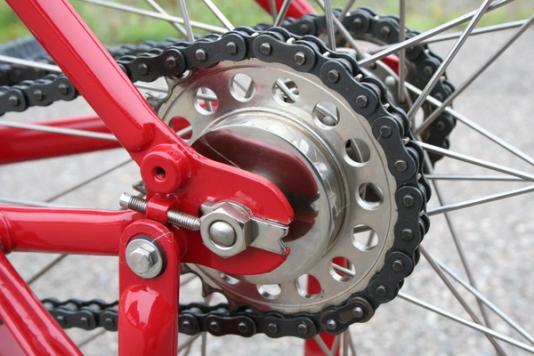
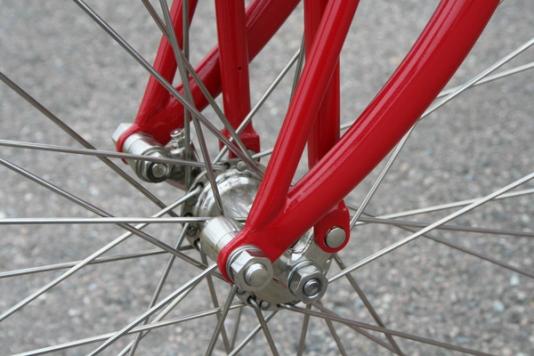
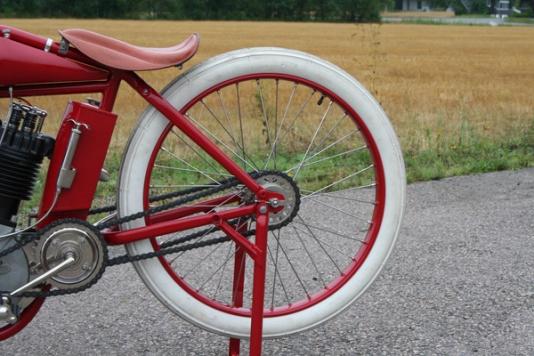
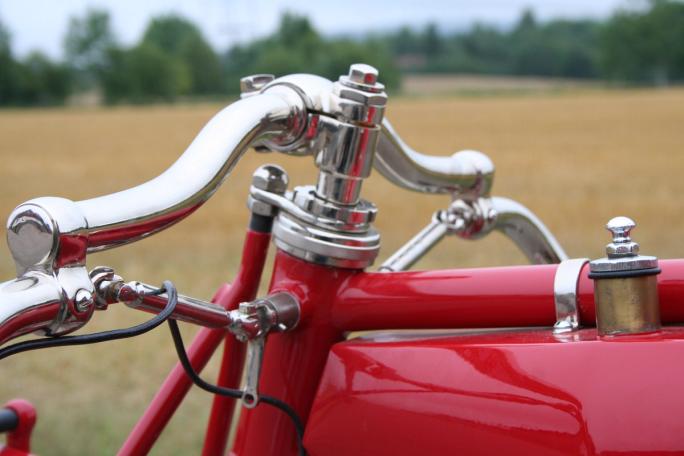
The bike is good for speeds of up to 150 km/h. It has no gears, and thus no clutch and no brakes. No wonder things went wrong every now and then, with ugly accidents and front-page headlines in the major newspapers, where scandals were called out due to lack of safety for the public. The riders were not as worried about as the newspapers. So we can only hope that the planks stuck to the ground, because this was long before the time of deck screws, and a fall on the wood meant more than a few splinters in the fingers!
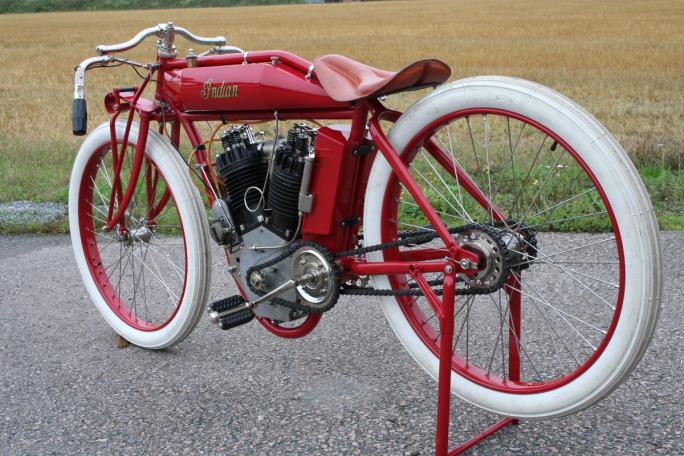
Indian won big with its 8-valve racer from 1910 onwards