
Honda Gold Wing GL1000
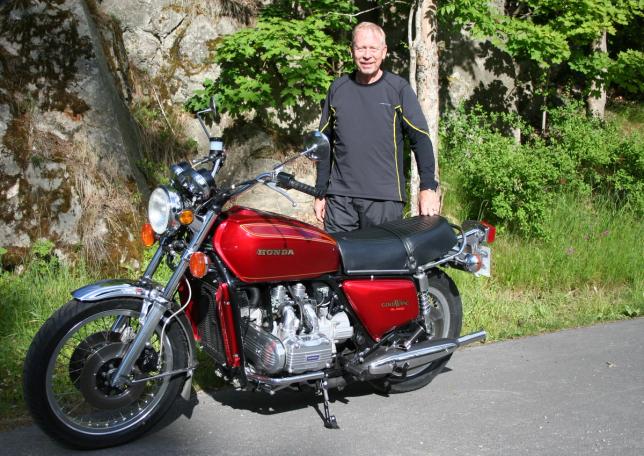
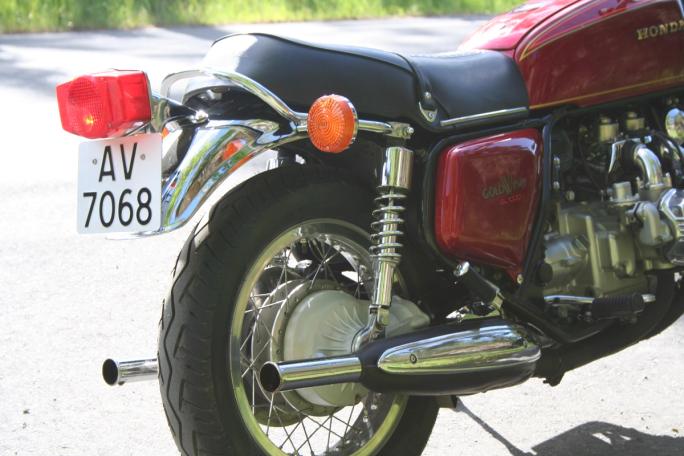
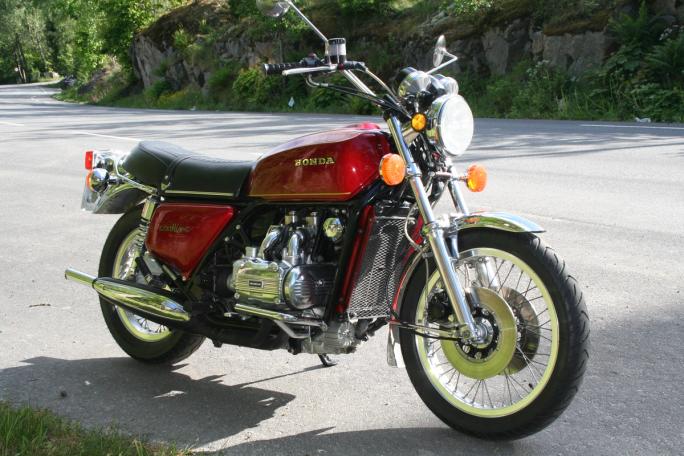
- Roger Jensen from Moss has several Honda classics, but the 1975 Gold Wing is his favorite bike.
Honda's new flagship Gold Wing GL 1000 was shown to the press and public at the Cologne Motor Show in September 1974, and when the model went on sale in 1975, Soichiro Honda was able to record another success on 2 wheels. Gold Wing became synonymous with touring, and the model is still alive and well, now with a 6-cylinder engine, just like the prototype from the early 1970s.
Shortly before Soichiro Honda passed away in August 1991, the founder from Japan could look back on a career and a success that few are blessed to experience. One of Mr. Honda 's last chess moves was the development of the Gold Wing touring machine, often referred to as "The king of touring motorcycles". The idea for a new and unconventional motorcycle was born in the corridors of the Honda Motor Company in the fall of 1972.
Honda Group had experienced phenomenal success with the inline-four CB750Four. However, competitors were catching up, and both Kawasaki Z1-900 and Suzuki GT 750 appealed to customers in the large heavy machine segment. Instead of building on the CB750Four, which would have been the easiest option, Honda chose to go completely new directions.
The engineering team at Honda looked at two very different machines. One was Harley-Davidson's megatourer Electra Glide . The other model that eventually came into focus was the exact opposite of the Harley, namely BMW R90 Sport. At Honda , it was decided that the new model would combine the touring capabilities of the Harley, with the sporty character of BMW .
A bit of a challenge, but Honda was to succeed to a certain extent. When development of the new model began, it was decided that the work would be led by Soichiro Irimajiri. He was considered one of Honda 's foremost designers, and was a distinguished gentleman with great success as head of Honda's racing team in the 1960s. If there was one thing Irimajiri knew, it was definitely motorcycle engines.
When he was presented with the specifications for the new model, he was clear in his speech. The “king of touring motorcycles” was to have an engine with a displacement that was larger than Kawasaki Z1-900, Moto-Guzzi V7 and BMW R90Sport, and an output that was measurably ahead of Harley’s Electra Glide . Honda considered several engine alternatives. At the beginning of the 1970s, there was a plethora of different engine sizes and types. In Japan, the three-cylinder two-strokes from Kawasaki and Suzuki , as well as Honda’s inline-fours, were in the lead. Yamaha stuck to the philosophy that “Two is enough”. Yamaha experienced great sales success with the XS650, and when they were about to launch their new superbike, the TX 750, they still stuck to the twin concept.
In Europe, BMW , Ducati , Moto-Guzzi, Norton and Triumph were among the largest motorcycle manufacturers. All of them stuck to 2-cylinder engines, but in slightly different ways. The transverse V-engine eventually became Guzzi's trademark. Ducati placed the V-twin longitudinally, BMW stuck to its old concept, the 2-cylinder boxer, and Norton and Triumph used the parallel twin concept. It was supposed to be a solution a la BMW that became the Gold Wing's drive package, the large and almost vibration-free boxer, but with a couple of extra cylinders and liquid cooling.
The first prototype, the M1, was ready for test drives in 1973. This was in many ways a hybrid. The front end was almost identical to that of Honda CB 750 Four. From the saddle to the rear, the bike looked like a BMW . In the middle of the frame was a massive 6-cylinder boxer engine. The test drive showed surprisingly good results. With a top speed of 210 km/h and a quarter mile in 12 seconds, the giant was faster than expected.
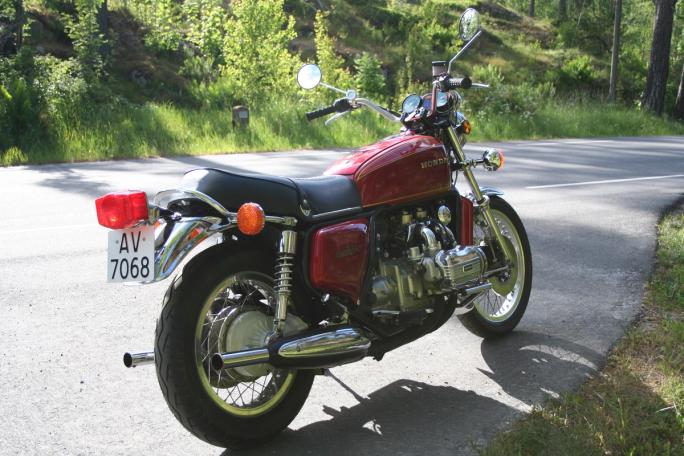
Much was good, but not everything. The 6-cylinder boxer engine was too long, and took up too much space towards the back of the frame. The relationship between the handlebars, footrests and seat was therefore wrong, and the sitting position was completely wrong. Comfort and riding position were paramount here, power and acceleration were not enough. The management at Honda therefore dropped the M1, appointed a new project manager, and continued to work with a focus on a shorter 4-cylinder boxer engine.
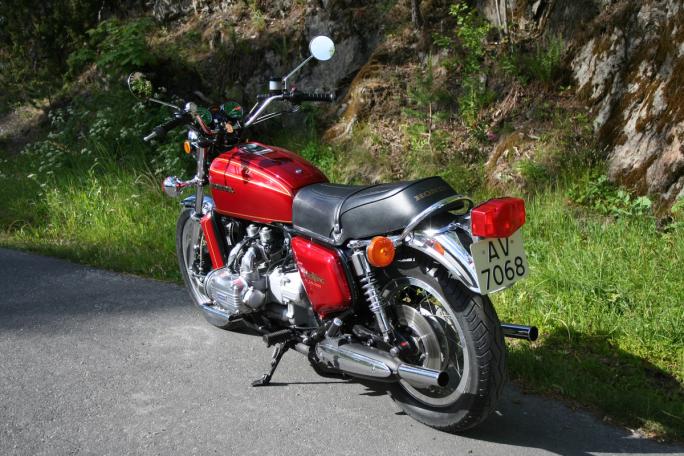
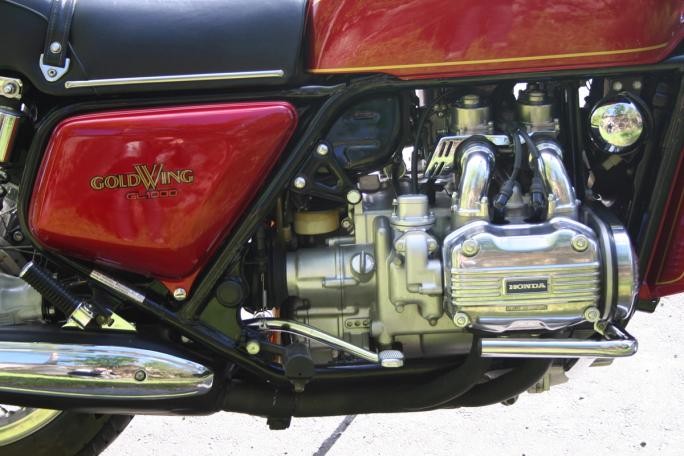
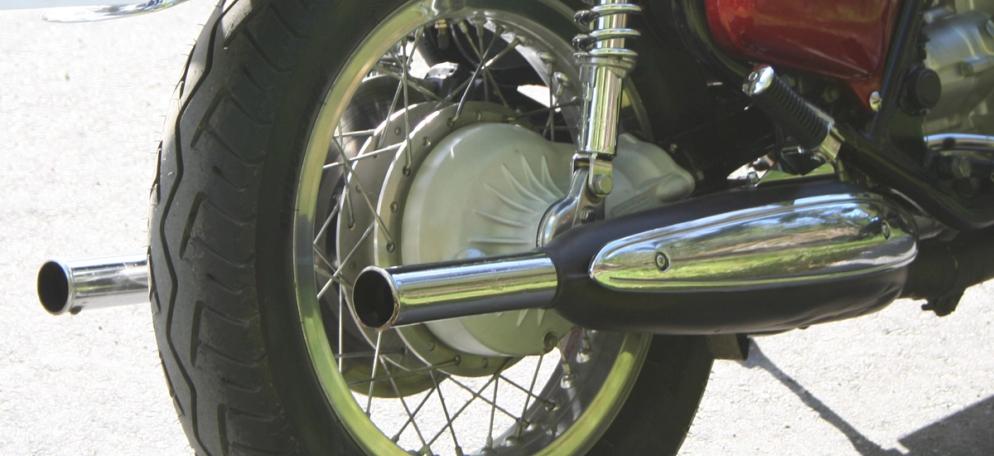
The new project manager, Toshio Nozue, would prove to be the right man in the right place. He had worked as a frame designer, and eventually solved the challenge associated with the seating position. The engine was slimmed down, and it was now decided that a four-cylinder boxer engine of around 1000 cubic centimeters would be used. This was water-cooled and driven by a cardan shaft. The engine was equipped with timing belts instead of timing chains, which significantly reduced mechanical noise. In addition, it was almost vibration-free, and not least torsion-free when accelerating, largely thanks to the location of the generator as a counterweight to the crankshaft.
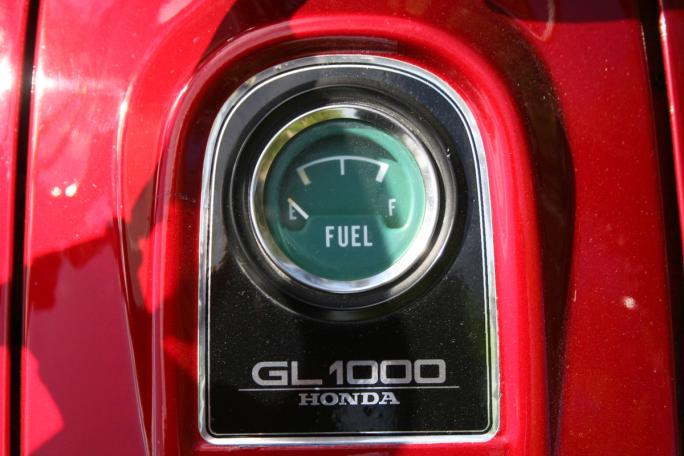
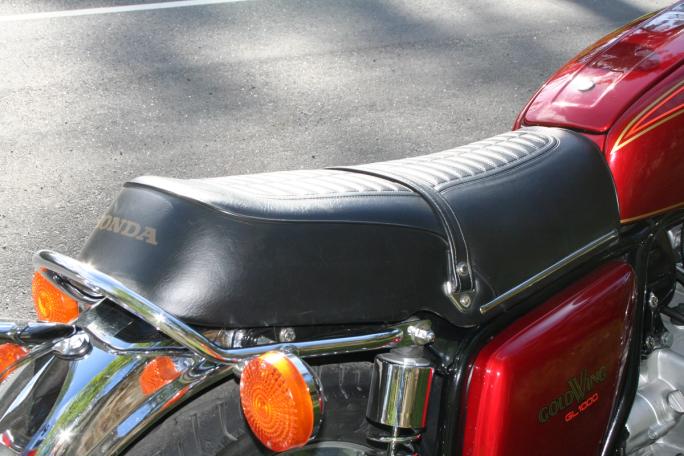
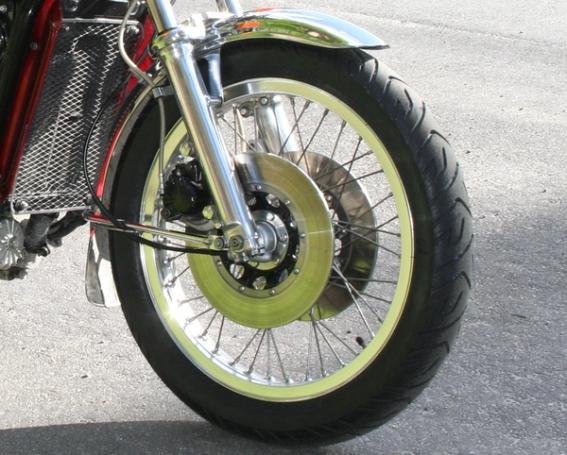
To give the bike as low a center of gravity as possible, the fuel tank was placed under the seat. What looked like a fuel tank was a “dummy tank” that served as a compartment for electrical components, an expansion tank for the coolant, a storage compartment for tools, an instruction manual, and a wallet. The Gold Wing was now beginning to take its final shape. The scale now showed 295 kg, and thus 3 disc brakes were used to stop the heavyweight.
Honda could now begin the final testing run. To guard against surprises and mechanical breakdowns, the Gold Wing was subjected to a testing period of 12 months, far more than usual. Honda's prestige attached to the new model was enormous, and if they were to succeed in the American motorcycle market, everything had to work right from the start.
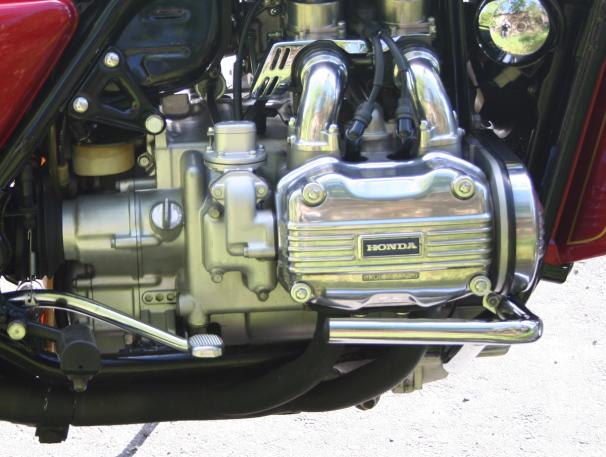
The MC press rose above Honda Gold Wing as soon as the first test specimens were ready. "The king of touring motorcycles" passed the tests with flying colors. Some critical voices pointed out that the saddle was a bit hard, and that the suspension could be perceived as soft when riding hard, but this was quickly forgotten, not least because the Gold Wing could demonstrate speed characteristics on par with Kawasaki's sports machine Z1. Not bad at all for a shaft-driven touring motorcycle weighing almost 300 kg!
Technical data Honda GL 1000 Gold Wing , 1975 model:
Engine:………...4-cylinder 4-stroke, OHC, boxer engine with liquid cooling Displacement:.....999ccm
Power:……..….82 hp at 7500 rpm
Number of gears:….…....5
Front tires…..3.50 x 19
Rear tires:…....4.50 x 17
Tank:……….....19 liters
0-100 km/h:….4.5 sec
Weight:………......295 kg
Top speed:….….196 km/h