
Honda Gold Wing 1000 K3
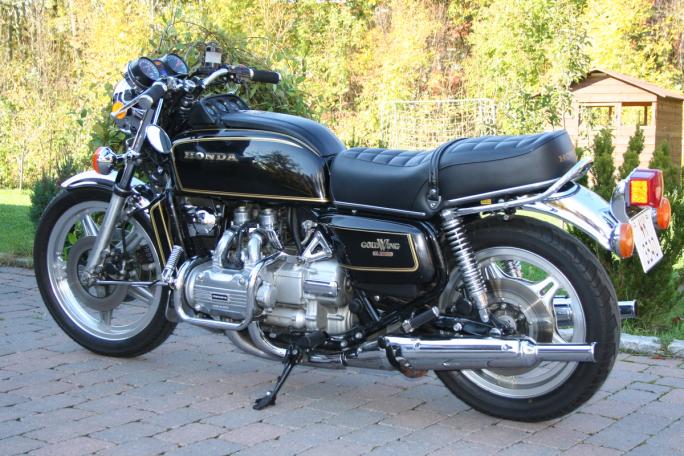
In 1978, Honda Gold Wing entered its 4th year of production, and the time was ripe for an upgrade. It was time for the K3, and although the main lines were the same, the 78 model offered a number of new features.
In 1978, the Honda Gold Wing entered its fourth year of production, and it was time for an upgrade. The stage was set for the K3, and although the main lines were the same, the '78 model offered a range of new features.
The GL1000 was shown to the press and public in 1974, and the first model went on sale in 1975. The Gold Wing immediately garnered praise from a unanimous press for its design, and not least its handling. The fact that, despite its high weight, it had speed resources on par with Honda's own super four CB750Four, and not least Kawasaki Z900 was nothing short of impressive for this type of motorcycle.
The GL1000 was shown to the press and public in 1974, and the first model went on sale in 1975. The Gold Wing immediately received praise from a united press for its design and, above all, its riding characteristics. That it, despite its high weight, had speed capabilities on par with Honda 's own CB750Four and especially the Kawasaki Z900 was nothing short of impressive for this type of motorcycle.
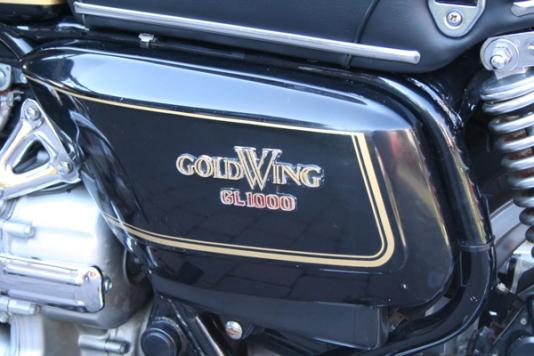
In 1976, Honda decided to launch an exclusive version of the GL1000, and thus the GL1000 LTD saw the light of day. It differed from the original through a number of details such as gold-colored wheels, a large emblem on the side covers, paintwork with gold stripes, and a chrome cover over the radiator.
In 1976, Honda decided to launch an exclusive version of the GL1000, giving birth to the GL1000 LTD. It stood out from the original with several details like gold-coloured wheels, a large emblem on the side covers, paint decorations with gold stripes, and a chrome cover over the radiator.
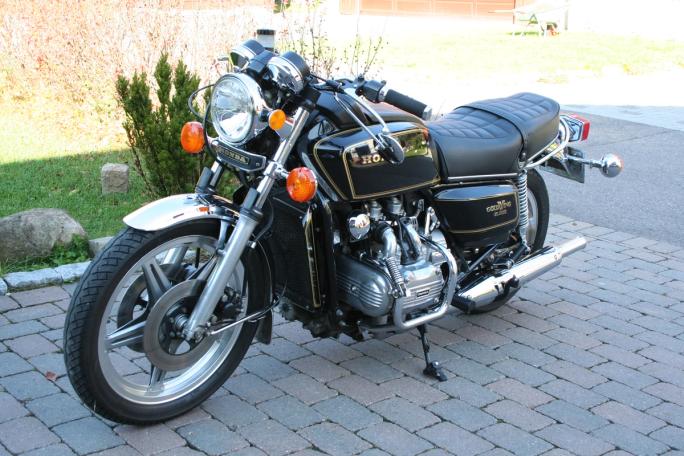
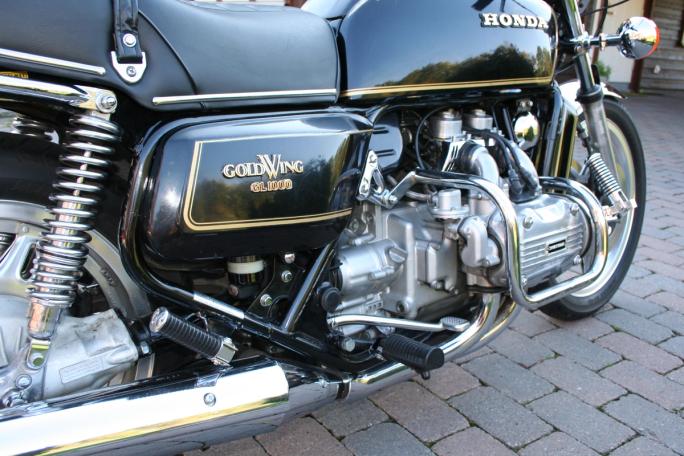
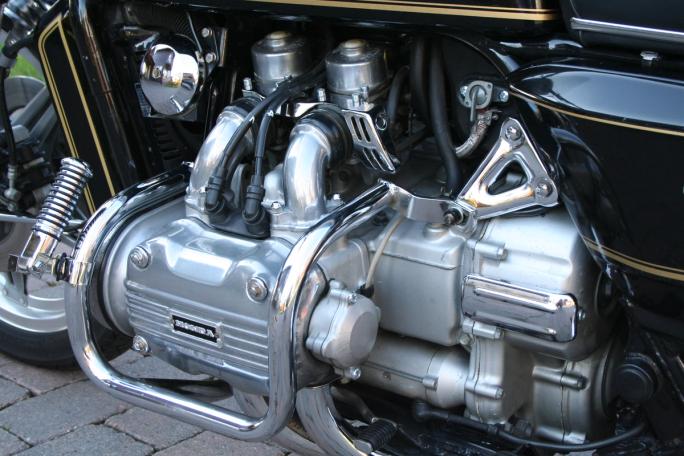
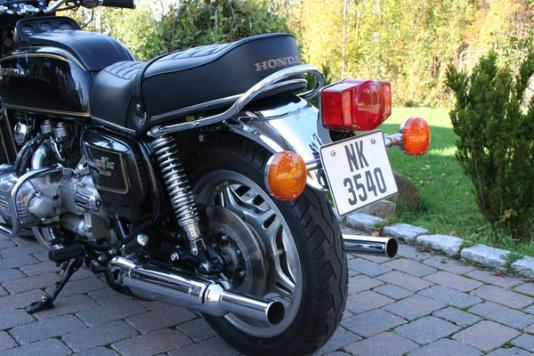
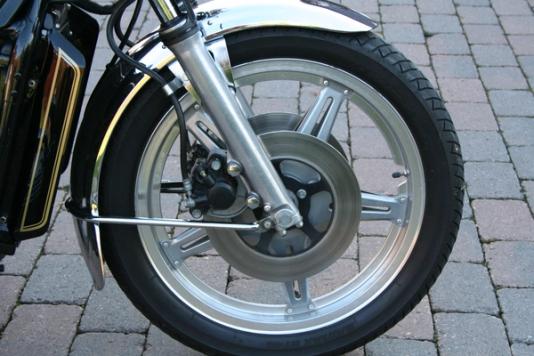
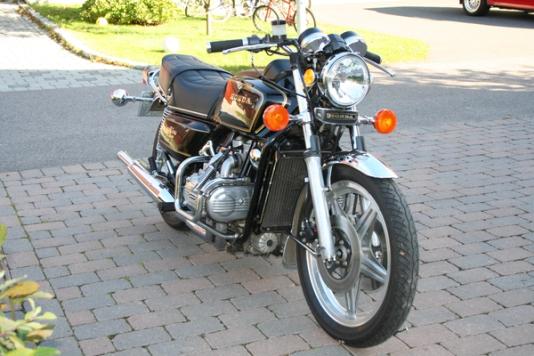
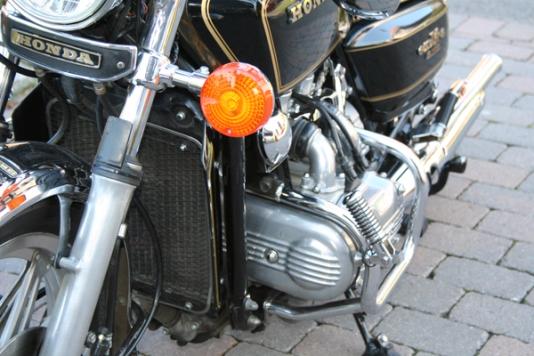
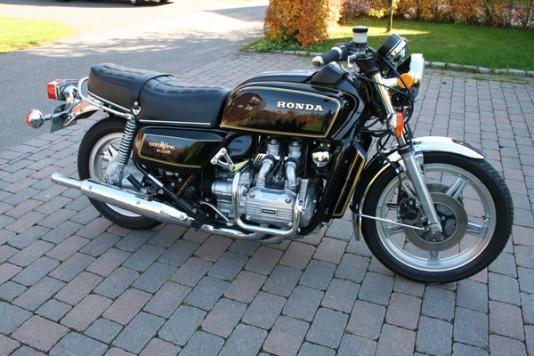
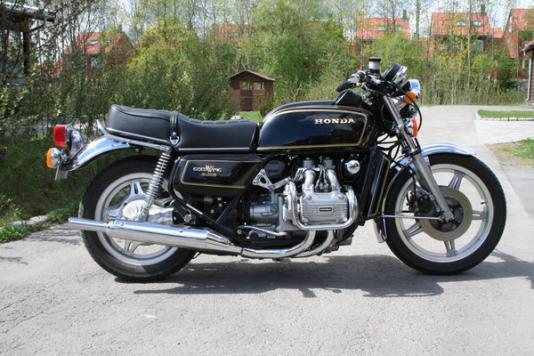
In 1978 the GL1000 K3 arrived, and now the changes were clearly visible. The entire exhaust system was now in chrome, the spoked wheels were replaced in favor of plate rims, and on the fake gas tank (the real one was located under the seat) a separate instrument housing was placed that housed the voltmeter, fuel gauge and temperature gauge. To give the engine better torque in the lower rev range, power was reduced from 82 to 78 hp.
In 1978 the GL1000 K3 came out, and now the changes were clearly visible. The entire exhaust system was now chrome, spoked wheels were swapped for solid rims, and on the fake fuel tank (the real one was under the seat) a separate instrument housing was placed containing a voltmeter, fuel gauge and temperature gauge. To give the engine better torque at lower revs, the power was reduced from 82 to 78 hp.
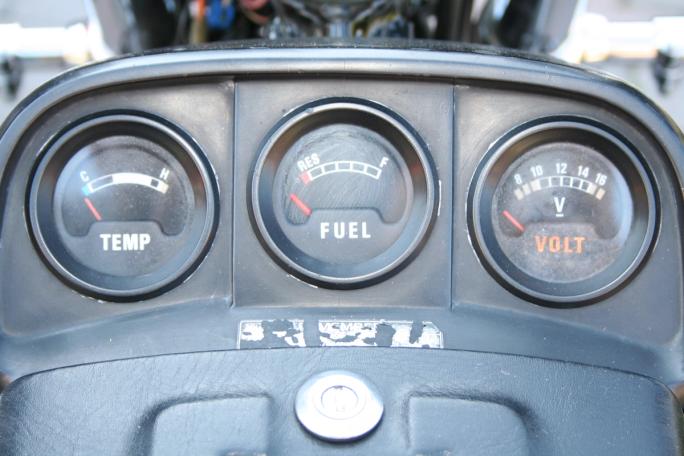
With the GL1000 K3, the 1000cc engine was in its final phase, and in 1980 the 2nd generation Gold Wing arrived with a new design and an 1100cc engine. The Gold Wing had now captured customers in the global touring segment, and the model was becoming a household name.
With the GL1000 K3, the 1000cc bike was in its final phase, and in 1980 the second-generation Gold Wing came with a new design and a 1100cc engine. The Gold Wing had now captured customers in the global touring segment, and the model was becoming iconic.
0/0