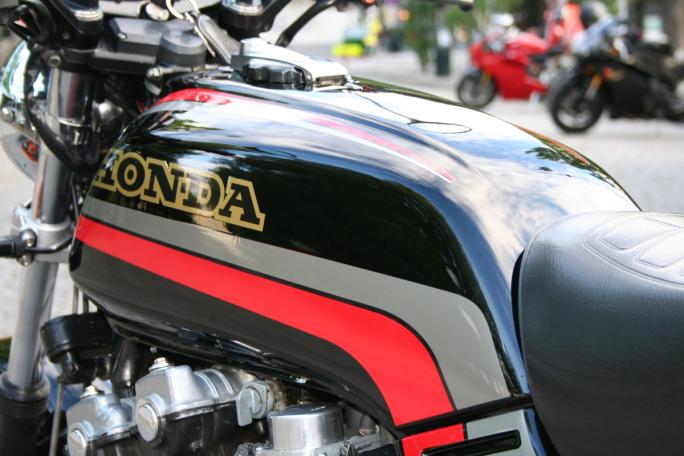
Honda CB900F
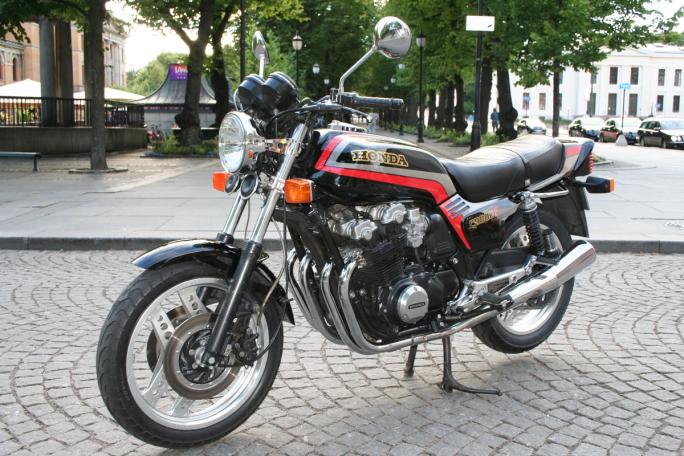
In 1969, sales of Honda CB 750 Four began, the motorcycle that had everything an enthusiast could dream of and then some. The model took the entire motorcycle world by storm, and led Honda to the top both on the racetrack and on the road. After 10 years, the time was ripe for a new model, and at the IFMA trade fair in Cologne in 1978, Honda proudly show off the heir CB 900F.


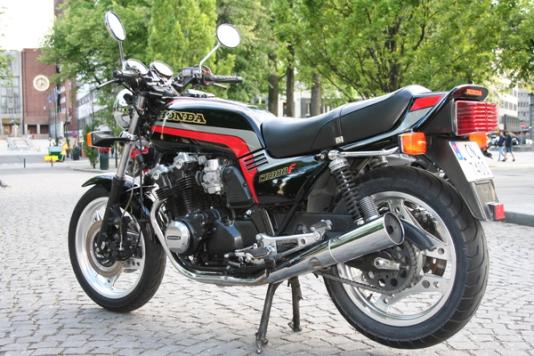
0/0
Honda's triumph with the single-cam model CB750 Four stands out in retrospect as the purest industrial adventure. For the group's founder Soichiro Honda , the experience must have been the crowning achievement in a life filled with development and excitement. Mr. Honda came from humble beginnings, and made his fortune after the war, among other things by putting small stationary engines into bicycle frames. The first commercial means of transport were a fact, and Japanese industrial workers could quickly and efficiently move between home and workplace. Mr. Honda distinguished himself in several ways. He was among the pioneers in R&D work (research and development), and introduced white coats, gloves and hats in production, among other things. Hair and other unwanted microscopic elements had to be kept away from precision work. Clean and tidy, with clear demands for quality. And it was precisely the quality that made the CB750 Four a winner, in addition to the fantastic design. Compared to the English machines, it was, if not exactly light years ahead, then not far behind.
Single comb vs double comb, a question of effect
The first serious challenge came in 1972, Kawasaki Z1. With its 901 cc and double overhead camshafts, it was named "king of the road" by motorcycle journalists. Strangely enough, Honda managed to hold on to its market share, and the CB750Four continued to sell well. The model did not change significantly until 1977. Then a new design was introduced for the tank, side covers and exhaust system. This upgrade was probably not for the better, and the last few years are also the least popular. After 10 years of success, it was time to take a step further. Kawasaki's 900 cc bikes were replaced by the Z1000 in 1977, and Suzuki stepped up to the heavyweight class with its new 4-stroke GS750. Honda now had to answer the call, and quickly.
Honda CB900F Bol d'Or
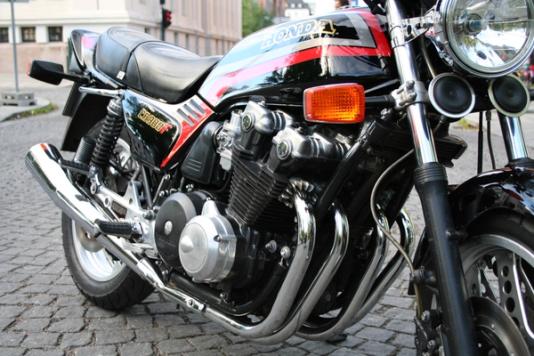
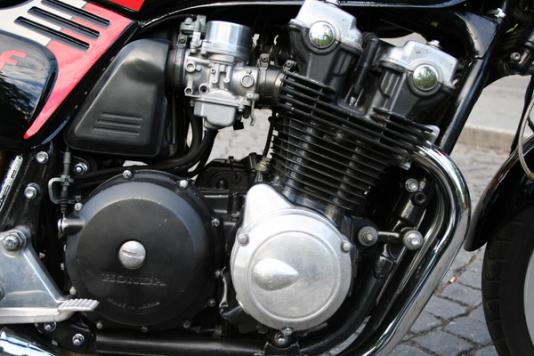
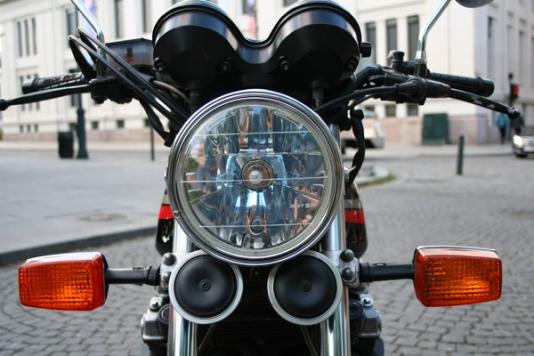
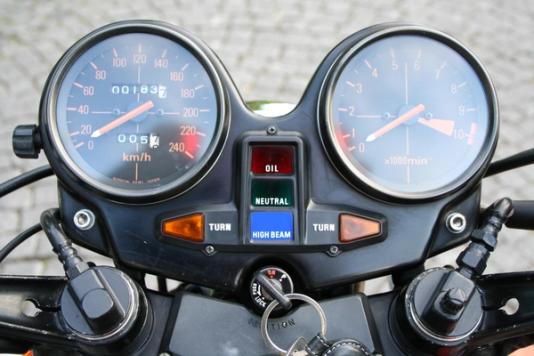
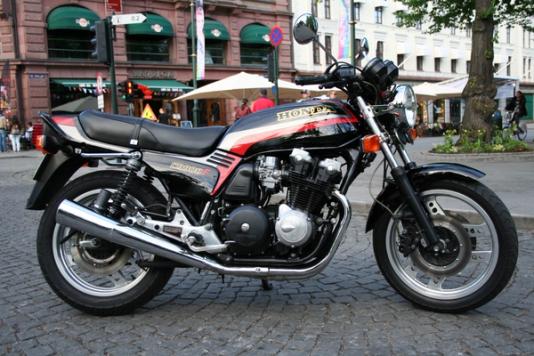
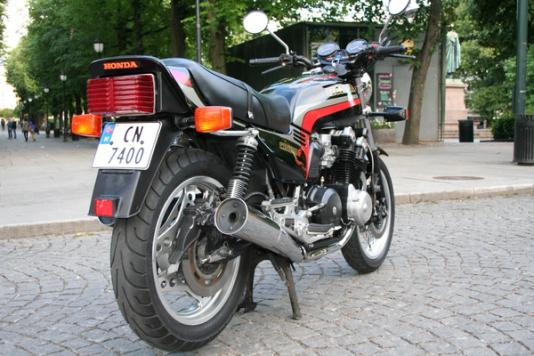
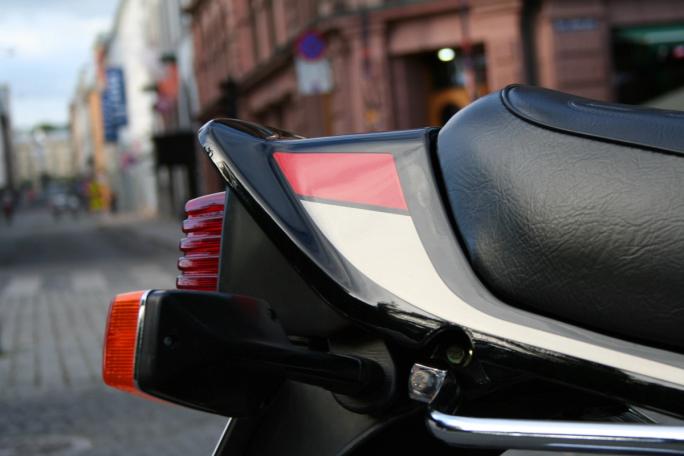
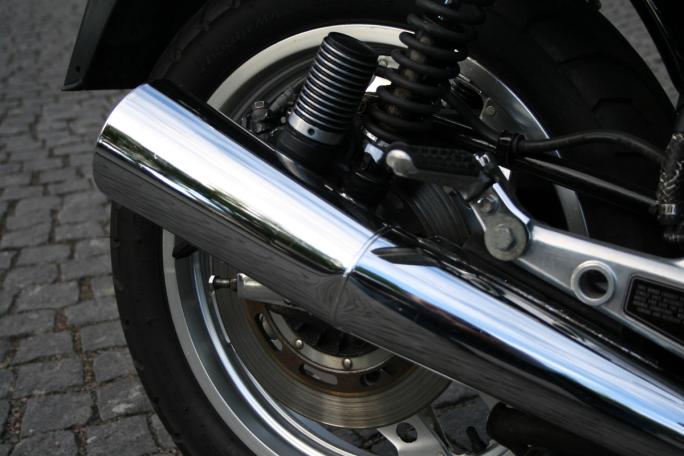
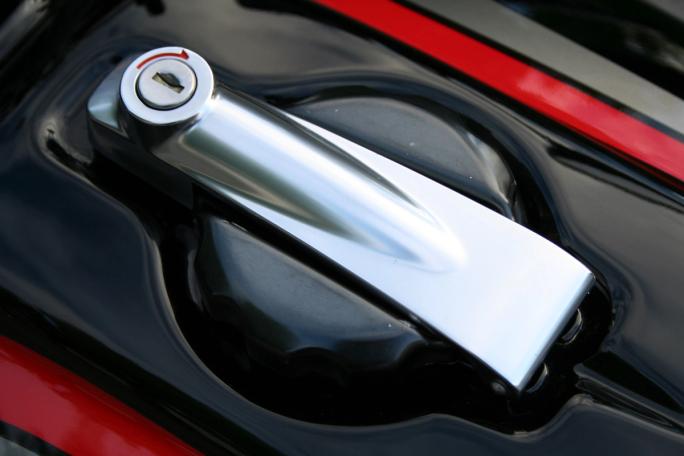
Honda had not rested on its laurels, however, and in the factory premises the development work on the new 900 cc engine was in its final phase. Honda could now send an ever-so-slight glance at the competitors and summarize what was needed. The recipe included, among other things, double disc brakes at the front and a single disc brake at the rear. A new frame with greater torsional stability was to ensure that the power could be used in a responsible manner. Most striking, however, was the design of the tank, side cover and fastback, and last but not least the new power package of an engine that produced a full 95 hp at 7500 rpm. This was 12 hp more than in the Kawasaki Z1000 and 5 hp more than Suzuki's 1000 cc GS1000E. The engine in Honda was very advanced by the standards of the time. It combined double overhead cams, with 4-valve technology, electronic ignition and vacuum carburetors. In addition, it had an original oil cooler, a smart solution to keep the oil temperature at a reasonable level. The top speed was stated at 216 km/h.
24 hour Bol d'Or
With the launch of the CB900F, Honda took a step forward in technological development. In many ways, the model was the second generation of Honda 4-strokes. The CB900F was a worthy successor to the good old CB750 Four that was phased out in 1978. To really show the public what the new model was good for, Honda took it to the Paul Ricard circuit in France. The goal was to win the legendary 24-hour race "Bol d`Or". A victory in this tough race was considered good marketing. Honda's commitment brought them to the top of the podium, and what was more natural now than adding Bol d`Or to the model name. Honda CB900F was produced from 1979 until 1983. From 1981 it could also be delivered with a full fairing, under the model designation CB900F2.
Technical data Honda CB 900F, 1982 model:
Engine: 4-cylinder 4-stroke, DOHC, 4-valve
Displacement: 901 cc
Compression: 8.8:1
Power: 95 hp at 9000 rpm.
No. of gears: 5
Tank: 20 liters
Front tires: 100/90 x 18
Rear tires: 130/80 x 18
Weight: 233 kg (dry)
0-100 km/h: 4.1 sec
Top speed: 216 km/h