
Honda CB1100F Super Bol d`or

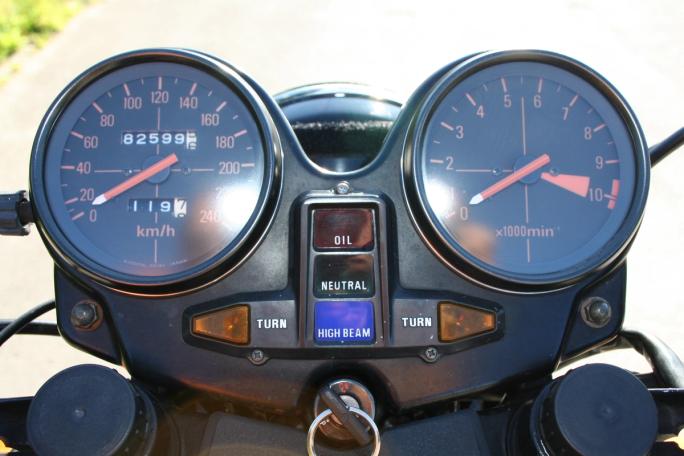
When Honda launched the CB1100F Super Bol D`Or in 1983, it marked in many ways the end of an era of air-cooled inline-fours that had begun in 1968 with the legendary CB750 Four. The new 1100cc machine had clear parallels to its 1960s ancestor, while at the same time being a modern motorcycle adapted to the speed demands of the 1980s.
From OHC to DOHC
By the end of the 1970s, the time was ripe for an upgrade of Honda 's old OHC engine. Competitors had already introduced inline-fours with double overhead cams, and both Suzuki and Kawasaki had 1000cc engines equipped with DOCH engines. In 1979, Honda had its second-generation inline-four CB750F-DOCH ready. The new 750cc engine had a completely new design, with the fuel tank, side covers and fastback forming a continuous line. The old spoked wheels were also history, replaced in favor of disc wheels, so-called “comstar wheels”.
The legacy of the CB750Four
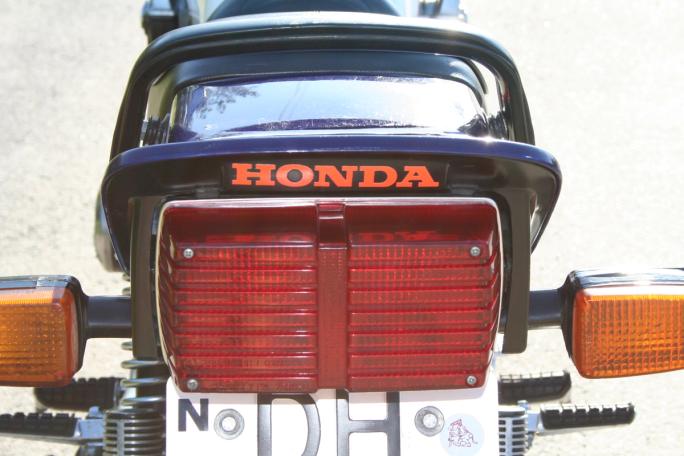
Nevertheless, the new four-stroke from Honda had clear parallels back to the CB750Four from 1968, with its bare chassis in a classic round tube frame. The model quickly became popular and later that same year came CB900F, a supersport machine that was very similar to the CB750. The success of the CB900F was immediate, and the model became a box office success for Honda .

Success with the CB900F
With the CB900F, Honda took home a number of first places in racing, which gave it a lot of publicity. At the same time, Honda took back the lead in the sports class, where the CB900F led the way with its 95 hp, which was 5 hp more than what the competitor Suzuki GS1000 could offer.
¼ mile in under 12 seconds
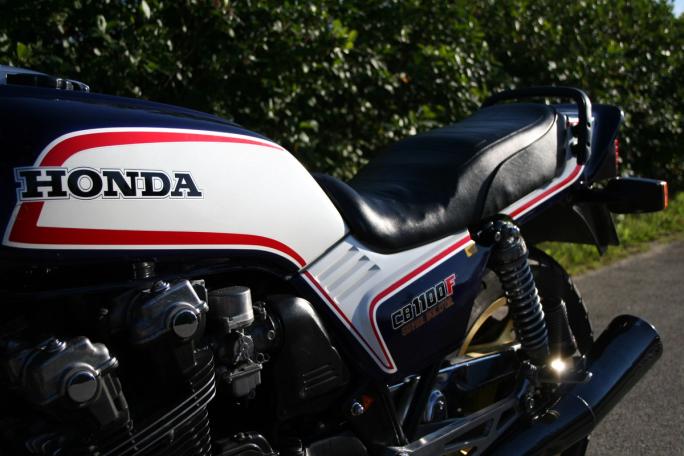
At the beginning of the 1980s, however, a displacement of just under a liter was not enough, and thus the stage was set for Honda's superbike CB1100R. The model built on the experience with the CB900F. However, the CB1100R did not become a volume seller, until the price tag was far too high. Moreover, only 4050 copies were produced in the period 1981-1983. However, Honda needed an 1100-cubic meter in the segment for the heaviest sports machines, and the answer was the CB1100F that came out in 1983. This was a more affordable and stripped-down version of the R model, without a fairing and with lower power. The price tag was also much lower, which made it accessible to most people looking for a bike in this class.
“Three of a kind”
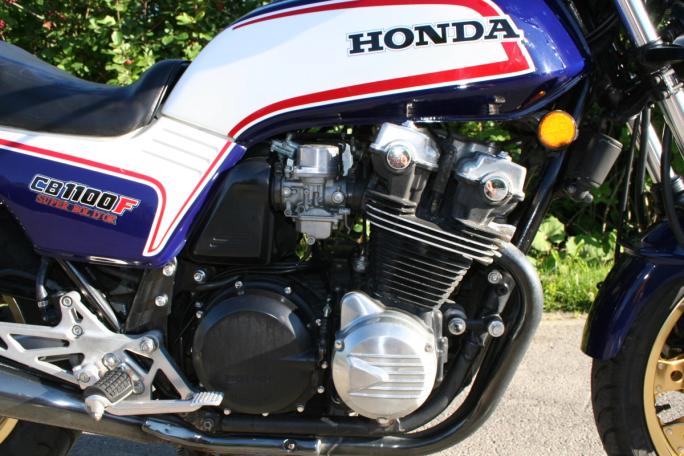
The CB750F, CB900F and CB1100F were all based on the same chassis, and many parts were interchangeable. In many ways, the three were quite similar motorcycles, but with different performance. This rationalized production, while at the same time giving Honda a model in a different segment in terms of price and performance. With the CB1100F, Honda had also reached a major crossroads, where the future would turn more towards models with water-cooled V-engines, including the VF1000F. The CB1100F became a popular motorcycle, even though it had to be beaten by, among others, Kawasaki's GPZ machines in terms of speed resources.
108 hp
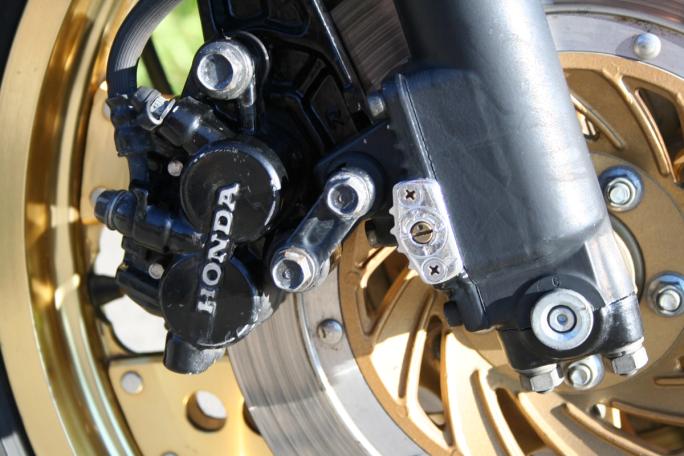
Now, however, the CB1100F was no slouch in traffic, and with its 108 hp it covered the ¼ mile in just over 11 seconds, which was very fast for a standard machine. With three disc brakes, twin-piston brake calipers and an anti-dive fork, the CB1100F offered handling characteristics that matched the engine's performance. Now Honda could have made it easy for itself in terms of the power race, and given the 1100cc much higher power. However, they failed to do so, which was sensible. They had clearly learned a lesson from the 70s, when many motorcycles were known for their power and performance far exceeding their handling characteristics.
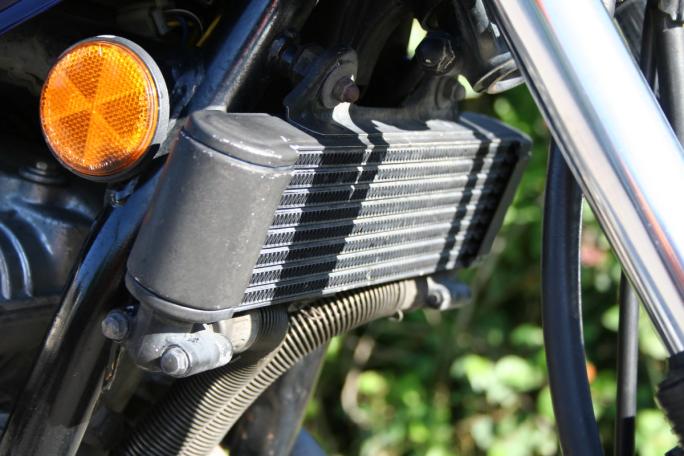
Technical data: Honda CB1100F, 1983 model
Engine: 4-cylinder 4-stroke, doch, 16-v.
Displacement: 1062 cc
Power: 108 hp at 8500 rpm.
No. of gears: 5
Front tire:100/90Vx18
Rear tire: 130/90Vx17
Fuel tank: 20 liters
Weight: 243 kg (dry)
Top speed: 225 km/h