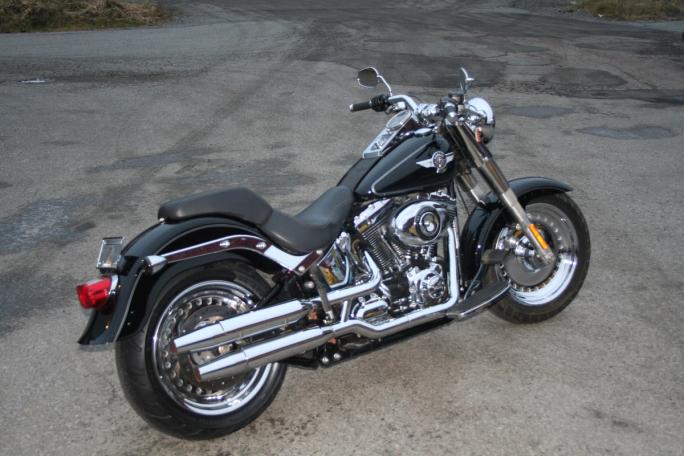
Harley-Davidson Fat Boy
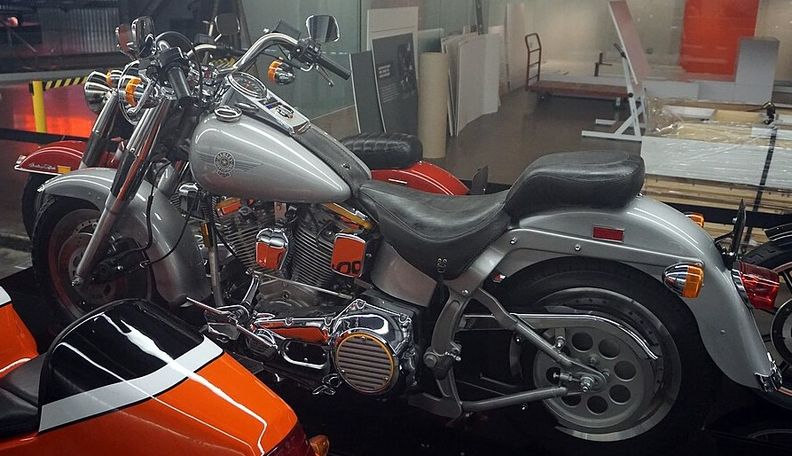
Photo: Michael Barera/Wikimedia commons
"It's nothing personal," growled Arnold Schwarzenegger in the form of the Terminator, before tightening his grip on the shotgun and swinging himself in the saddle of his Harley-Davidson Fat Boy . Talk about a hit in terms of product placement, because Terminator 2: Judgment Day (1991) went on a triumphant run on cinema screens all over the world. For Harley-Davidson This was advertising of almost priceless value.
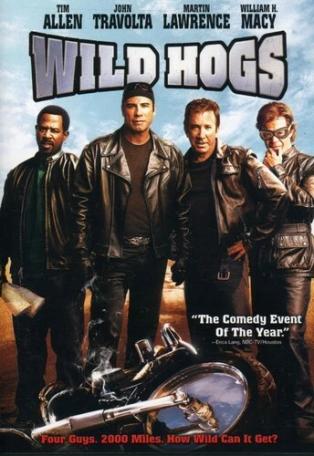
16 years later, in the movie "Wild Hogs" (2007), Fat Boy once again appeared on the big screen, and this time it was John Travolta who sat behind the wide handlebars. Maybe not quite as macho as the Terminator, and with an overturned Fat Boy on the movie poster, it was a bit of an anti-hero. But what does it matter when all PR is good PR....
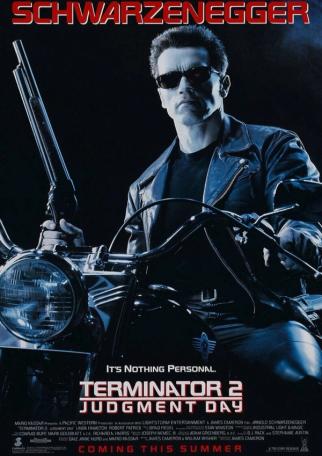
The Terminator himself couldn't ride a Japanese motorcycle, or..........?
Fat Boy has become one of the truly great classics from Harley-Davidson , and not without reason. The model, which was introduced in 1990, was built on Softail frame with the Evolution engine as the power package. The cruiser design pointed back to the greats of the past, such as the Model E with the iconic Knucklehead engine, and not least the Duo and Hydra-Glide with the classic Panhead engine.
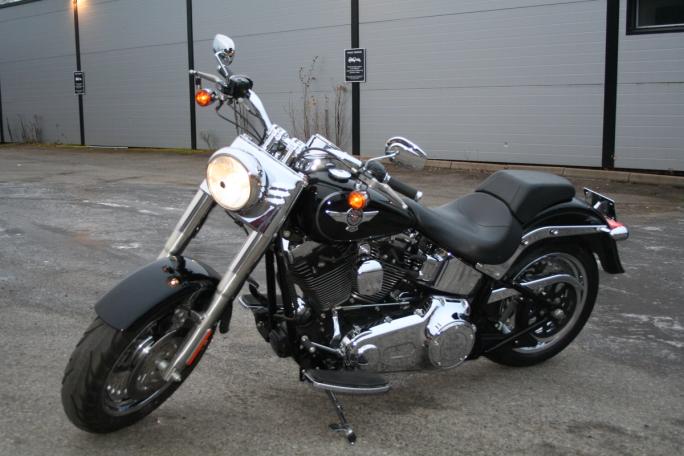
The man behind Fat Boy was none other than William (Willie) G. Davidson (b.1933-), grandson of William A. Davidson who was one of the four founders of Harley-Davidson in 1903. He had Louie Netz on his team, and the goal was to create a cruiser with a raw, industrial and futuristic look.
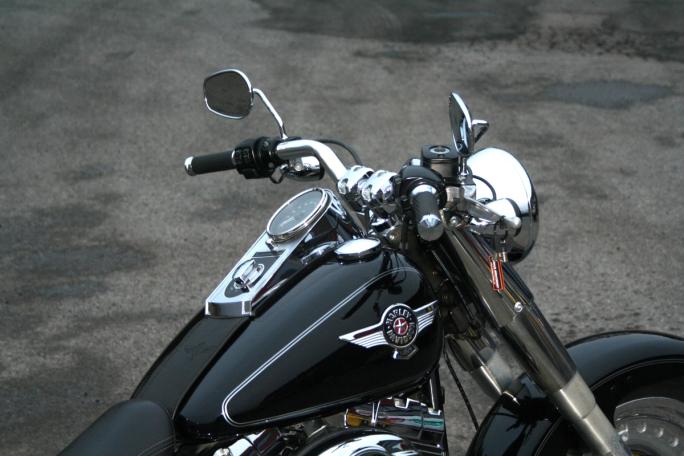
Willie G. understood the importance of connecting with motorcycle enthusiasts, and in 1988 and 1989 he brought a prototype Fat Boy to Daytona Speed Week to gauge the mood. He was curious about what the audience, or customers if you will, were looking for.
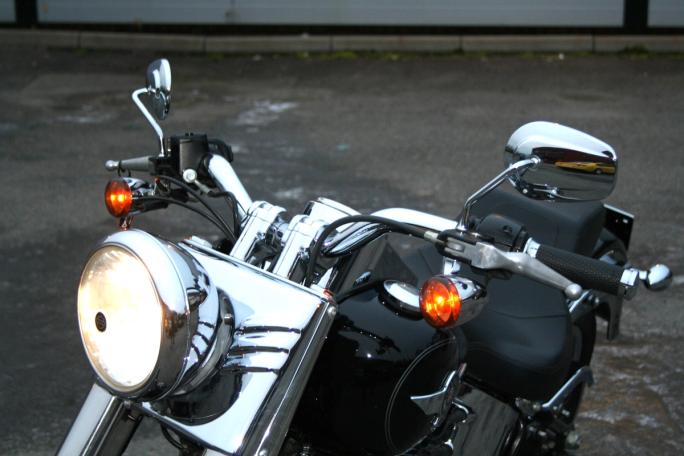
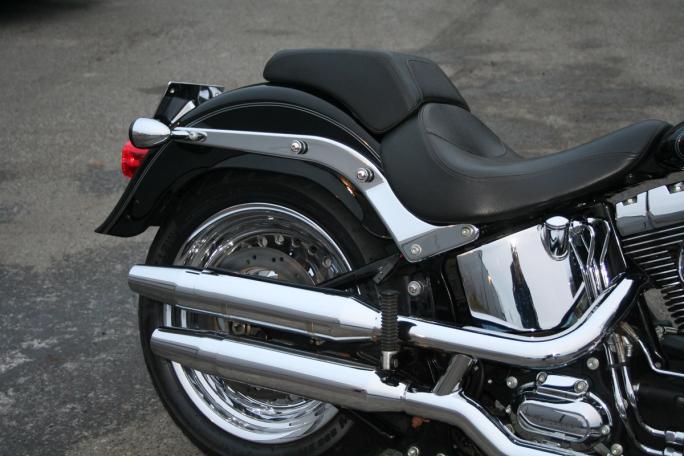
Fat Boy was intended to stand out from the crowd of more traditional Harley-Davidson models. Typical characteristics of Fat Boy were the wide tires, aluminum disc wheels, and a low profile. The powerful front fork, almost a copy of the Hydra fork from the late 1950s, also contributed to the "fat" stance.
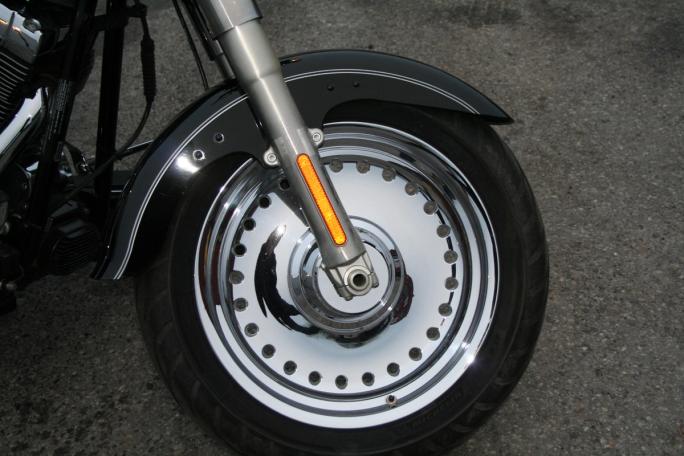
A number of myths eventually arose that the name Fat Boy was a reference to the two atomic bombs from World War II, Fat Man and Little Boy, and that Harley-Davidson mixed the names, resulting in Fat Boy . The myth was fueled by the first vintage of Fat Boy . It was painted silver with small orange details, reminiscent of the B-29 bomber plane that dropped the two bombs. The myth lived on for a long time until Harley-Davidson had to take action to release the associations with the deeply tragic events in Japan at the end of World War II.
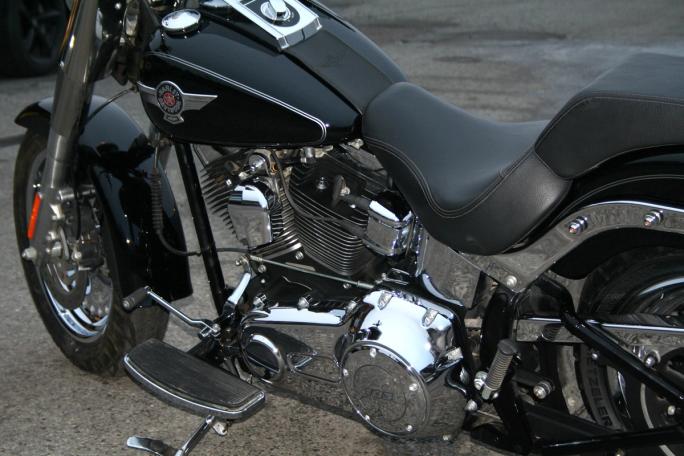
The emblem on the gas tank also contributed to the myth of the bombs as it could give associations to military symbols. As said, only speculation and if there is one thing that is certain it is that Harley-Davidson would never name one of its models with the result that it gave associations to one of the greatest tragedies in recent history. The truth behind the model name was, in short, to emphasize the model's bold shapes.
In a 2015 interview, Scott Miller, Harley-Davidson's vice president of design and product development, was very clear that the name Fat Boy was only descriptive of the model's design, and that it could in no way be linked to the atomic bombs that hit Hiroshima and Nagasaki.
Fat Boy would become very popular, and the model received a huge sales boost when it was driven by Arnold Schwarzenegger in the 1991 film "Terminator 2: Judgment Day." This gave Fat Boy almost iconic status, and the model became a popular cultural symbol.
So, why did Fat Boy become so popular? The answer lies in the fact that the model combined classic Harley heritage with a unique, massive look. The design struck a chord with both custom enthusiasts and regular cruiser owners, because motorcycling is about emotion, not reason. And, it still does, because production of Fat Boy is still going strong, 35 years after the first vintage rolled off the assembly line.
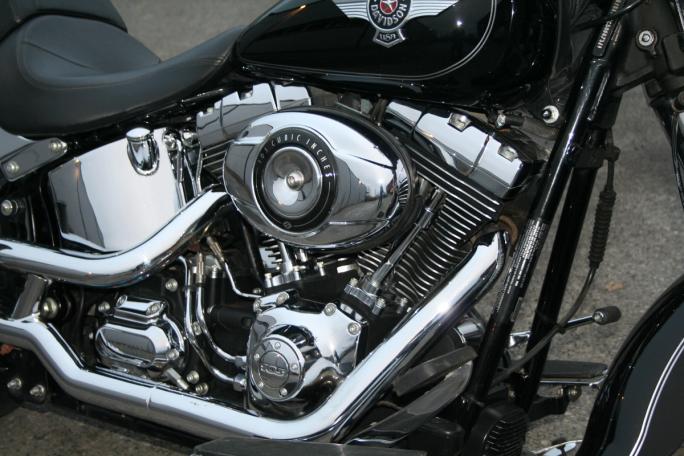
- Key developments:
Fat Boy 1990:
- Introduced as a new Softail model
- 80 cubic inches/1340 cc Evolution engine
- Heavy-duty aluminum wheels
- Painted in gray/silver with yellow details
- Wide and powerful front fork, much like the old Hydra front fork
Fat Boy 1994-1996:
- Paint codes and details are updated
- Small ergonomic improvements
Fat Boy 1999:
- Gets the new Twin Cam engine of 88 cubic inches/1450 ccm
Fat Boy 2005:
- Better shock absorbers and better brakes
- 15th anniversary model that comes with a Screaming Eagle engine, custom wheels and custom paint
Fat Boy 2007:
- Twin Cam engine of 97 cubic inches/1584 ccm
- New 6-speed gearbox
Fat Boy 2010:
- 20th anniversary special edition with unique details
- Fat Boy Lo with record low seat height
Fat Boy 2012:
- Twin Cam engine of 103 cubic inches/1690 ccm
- Updated color codes, and more chrome details
Fat Boy 2018:
- New Softail frame that is lighter and stiffer
- Milwaukee-Eight engine, 107 and 114 cubic inches
- New tire dimensions m.160 front and 240 rear