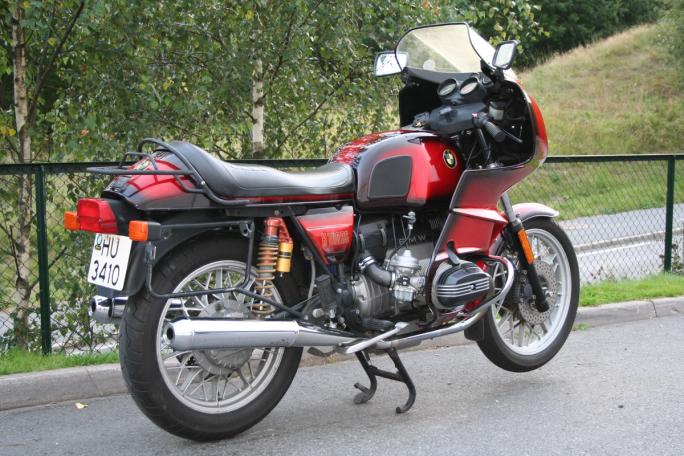
BMW R100RS
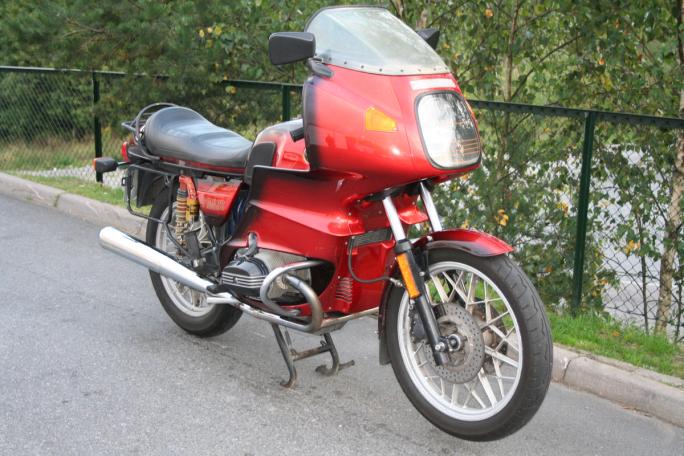
For touring people, BMW has often been the first choice. Now, of course, competitors have sharpened their models in the same segment, and bikes like Honda Gold Wing , Suzuki Cavalcade and Yamaha Venture did their part to capture customers' attention. BMW , with the possible exception of Gold Wing , kept most of the competitors at arm's length, thanks to quality, handling and ergonomics.
Even though BMW were well established in the touring segment in the 1970s, they took over the throne in full in the 1980s. Now there was an end to retrofitting touring equipment such as side fluids, top cases and full fairings. This equipment was now standard equipment, and the typical long-distance machines were now fully rigged the moment they rolled out of the dealers.
0/0
R90/Sport
BMW indicated a trend in the mid-70s with the R90/Sport. This had a fairing as standard equipment, and suggested that something was going on. In this segment there was also Moto Guzzi LeMans, also equipped with a fairing. This time, however, it was not a one-piece case, but a more minimalist and sporty handlebar fairing, which emphasized the sportiness of these two models. Those who chose touring bikes in the 70s therefore had to order and assemble the equipment themselves. The supply of equipment was by no means scarce. Most of the readers probably remember Wetter, Rickman and Dunstall, and many a motorcycle owner had boxes delivered to their home, full of struts, fiberglass and molded soot-colored plexiglass. Then all that was left was to read the assembly instructions carefully before starting the work of transforming the bike into a road locomotive.
Coat and suitcases as standard equipment
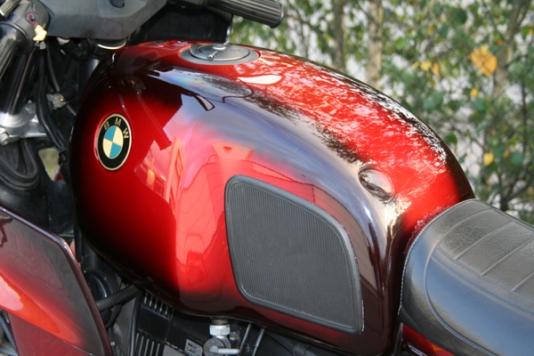
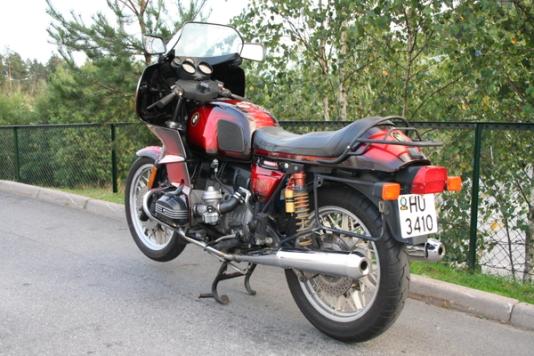
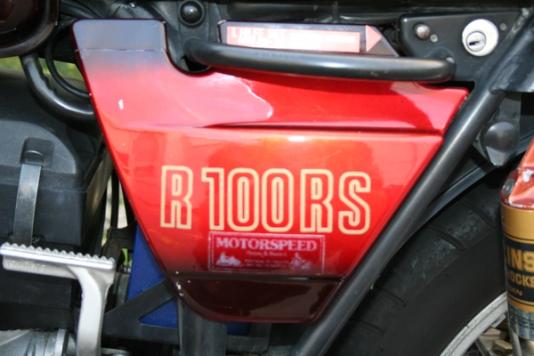
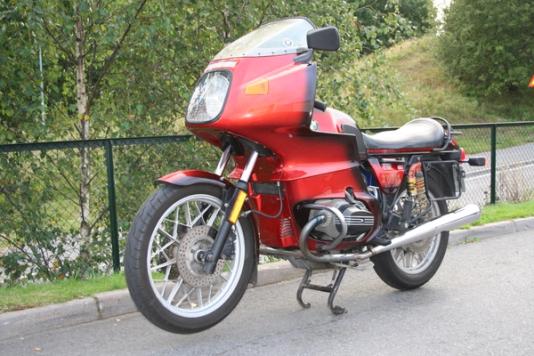
As previously mentioned, this changed, and the touring bikes that were produced in the 80s were completely factory-rigged. One of the models that really affected the sales statistics in Norway and Europe in general was BMW R100RS. When the model went on sale in 1978, it set the standard for the modern generation of touring bikes. With a full fairing and pannier set, it was complete. BMW had also spent many hours in the wind tunnel, precisely to design the fairing so that the rider could sit untouched by the wind despite high speeds over long periods of time. The side cases that were adapted to this particular model were designed by Krauser, and were waterproof and lockable.
Low center of gravity
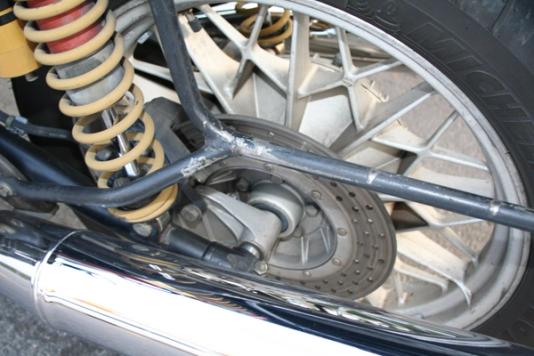
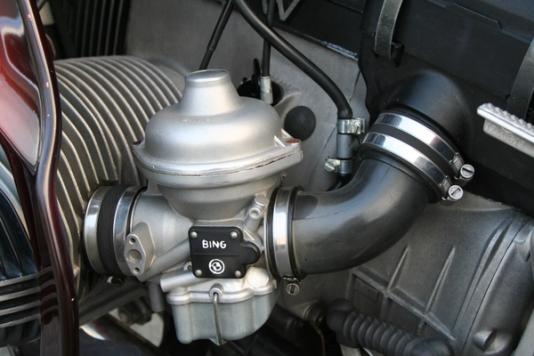
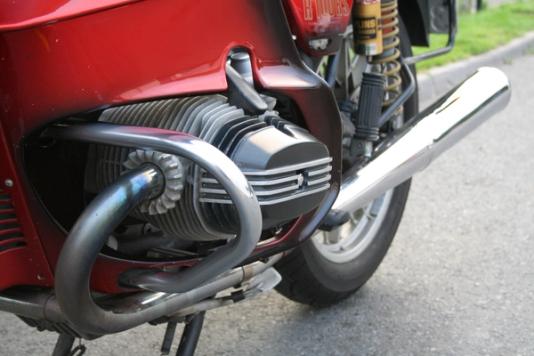
Now it must be said that a fairing and panniers are not enough to create a trendsetter, more is needed. However, BMW already had that. The boxer engine was a real contribution to the bike's low center of gravity, and the cardan drive gave a smooth and noise-free ride. The engineers at BMW took up the latter, and the R100RS could therefore be delivered with two rear wheel ratios, 1:3.0 as standard, and 1:2.91 as an "option"! However, what created an army of fans was the seating position, and few of the competitors could match BMW in terms of ergonomics. On the long day stages, the angle of the knees and hips and the position of the back were not unimportant, on the contrary. This was where BMW owners really got to experience what their bike was good for. Seating position and comfort became of decisive importance for those who chose a motorcycle for long trips, and BMW offered these qualities more than any other motorcycle manufacturer.
Fully rigged already in 1978
Ranking motorcycles according to different parameters is of course difficult, especially because many people own their bikes based as much on emotion as on reason, and vice versa. It is therefore somewhat subjective to claim that BMW was "top of the line" in the touring segment. On the other hand, this claim is probably not that far from the truth. Now many will probably claim that Honda Gold Wing was No. 1. With its four-cylinder boxer engine, it was both larger and more powerful. However, with its nearly 300 kilograms, it was considerably heavier and thus far from as easy to ride and agile as the R100RS. In 1978, Gold Wing was also still "naked", and if owners wanted protection from the wind, they had to get the fairing themselves. Thus, BMW R100RS was a more complete tourer than its rivals when it entered the market in 1978, fully rigged with fairing and panniers.
Technical data BMW R100RS, 1982 model:
Engine: 2-cylinder 4-stroke, flat twin, air-cooled
Displacement: 980 ccm
Power: 70 hp at 7250 rpm.
Max. torque: 77Nm at 5500 rpm.
No. of gears: 5
Front tires: 3.25Hx19
Rear tires: 4.00Hx18
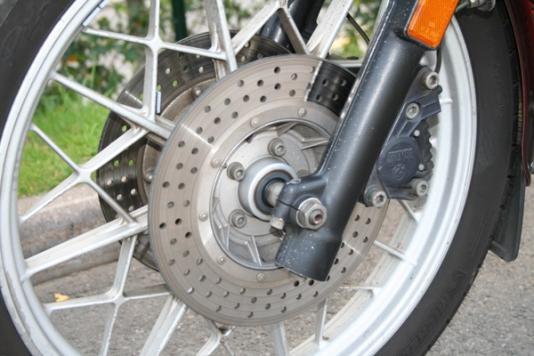
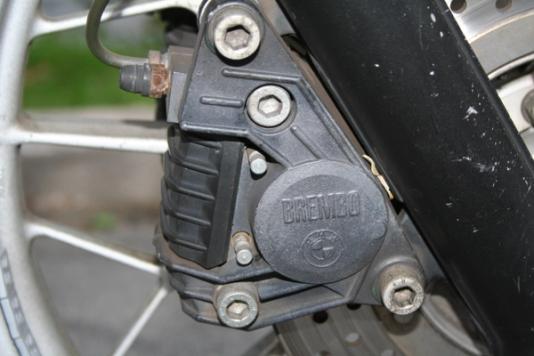
Brakes: 3 x Brembo disc brakes
Tank: 24 liters
Weight: 210 kg (dry)
0-100 km/h: 4.3 sec.
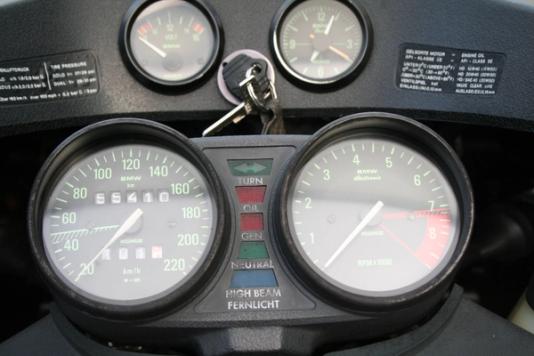
Top speed: 200 km/h