The Yamaha was on a field in Colorado
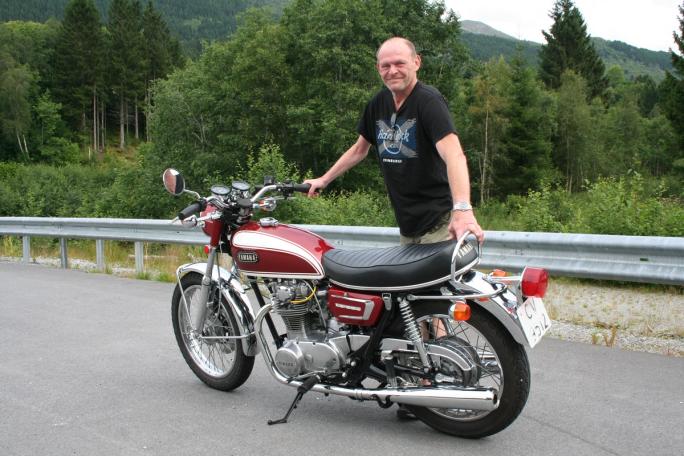
When the calendars were flipped to 1969, this marked the start of a new generation of motorcycles, where Honda CB750Four and Kawasaki H1-500 turned the entire motorcycle world upside down. Close on their heels came Yamaha's best-selling XS-1 650. It wasn't quite as sharp as the other two, but for Ola Ernst Moe it was the dream classic that had more than enough power for cruising on winding western roads.
Beautiful lines, strong colors, modern technology and power and performance that can best be described as a quantum leap were a fact for the motorcycles produced in Japan. The management at Yamaha had to take action if market shares were not to disappear.
Spectacular prototypes
The old 2-strokes were fine in themselves, but if they were to have a say in the team, they had to offer a 4-stroke. On the drawing board, two, to say the least, spectacular models took shape, and they quickly became prototypes. The Wankel-powered RZ201 was one option. The other was the water-cooled 4-cylinder 2-stroke GL750. Both were very spectacular designs, but Yamaha knew the art of building engines. They were behind the engine in the very rare Toyota GT2000 sports car, among other things.
With Bonneville as a model
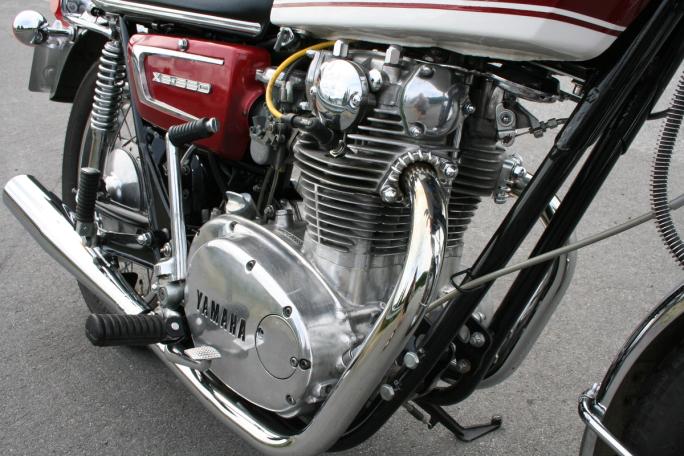
The management at Yamaha were clear that the American motorcycle market was the most interesting commercially. Since the CB750Four had 4 cylinders and the H1 Mach IV 3 cylinders, Yamaha dropped the idea of surpassing the two. An analysis of the American motorcycle market and biker culture on this vast continent showed that Triumph in particular were big and popular "over there". Triumph Bonneville had a solid position, and Yamaha's strategy to position itself was to build a copy of Bonneville . The stage was set for the 650cc twin XS1, marketed under the slogan "Two is enough". Thus, they abandoned the idea of a multi-cylinder machine and went "all in" with the new twin.
Yamaha XS1-650
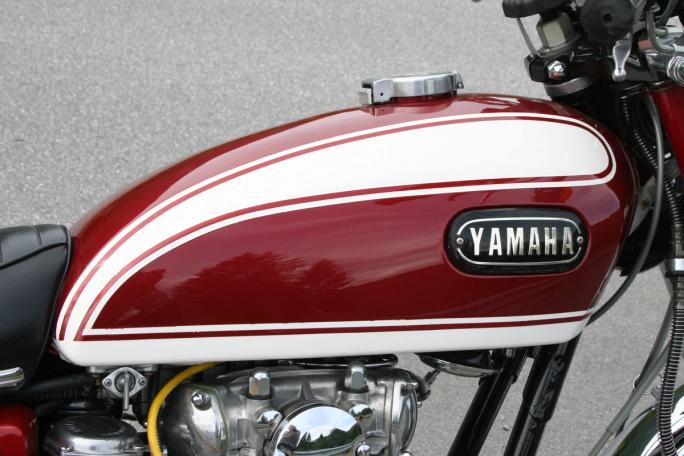
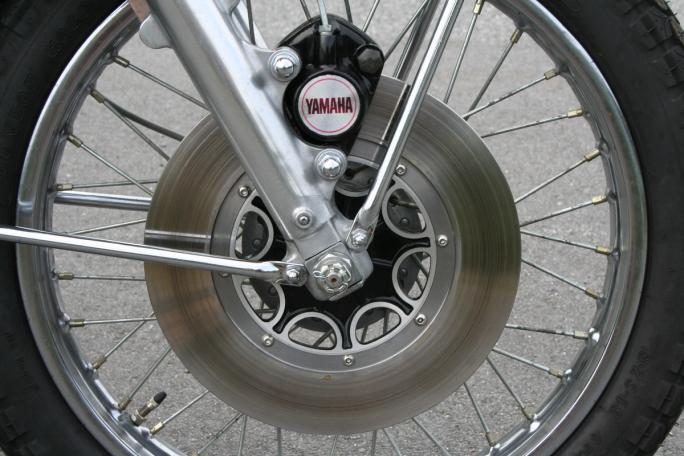
When the XS1 went on sale in 1969, it received rave reviews for its design and reliability. The engine was very robust, which was not surprising as Yamaha engineers were known for their technical expertise. However, the handling was not quite what was expected. The frame tubes could have been thicker, and the front drum brake did not bite as well as a disc brake. Despite the criticism, it sold well, and Yamaha did not make the necessary improvements to improve the handling until 1973.
From Colorado to Årnes
The story behind the XSn in this report is quite incredible. The two friends Morten Helbø and Bjørn Støkker were in the USA in the fall of 1994, more specifically in Greely, Colorado, to arrange the import of a car. There, they came across an elderly man who had been involved with motorcycles and was about to retire. Behind the main building, there were a lot of classic Japanese motorcycles parked in the field. It was quite a sight, and the two friends could hardly believe what they were seeing. They agreed with the "oldtimer" on a sum for the entire collection, and after a trip home to Norway to raise capital, they went back to Colorado to pick up the bikes. There were hundreds of classic Japanese motorcycles, and the solution was to stow them together in containers for shipping to Norway. Back home in Årnes, the bikes were unloaded and stored in a large warehouse. Along with the bikes, they also bought a large stock of parts, which was a good deal as interest in classic bikes was high in Norway at the time. Many mature men wanted to have motorbikes, preferably classic Japanese ones, and preferably the same motorbike they had had in their youth in the 70s, the 10th anniversary of the boom in Japanese motorcycles.
Olas XS
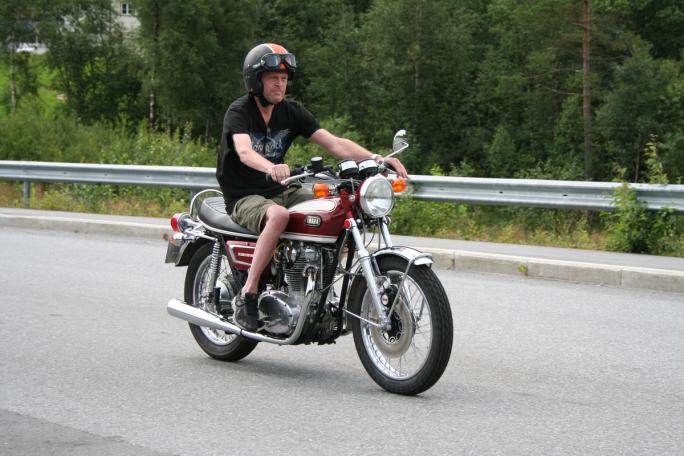
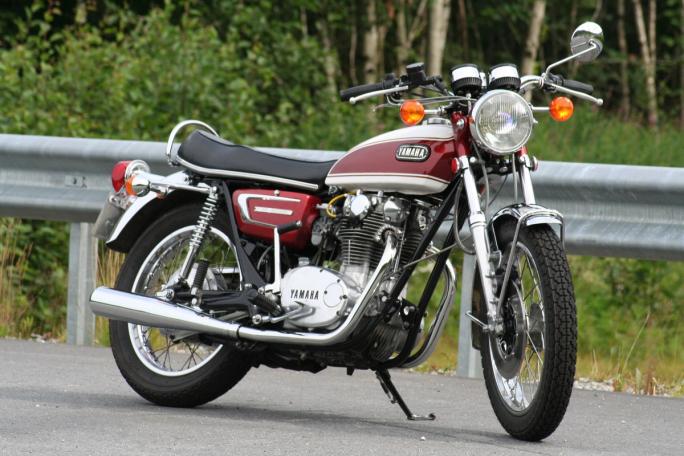
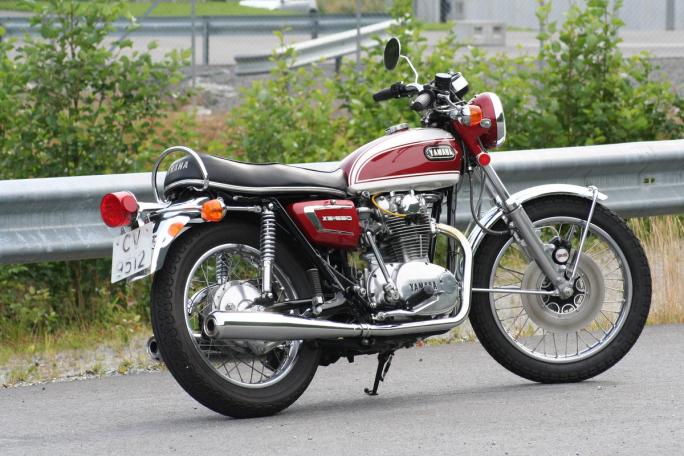
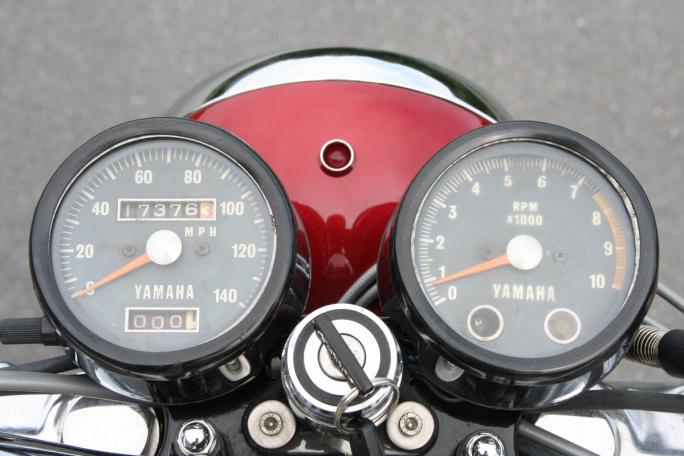
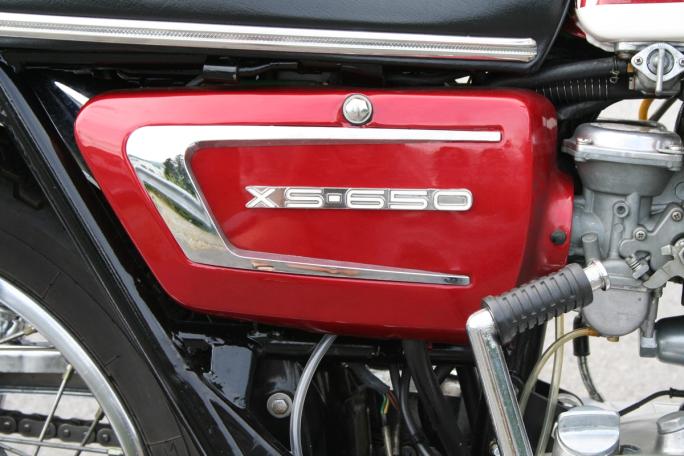
Ola Ernst Moe from Ørsta wanted a classic, and the XSn was picked up in Årnes not long after it arrived there from the USA. The bike, a 1972 model, was completely original and undamaged. "This is an advantage because bikes in this condition are not screwed to death," says Ola. However, the XSn was quite sunburned in the paint after many years in the scorching Colorado sun. He has therefore repainted the bike in the original red color "Candy Red" with the right pinstriping. Some minor technical improvements have also been made, and now Ola can enjoy himself on winding western roads when the sun peeks out. For Yamaha , the XS650 was a commercial success. The model was in production from 1969 to the early 1980s, and it is estimated that over 400,000 copies were produced. Then perhaps it wasn't so stupid of Yamaha to copy Triumph's successful model Bonneville !
Technical data Yamaha XS650, 1972 model:
Engine: 2-cylinder 4-stroke, OHC
Displacement: 654 cc
Power: 53 hp at 7000 rpm.
No. of gears: 5
Start: kick and electric start
Front tires: 3.50 x 19
Rear tires: 4.00 x 18
Tank: 12.5 liters
Weight: 194 kg
Top speed: 180 km/h