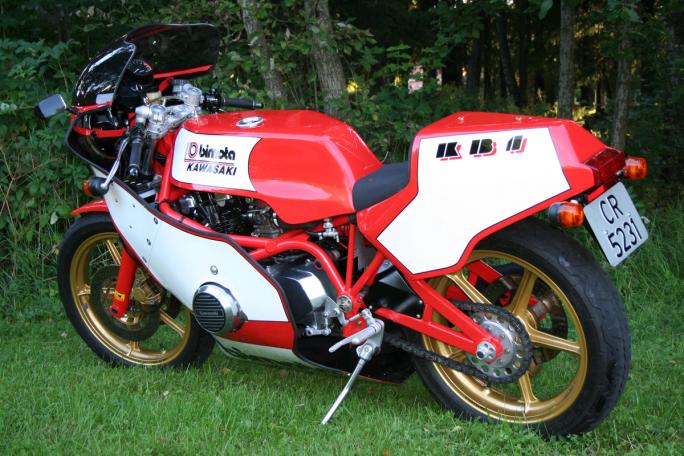
Tom Anders Bimota
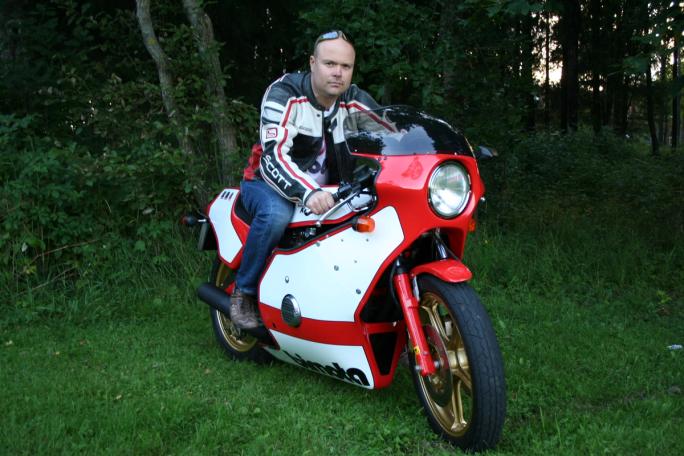
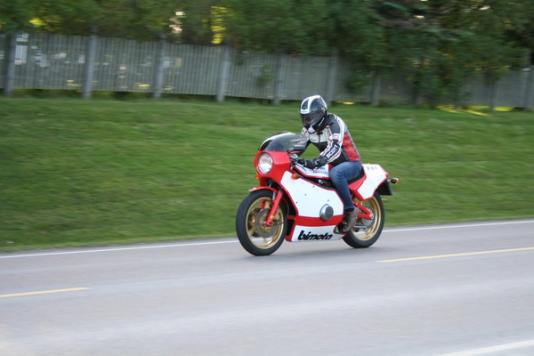
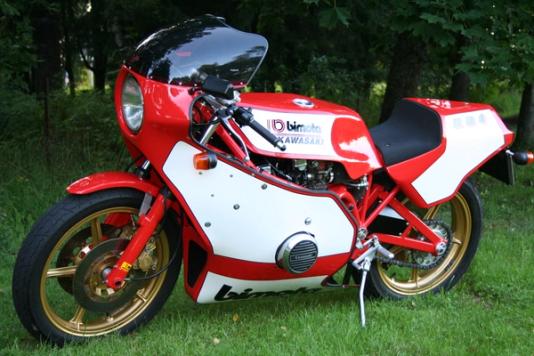
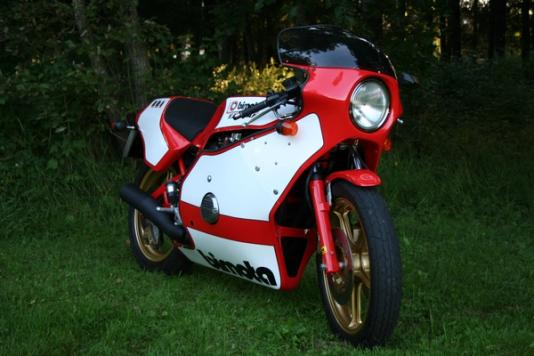
“The most brutal bike in the collection is undoubtedly this one,” says Tom Anders, pointing to the polished Bimota, a KB1, with Kawasaki engine of course. Tom Anders Rein from Skedsmo knows and can do most about the classic Kawasakis from the 1970s. He owns a number of different models of the Japanese brand that were first out of the traffic lights, which makes me assume that the Bimota must have been the fastest of them all. “That’s right,” says Tom Anders, quickly adding that “it has the engine from Kawasaki Z1000, so with 84 hp in the light chassis it was superior to the competitors.”
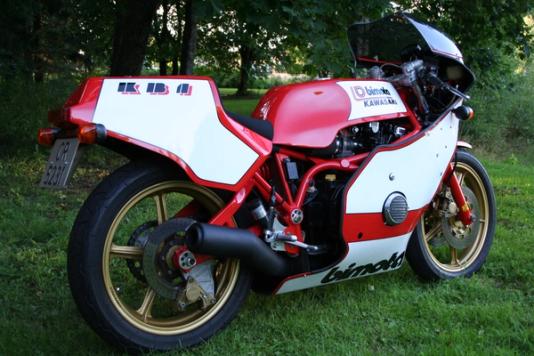
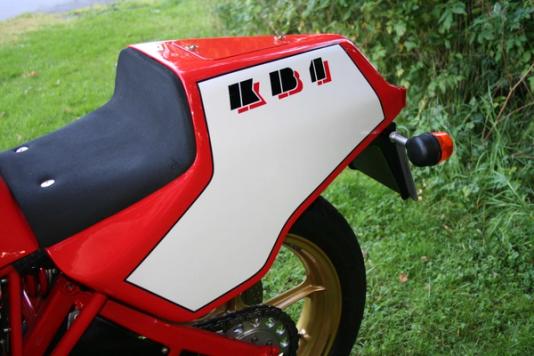
When it comes to motorcycles, Bimota represents the very best of Italian refinement, design and technology. The small motorcycle manufacturer in Rimini set itself the goal from the very beginning of the 1970s to be able to satisfy the most demanding motorcycle customers. We have taken a closer look at one of the classic models, a KB1 from 1980.
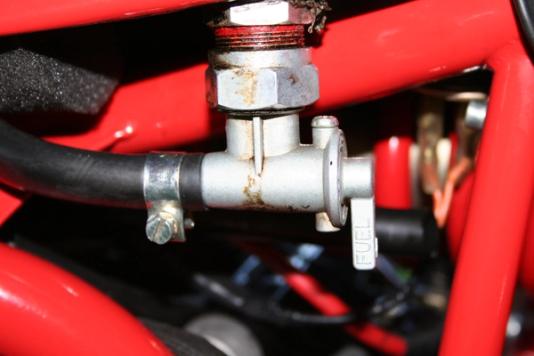
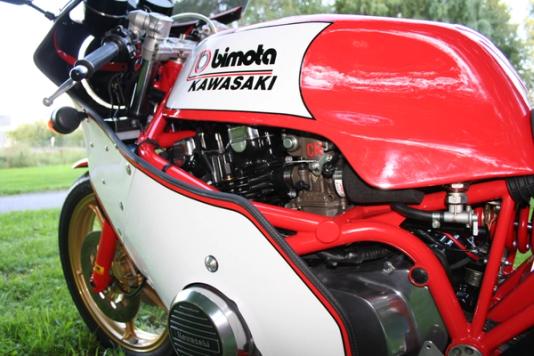
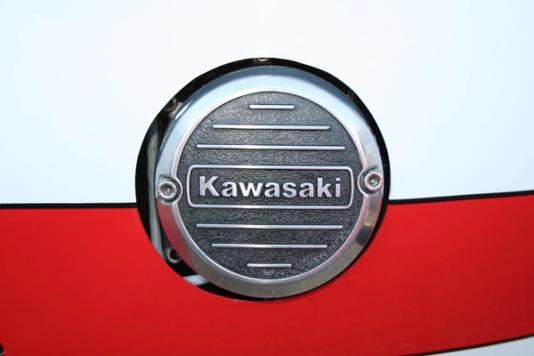
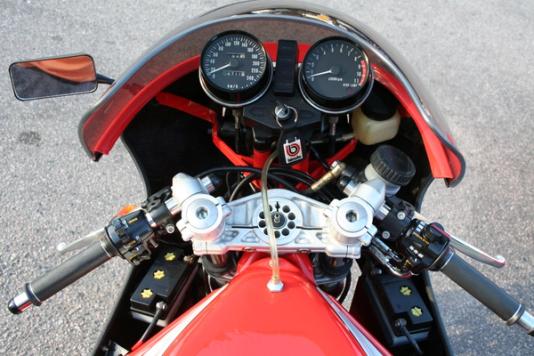

0/0
Bi-mo-ta
If we take the name Bimota and divide it into three equal syllables, i.e. bi-mo-ta, we get the two first letters of the surnames of the three founders Valerio Bianchi, Giuseppe Morri and Massimo Tamburini. All of them had a strong passion for special motorcycles, and when they quit their respective jobs to build the first superbike together, the HB1 prototype in 1973, this was the start of a small industrial adventure.
Prototype with Honda engine
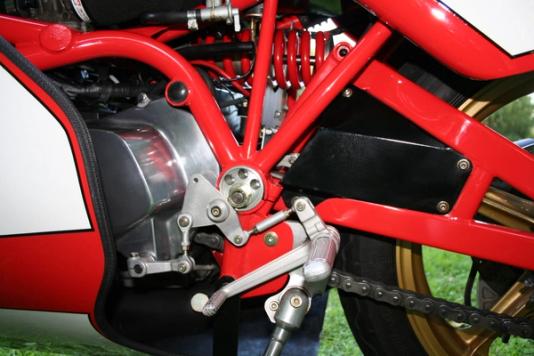
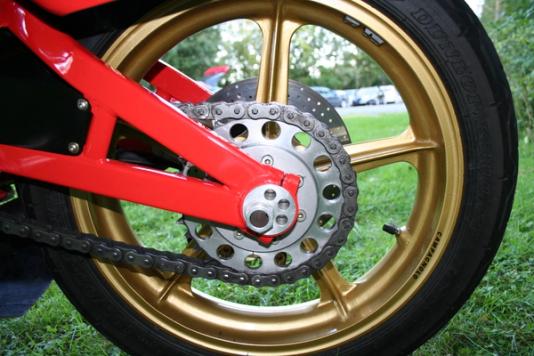
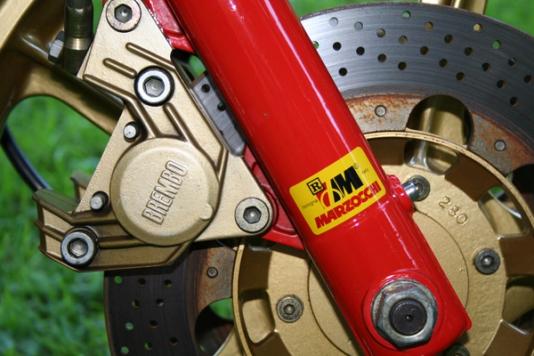
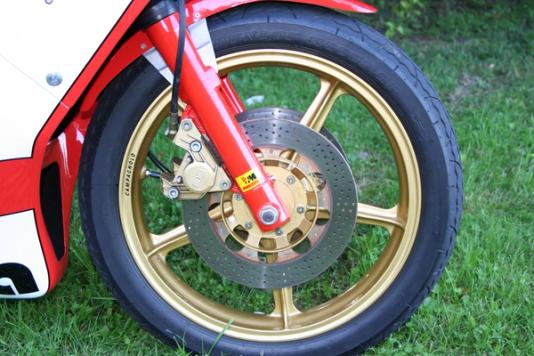
One of the first models was built around Tamburini's crash-damaged Honda CB750Four. Since they used a Honda engine, the letter H was added to the model designation. Bimota's trademark has been the spectacular frames. The rest has largely been sourced from other manufacturers, such as brakes from Brembo, rims from Comapagnola and forks from Marzocchi. Bimota's models have always been easy to recognize, with their red tubular steel frames wrapped in white-painted racing fairings. When Bimota participated in its first motorcycle show, in Milan in 1975, they also attracted justified attention.
Refinement and performance
Much of the success of Bimota's motorcycles lies in the fact that they improved the feature that the Japanese motorcycle manufacturers in particular lacked in the 1970s and partly into the 80s, namely the handling characteristics. The Japanese motorcycles with Honda CB 750Four and Kawasaki Z900 led the way in the 70s, where acceleration and top speed far exceeded the handling characteristics. Soft frames led to wobbling, which in turn led to skidding and accidents. The frame structures were not up to the task. At Bimota they solved this problem, while offering machines that were even faster. We have looked at one of the Rimini company's greatest successes, Bimota - Kawasaki KB1, with an engine from Kawasaki 1000.
Brembo, Compagnola and Marzocchi
Bimota KB1 is one of the brand's biggest sales successes. In the period 1978-1982, a total of 873 copies were produced. These are of course very low numbers if these are associated with mass production of motorcycles, but for a niche manufacturer like Bimota these were solid numbers. Bimota's business idea was to offer so-called “kits” or complete bikes. The difference between a kit and a complete machine was, in short, with or without an engine. Bimota “borrowed” these from other manufacturers, from the four Japanese and Italy's one pride, Ducati .
Kawasaki Z1000
Bimota KB1 was equipped with Kawasaki's inline-four Z1000. This had an output of 84 hp. Now the Bimota Kit was considerably lighter than an original Z1000, yes we are talking about a diet of almost 50 kg. This was a significant weight reduction, which gave significant improvements in the figures indicating top speed and acceleration, not insignificant values for those who cast their eyes on a Bimota with the intention of acquiring the fastest thing that could be found.
Chrome-Molybdenum
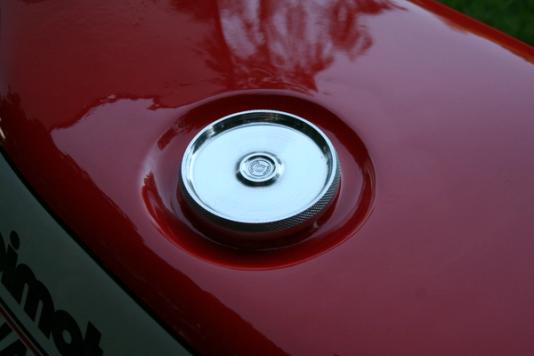
Bimota's success factor was its handling characteristics. These were well taken care of through the use of the best in brakes, wheels and frame construction. Using chrome-molybdenum tubes, a network of tubes was welded together that provided superb torsional stability. Solid swingarms were designed to get the forces down to the asphalt, while the Marzocchi fork ensured good ground contact at the front. Braking capacity was provided by double discs at the front and a single disc at the rear, of course supplied by Brembo. To ensure minimal air resistance, the bike was equipped with a full-coverage racing fairing. The seating position was of course very sporty, through the footrests moved back and low clip-on handlebars. The Bimota was characterized by a number of details in milled aluminum, topped with exclusive rims signed Compagnola. It's strange to think that this superbike has actually achieved veteran status.