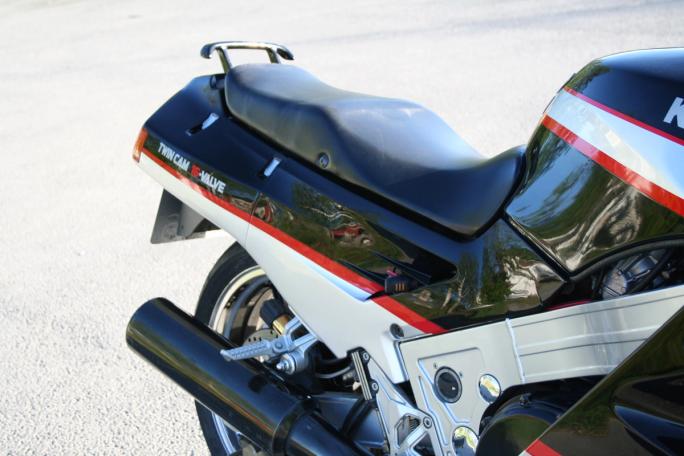
Klæboes Kawasaki ZX-10
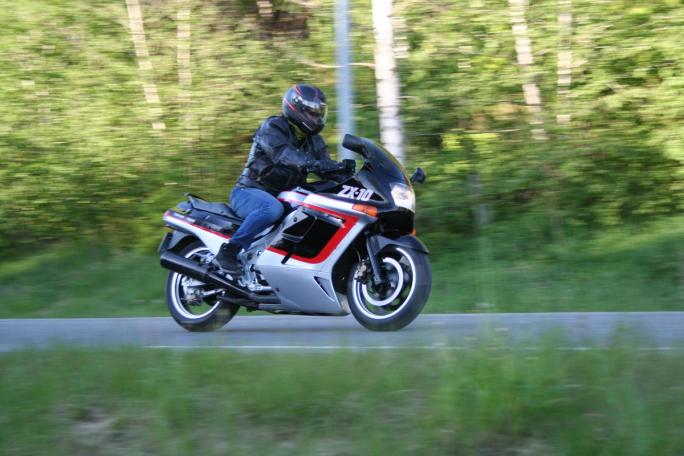
The ZX-10 fits nicely into the line of fast motorcycles from Kawasaki , but the model had a short life, and was only produced for 3 years, from 1988-1990. There was nothing wrong with the ZX-10, but at Kawasaki , development was supposed to go fast, literally, so the next step on the ladder was the ZX-11. We have spent some time on the ZX-10, a sports machine that is both rare and greatly underrated.
The ZX-10 fits nicely into the lineup of fast motorcycles from Kawasaki , but the model had a short lifespan and was only produced for 3 years, from 1988-1990. There was nothing wrong with the ZX-10, but at Kawasaki , development had to happen quickly, literally, so the next step up the ladder was the ZX-11. We have lingered a bit on the ZX-10, a sports machine that is both rare and greatly underrated.
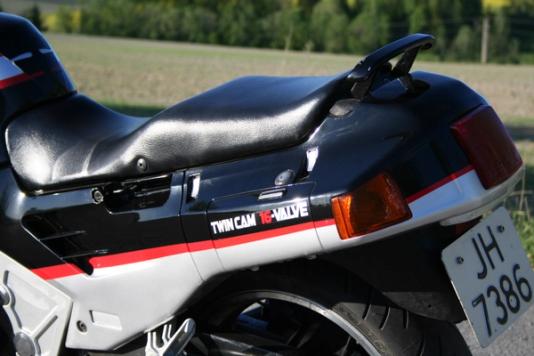
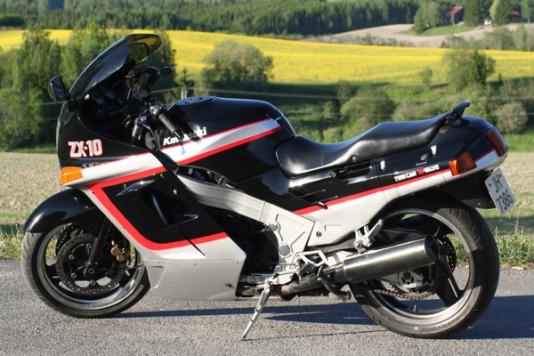
0/0
The ZX-10 was in many ways an "in between" model, positioned between the GPZ1000RX it replaced and the ZX-11 that replaced it. The GPZ1000RX received mixed reviews and had to endure some "pepper" because its handling characteristics were not as expected. Expectations were therefore high when the successor, the ZX-10, was ready in 1988.
In many ways, the ZX-10 became a model 'in between,' positioning itself between the GPZ1000RX, which it replaced, and the ZX-11, which became its successor. The GPZ1000RX received mixed reviews and had to take a lot of 'heat' because the handling did not meet expectations. Therefore, expectations were high when its successor, the ZX-10, was ready in 1988.
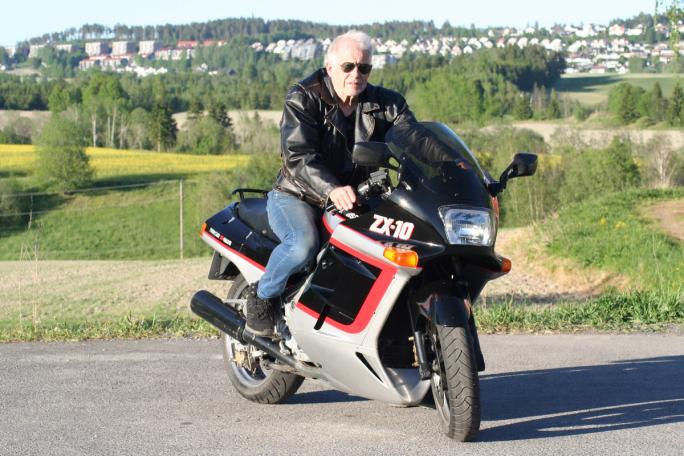
Kawasaki was now chasing hard with the goal of breaking the 300 km/h mark, and the way to get there was via the ZX-10. With a top speed of up to 270 km/h, it was approaching, and at the same time was one of the fastest series-produced motorcycles that could be found in 1988. Typical of the time, the Japanese motorcycle manufacturers provided figures regarding speed resources. The quarter-mile performance thus played an important role in marketing, and it is clear that when 0-402 meters went by in under 11 seconds, Kawasaki proved that they were once again the manufacturer of the fastest motorcycles.
Kawasaki was now chasing hard with the goal of breaking the 300 km/h barrier, and the path to that went through the ZX-10. With a top speed approaching 270 km/h, it was getting close, and at the same time, it was one of the fastest mass-produced motorcycles available in 1988. Typical for the time, the Japanese motorcycle manufacturers provided precise figures regarding speed capabilities. Quarter-mile performance played an important role in marketing, and it is clear that when 0-402 meters were covered in under 11 seconds, Kawasaki proved once again that they were a manufacturer of the fastest motorcycles.
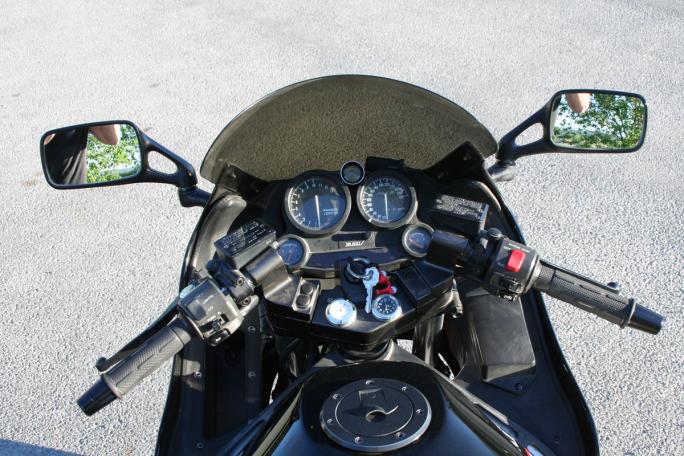
The design and riding position were typically sporty on the newcomer XZ-10. It was very fast, and easy enough to ride sporty on winding roads. The comfort on the long daily stages on the motorway at high speeds was also not inferior to the competitors from Honda , Yamaha and Suzuki . The strength of the ZX-10 was the combination of a powerful inline-four and a light and very stable chassis. The profiled aluminum frame was very torsionally stable, and with a 17-inch front wheel and 18-inch rear wheel, the 1000 cc engine could be challenged without showing weaknesses. Unleashing 137 hp required the right combination of chassis, brakes, tire dimensions and, not least, steering geometry, and the ZX-10 delivered all the way.
The design and riding position were typically sporty on the newcomer XZ-10. It was very fast and easy enough to ride for sporty driving on winding roads. Comfort on long daily highway rides at high speeds was also on par with competitors from Honda , Yamaha , and Suzuki . The strength of the ZX-10 was the combination of a powerful inline-four engine and a light and very stable chassis. The prominent aluminum frame was very torsionally rigid, and with 17-inch front and 18-inch rear wheels, the 1000cc bike could be challenged without showing weaknesses. Releasing 137 hp required the right combination of chassis, brakes, tire sizes, and not least steering geometry, and the ZX-10 delivered all the way.
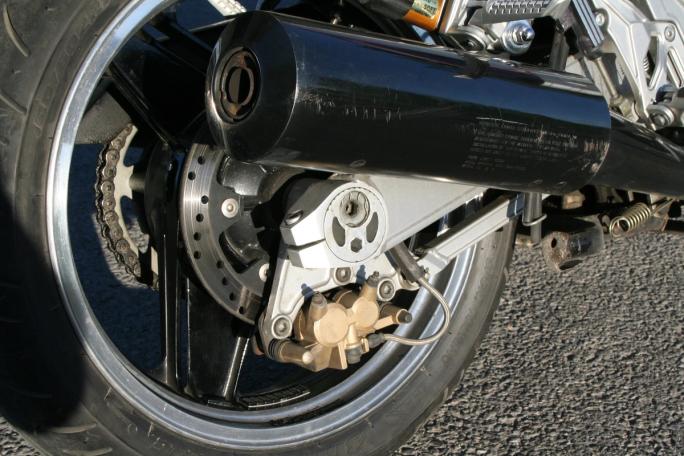
The adjectives that best describe the ZX-10 are fast, steady, stable and easy to ride. In concurrent tests from 1988 when the model was launched, it measured forces with its three Japanese competitors Yamaha FZR1000, Honda CBR1000 and Suzuki GSX-R1100. With the aforementioned adjectives in mind, and the fact that the ZX-10 completed the standing quarter mile in 10.71 seconds, and that the top speed was close to 270 km/h, there was no one above, and no one next to it. Kawasaki had once again delivered, just as Kawasaki owners had been accustomed to since the early 1970s when Kawasaki H2-750 and Kawasaki Z1-900 got the adrenaline pumping in young men in jeans and leather jackets.
Adjectives that best describe the ZX-10 are fast, steady, stable, and easy to ride. In contemporary tests from 1988 when the model was released, it measured its power against its three Japanese competitors: Yamaha FZR1000, Honda CBR1000, and Suzuki GSX-R1100. With these adjectives in mind, and the fact that the ZX-10 completed a standing quarter-mile in 10.71 seconds and had a top speed close to 270 km/h, there was no one above it, and no one next to it. Kawasaki had once again delivered, just as Kawasaki owners had been accustomed to since the early 1970s when the Kawasaki H2-750 and Kawasaki Z1-900 sent adrenaline rushing through young men in jeans and leather jackets.
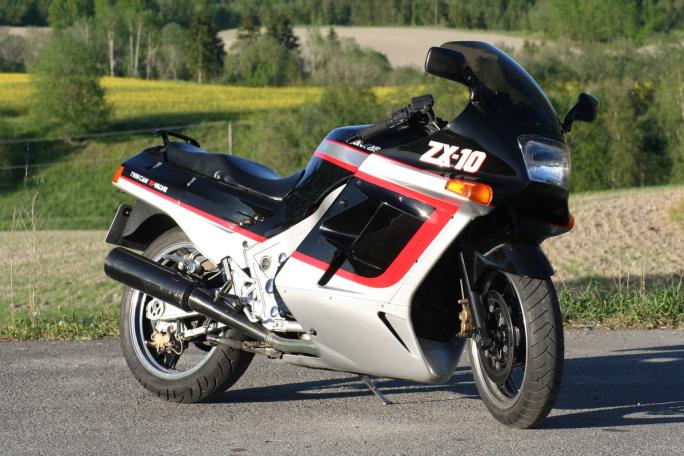
Edvin Klæboe from Oslo got his first Kawasaki in the mid-1980s, more specifically a Kawasaki GT750. The bike worked well, was both agile and easy to ride, but when the family grew, Edvin thought that maybe he should get a bike that was better for his little daughter to ride. GTs were a bit scarce, and when the father of the famous GP star Kate Gulbrandsen advertised a Yamaha XVZ1200 for sale, a trade was made. The GT had to leave the garage in favor of the touring bike from Yamaha . For father and daughter, this was a completely new and more enjoyable cycling experience. She sat safely and comfortably on the back of the Yamaha, but Edvin did not stop following the model development of Kawasaki .
Edvin Klæboe from Oslo got his first Kawasaki in the mid-1980s, specifically a Kawasaki GT750. The bike worked well, was both nimble and easy to ride, but when the family grew, Edvin thought he might need a motorcycle that was more comfortable for his little daughter. The GT was a bit cramped, and when the father of the well-known GP star Kate Gulbrandsen advertised a Yamaha XVZ1200 for sale, a deal was made. The GT had to leave the garage in favor of Yamaha 's touring bike. For father and daughter, this became a completely new and more enjoyable motorcycle experience. On the back of the Yamaha , she sat safely and comfortably, but Edvin did not stop keeping an eye on Kawasaki 's model developments.
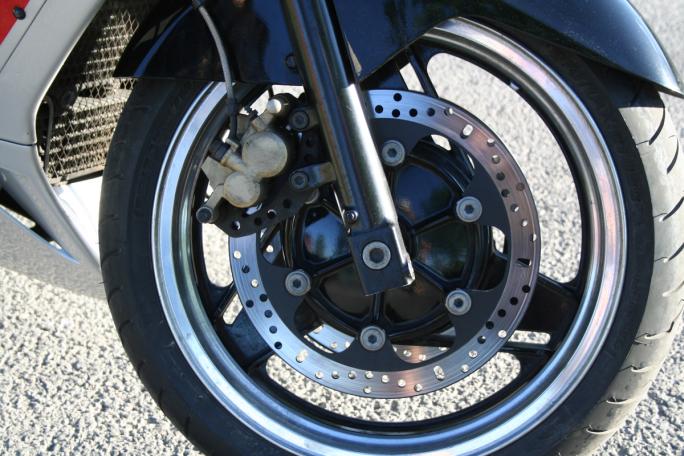
Used Kawasakis kept coming up for sale, and several were tempting, including a ZZR, but it was relatively expensive. Edvin eventually came across a used imported ZX-10 in Western Norway. Since it was not in the condition that Edvin was happy with, he let it go in favor of a similar model in Stjørdal. The XZn in Stjørdal, on the other hand, was spotless, and appeared almost like new, so Edvin did not hesitate, and bought it sight unseen. The bike was delivered home to Oslo by truck, and the purchase was a bargain. The ZXn had been restored by a previous owner in 2008 who had clearly not spared any money. You will have to look for a nicer 1990 model, regardless of brand, because as Edvin says, "I am a trained aircraft technician, and it is in my blood that things should be in good condition."
Used Kawasakis kept appearing for sale, and several were tempting, including a ZZR, but it was relatively expensive. Eventually, Edvin came across a used imported ZX-10 in Western Norway. Since it wasn't in the condition Edvin was satisfied with, he let it go in favor of a similar model in Stjørdal. The ZX in Stjørdal, however, was in pristine condition and looked almost like new, so Edvin didn't hesitate and bought it unseen. The bike was delivered home to Oslo by truck, and the purchase was a jackpot. The ZX had been restored by a previous owner in 2008, who clearly hadn't spared any expense. You'd have to look a long time to find a nicer 1990 model, regardless of brand, because as Edvin says, "I'm trained as an aircraft technician, so it's in my blood that things should be in order."
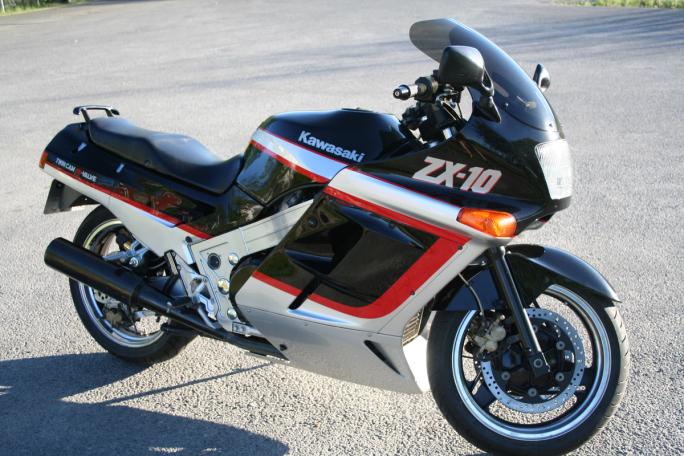
Technical data Kawasaki ZX-10, 1990 model:
Engine: 4-cylinder 4-stroke, DOHC, 4-valve technology, liquid-cooled
Displacement: 997 cc
Compression: 11.0:1
Power: 137 hp at 10,500 rpm.
Torque: 103 Nm at 9000 rpm.
No. of gears: 6
Front tires: 120/70 R17
Rear Tires: 160/70 R18
Tank: 22 liters