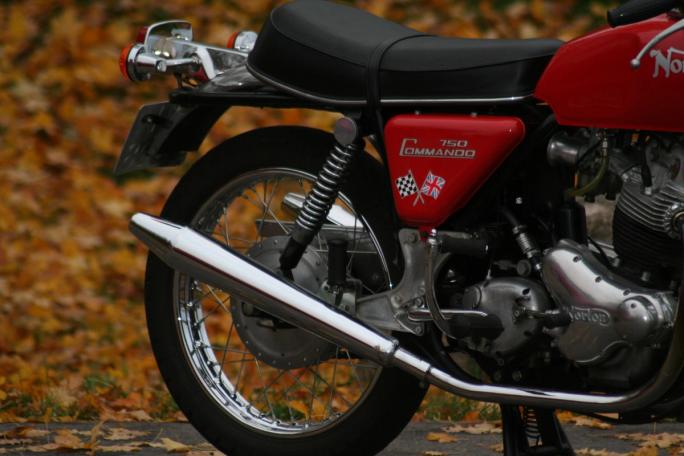
"Geir ran and bought the Combat immediately"
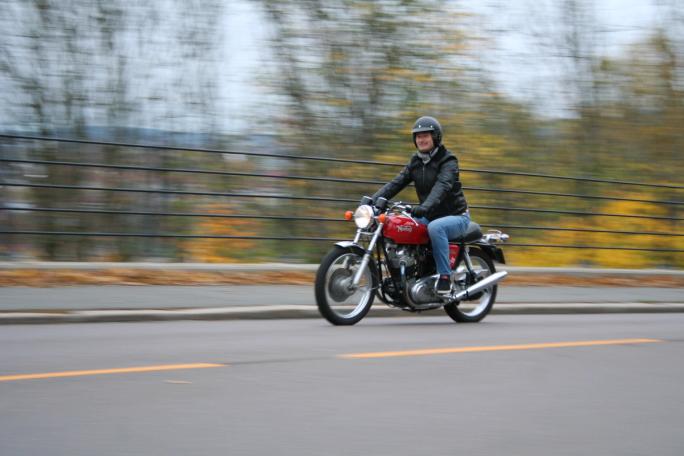
Geir Hellum pulls a tightrope up towards Ekebergsletta
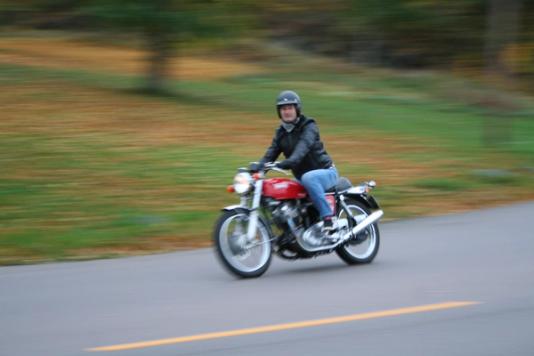
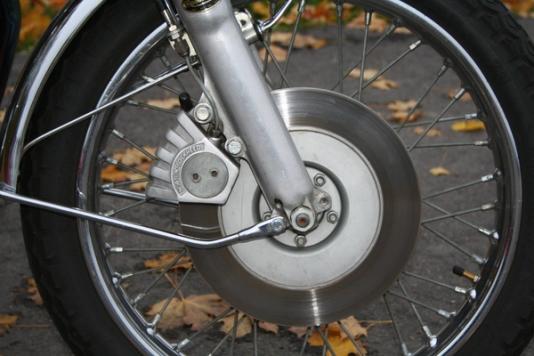
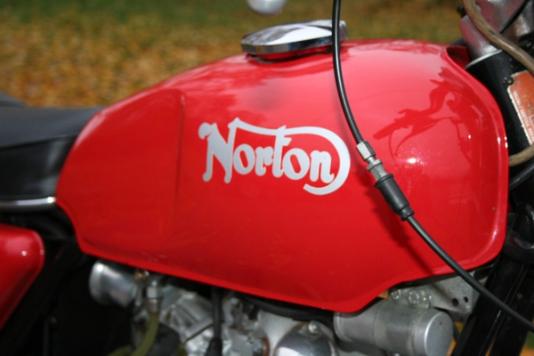
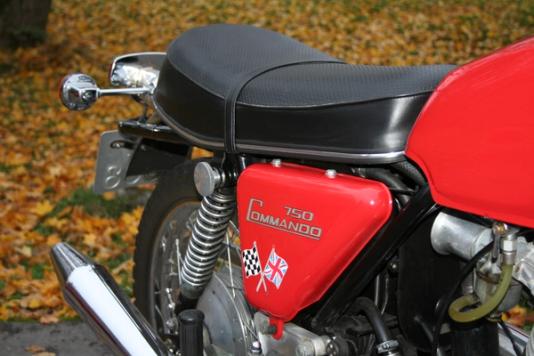
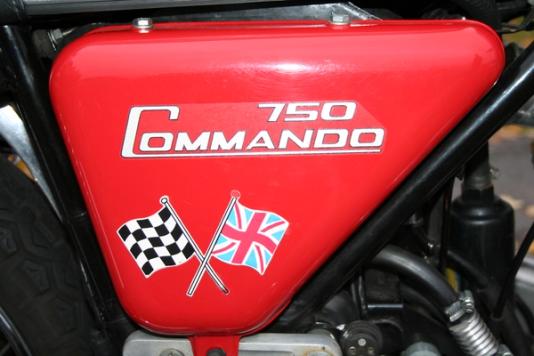
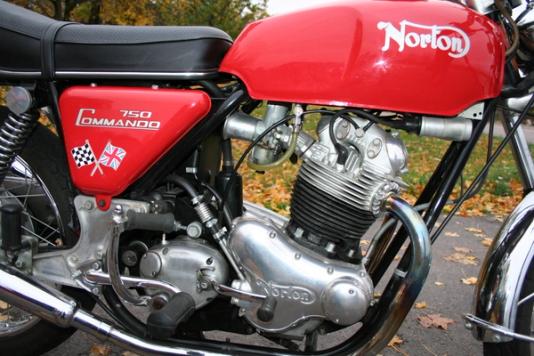
Geir Hellum from Oslo didn't hesitate when something as rare as a Norton Commando Roadster Combat 750 came up for sale online. "It was snapped up and bought immediately," says Geir, pointing to the red-painted Englishman. The Commando, a 1972 model, has been completely renovated and significantly modernized, making it reliable and a pleasure to drive. "It's both fast and furious," says Geir, pulling the tight wire up the slopes towards Ekeberg. The sound from the two Raycon silencer mufflers is indescribable, and can hardly be expressed in words on paper.
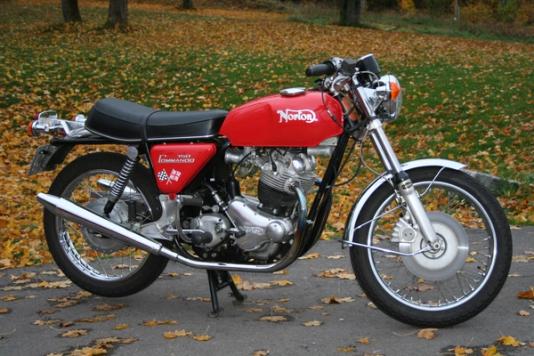
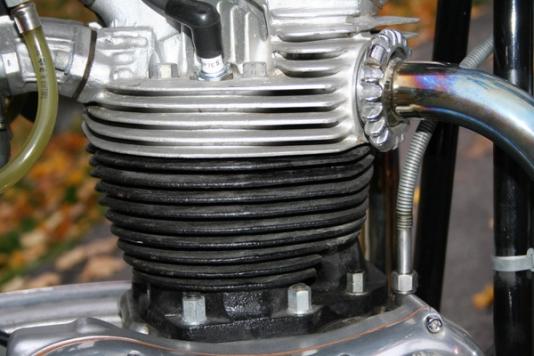
Black cylinder block = Combat
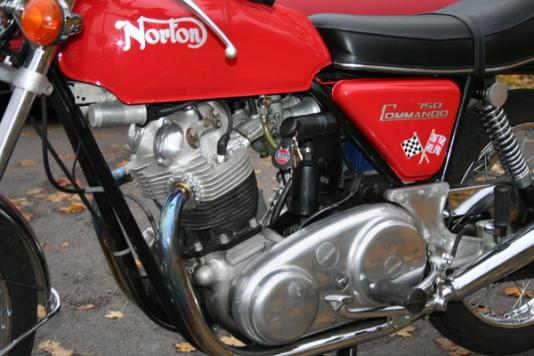
0/0
With Commando Norton wrote the final chapter in the brand's classic era. The model was voted "Motorcycle of the Year" in England several years in a row thanks to its good riding characteristics. However, the 1970s offered fierce competition from the Japanese motorcycle industry, and Norton took action and tuned up the Commando in 1972. The stage was set for the "Combat 750".
"Hard facts":
- The Combat engine was produced in 1972-1973, and used in Commando Roadster and Interstate models.
- Key Tech-specs: Planed cylinder head, sharper cam, larger carburetors, lower gearing
- 749ccm, 65 hp at 6500 rpm.
- Compression: 10.5:1
- Top speed: 125 mph./200 km/h.
- Carburetor: 32 mm AMAL Concentric 932
- Characteristics: Black cylinder block
- In 1973 Norton peaked the tuning of the Combat engine with a compression ratio of a whopping 10.5:1 and a bore to stroke ratio of 77 mm x 80.4 mm. They never came close to a super-square solution, and this ratio gave the engine a maximum speed of just over 8000 rpm. For an English twin, this was more than the engine could handle in the long term.
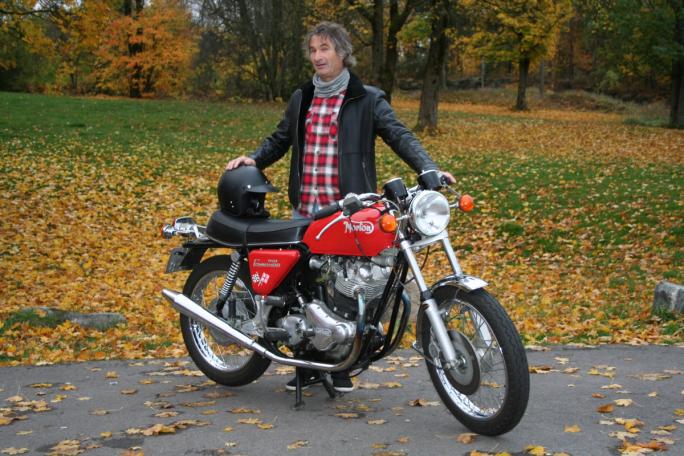
It was raced and bought when the bike went on sale. Combat is not a cheap product.
Technical challenges
Increased competition from Japan was one of the main reasons Norton tuned the Commando engine. Something had to be done to stem the market share that was being lost to motorcycles such as Kawasaki H1-500, Honda CB750Four and not least the "Hamamatsu-Bonneville" Yamaha XS-650. The answer was more power, and the result was the Combat. The new and tuned Combat engine was intended to give customers that little bit extra, a touch of race and performance. What customers actually got was that little bit extra of engine trouble. The reinforced and stiffened engine block in combination with the old crank was a combination that would prove to be downright destructive. The ignition system and various adjustment mechanisms were also not optimal, and proved difficult to adjust. The forces that arose at high rpm were so great that the bearing seats and bearing races were destroyed. The low gear ratio, deliberately chosen to provide quick acceleration, also proved problematic as it contributed to an excessively high engine speed in low gears.
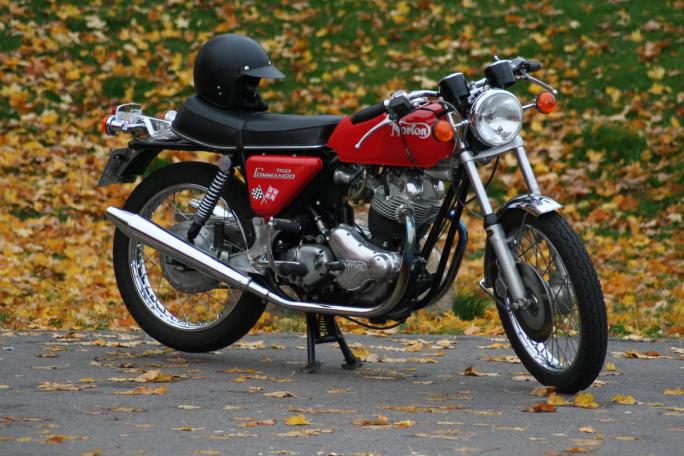
8000 rpm
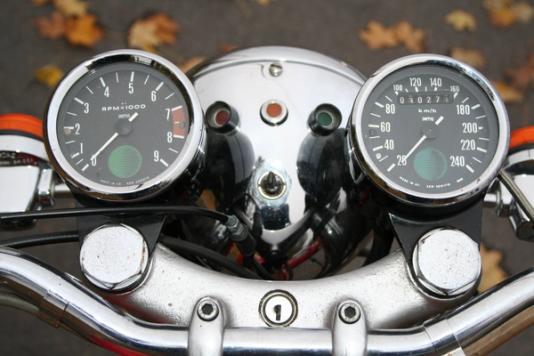
The maximum rpm was stated to be 7000, but in reality the Combat engine was good for a full 8000. It was "all too much" for the old twin. The Combat was partly a flop and Norton "lost the Combat", literally. Today the Combat models are highly sought after. With today's technology and access to modern high-precision crank bearings, it is a simple matter to modernize a Combat engine so that it works as it was intended to do; "To perform".
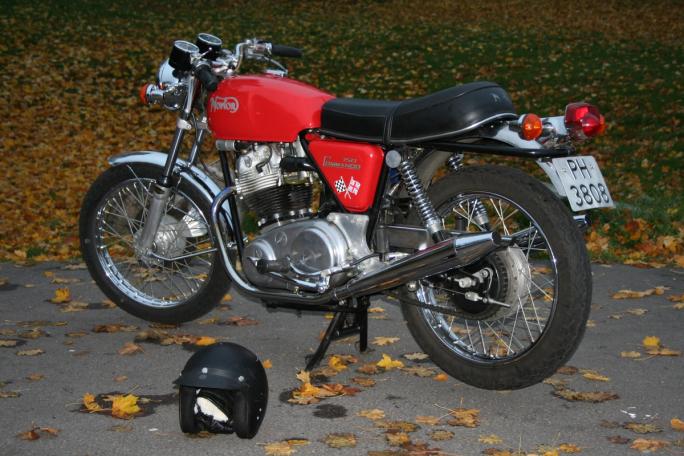
Although Commando Combat did not go on sale until 1972, several Norton owners had "stolen" their Commando engines. From February 1970, Norton sold the Combat kit, consisting of, among other things, larger carburettors with larger intake manifolds and sharper camshafts. The price tag for the kit was 56 pounds and 14 shillings. A Norton Commando Roadster 750 Combat cost 645 pounds and 25 shillings in 1972!