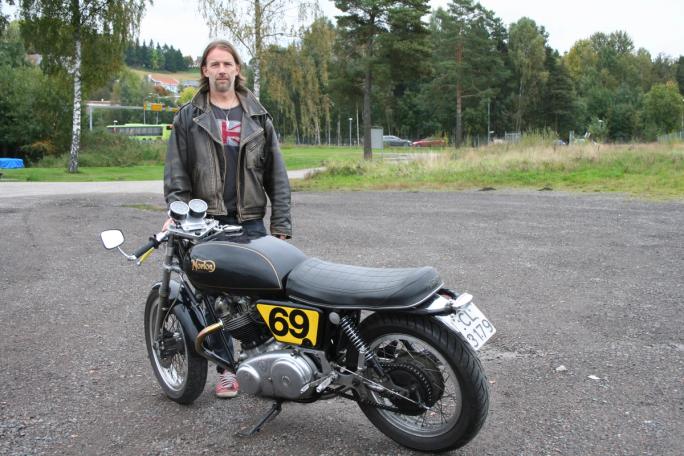
"I had two toy motorcycles as a kid, including a Commando "
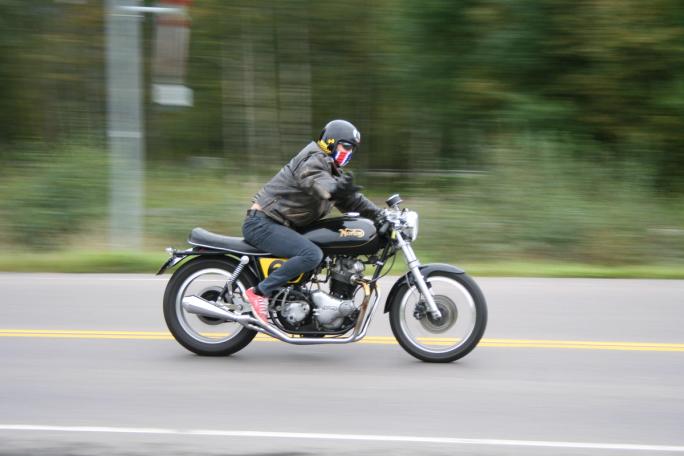
Norton was one of the most important brands in the British motorcycle industry, and their Manx racers are widely known for their achievements in the TT races on the Isle of Man. The models used on the "street" were no slouch in traffic either. I had a chat with Morten Myrdal Køien, and took a closer look at his RGM- Norton , a Commando a little out of the ordinary.
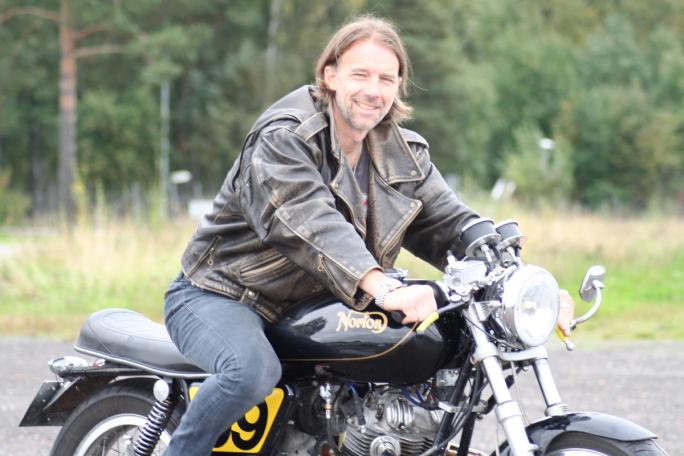
Commando stands out today as one of Norton's most popular models. Here are some "hard facts" about the classic: Norton Commando was launched in September 1967 and went on sale in 1968. The engine was a modified Atlas, a powerful twin that Norton put into production in 1962. Commando was produced until 1977. The 750 version was made from 1967/68 to 1973, and the 850 from 1973 to 1977. The 750 cc was made in 20 different versions, and the 850 in 13 versions, so a total of 33 different models in a ten-year period. This means that it can be a challenge to find an original bike. Many of the models on the market bear the hallmark of being assembled from parts from different types and years.
Norton vs Honda
Commando is a long-legged and fast motorcycle, and concurrent tests from 1969 and 1970, where the Commando was matched up against Honda CB750Four, concluded that the English twin was both better and faster than Honda's super fours. That Commando should claim the top spot in terms of handling was no surprise. This was a harmonious machine in the sense that the engine power was in proportion to the strength of the frame. The Japanese motorcycles with which it was natural to compare were known for the fact that the ratio between power and frame was not entirely patent, and wobbling was not an unknown phenomenon.
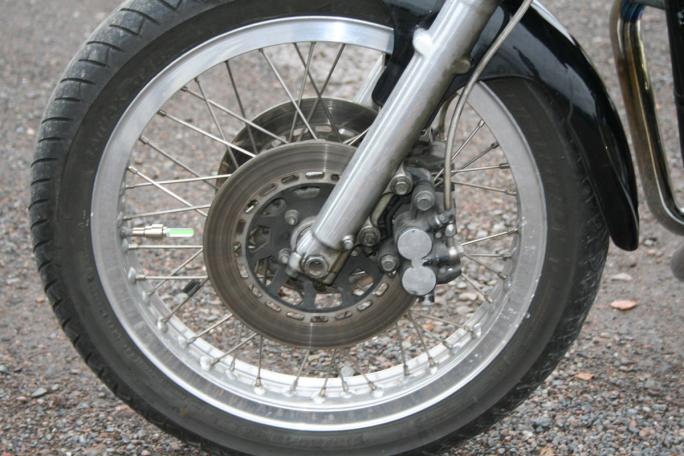
Disc brake and self-start
From 1973, all Commando models were fitted with front disc brakes and self-starters. The bike has very good handling characteristics and is known for its solid bottom bracket. The frame of a Commando has a rubber-mounted engine, which Norton called the "Isolastic system". This technical solution helped to minimise vibrations from the engine into the frame. Commando quickly became a favourite with both professional racing teams and home-builders of café racers. A wide range of race parts was available, including the "Stage 3" tuning kit supplied by Paul Dunstall, which advertised increased power and a top speed of 220 km/h.
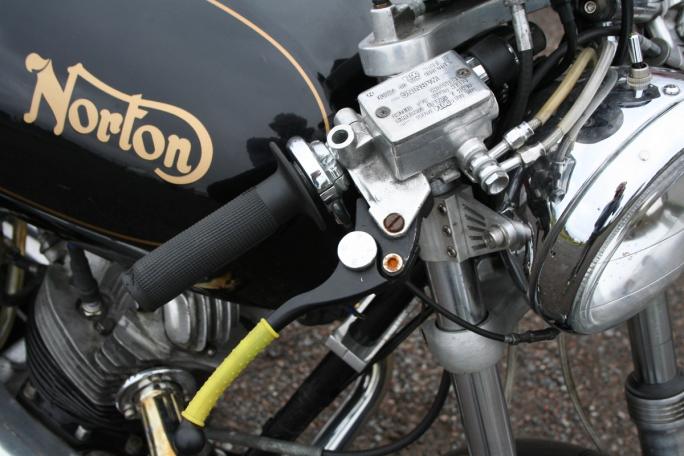
Dunstall and Rickman
Among Anglophile cafe racer enthusiasts, Commando is highly sought after. As mentioned, it is very potent, and with all the "options" that are available, the bike can be transformed into a raw street racer, or cafe racer if you like. Bigbore kits, GP carburetors, fiberglass body kits, and 2-1 sports exhaust systems are just some of the things that can be found. Already during the production period from 1967-1976, there were cafe racer kits from well-known manufacturers such as Dunstall and Rickman . A slightly less well-known equipment supplier is RGM. Here, Morten Myrdal Køien found the parts he was looking for when he was going to modify his Commando .
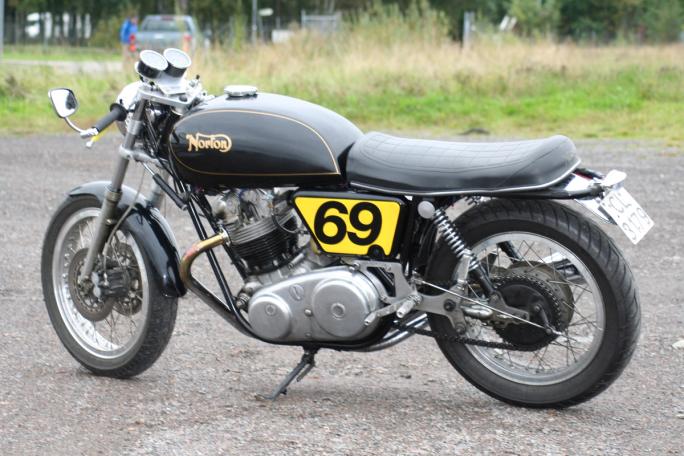
RGM- Norton
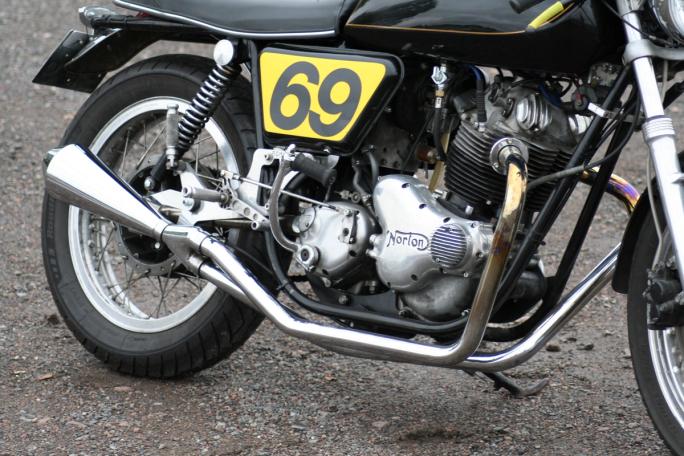
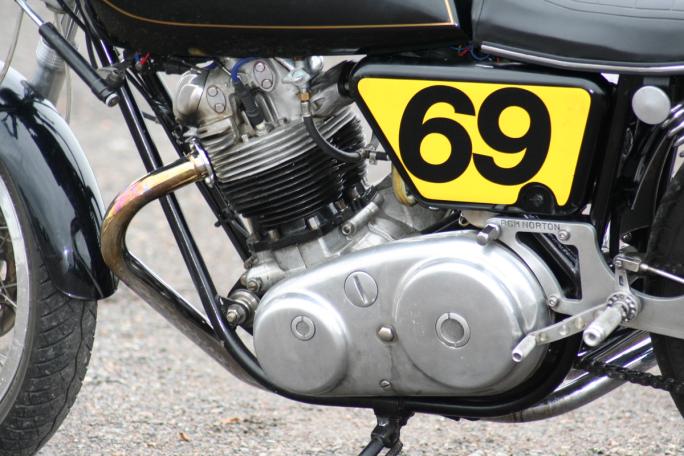
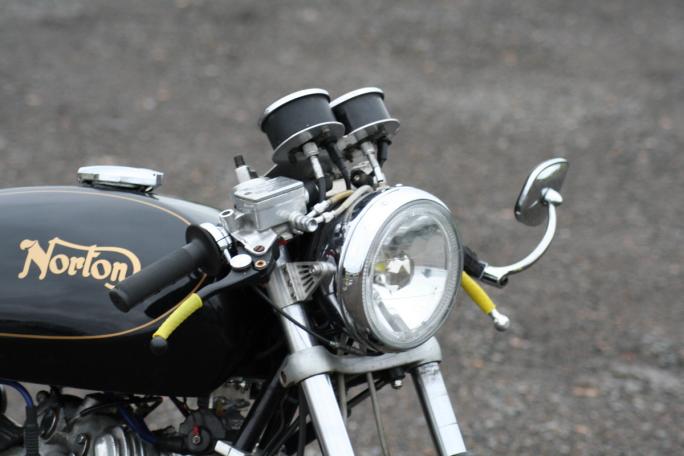
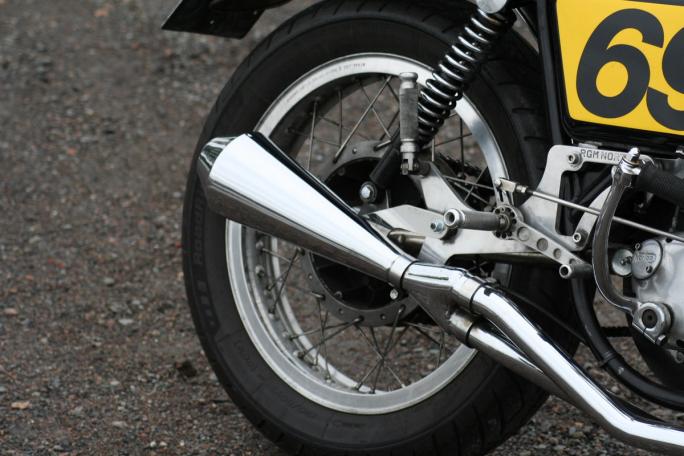
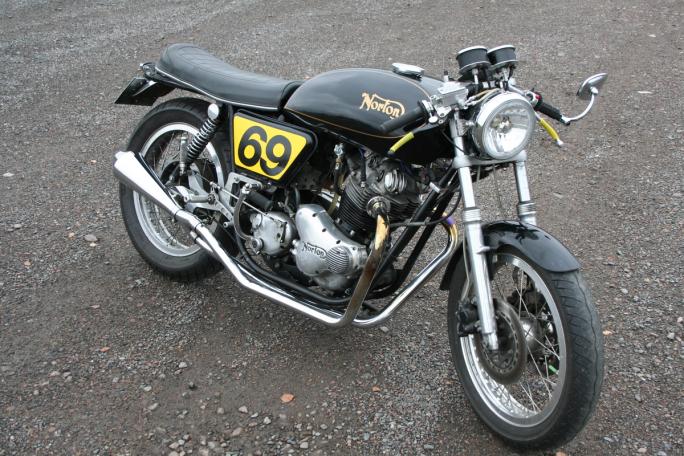
Morten Myrdal Køien from Skedsmo has dabbled a lot with classic "Englishmen", and Norton Commando is undoubtedly one of his favorites. Morten's machine is a so-called RGM Norton , where many of the parts come from the small English company "RGM Norton Ltd". Under the slogan "The UK's Premier Norton Specialist" they offer a wide range of original parts for Norton models from 1920-1977. RGM also offers parts that they have designed and manufactured themselves. Morten's machine has both a footrest set and exhaust system from RGM, both of the sporty kind. The reciprocating set and the exhaust system, which is of the 2-1 type, emphasize the race factor.
Had two toy motorcycles as a kid
Morten has had a special interest in repairing and making things ever since he was little. This was reflected in his choice of vehicles later in life. When he was 16, he had two Honda CB100s. He remembers well that he was committed to advancing to a Triumph Bonneville as soon as he was old enough. "That was kind of what I thought was the toughest," he adds. Then a few years passed where he only drove cars, but he wanted a bike. "I remember looking at a 1958 HD Duo-Glide in candy red, but it didn't work out. Soon after, gang wars broke out and all HDs were stolen and vandalized," he says. Morten can vaguely remember having two toy motorcycles as a boy, a Moto Guzzi and a Norton Commando Interstate. Morten started toying with the idea of something English and bought everything from magazines with sales ads.
Briton Bob Green
Eventually, Morten found a Brit living in Østfold who had several Bonnevilles for sale. His name was Bob Green and he lived in Halden. Green had good contacts in England, and imported classic motorcycles that he sold here at home. One Sunday in early February 1997, Morten and a friend went to Halden to look at a Bonneville . It so happened that the bike Morten went to look at had been sold. Green had forgotten to tell Morten this, but the Englishman had several motorcycles for sale, so there were plenty of machines to choose from.
Fell in love with a Bonneville
Morten fell in love with a 1960 Bonneville , but kept looking around. When Green took him into the next room, he was sold. There were even more motorcycles there, but two in particular stood out. One was a red 1967 Norton N15, and the other was a 1969 Norton Commando Fastback, painted like an AMA racer. When the Fastback was started, there was no doubt. Morten went home, and three days later he was back at Green's to pick up the bike. He remembers the viewing at the Norwegian Motor Vehicle Authority well, and says that "The guys there hadn't been around Norton much before, and were mostly concerned with making sure it sounded nice, and that way it stood out from the back and out on the road," says Morten.
Many modifications
The first year it was driven as is to see what needed to be done. Winter came and the entire bike was stripped down. New aluminum rims from Akront with stainless spokes were purchased. Likewise, the electrical system was upgraded to 180-watt charging, belt drive and Boyer powerbox. Clip-on was a given, and the front brake was replaced in favor of a 12" floating disc with AP racing calipers. The Commando also received new paint, and a sporty 2-1 exhaust system from RGM. The engine has also received a little extra power through the installation of camshafts from the Combat engine. Morten is basically happy with the Commando, but adds that "I must clarify that I do not think it is completely representative in its current state. I think it should be the AMA racer I once fell head over heels for". We sense that the building process is not over, and that something is afoot. This is often the case with Anglophile cafe racer enthusiasts, the creative process rarely ends.