
Two tough trendsetters: Triumph Speed Twin 500 and Honda CB750Four
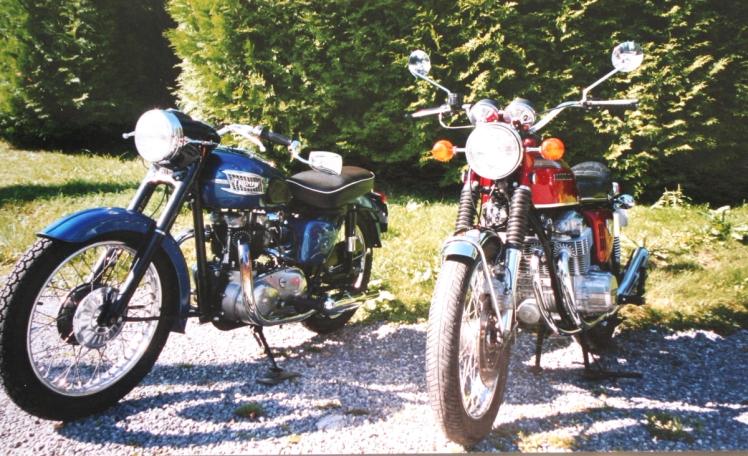
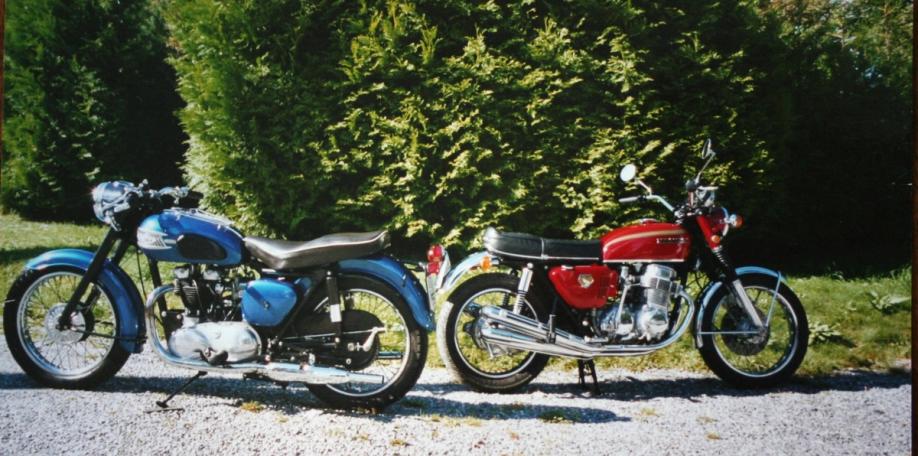
There are few motorcycle models that have set such clear standards for design and technology as Triumph Speed Twin 500, and Honda CB750Four. Speed Twin 500 became the model for other English motorcycle manufacturers, and the CB750Four became the same for Japanese motorcycle manufacturers.
Mr. Motorcycle; Edward Turner. English motorcycle manufacturing and Triumph in particular are forever linked to Edward Turner (1901-1973). Turner was knighted after his efforts for Triumph , and he began his career in Birmingham under the management of Jack Sangster, the boss of Ariel . The young Turner was a trained engineer, and he designed, among other things, the spectacular engine in Ariel Square Four.
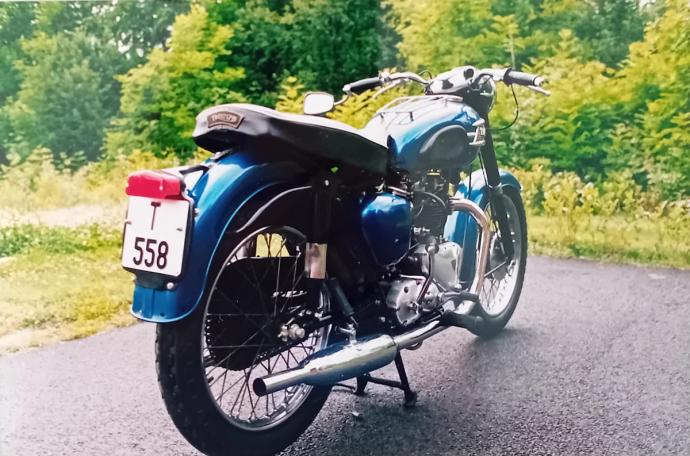
The twin engine in a single frame provided high power, low weight, and a top speed of around 150 km/h.
A rare talentThe young man showed a rare talent for mechanics and design, and eventually climbed to the top of BSA group, which bought Triumph as early as 1951. However, his career at BSA was not entirely without conflict between Turner and the rest of the top management, which was due to Turner favoring Triumph over BSA , especially when it came to marketing and selling the two brands in America.
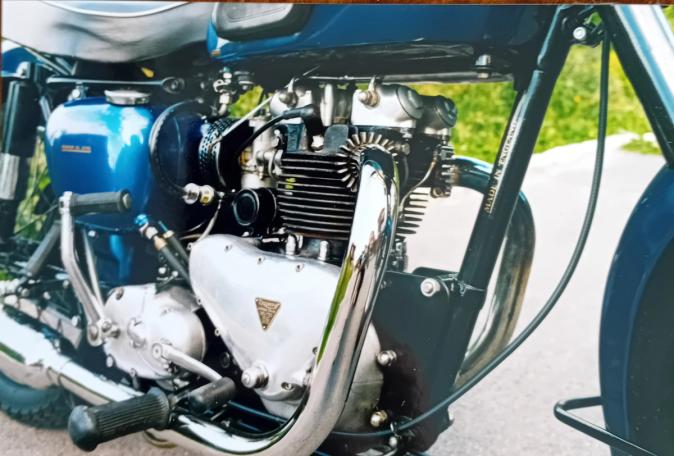
The 498cc, 2-cylinder Speed Twin set a new standard when it arrived in 1937
The Twin concept. Turner's most successful and perhaps most important design was the Speed Twin 5T model. The 2-cylinder 4-stroke that came in 1937 set a completely new standard for the English motorcycle manufacturers. The old 1-cylinder 4-strokes with side valves became hopelessly old-fashioned compared to the new twin with overhead valves and ditto high power. The engine was eventually available as both 500-650, and 750, and the most important development point along the way was the transition from pre-unit to unit in 1963. Triumph stuck to the twin concept right up until the end in 1983.
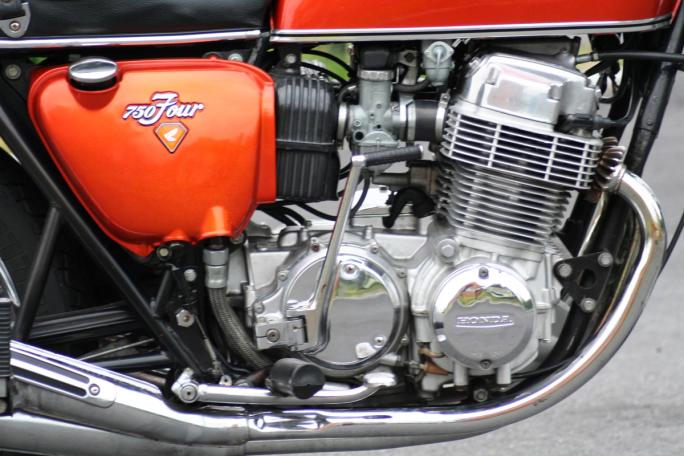
The engine that changed everything; the 4-cylinder 4-stroke with OHC, electric start and a whopping 67 hp
Mr.Honda. Although Honda's first motorcycle was a 2-stroke, it was the 4-strokes that would become Honda's hallmark. Throughout the 1960s, Honda steadily gained market share in both Europe and the United States, and the Benly and Dream models became very popular, despite a somewhat conservative design. Then the bombshell dropped at the Tokyo Motor Show in October 1968.
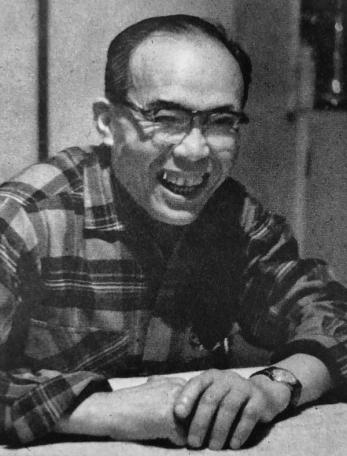
Mr. Honda changed the entire motorcycle world with the CB750Four. Source: Wikimedia commons
The shock. The unveiling of Honda CB750Four came as a shock to the entire motorcycle world. The conservative design was now history, and the huge "fifty-seven" set a completely new standard in terms of design and technology. Equipment such as indicators, tachometer, disc brakes, and electric start were just some of the things that were standard on the newcomer.
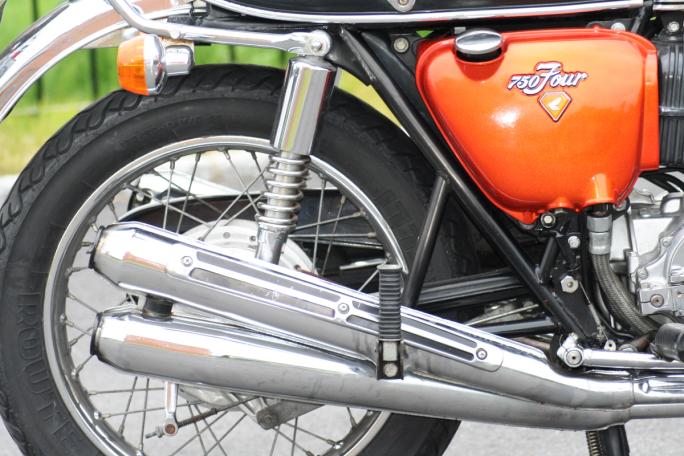
4-4 exhaust system with 2 pipes on each side emphasized that the engine was 4-cylinder
4-4 exhaust system. The massive inline-four with overhead camshaft, placed transversely in the frame was spectacular to say the least, and to emphasize that the bike had 4 cylinders it got four exhaust pipes, two on each side. With 67 hp it was good for a top speed of around 190 km/h, and thus there were few machines in the same segment that could keep up. For its competitors in the UK, the CB750Four was considered a challenger that was impossible to compete with. For its Japanese competitors, it became an inspiration for imitation, where Kawasaki challenged Honda with its Z1 in 1972. The rest is history.
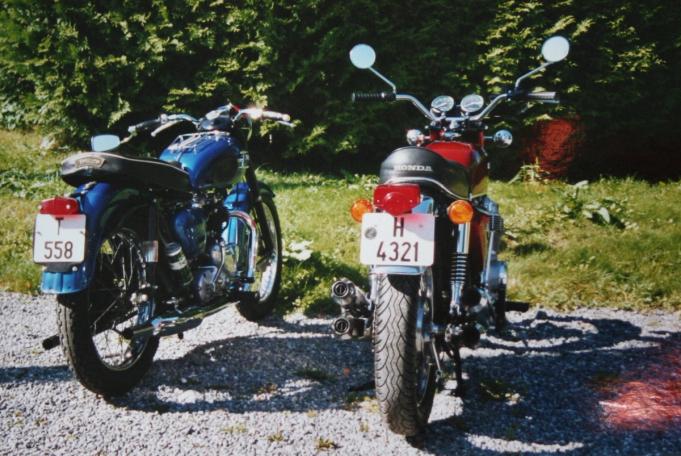
- Technical data Triumph Speed Twin 500/ Honda CB750Four:
- Engine: 2-cylinder 4-stroke OHV/4-cylinder 4-stroke OHC
- Displacement: 498 cc/736 cc
- Power: 27 hp at 6300 rpm/67 hp at 8500 rpm
- No. of gears: 4/5
- Front tires: 3.25x19/3.25x19
- Rear tires: 3.25x19/4.00x18
- Front brakes: drum/disc
- Rear brakes: drum/drum
- Tank: 18.2 liters/18 liters
- Weight: 172kg/230kg
- Top speed: 150 km/h/190 km/h