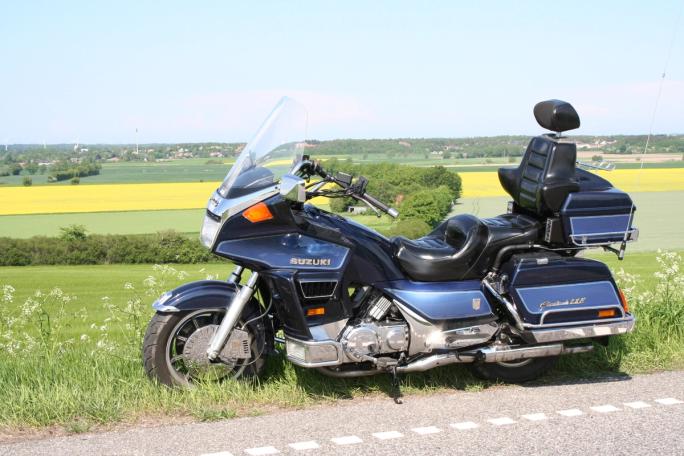
I have tested the classic Suzuki Cavalcade 1400 LXE
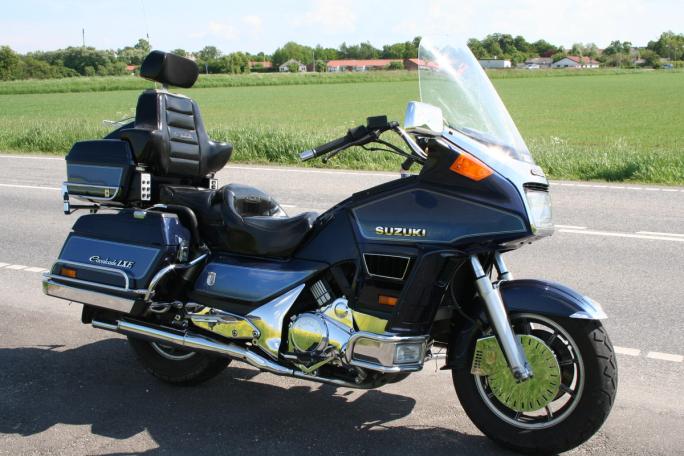
I've taken a closer look at Suzuki's alternative in the touring segment from the optimistic 80s, the classic Suzuki Cavalcade 1400LXE, and test-drove the touring giant that is now well established in the ranks of veterans.
Although the motorcycles that were available in the 1970s could be equipped with fairings and side bags as “options”, the large and factory-built touring machines are a 1980s phenomenon. Now owners no longer had to provide side fluids, fairings and music systems themselves, now they could get a complete and ready-made touring bike where all the equipment was part of the concept.
Krauser, Windjammer and Rickman
In the 1970s, there were a lot of manufacturers that supplied both side cases and fairings. Among the most popular were Krauser, Windjammer and Rickman . Many motorcycle owners took advantage of these products, and converted their bikes to adapt them for longer trips. Honda Gold Wing , which came out in 1975, became a popular motorcycle, but it was delivered without touring equipment. The Gold Wing, wearing a Windjammer fairing and Krauser side cases, quickly became a common sight. As bike sales increased and owners used them for longer trips, manufacturers saw a market in the production of pure touring machines. Suzuki's path into this market started slowly with the GS1000G model that came out in 1980. This was essentially a naked sports tourer, but with a cardan drive it signaled that something was up. The follow-up GS 1100GK was equipped with a full fairing and bag set. However, this was not fully integrated, and it would take a few more years before Suzuki's first pure touring bike saw the light of day.
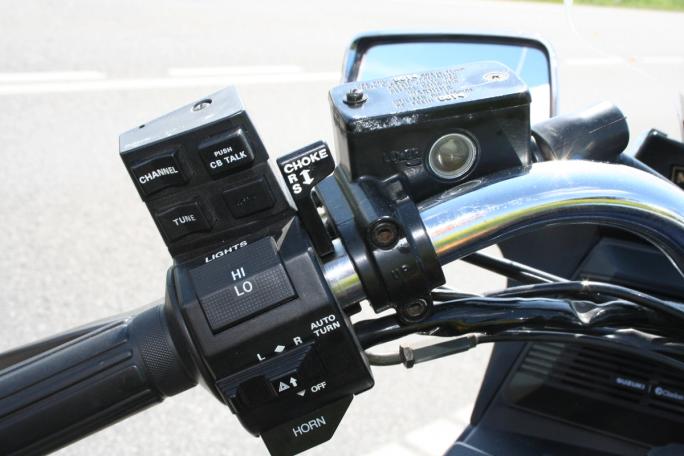
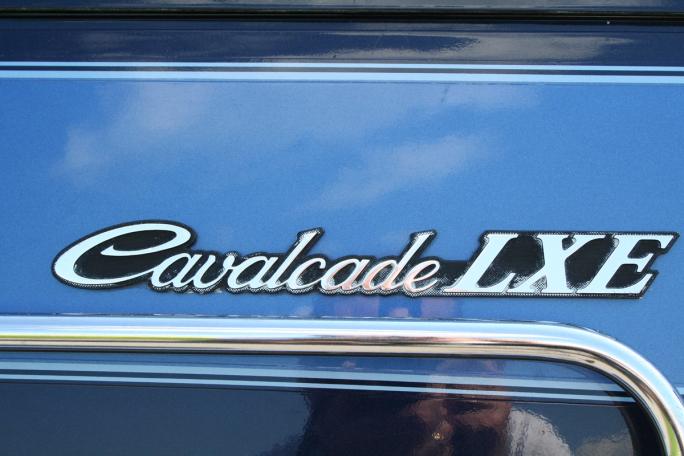
Suzuki Cavalcade GV 1400LXE
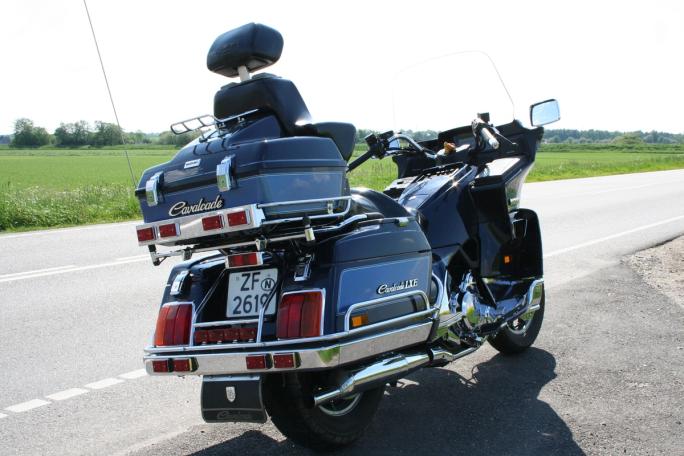
Development work on the new touring giant began in 1983. From the start, it was clear that the bike had to match the other Japanese competitors' machines in the same segment, where Honda's touring legend Gold Wing in particular was the toughest competitor. In 1985, Suzuki's newcomer was ready for test drives in the USA, and in late autumn, the touring giant Cavalcade GV 1400 was ready to conquer the country road. The old GS series with roots back to 1977 was now history. The Cavalcade represented a completely new concept, where the drive package was a 4-cylinder V-engine with a shaft drive, well wrapped in plastic. The Cavalcade was not lacking in anything by the standards of the time. The equipment list consisted of, among other things, a stereo system, cruise control, automatic level control, electrically adjustable saddle, armrests and a headrest for the passenger seat, to name a few. The most prominent feature was the integrated full fairing and pannier set (side panniers and top case), built as part of the bike. In addition, there were small storage compartments integrated into the fairing and tank, with space for small items that are nice to have on longer rides.
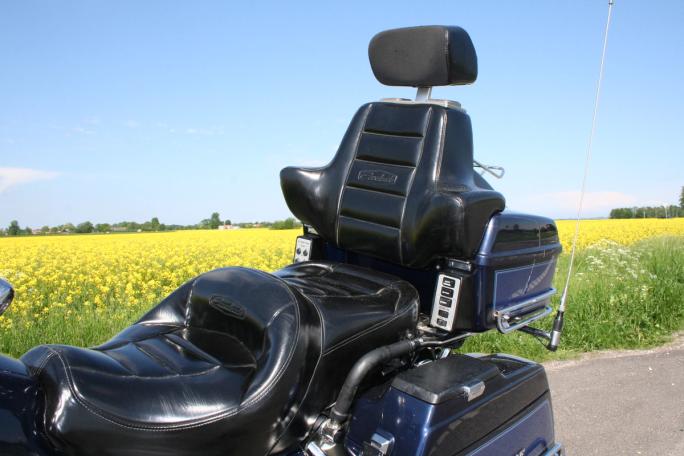
Heavy but comfortable
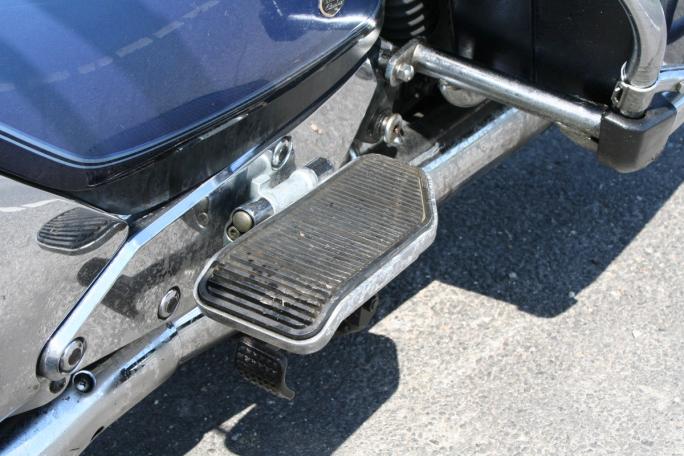
The bike I borrowed is the top model LXE from 1988. The Cavalcade towers well where it is parked at the curb, and after getting comfortable in the “driver’s seat” I realize that this is not a bike for short and inexperienced riders. It is large and heavy, and requires some experience, especially at low speeds, as the center of gravity seems somewhat high. However, as I leave the traffic inside the small town of Allingåbro and find the highway heading for Grenå in East Jutland, the Cavalcade’s characteristics come into their own. The large fairing provides complete protection from the wind at speed, with the exception of my feet, which is of course inconvenient in case of rain. With the cruise control set to 100, I glide through the Jutland landscape. The 4-cylinder V-engine provides solid and smooth traction throughout the entire range, while being very quiet.
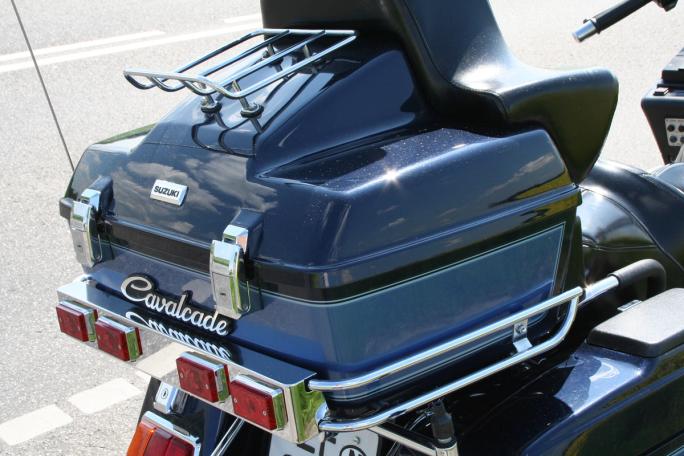
123 Nm
The maximum torque is a whopping 123 Nm, which is noticeable when you step on the gas. The engine is very tenacious in the highest gear, and it pulls smoothly and effortlessly in 5th gear from 40 km/h. At 100 km/h the tachometer shows 3000 revolutions, but vibrations and noise are almost completely absent. There is nothing to complain about with the brakes either. However, the suspension and chassis require some attention, and during heavy braking the bike can seem somewhat “soft”. With its nearly 400kg, there are demands on both the frame dimensions, and last but not least the front fork and rear suspension. As the speed increases, the bike becomes easier to ride, and the cornering properties are very good. It can withstand relatively heavy drops in the corners without becoming nervous and unstable, and it sits very well on the road.
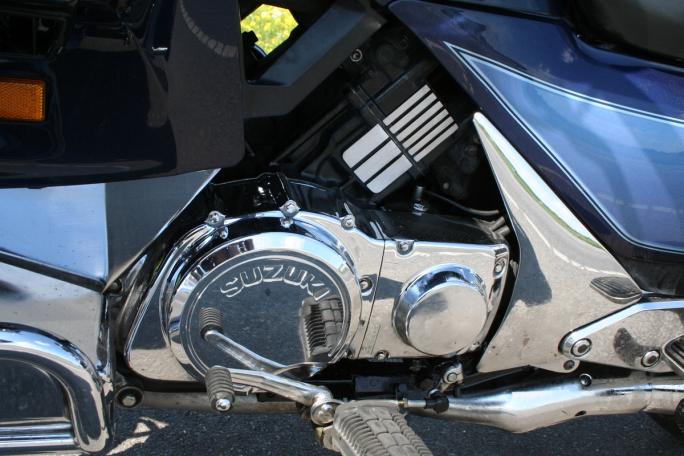
Comfortable cruising
As the miles pass, I become more and more comfortable with the Cavalcade's strengths and weaknesses. As I approach Grenå an hour later and see the “Baltic Sea” on the horizon, it's time to take stock: the classic that will soon achieve veteran status invites many long, comfortable miles for a reasonable price. It can feel a bit soft under hard braking, which is good to keep in mind, especially in heavy traffic.
9000 copies
The Cavalcade was produced in only 9,000 copies in the three model variants GT, LX and LXE in the period 1985-1990. Compared to Gold Wing , this is very modest in terms of production numbers, which makes the Cavalcade a relatively rare touring classic.
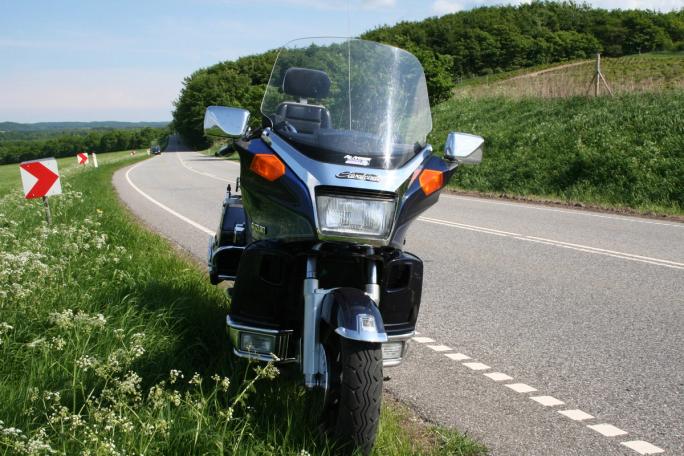
Technical data Suzuki Cavalcade GV 1400LXE, 1988 model:
Engine: 4-cylinder 4-stroke V-engine, dohc, 16v, liquid-cooled
Displacement: 1360 ccm
Compression: 9.5:1
Power: 112 hp at 7000 rpm.
No. of gears: 5
Front tires: 130/90x16
Rear tires: 150/90x15
Weight: 382 kg (dry)
Tank: 23 liters
Top speed: 195 km/h