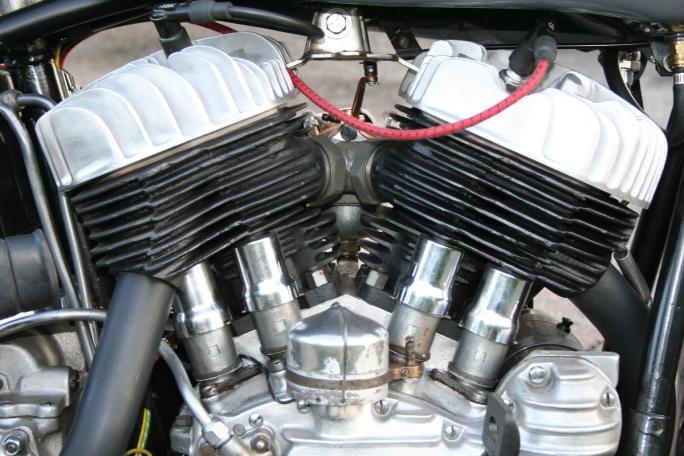
Fredrik's great Flathead
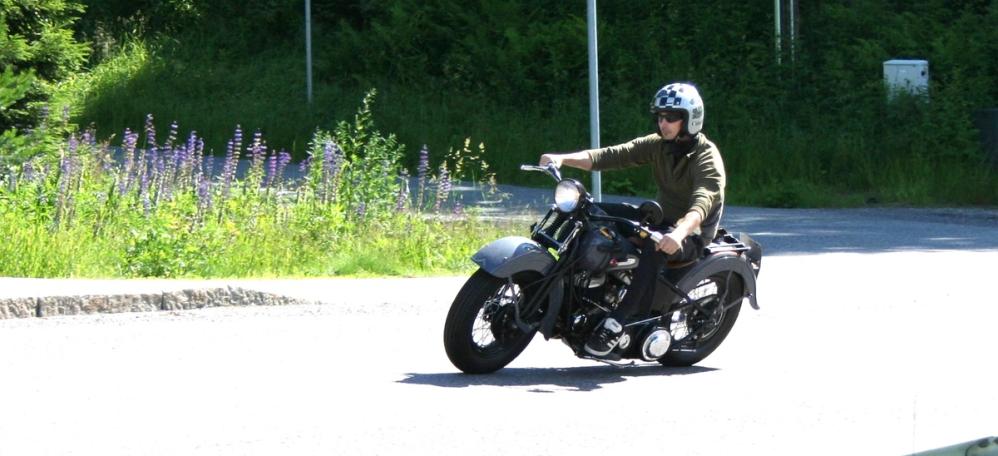
Fredrik Sandbo in a good drive on his course ULH
Some models achieve almost iconic status, such as Harley-Davidson Knucklehead. The model was Harley's first series-produced overhead-valve v-twin, and in the shadow of the icon stood what the Swedes refer to as "Storsidan", the side-vented 1200cc Flathead with the model name U. Now, however, the large side-vented Flathead is about to take over this position.
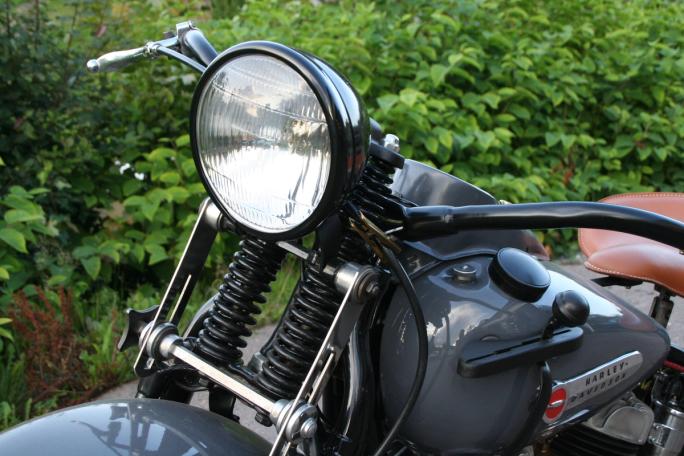
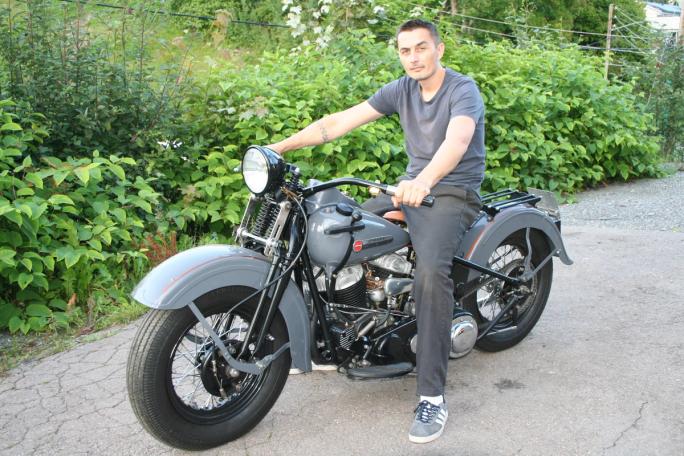
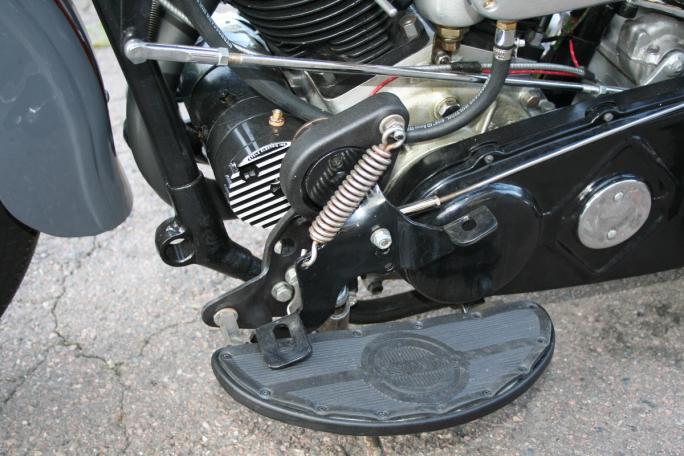
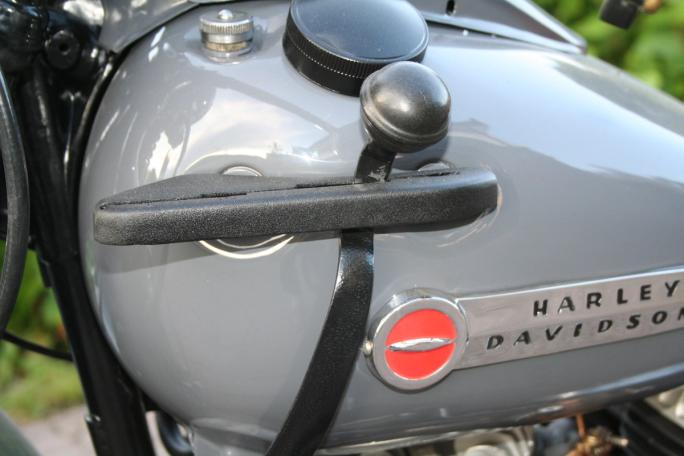
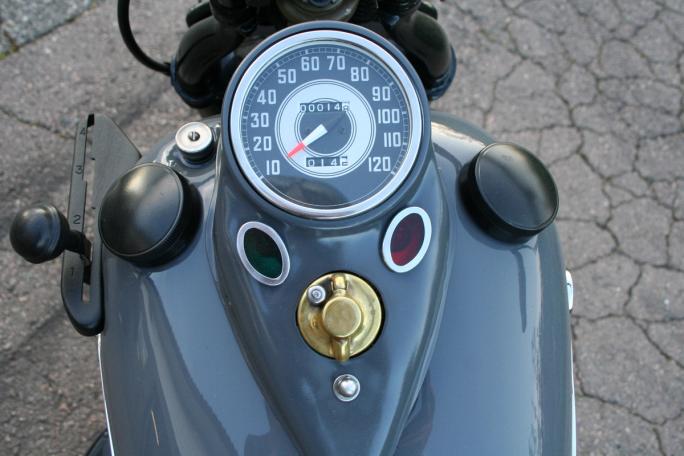
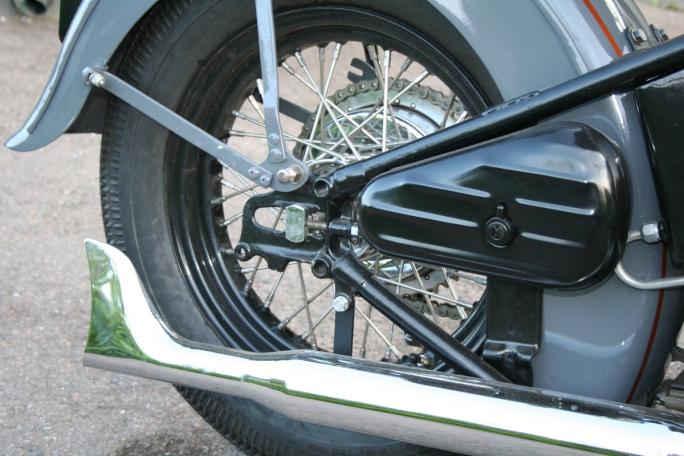
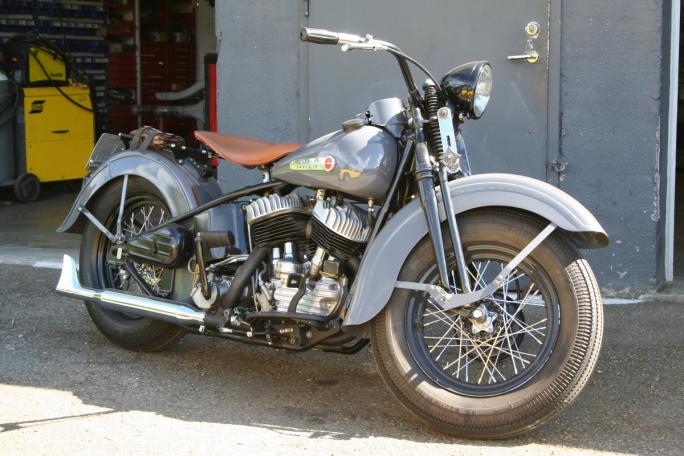
I went to Fredrik Sandbo in Fetsund to look at the largest of the side blowers from Milwaukee, a ULH with a whopping 1312 cubic meters. Fredrik has taken this bike down to small pieces and then rebuilt it to a standard that is probably better than when it was new.
Despite the economic depression that was still ongoing in 1936, Harley-Davidson kept the Milwaukee machinery running at full speed. The year marks a turning point in terms of technology, and the E1000, or Knucklehead as it was and is colloquially called, rolled out of the factory premises. Few, if any, Harley models have aroused such enthusiasm while being decisive for the factory's future. Of course, we should not forget the Evolution that came in 1984, the model that brought Harley-Davidson out of the crisis-ridden existence at the beginning of the 1980s, but 1936 undeniably stands as a very important year in the company's history.
Product development despite difficult times
Black Tuesday in 1929 needs no further elaboration beyond the fact that the economic downturn was a global blow to both businesses and individuals. For Harley-Davidson , the years after the crisis were paradoxically marked by new thinking and innovation. Sales and production fell dramatically, but the young men in Milwaukee refused to slow down. In 1933, only 3,703 new Harleys were sold, which was the lowest number in 23 years. Nevertheless, management managed to think differently. In the midst of the hard 1930s, the clothing collection was released that gave Harley owners their own identity, and this has since become big business. We should also not forget the 3-wheeler "Servi-car" that came out in 1932. With the help of the small cargo box in the back, it became a practical utility vehicle for both the public and private sectors, and was in production until 1971.
The Big Twin Knucklehead
Art Deco as a style was also introduced, and last but not least, the four-leaf clover that founded Harley-Davidson managed to complete what would become one of Harley-Davidson 's foremost icons, the E1000, nicknamed Knucklehead. The 1000cc engine was an immediate success, and racing legend Joe Petrali rode a tuned version on the beach in California where he reached a dizzying top speed of 219 km/h. However, Harley-Davidson had more strings to play on, and the side-ventilated treads were not forgotten at all.
Bigger and stronger engine
The 750cc was well established, and a 1200cc was in development. Despite the success of the Knucklehead, this was relatively new and it was important to secure a number of models to offer. Side-vented engines were reliable, easy to service, and not least easy to repair. They were also well suited to pulling sidecars, which were popular equipment.
Flathead; a large side blower
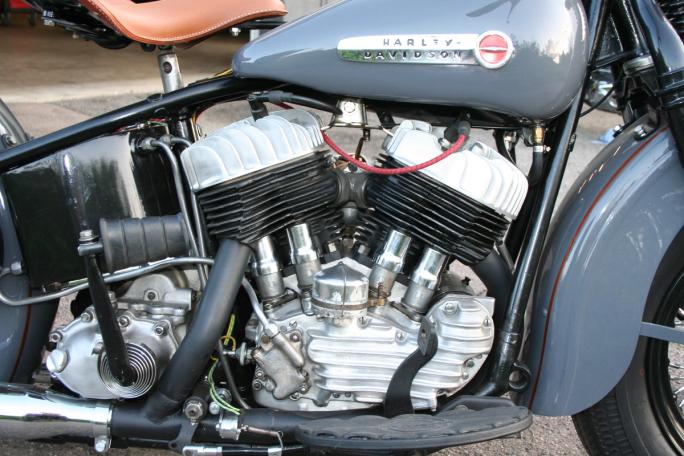
By the early 1940s, engineers in Milwaukee had developed the big "Flathead" to become Harley-Davidson's most reliable engine since its inception in 1903. Now they took it one step further, based on the technology from the Knucklehead. The large side blower now received dry sump lubrication and a 4-speed transmission. The largest Flathead, the UH, received another upgrade, specifically a new cylinder head in die-cast aluminum with deeper cooling fins. The cylinder head was lighter in weight, and had better metal in the thread portion of the spark plugs. This had been a weak point on previous models.
War production
The UL and UH became very popular models, and were often preferred by sidecar owners. The high-torque side blowers were well suited as "locomotives" for these heavy, three-wheeled equipment. When World War II broke out, Harley-Davidson invested all its resources in the production of the 750cc WL, and about 90,000 of it were produced under the model designation WLA. The 750cc WL/WLA is in many ways a "little brother" to the model U, which was available with four engine options, the standard version U, and the high-output version UL, both with 1212cc, and the UL and the high-output version ULH, both with 1312cc.
Military motorcycles
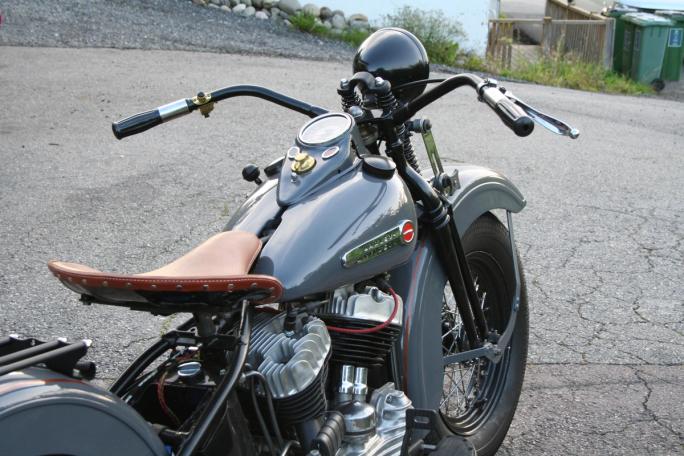
The UH and ULH models were mainly produced for military use, and it is estimated that a total of about 4,000 were made in the years 1941-1945. Officially, production of the two 1312-cubic meters ended in 1941, but the war took its toll. The U models share a design with the Knucklehead, and many of the chassis parts are identical. The long and low body with logo, and the Art Deco-style bodywork are beautiful, and among collectors the 1200- and 1300-cubic-meter Flatheads are now about to surpass the popularity of the Knucklehead.
The production of the large side blowers based on model U is divided as follows:
Model U. 74 ci/1212 ccm. Standard engine. Production years: 1937-1948
Model UL. 74 ci/1212 ccm. High-output engine. Production years: 1937-1948
Model UH. 80 ci/1312 ccm. Standard engine. Production years: 1937-1941
Model ULH. 80ci/1312 ccm. High-output engine. Production year: 1937-1941
Technical data: Harley-Davidson ULH 1300, 1946:
Engine: V-twin
Displacement 1340 ccm
Power: 34 hp
Weight: 274 kg
Top speed: 147 km/h