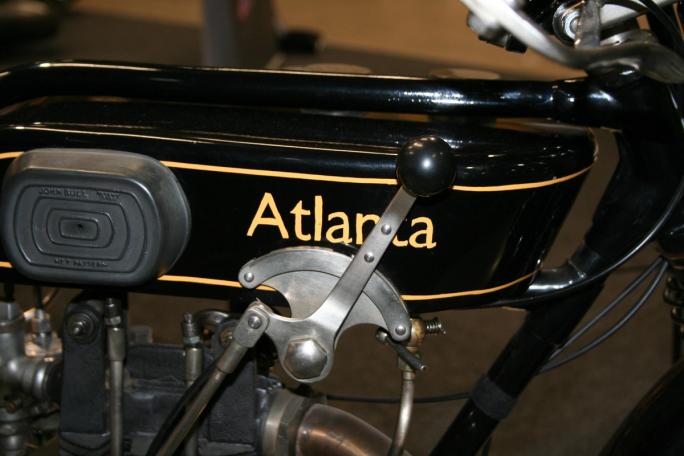
The Dane's Atlanta
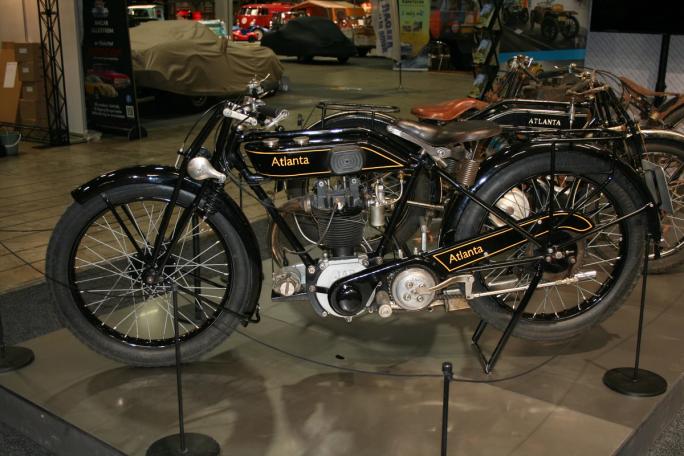
Atlanta with a JAP engine is a rare cultural treasure.
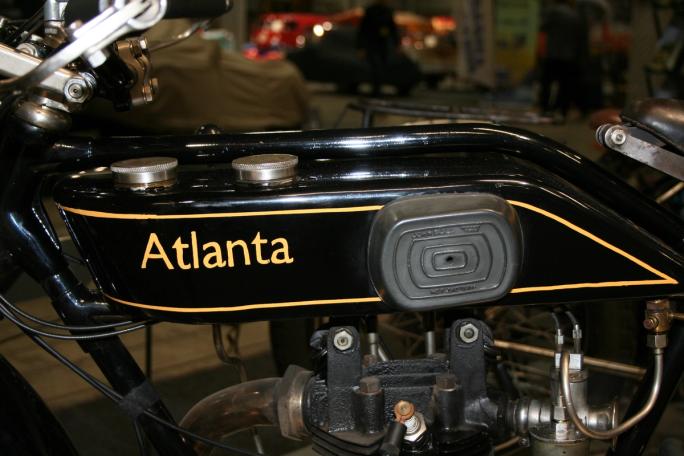
Norwegian motorcycle production is modest, and is often associated with Tempo . However, there have been several manufacturers, and one of these was Atlanta. Production was short-lived, but exclusive considering that Atlanta used something as iconic as an engine from JAP.
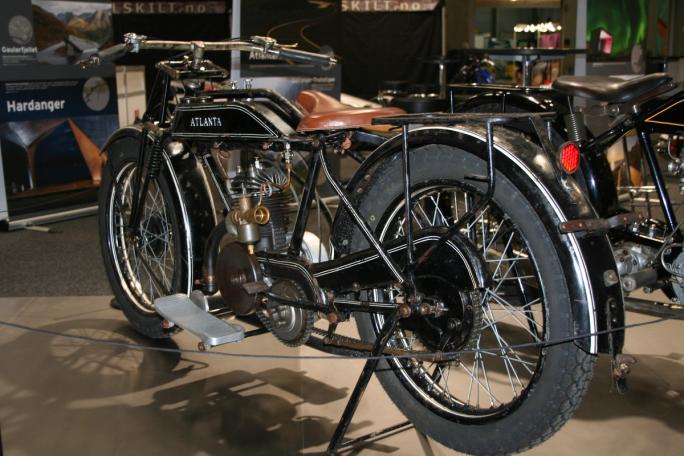
Atlanta is a small piece of Norwegian industrial history, founded by the Dane Carl Bendtsen. Bendtsen was born in Aarhus in 1874, and came to Norway after the turn of the century. Here he was heavily involved in the development and production of boat engines.
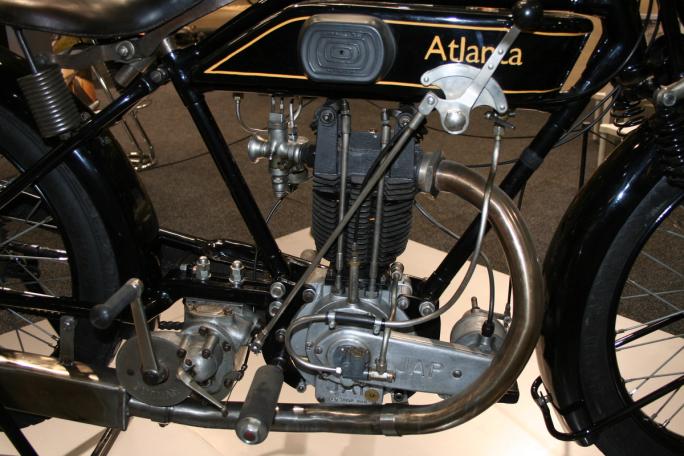
JAP with long stroke
Atlanta Motor Factory
In 1910 he established the Atlanta Motor Factory, and among the products he developed were carburetors. Later he became involved in the development of vehicles adapted for winter use, and the focus was on tracked vehicles.
Villiers engine
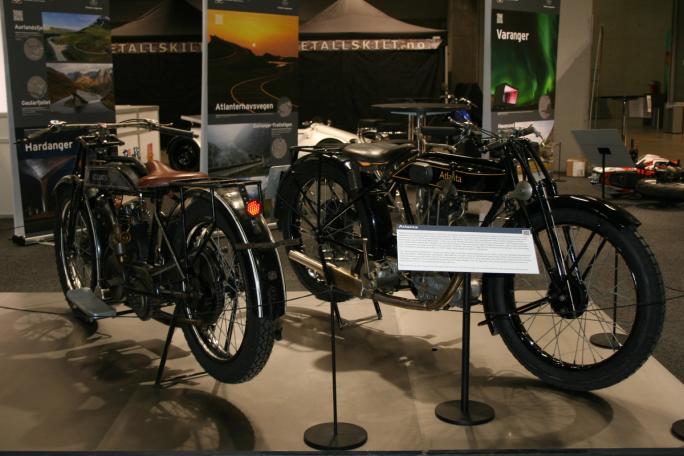
The first two decades of the 20th century were characterized by few vehicles, and the motorcycles that could be found in Norway were mainly Harley-Davidson and Indian . Bendtsen now became interested in motorcycles, and had the idea to start production of his own model. Although Bendtsen had been involved in the development of boat engines, he chose to turn to the English Villiers . They were known for their simple and robust 2-stroke engines. For Bendtsen, it was easiest and most cost-effective to buy engines from external suppliers and adapt these to a self-produced frame.
JAP engine
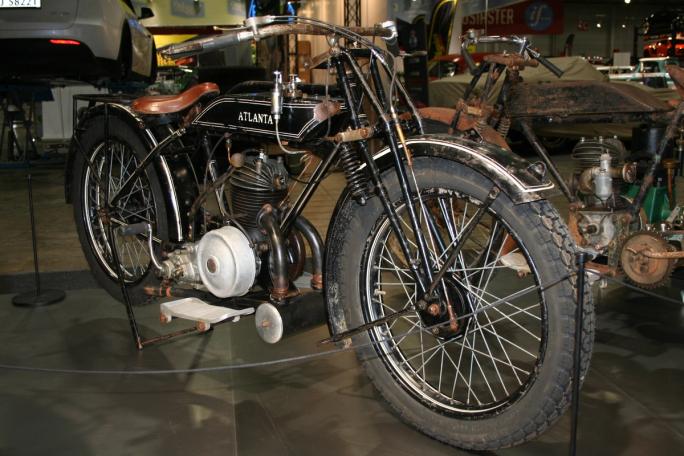
In 1928, however, the Dane went big and used something as exclusive as a 4-stroke from the legendary JAP with a capacity of 500 cubic centimeters. Since Atlanta was competing for customers with the American brands that were mainly 4-strokes, Atlanta had to follow suit. 2-strokes were a rare commodity in Norway at the time, and the market for this type of engine came much later.
David against Goliath
Atlanta's production of motorcycles was short-lived, and in the period 1926-1929 only 20 copies were produced. The reason for the short life of the brand is mainly the tough economic situation in Norway in the 1920s. Unemployment was high, purchasing power was low and the nation lacked the expertise and industrial complex where motorcycle production was a natural part of this. In the USA, there were dozens of motorcycle manufacturers this decade, and several of these already had a global dealer network. Thus, it became a bit of a David against Goliath. Of the 20 motorcycles that were produced in the 4-year period, 4 of them are actually still in existence. The Norwegian Road Museum at Hunderfossen has one of these in its exhibition.