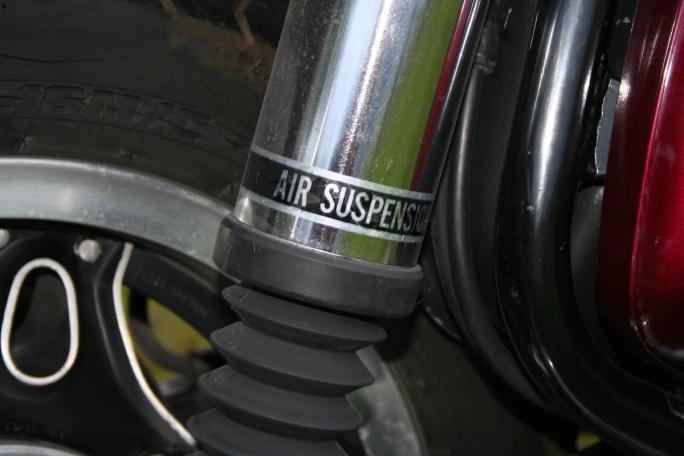
Ground contact; about front forks and shock absorbers
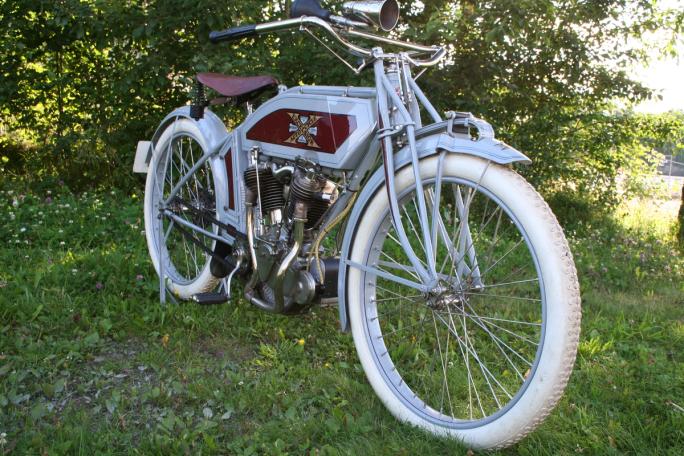
The road to today's adjustable front forks and shock absorbers has literally been both hard and demanding for rider and machine, and the first motorized two-wheelers were relatively simple pedal bicycles with an auxiliary motor attached.
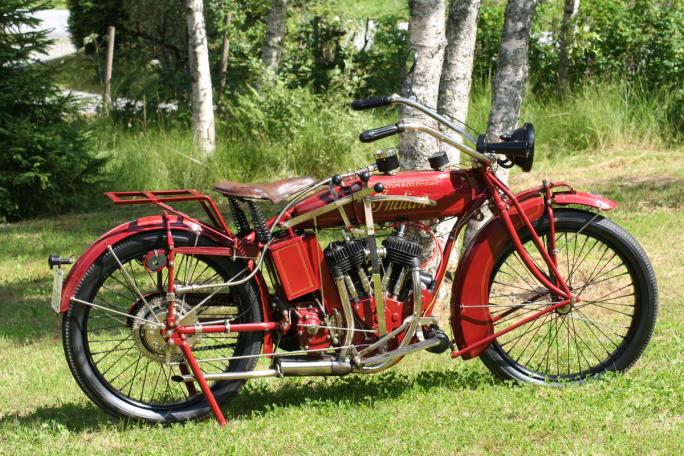
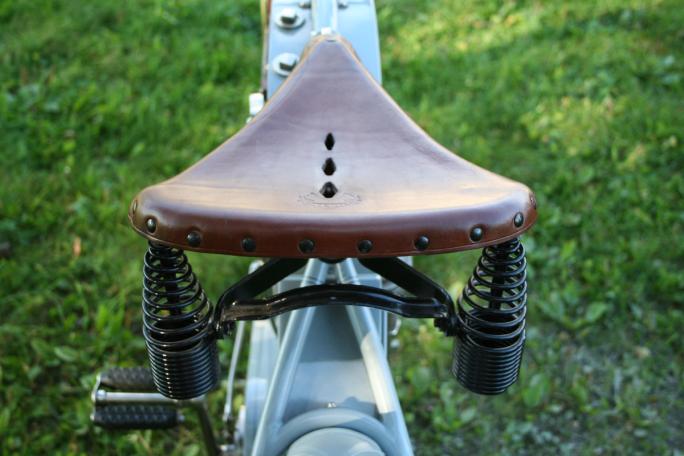
Some had no brakes or suspension except for the seat which had a pair of coil springs in the back. I have looked closely at the development of shock absorber and frame technology from the first motorcycles, and up to today's veterans who were "conceived" as recently as 1995.
The need for suspension. Motorcycles produced for sale did not become a reality until after 1900, but then it would not take many years before a number of motorcycle manufacturers popped up on both sides of the Atlantic. This gave impetus to the development of a number of technical solutions, including suspension, which was completely or partially missing on the first motorcycles. As a result, ground contact, handling characteristics and road grip were so-so.
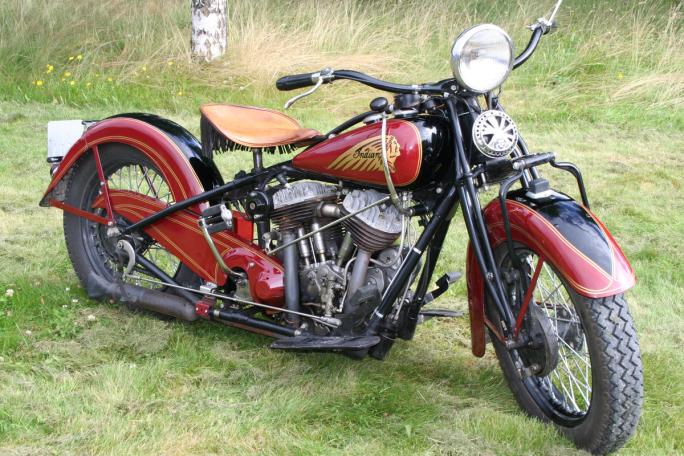
Strut frames and link arm forks. In America, a number of motorcycle manufacturers were established just after the turn of the century. In addition to Indian and Harley, there were well-known brands such as Excelsior , Henderson , Ace and Flying Merkel to name a few. The road network “over there” was characterized by long straight stretches, and the American motorcycles had a relatively large displacement, often around 1000 cubic centimeters. However, the standard of the road network was not in proportion to the speed resources of the bikes, and the ground contact was often so-so. Rigid frames were quite common until the 1950s, while front suspension came into place quite early.
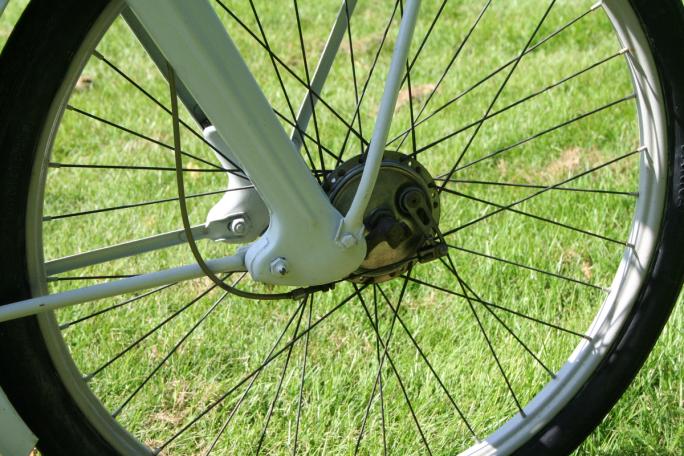
Link arms and rubber bands. The first damped front forks were simple link-arm designs with short suspension travel. They often had a wide rubber band between the steering head and the front fork leg. Gradually, the band was replaced in favor of a simple coil spring. In addition to the front suspension, the seats were damped by two coil springs, just like on pedal bicycles. The English machines followed the same development in terms of suspension, but were far more modest in terms of displacement. Then there was also a rather different topography that embraced the road network on the island. Narrow winding roads in a low hilly landscape did not invite very high speeds. But, of course, there were exceptions, and several of the English motorcycle manufacturers had 1000-cubic-liter engines in their sales brochures already in the interwar period.
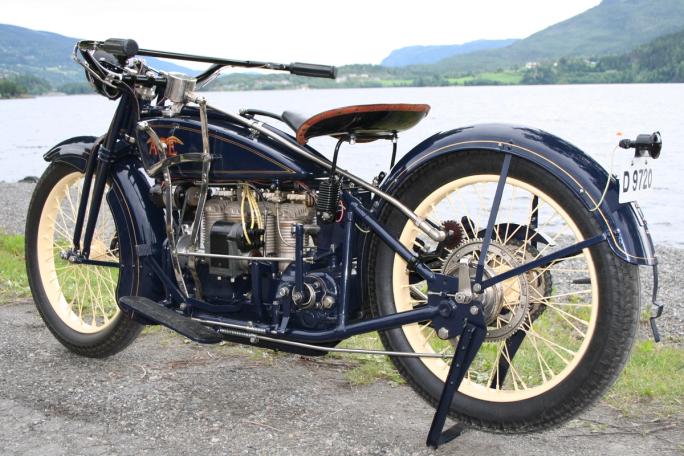
BMW's telescopic fork. Over time, the swingarm forks were further developed with stronger struts and larger springs. Several manufacturers, including Indian and BMW made their swingarm forks with horizontal leaf springs. BMW was among the very first to use telescopic forks as early as 1935 on its 750 cc boxer model R12. Later, BMW would use the Earls fork, often referred to as a swingarm fork, on a number of its models. The advantage of this construction was that it was very well suited to sidecar riding.
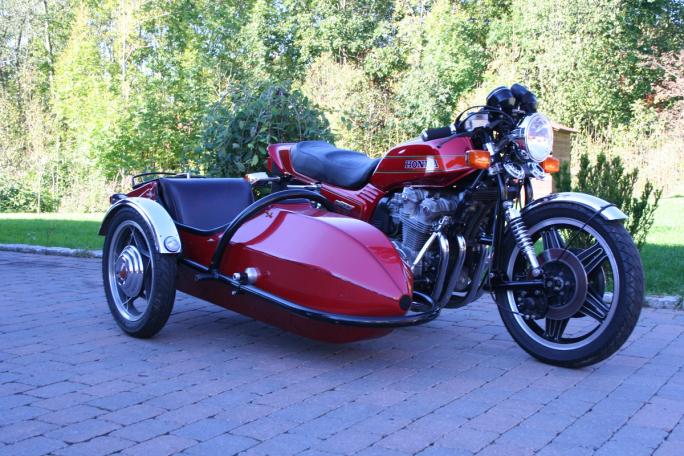
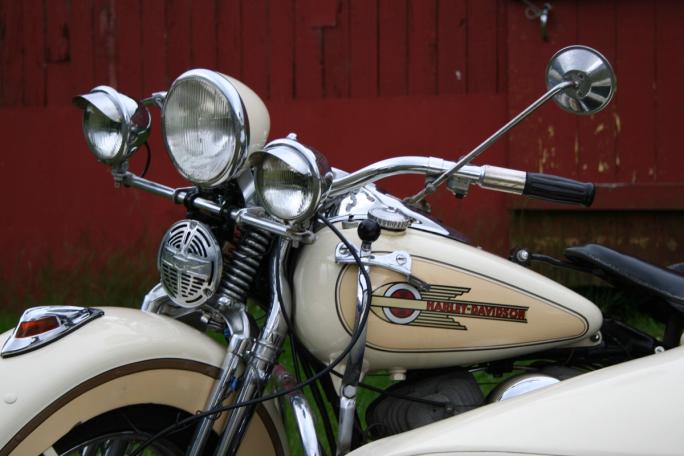
The Springer fork. Harley Davidson eventually used the term “Springer” for its front fork, a name that became a household name after they launched their new top-ventilated 1000cc Knucklehead in 1936. This fork became a classic on HD models until it was replaced by Harley’s first telescopic fork mounted on the Hydra Glide model in 1949. 3 years later, the same model also received rear suspension via a swingarm with two shock absorbers. The rigid frame was now history. The Springer fork was so popular that it was used on Harley’s retro classic Softail Springer that came out in 1988.
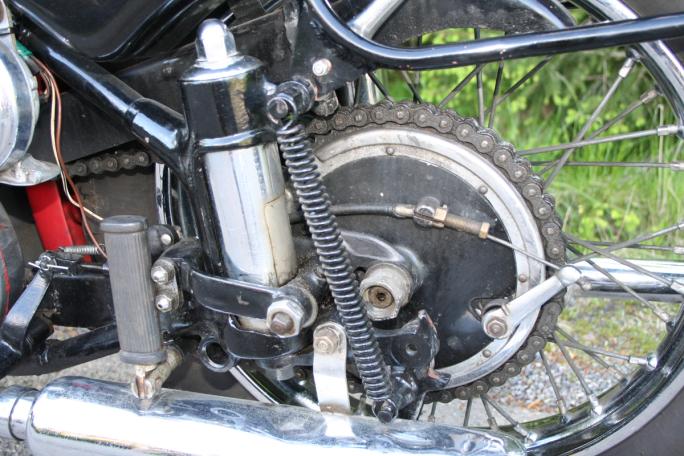
Plunger suspension. Rear wheel suspension came late compared to various solutions for the front wheel. BMW was early on the scene, launching plunger suspension as early as 1938. Despite the fact that the English motorcycle industry was the largest in terms of production volume, rear suspension did not become common until many years after World War II. The plunger suspension was the precursor to the swingarm, and an important step towards full rear suspension. The rear frame was still static, but the wheel could now move in the vertical direction thanks to a simple damper device, where the rear hub was attached to the upper part of the damper. In the 1950s, most motorcycle manufacturers abandoned plunger suspension in favor of a swingarm with two shock absorbers.
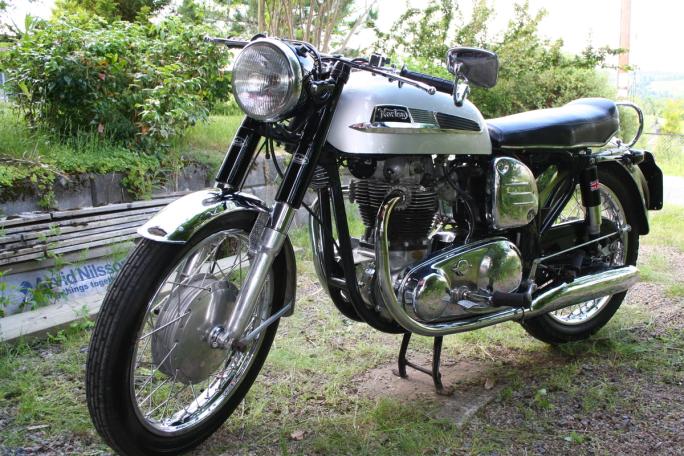
Feahterbed and Roadholder by Norton . When Norton adopted the Featherbed frame in combination with the Roadholder fork, a new standard for suspension was set. This would prove to be an unbeatable combination, and proof that the features of a modern chassis compensated for the effect. Now it was not that Norton's parallel twin lacked power, but the chassis was so superior that Norton's models beat much larger and stronger competitors thanks to their unsurpassed roadholding. The Featherbed frame was a classic steel tubular frame with a swingarm at the rear, and was available in two versions, “Slimline” and “Wideline”.
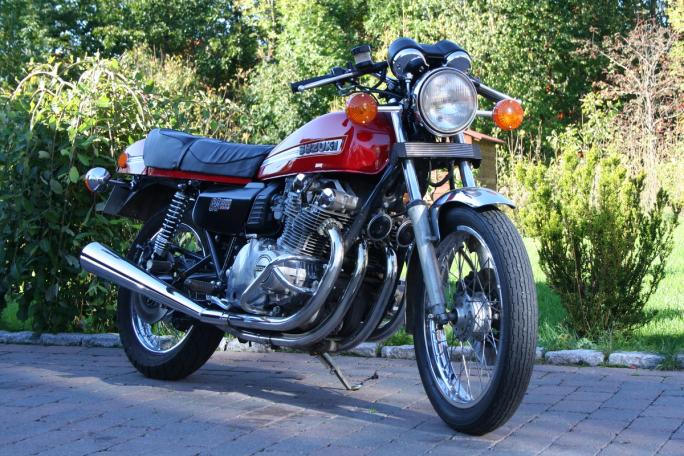
Power, performance and frame characteristics. Wobbing eventually became a not unknown phenomenon on several of the Japanese models. This very dangerous phenomenon was almost unknown on the British machines from the same period. The Japanese manufacturers focused everything on power and performance, and the frame and damping were given second place. This would cost many of the most “gas-happy” riders both their lives and their health. It was only with Suzuki GS 1000, which went on sale in 1977, that the motorcycle press in the US and UK could state that “the Japs had finally realized that the characteristics of the frame had to be in proportion to power and performance”.
Adjustable damping. By the end of the 1970s, however, most motorcycle manufacturers had both front and rear suspension on all models, where preload and damping could be adjusted both mechanically and with the help of air assistance. Progressive fork springs were also offered in the aftermarket. This type of spring, in combination with anti-dive, improved both handling and safety. Thus, the long-awaited ground contact was achieved.