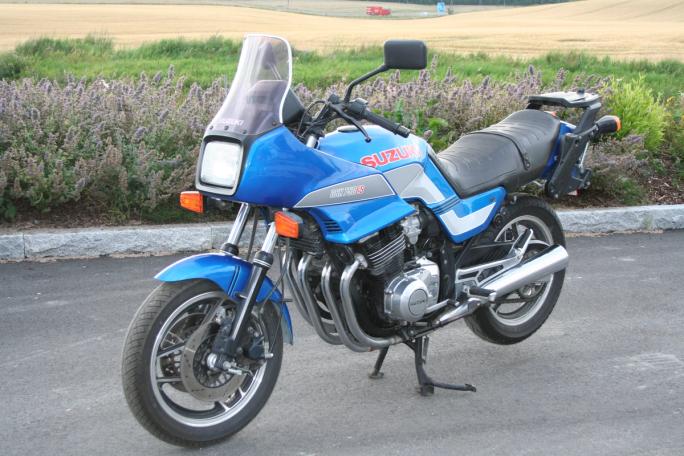
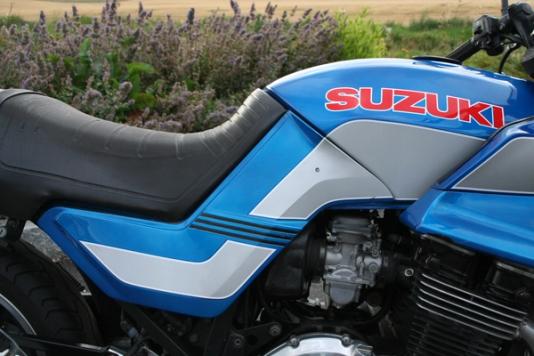
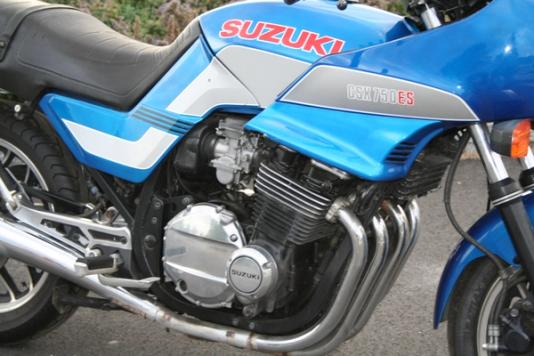
The 80s icon Suzuki GSX750ES
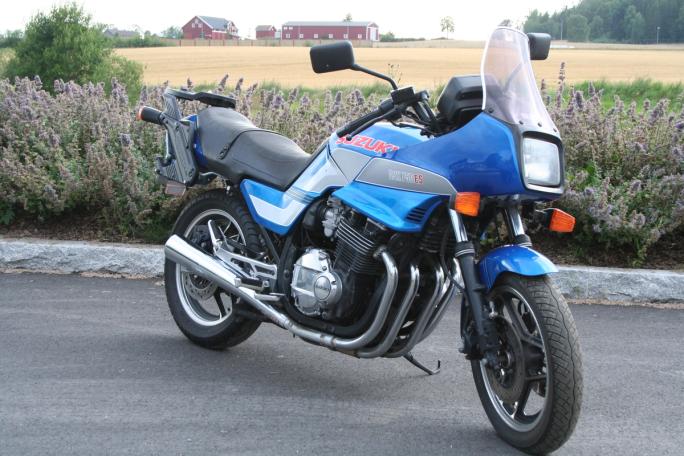
At the beginning of 1980, quite radical changes were made in motorcycle design. The soft and teardrop-shaped lines of the 1970s were replaced by more angular, rectangular and straight lines. Fairings as standard equipment became common this decade, and engine technology was constantly taking new steps on the development front. I have been "up close" to the history behind Suzuki GSX750ES, a bike that is as typical of the 1980s as it is possible to imagine, but which is today a rare sight in the Norwegian motorcycle flora.
0/0
Suzuki's history back from the 1960s, much like other motorcycle manufacturers from Japan in the same period, is characterized by letters as model prefixes. The 1960s offered the T series, the 1970s were characterized by the GT series, until it was replaced by the GS series in 1976. The GS series was synonymous with 4-strokes, and the GS750 and GS1000 in particular became very popular. Fast, solid and with a great design. Suzuki was the last out of the starting block of the four Japanese manufacturers when it came to the production of 4-strokes. Late, but good, in other words. Now, however, a product has a certain lifespan. The world moves on, products meet competing products, and action must be taken to literally keep up with the times.
4-valve and TSCC: GSX750ET
When Honda launched its new inline-four CB900F in 1979, it offered a whopping 90 hp, with technical innovations such as electronic ignition, 4-valve technology and double overhead camshafts. Suzuki now followed close behind, and in 1980 came the 750 cc 750ET. Compared to the old GS engine, this was a real technological boost. The engine was strongly over-square with a completely new cylinder head and new piston profile. 4 valves per cylinder and flat-topped pistons were the essence of what Suzuki marketed as TSCC, or Twin Swirl Combustion Chamber.
0-402 meters in 12 seconds
Increased air and fuel filling resulted in more efficient combustion in the over-square cylinder, which in turn produced higher power and better torque. The styling was radically changed, but the cradle frame with traditional swingarm at the rear was still the basis. The GSX750ET was a huge sales success. It was very reliable, and not least very affordable. It was also fast, and a quarter mile in just over 12 seconds was fully achievable. The model eventually came in a 1100 version, and there were quite a few of these that were used in drag racing with great success. The construction could withstand a beating, and was described as bulletproof.
GSX750ES/EF
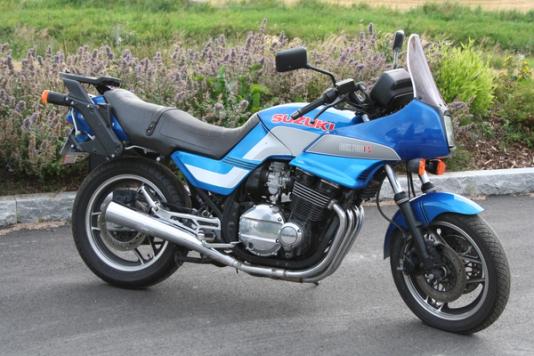
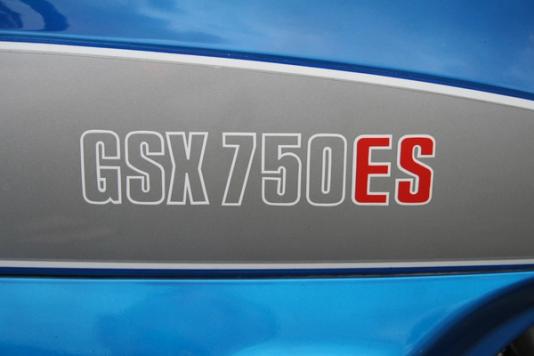
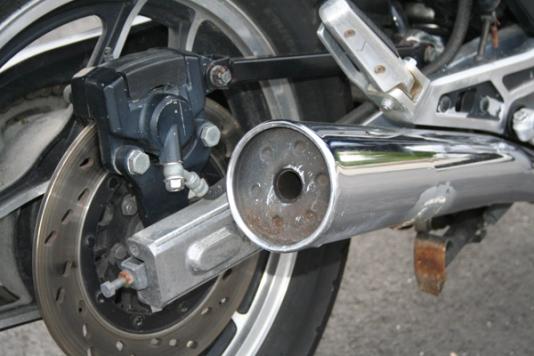
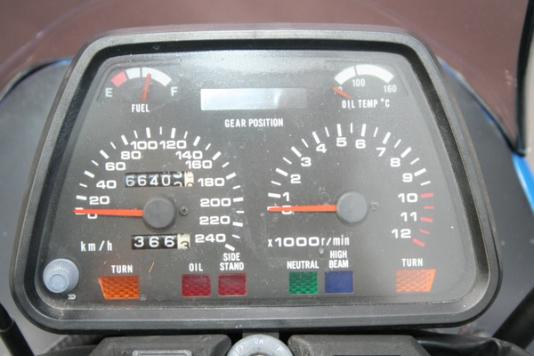
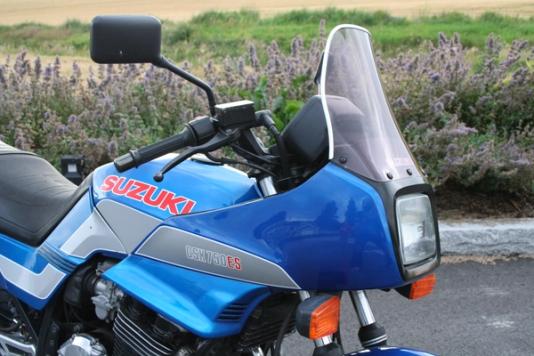
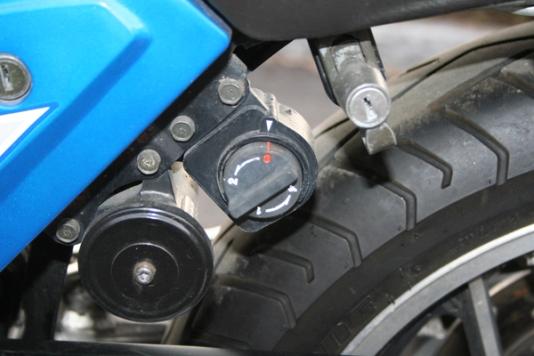
Driven by the success of the 750cc ET, but also by competition from Honda , Yamaha and Kawasaki , a completely new model saw the light of day in 1983. Suzuki's weapon in the 750 segment was given the model prefix GSX750ES, and most of it was new. A new square-section frame gave greater torsional stability compared to previous round-tube frames. The engine received a lighter crank, larger valves and increased compression. Adjustable rear monoshock, anti-dive on the front fork, lower handlebars, moved footrests, sporty fairing developed in a wind tunnel, new dashboard, yes the list goes on. The GSX750ES was far sportier than its predecessors GS750 and GS 750ET, which was also the intention.
16 and 17 inch wheels
New dimensions for the wheels, 16 inches at the front and 17 inches at the rear, as well as a somewhat shorter wheelbase than its predecessor, were supposed to allow for sportier driving. In many ways, this model represents a new trend; the rider's identity and needs. A sporty machine with the ability to adjust the damper characteristics to suit each individual owner represented something new. For comparison, you could of course adjust the spring rate on the rear shock absorbers if you owned a GS750, but it wasn't quite the same.
Modern damper technology
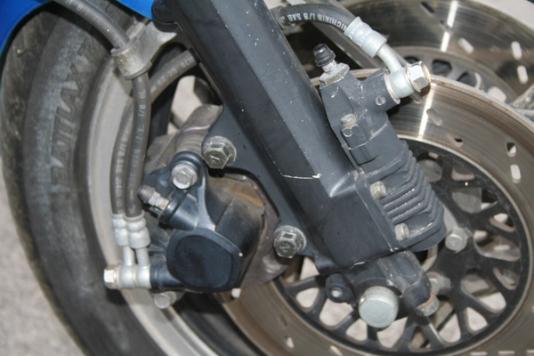
"Full-floater" and "Anti-Dive" heralded a new era of technology, gadgets for safer and more comfortable riding. The 750cc was produced in the period 1983-1987, and was delivered in two versions. ES with half fairing and EF with full fairing. The model changed little during the four years of production. The GSX750EF was so far in Suzuki's history the smallest, lightest and fastest 750cc. The technical innovations that the model offered, and we are thinking in particular of the adjustable rear monoshock, the anti-dive on the front fork and fairing as standard, pointed the way in the direction of increasingly sophisticated and advanced motorcycles. We should also not forget that the 750cc, as previously mentioned here, got a big brother in the 1100 version, a model that of course enjoyed the same recognition in terms of "styling, handling and performance. The model prefix associated with the year models can be helpful if you are looking for parts to restore this period-typical 80s car, and they look like this; 1983:D. 1984:E. 1985:F. 1986:G. 1987:H.
Technical data Suzuki GSX750ES, 1983 model:
Engine: 4-cylinder, 4-valves per cylinder DOHC, air-cooled
Bore x stroke: 67 x 53 mm
Compression: 9.6:1
Displacement: 747 cc
Carburetor. 4 x Mikuni 32 mm.
Power: 84 hp at 9500 rpm.
Torque: 66.6 Nm at 8500 rpm.
No. of gears: 5
Front tires: 100/90-16
Rear tires: 120/90-17
Front brakes: dual discs 260 mm
Rear brakes: single disc 260 mm
Fuel consumption at 80 km/h: 0.35 liters per mile
Tank: 19.5 liters
Weight: 210 kg (dry)
0-402 m: 12.5 seconds
Top speed: 210 km/h