
Suzuki GT-500 Cafe Racer
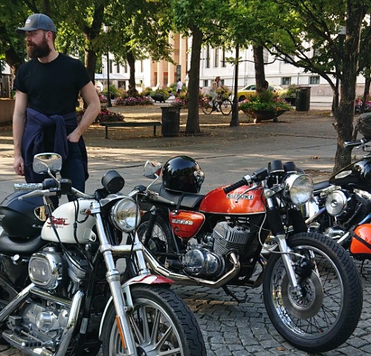
The new generation of cafe racer enthusiasts, with caps and beards, a bit hipster-like
0/0
“Everything was better before,” an old motorcycle enthusiast told me one Wednesday evening in the capital when he spotted this mischievous cafe racer, built on a 70s Suzuki 500cc 2-stroke engine. “Do you think it’s English that counts?” I asked, knowing full well that this part of motorcycle culture originated in England. The answer came immediately.
"Yes, of course it has to be an Englishman with a twin engine as a power package," comes the slightly arrogant gentleman, a little dryly but all the more self-confidently. Judging by his attire, a shabby leather suit from the early 1970s, and his age, he was probably young at the time when Norton , BSA and Triumph were the dominant cafe racers. The conversation between the two of us is characterized by "verbal shadow boxing", and gradually turns in the direction I want it to be, namely to focus on creativity rather than traditions.
Breaking traditions
I like traditionalists, precisely because they give new meaning to old concepts and challenge narrow beliefs that everything was better before. Truth be told, the cafe racer cult has developed greatly in the last 10 years. A new generation of motorcyclists has come onto the scene. These have affiliations from all walks of life, unlike those who established the cafe culture in the 1950s and 1960s; the rockers from the British working class.
No limits
The new generation works from a starting point that can best be described as "no limits". If you have a frame, engine and handlebars mounted lower than the highest point of the gas tank, then you are free to move forward. And that's how the road is made as you go. There are countless social platforms where builders ask each other about the way forward, knowing full well that taste is like the bottom. Creative input, critical advice that is more or less well-founded, and long tirades marked by emotions, provide motivation to inventive souls all over the country. And best of all; they build without having to pay a fortune. This brings new bikers onto the scene, renewing the motorcycle culture. It is needed.
Suzuki GT-500; why not.
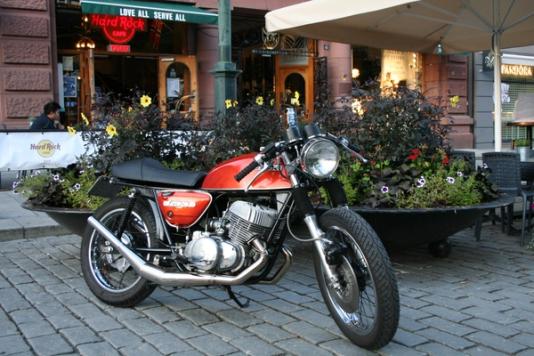
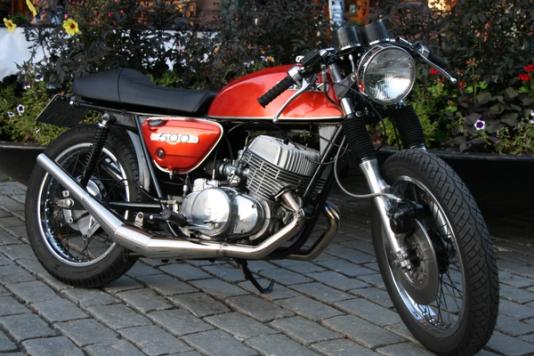
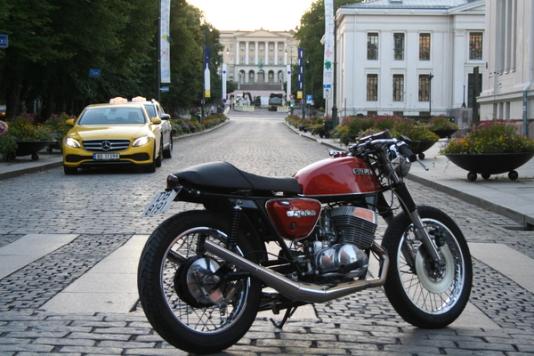
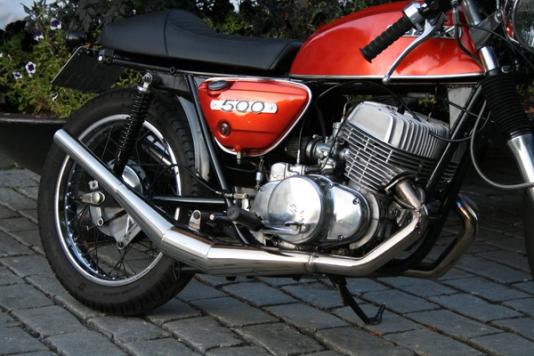
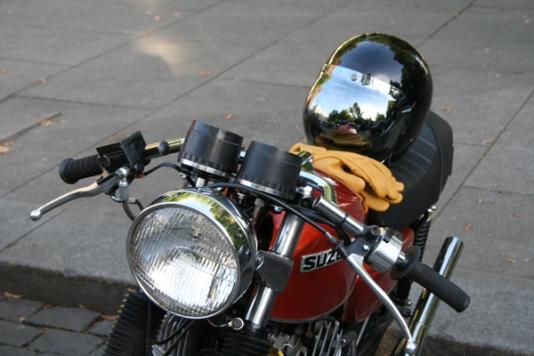
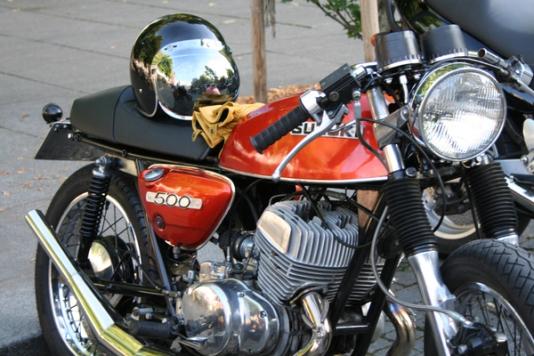
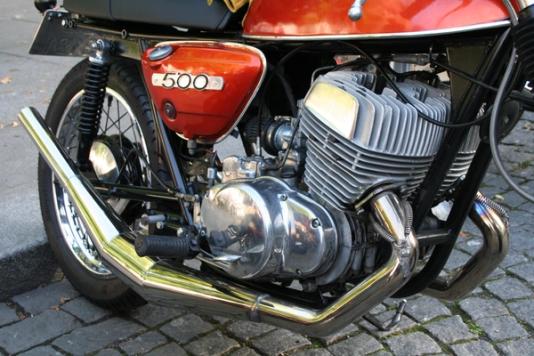
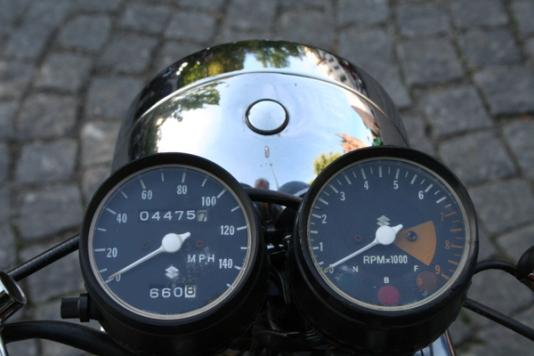
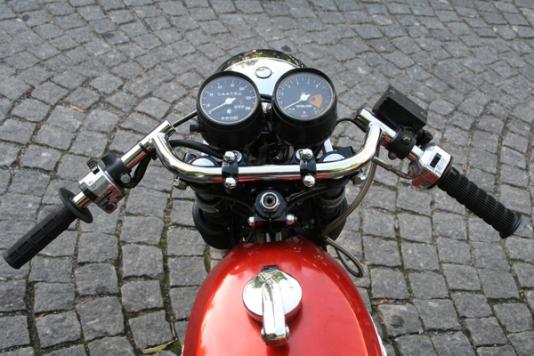
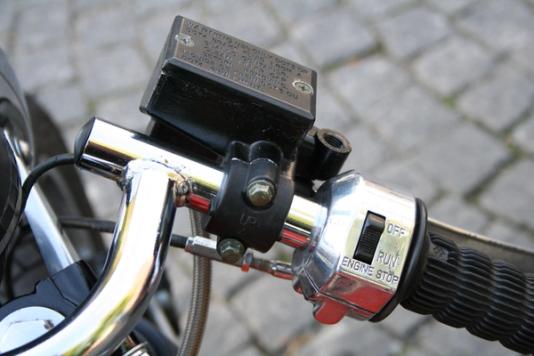
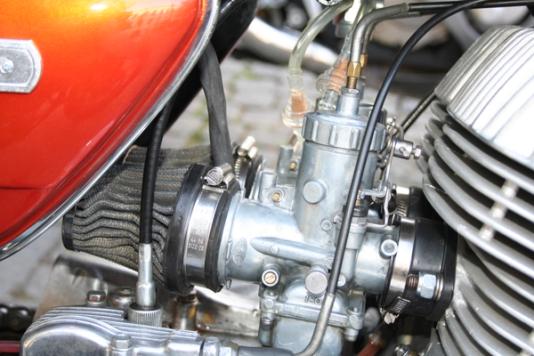
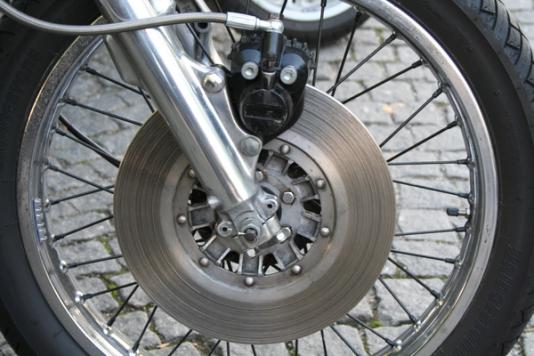
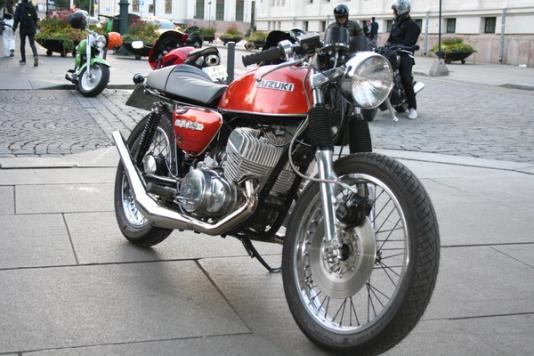
I ask the expert what he thinks about the development and the future. He hesitates a bit, turns his head and points to the motorcycle that started the conversation, a Suzuki T-500 from the mid-70s, fairly rebuilt. The style is complete, and the right ingredients are in place. Classic TT handlebars set the agenda, and we are already in race mode. The seat is short, low and with the classic GP riser at the rear. Turn signals and mirrors are "long gone", because minimalism is what matters here. The upturned exhaust system, stainless and of the pressure chamber type, gives clear sporty associations; it is tough and effective. A short rear fender and a tiny taillight, of course with LED technology, complete the rear. "Well, it's a bit unconventional, but it has a twin engine and that helps," he replies. "Do you like 2-strokes" or was everything better before?" I ask, knowing full well that the sarcasm can go both ways. "It's a bit rough," comes the oldtimer's comment.
A blue haze over Karl Johan
Darkness descends over the capital on this warm summer evening, and then the owner of the bike, a younger gentleman, without a hint of gray in his mane of hair, arrives and starts the twin. It slurps a little in the intake on the first pedal, but when the kick is pulled all the way down on the second pedal, it slams nicely between the buildings. Tigerstaden's parade street no. 1, Karl Johan, is covered in a light bluish haze. Not exactly something for MDG, but much to the delight of the spectators along the sidewalk.
Tight wire
The revs are increased slightly at idle before the owner puts in first gear and pulls the tight wire up Karl Johan in the direction of the king's residence. The sound from the expansion chambers is indescribable, drowning out the last comment from the old man. When I ask him what he said, he comes up dryly: "Raw, naughty and politically incorrect". I nod and conclude that we basically agree. Cafe racers are tough, regardless of whether their origins are English or Japanese.