
Suzuki GSX-R 1100
Once you've said A, you often have to say B. In this sense, Suzuki had to follow up the success of the GSX-R750, which came out in 1985, with an 1100 version. It came out the very next year, in 1986. We've taken a closer look at the R-bike, which can actually claim the title of "veteran motorcycle."
With the highly race-inspired GSX-R series, Suzuki set a new standard for sports motorcycles. When the 750 version arrived in Europe in 1985, it quickly became a trendsetter and an icon. Few if any 4-strokes were as close to what are often referred to as "production racers". Low weight, high performance and ultra-sporty design set the tone, and a new generation of sports machines was on the way. With 100 hp, the 750 cc placed itself in the top tier in terms of weight-power ratio, and in its first year it took 1st and 2nd place in the 24-hour race at the legendary Le Mans.
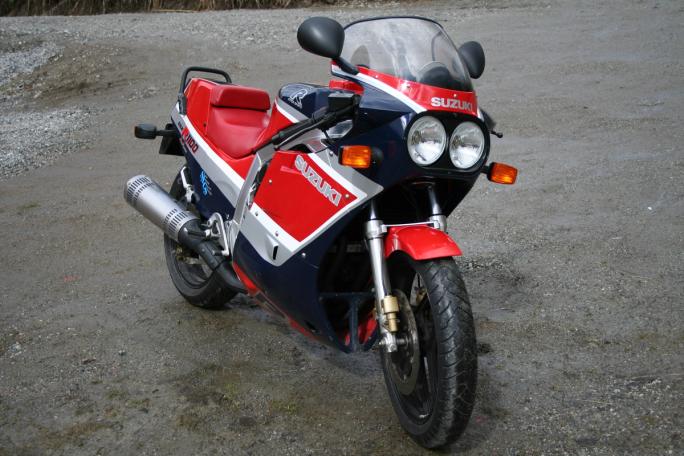
GSX-R1100
Suzuki did not rest on its laurels after its success in 1985, and in 1986 they launched the "big brother" GSX-R1100. From a distance it looked very similar to its little brother GSX-R750, but on closer inspection the 1100cc was both bigger and more powerful in every way. The "upside" was of course the power, because with 130 hp the 1100cc with its 197 kilos (dry) was a pure rocket. The "downside" was of course the fact that on closed tracks it was far more difficult to drive than the 750n. The press pointed this out, but for the majority of owners tracks were out of reach. They had their own track on the nearest asphalt strip on the local highway, and for most people this track was good enough. Here the "Gixer" (as it was often referred to colloquially) was pushed through the power range until the needle was well into the red zone on the tachometer.
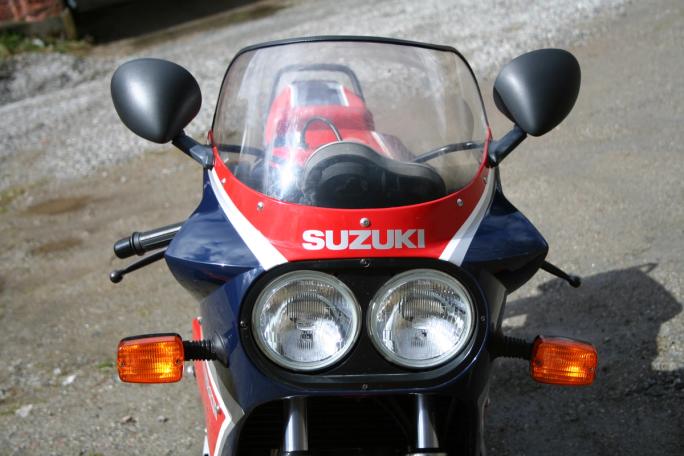
SACS
The GSX-R1100 had a number of technical goodies. The front and rear suspension had a lot of adjustment options, and the brakes had multi-piston brake calipers with floating discs. The engine had both air and oil cooling, the so-called SACS, or " Suzuki Advanced Cooling System". This system ensured that oil was sprayed on key parts in the engine to lubricate and cool, a solution that was chosen instead of water cooling. The 4-1 exhaust system was a natural choice to emphasize the sports image. The 4-sided swingarm at the rear was a matter of course, and the full fairing in racing design emphasized the bike's character. Few if any production models were so similar to a production racer.
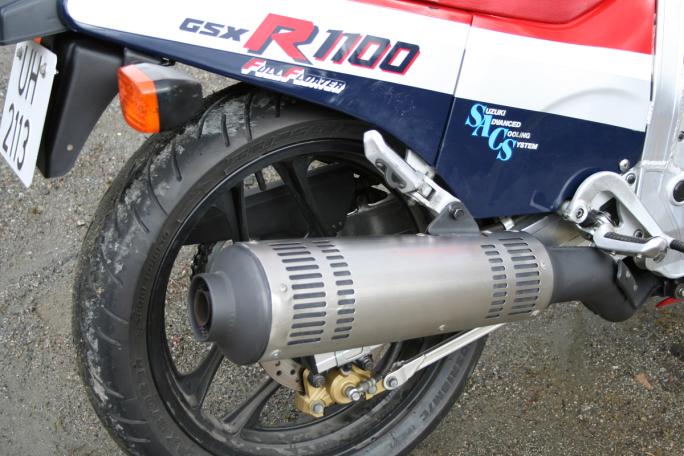
Low weight, high power
Much of the success behind the 750 and not least the 1100cc is due to Suzuki's ability to run both models on extensive "diet diets" before they were put into production. There were models, both in the 750 and 1100 class, that could show the same or higher power. But what good was that when the weight of the competitors was too high. After all, the weight-to-power ratio is of significant importance when it comes to acceleration and top speed, and here GSX-R was unbeatable. Suzuki saved weight where they could, including by making parts of the dashboard around the instruments in foam plastic!
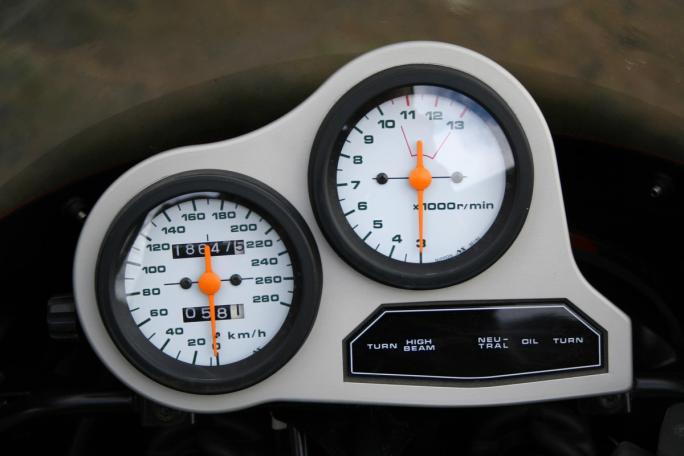
251 km/h
When the GSX-R1100 was finally released in 1986, and customers could take their bikes out of the shop and onto the tarmac, the fun began. With 130 hp at its disposal, and with a dry weight of “only” 197 kilograms, the R model was wicked fast. The speedometer needle didn’t stop until it barely passed the 250 mark. This was sensational.
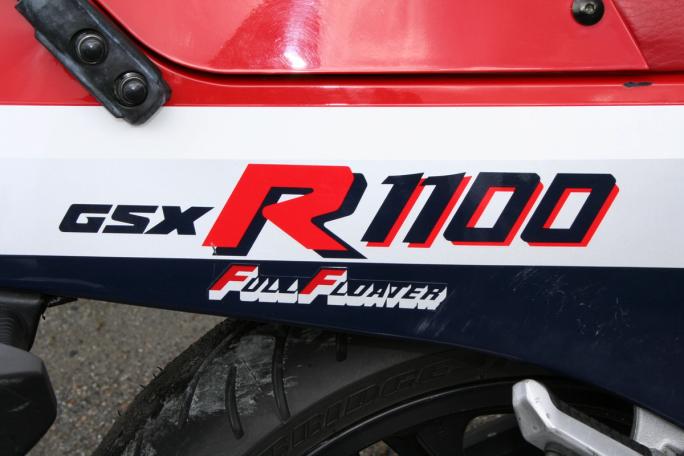
Compared to its "little brother" GSX-R750, the 1100cc was not as easy to ride on winding roads, but when the straights came, there was no one above and no one beside. It was simply the "worst", and R almost became a new term.
Technical data: Suzuki GSX-R1100, 1986 model
Engine: 4-cylinder 4-stroke, DOHC, 16V, SACS
Displacement: 1052 cc
Power: 130 hp at 9500 rpm.
No. of gears: 5
Front tires: 110/80x18
Rear tires: 150/70x18
Weight: 197 kg (dry)
Tank: 19 liters
Top speed: 251 km/h