
Rudge 500 Special
0/0
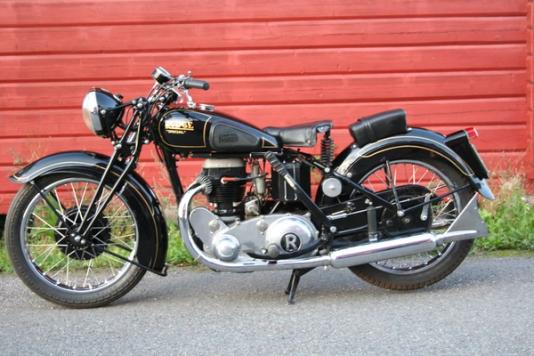
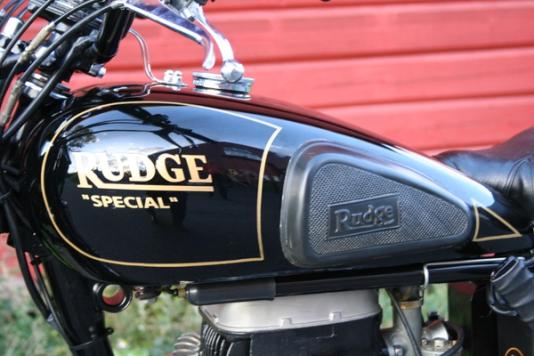
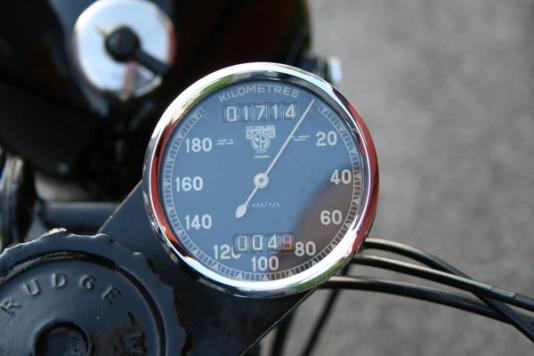
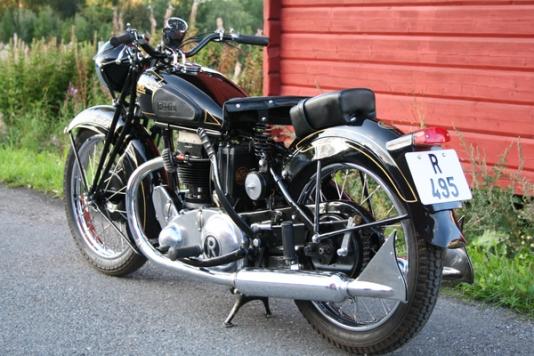
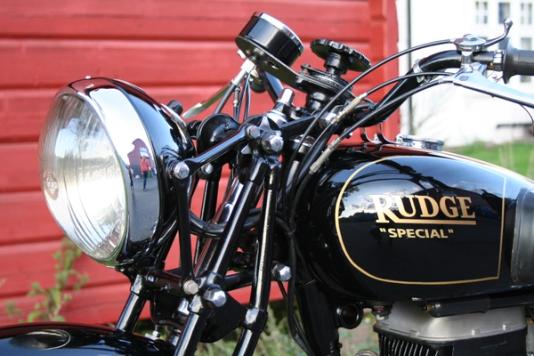
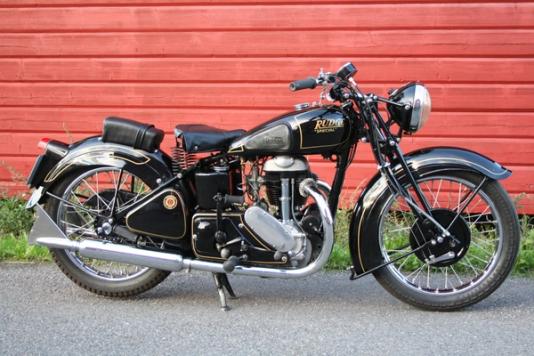
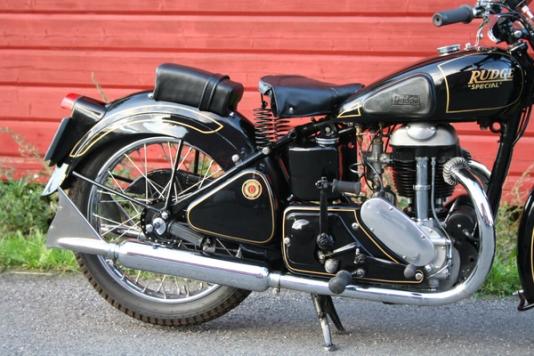
Among the many English motorcycle manufacturers, there were some brands that stood out from the crowd by being early adopters of advanced technology. Rudge , which produced motorcycles from 1911 to 1939, was known for reliability, quality, innovation and last but not least sporty machines. I have dug a little into the brand's history, and took a closer look at a "500 Special" from 1937.
Daniel Rudge and Charles Pugh
Rudge traces its roots back to Wolverhampton in 1868. Rudge Whitwort Company Ltd. was established in Coventry in 1894, and was the result of the merger of two pedal cycle manufacturers Daniel Rudge and Charles Pugh. Until 1911, the year when Rudge moved from prototype to production of motorcycles, they mainly made pedal cycles and pedal cycle seats. The company quickly became known for being innovative, and they were behind several patents such as wire spoked wheels with a center bolt, known from a number of sports cars, including Jaguar.
4 gears, 4 valves, and integrated brakes
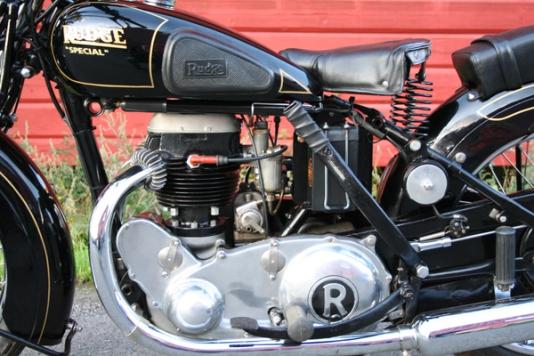
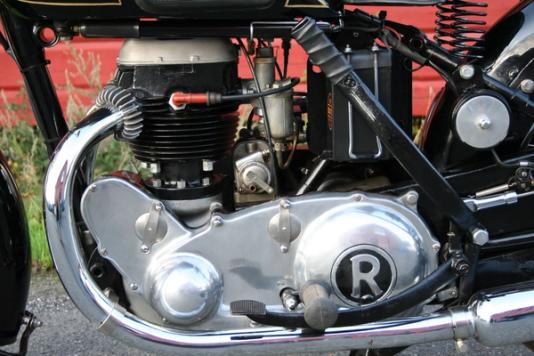
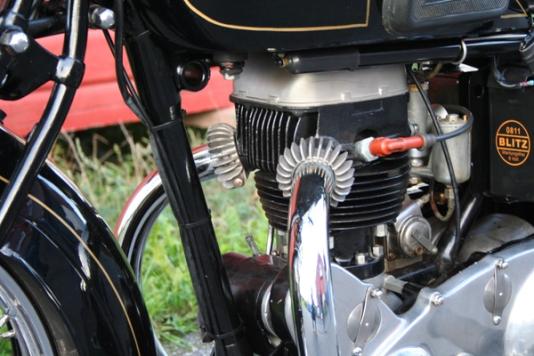
The first motorcycle from Rudge that went on sale in 1909 was actually a "Werner" with Rudge logo. In 1911, however, they came up with their own motorcycle, a 1-cylinder 500 cc. As early as 1923, Rudge used a 4-speed gearbox, which was far ahead of the competition, and in 1932 the first model with foot gear came out. Most other motorcycle brands at that time had hand-operated gear on the tank. Another technical solution that is worth noting is the integrated brakes that appeared as early as 1925. The factory was also very early with 4-valve technology, and the high performance of Rudge 's machines quickly became known. Rudge 500 Special was strong compared to similar models from other manufacturers, and few of the competitors could demonstrate an output of 35 hp.
Top position on the Isle of Man in 1914
As early as 1914, Rudge took the first of a number of top positions at the TT race on the Isle of Man. Among Rudge's sports machines, the "Ulster" model is particularly popular. The model was equipped with a 1-cylinder 4-stroke engine that delivered a whopping 33 hp, which gave a top speed of a staggering 170 km/h. Quite remarkable for a "dunker" in the 1930s. Rudge mainly produced two 4-stroke engines, of 346 cc and 495 cc respectively. When World War II broke out, sales almost completely stopped for many English motorcycle manufacturers. Those who received orders from the British military, including the "big 3" BSA , Norton and Triumph , managed through the long and difficult war years. Many of the smaller motorcycle manufacturers, however, did not survive, and disappeared around the same time as the war broke out or during the first few years after the war ended. Rudge 's last year of production was 1939, after which the brand "almost" went into the history books. We say "almost" because some two-wheelers were produced in 1940, and immediately after the war under the model name Autocycle, but Rudge machines as we know them from the pre-war years were now history. Although the war years in isolation were not the only reason why many succumbed, they were also the most important single reason for closure, also for the once proud Rudge brand.
Technical data: Rudge 500 Special, 1937 model
Engine: 1-cylinder 4-stroke, OHV, 4-V.
Displacement: 495 cc
Power: 35 hp
Front tires: 3.25 x 19
Rear tire: 3.25 x 19
No. of gears: 4
Weight: 170 kg
Top speed: 105 km/h