Opel Motoclub 500T
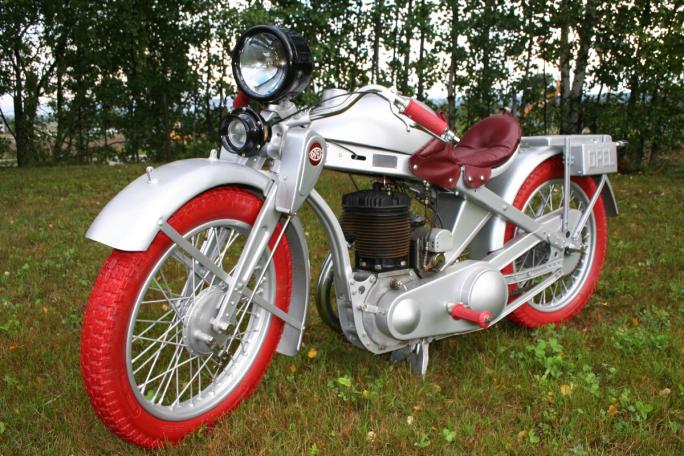
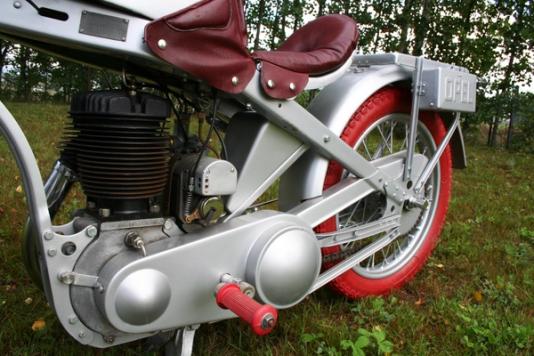
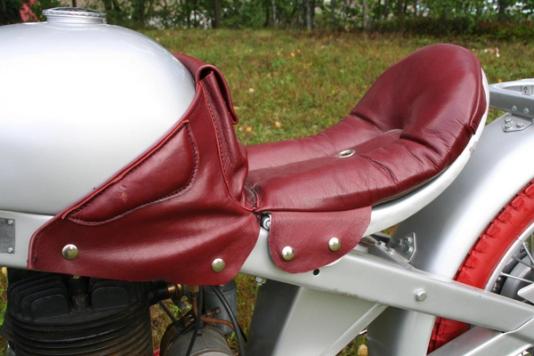
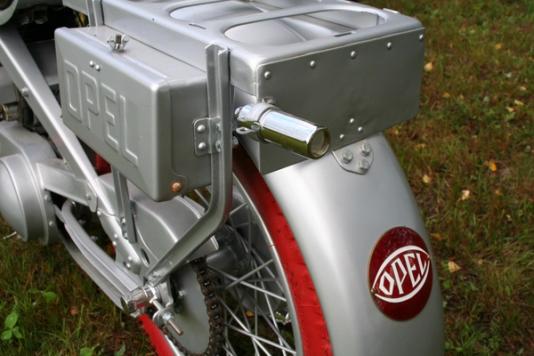
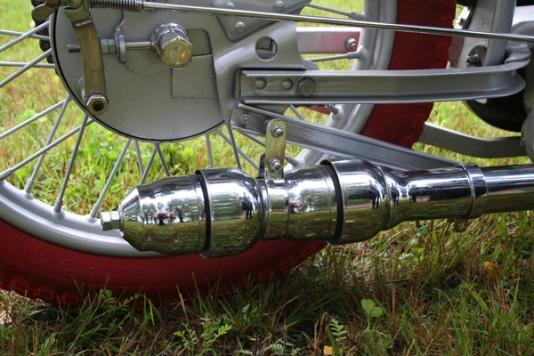
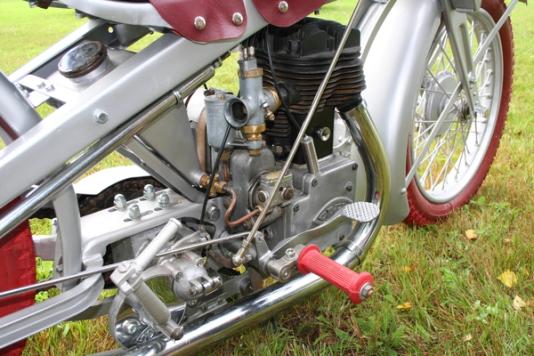
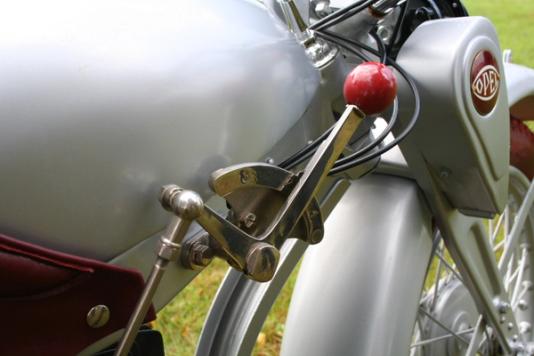
Opel Motoclub 500T, 1929 model. Probably one of only 2 examples in Norway
Most people naturally associate Opel with car production in Russelheim. Opel is associated with cars, not motorcycles. The fact that there is an Opel motorcycle in Norway is therefore unique, to say the least. Here is a bit of the history behind Opel's motorcycles.
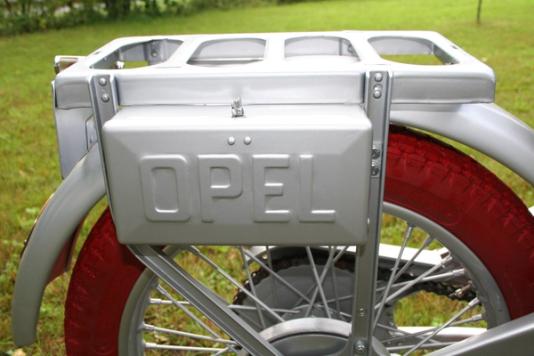
0/0
Opel was founded in 1862 by Adam Opel, and made a number of technical aids. In addition to car production in Russelheim, they also made sewing machines, refrigerators and pedal bicycles. After Adam Opel died, his grandson Fritz von Opel came to play a central role in the development of motorcycles. He was very fond of fast two-wheelers, and in the 1920s he conducted a number of experiments with rocket-powered motorcycles.
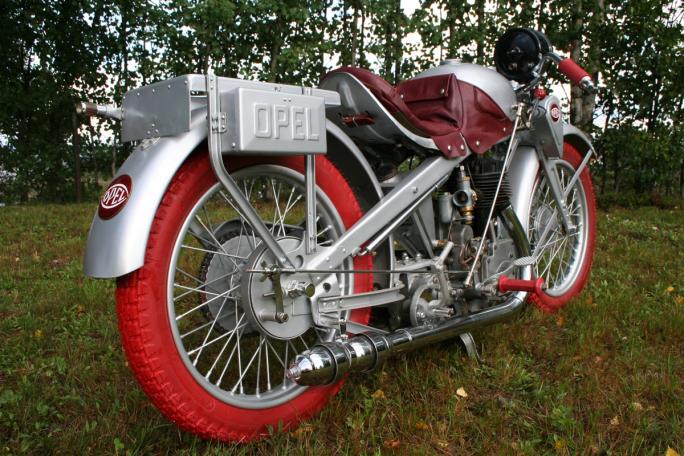
Pedal bikes and auxiliary motors
Since Opel motorized its first pedal bicycle in 1901, the factory is actually considered one of the pioneers of motorcycle production. At first, small 1-cylinder models were produced. Among other things, Opel produced auxiliary engines to hang on the side of the rear wheel of pedal bicycles. The design differed from other manufacturers of auxiliary engines due to the somewhat unconventional placement of the engine.
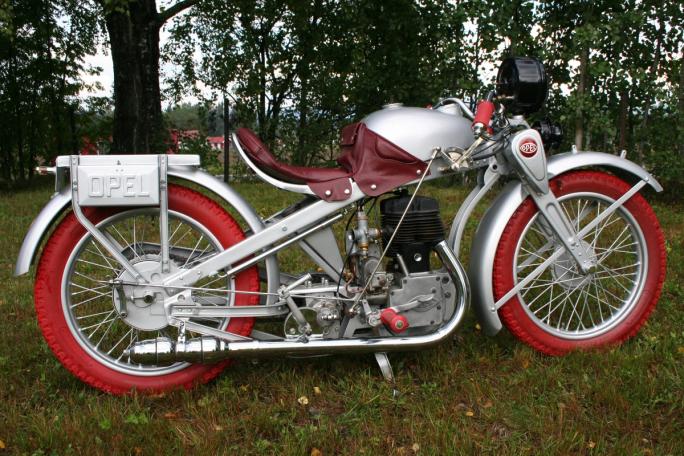
Pressed steel frames
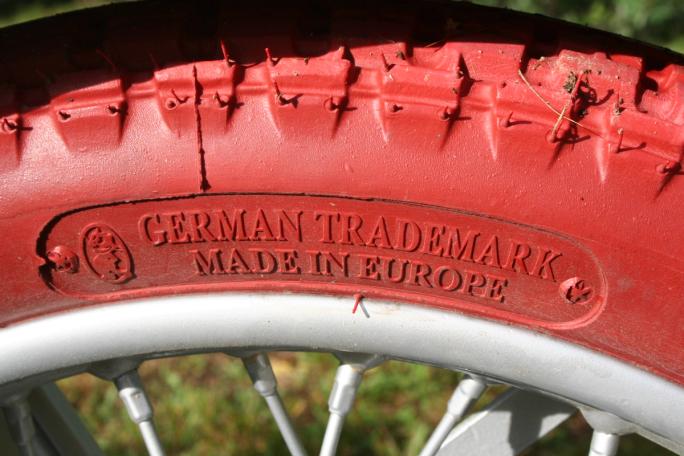
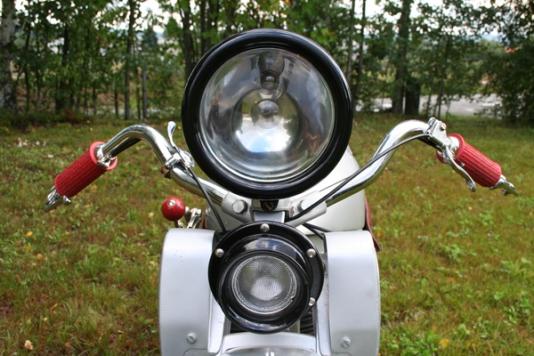
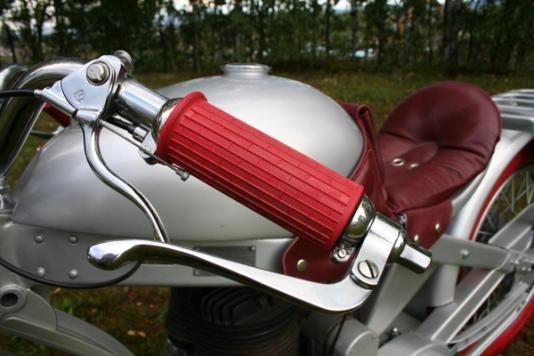
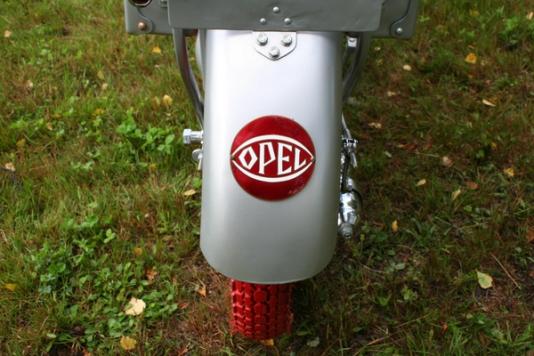
In 1926, Fritz von Opel began a collaboration with the designer Ernst Neumann-Neander. Neumann-Neander was known for his distinctive frame constructions, built up of pressed steel plates. This principle was later used by a number of German manufacturers, including Zundapp . The advantages of pressing the plates into U-profiles and then screwing them together were several. Production was faster, it was cheaper and the process of welding joints was avoided. In contrast to a number of other motorcycle manufacturers who made the frames themselves and "borrowed" engines from other manufacturers, Opel therefore went the other way. They made the engines themselves, while the frames were licensed by agreement with Neumann-Neander. Production took place in the factory premises of the closed car and motorcycle manufacturer "Elite-Diamant". In addition to the characteristic pressed steel frame, Opel's motorcycles were distinguished from other motorcycle brands by their red rubber details. Both the front tire, the rear tire, the footrests and the handguards were delivered in red rubber. From 1924-1929 Neumann-Neander also made his own motorcycles while collaborating with Opel. Neumann-Neander also used "borrowed" engines from Villiers , MAG and JAP.
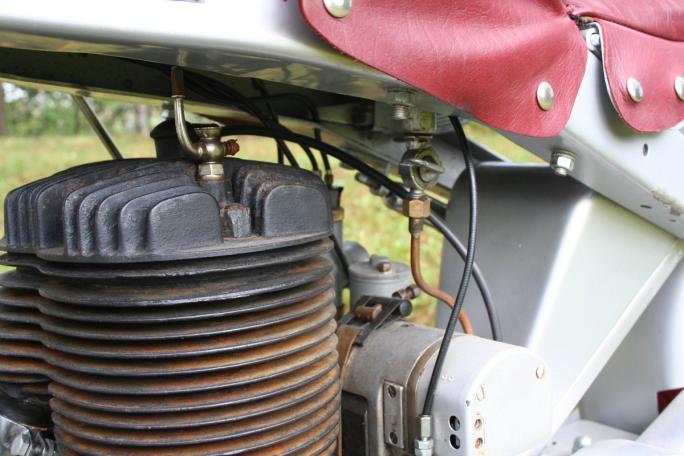
The Tour and Super Sport
The collaboration between Fritz von Opel and Ernst Neumann-Neander resulted in a new and larger model from Opel, and in 1926 the new motorcycle was ready. This was equipped with a 1-cylinder engine of 498 cc and was produced until 1927. One year later a new model came with the name "Motoclub". This was available in two versions, the Touren and the Super-Sport. The Touren was equipped with a 1-cylinder 4-stroke engine of 16 hp. The Super-Sport was somewhat faster with its overhead ventilated engine of 22 hp. These two models were the last motorcycles Opel made, and in 1930 Opel stopped all motorcycle production.
Technical data Opel Motoclub 500 Touren, 1929 model:
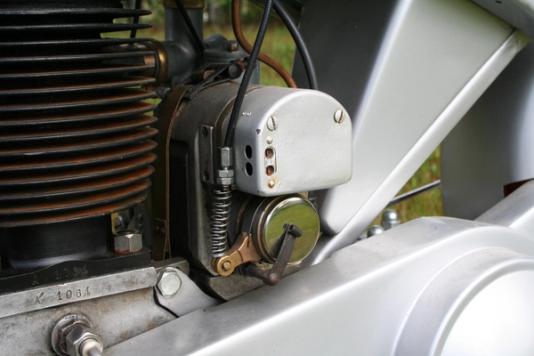
Engine: 1-cylinder 4-stroke, side-ventilated
Displacement: 499 cc
Power: 16 hp
No. of gears: 3
Weight: 135 kg
Top speed: 100 km/h