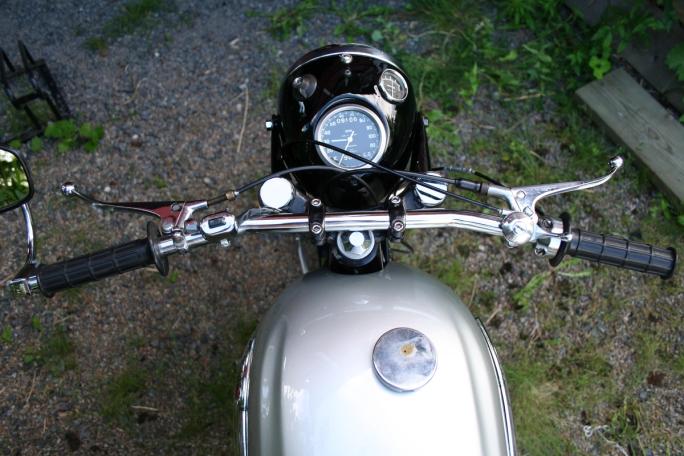
Norton Dominator Sport Special 650

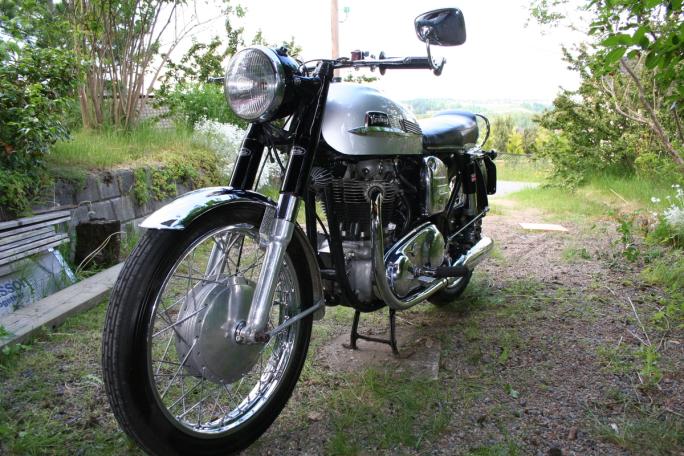
Norton factory on Bracebridge Street in Birmingham has a long track record when it comes to racing. The legendary Manx racers made a clean sweep of the racetracks before and after World War II. If Norton's street bikes didn't exactly make a clean sweep of the roads, they weren't far off. With the twin-engine Dominator Sport Special 650, Norton cemented its reputation as "The Unapproachable", thanks in large part to two ingenious technical solutions; the Featherbed frame and the Roadholder fork!
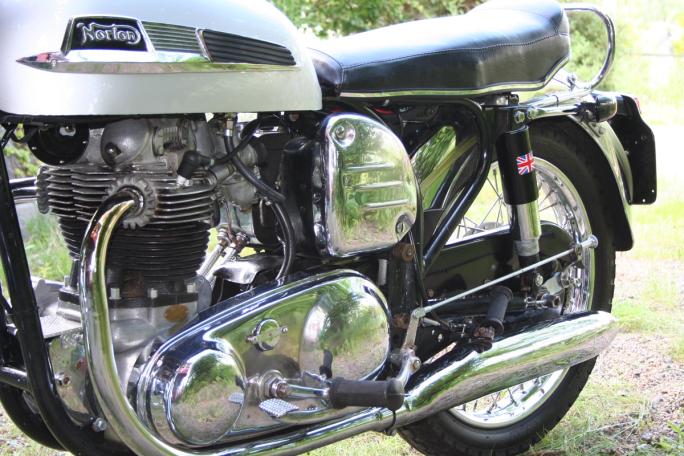
When Herbert Hopwood left Triumph factory in Meriden in 1947 for a new job as chief designer at Norton , one of the great personalities of the English motorcycle industry was finally able to sign his “own” machine. His time at Triumph was marked by Edwards Turner’s decisions, which have often been described as “all-encompassing”.
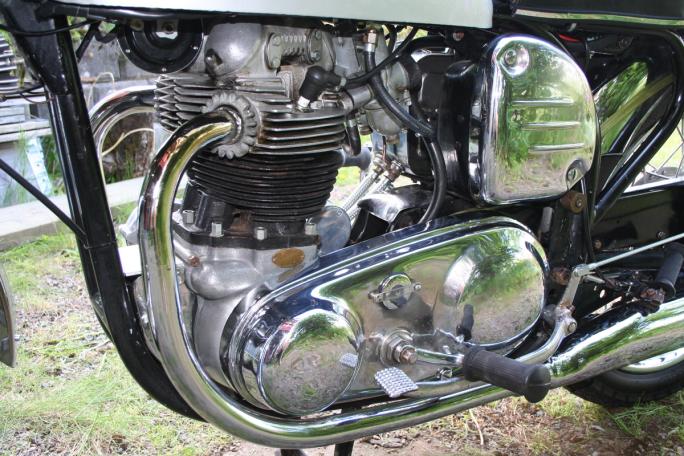
Norton vs Triumph
Turner's word was “law” in the farm, so for Hopwood the change of pasture was probably what was needed for his talent for design and mechanics to flourish. The pressure on Hopwood was also considerable, because Norton urgently needed a model that could compete with, among others, Triumph's successful model, Speed Twin 500.
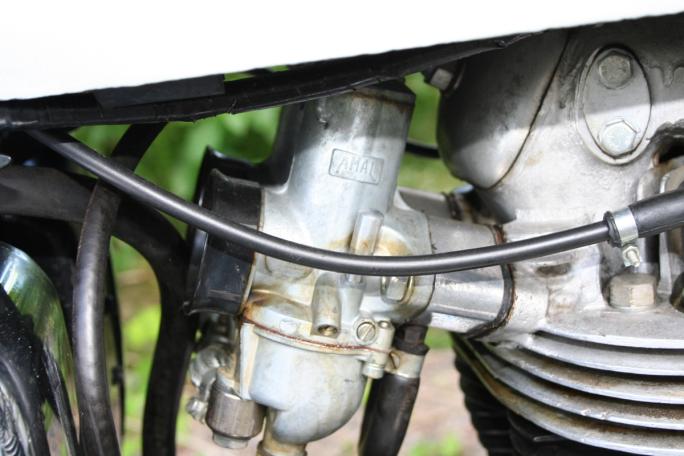
Screening at Earls Court
Hopwood did not let the opportunity pass him by, and already in November 1948 the new model, the Dominator Model 7, was ready for display at the “Earls Court Show” in London. The new parallel twin appeared to be a cross between the past and the future, with old-fashioned plunger suspension at the rear, but with the new oil-damped telescopic fork “Roadholder” at the front. However, it was not long before a new frame design was underway, and then the Dominator would really take off!
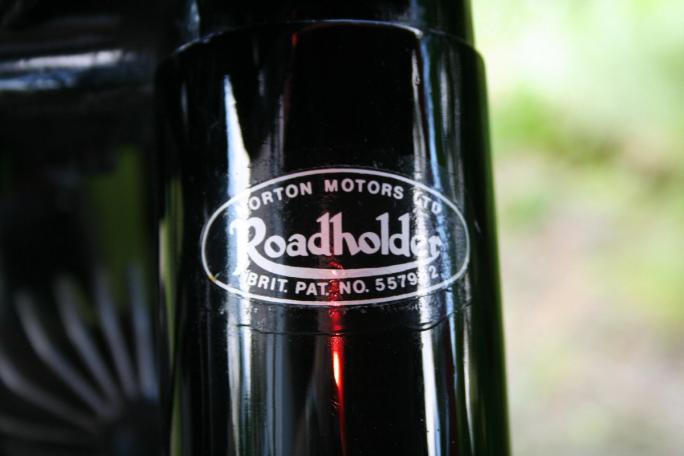
Featherbed & Roadholder; an unbeatable combination
As the Dominator showed its speed potential, it was suggested that a new frame was needed to match the power of the engine. The famous Featherbed frame, designed by Rex McCandless, was the solution. McCandless was nothing less than a technical genius who knew how to best manipulate the laws of physics when it came to motorcycling. Hopwood was also given the honor of unveiling the first bike equipped with the new frame.
Geoff Duke
This event took place at Blandford on 29th April 1950, and the “house” Geoff Duke’s Norton 500cc racer was the winner. The bike took a landslide victory, which was attributed to the superior properties of the new “Spring Bed”. In 1952 the first Dominator models to be sold to the export market received the new frame. However, home market customers had to be patient before they could experience the magic. The Featherbed frames were lighter, sleeker and stronger than their predecessors, and a light year ahead in terms of development compared to the old plunger solution.

The Roadholder fork
The same also applied to Norton's oil-damped telescopic fork with the designation “Roadholder” which came as early as 1947. This was also a major advance compared to the old girder forks. The combination Featherbed & Roadholder gave the Dominator top-notch handling characteristics. The Featherbed frame became nothing less than a concept, and is today the first choice for home builders of street bikes in the cafe racer genre.
Bigger, stronger and faster
The first twin engine used in the “Model 7” had a displacement of 497 cc, and an output of 29 hp at 6000 rpm. The engine was gradually developed, and in the model “88” the output was stated to be 29.5 hp. The next step up was the 596 cc version, with an output of 31 hp. To match the competitors’ twin machines, and especially Triumph’s very popular Bonneville , the engine was upgraded again to 646 cc and a full 49 hp. This was 3 hp more than in Bonneville which had 46 hp, and Hopwood could “say thanks for the last time” to his old boss Edward Turner, the man behind the Bonneville. Norton’s twin engine also became very popular as a power package in Norton ’s racing machines.
1st place on the Isle of Man
These proved very successful on the racetracks, taking top places at both Silverstone and Thruxton . One of the great highlights for Norton was 1st place at the Isle of Man in 1968, in the production racer class, where the winner Ray Pickrell rode a tuned 750 cc Dominator engine. Norton had now firmly established its reputation as a manufacturer of fast and sporty machines, a reputation that was maintained by the future Atlas and Commando models.
The Genius Hopwood
There is no doubt that Hopwood lived up to expectations. He left Norton for good in 1961, around the same time that the successful Dominator SS650 model went into production. The Dominator SS650 was produced from 1961-1970. History has it that Hopwood could not reach an agreement with Norton's new owner “AMC” about the way forward for the famous English motorcycle brand.
Hopwood's memoirs
If we look back at the classic era of the British motorcycle industry, Herbert Hopwood is considered one of the leading figures, along with Edward Turner, Val Page and Joe Craig. Hopwood has also written his memoirs in the book: “Whatever happened to the British motorcycle industry?” (ISBN 1 85960 427 7). I have mentioned the book here on the website under the "Book Tips" tab, and it is a “must” for those who want a deeper insight into what can best be described as “the rise and fall of a motorcycle empire”.
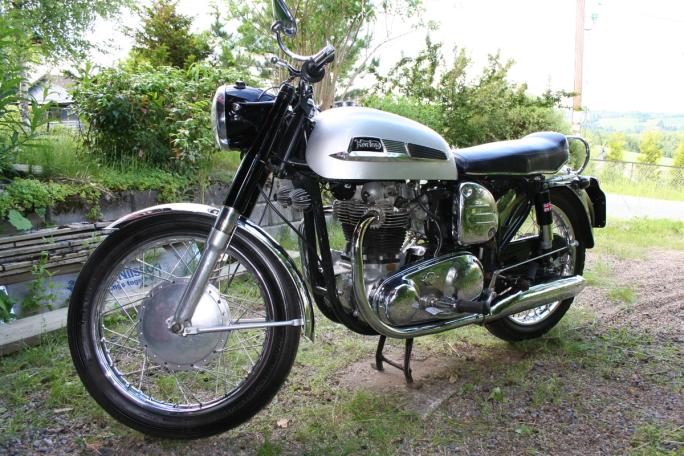
Technical data Norton Dominator SS650, 1962 model:
Engine: 2-cylinder 4-stroke, OHV
Displacement: 646 cc
Compression: 8.9:1
Power: 49 hp at 6800 rpm.
No. of gears: 4
Electrical system: Lucas 6-volt solenoid
Front tire: 3.00 x 19
Rear tires: 3.50 x 19
Tank: 16 liters
Weight: 179 kg
Top speed: 190 km/h