
Moto Guzzi Falcone 500
0/0
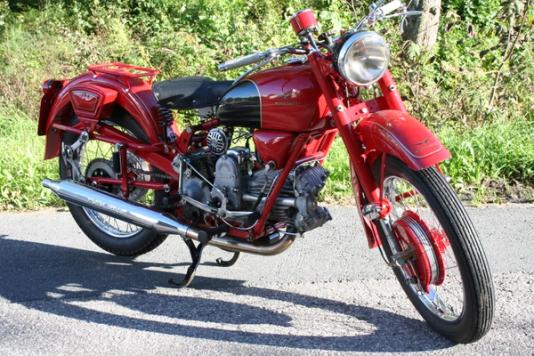
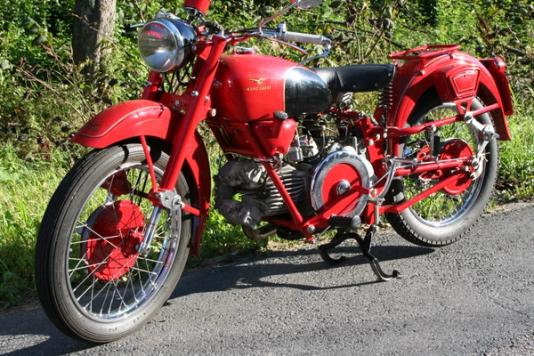
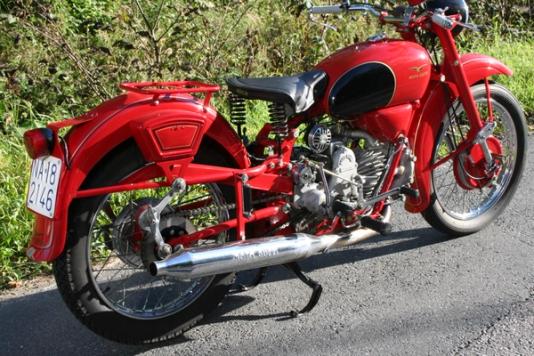
When Moto Guzzi launched the “flat-single” Falcone 500 in 1950, they built a motorcycle that was essentially out of date in terms of design and technology. Nevertheless, the model remained very popular until well into the 1960s. How was this possible?
Normal Type
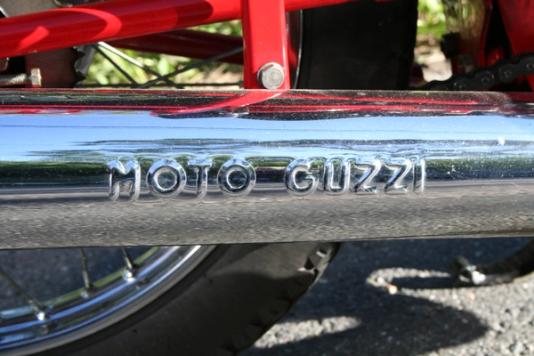
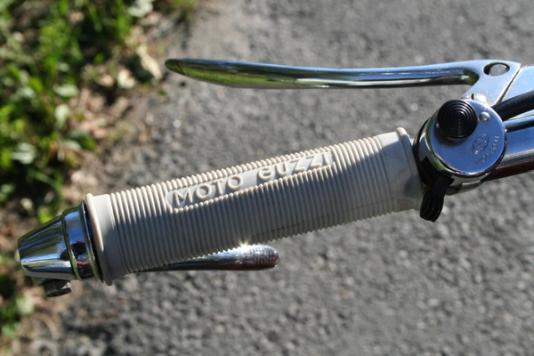
No one should accuse Moto Guzzi factory in Mandello del Lario of copying its competitors. Ever since they built their first motorcycle, the 498 cc Tipo Normale in 1921, the factory has gone its own way, producing motorcycles with a distinctive character. This has earned the brand a following with a taste for motorcycles a little beyond the A-4. Moto Guzzi was, incidentally, the first motorcycle manufacturer in the world to build and use its own wind tunnel for developing the aerodynamic properties of its motorcycles.
Falcone 500; new but nostalgic
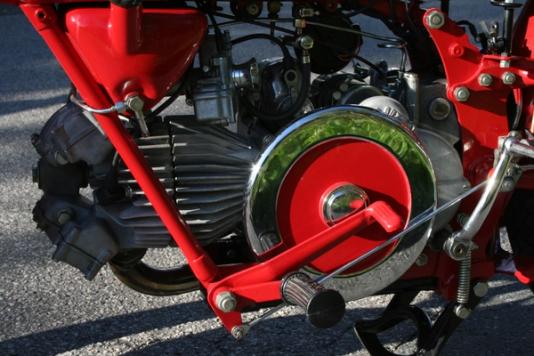
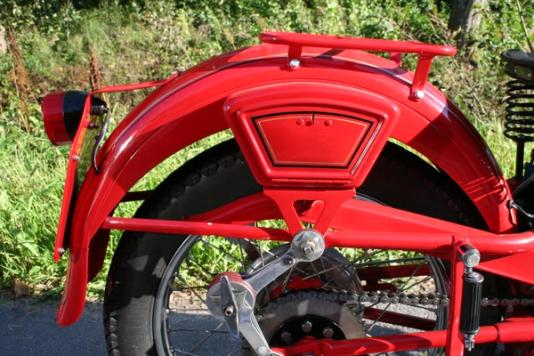
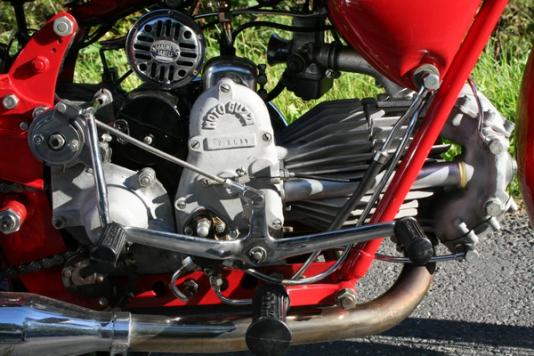
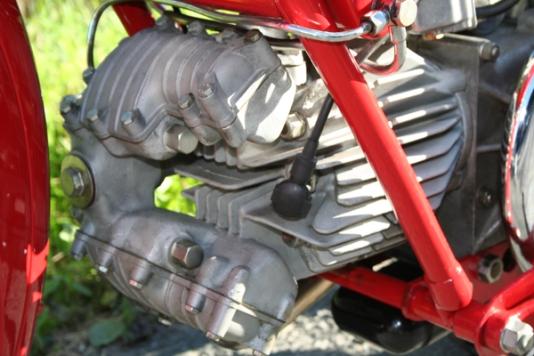
The Guzzi factory has been a faithful supplier of motorcycles to the Italian military and police since its inception in 1920. During World War II, Mussolini's soldiers rode military versions of Moto Guzzi on the battlefield. If we look closely at the Falcone 500, which went on sale in 1950, it was actually a further development of the pre-war GTW model, which was equipped with the characteristic 1-cylinder engine with the cylinder lying flat forward. The development from the 1930s to the 1950s was actually negligible, and it really appears as an ever-so-small sensation that it was possible to produce the Falcone from 1950 until 1967. The model had something magical about it, and the strongly nostalgic design that characterized the bike was highly appreciated by Guzzi owners.
High top speed
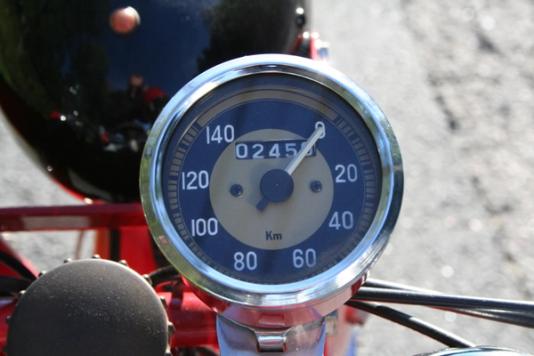
Despite its nostalgic design compared to its competitors, the Guzzi proved itself very well in terms of driving characteristics. Performance was decent enough, with a top speed in standard trim of around 135 km/h. However, with pistons, camshafts and carburetors from Guzzi's own Dondolino engine, the Falcone did a whopping 170 km/h. This was noticed, and a Falcone in Dondolino trim surprised its competitors in legendary road races such as the “Milano-Taranto” and the classic “Giro d`Italia”. We are talking about nostalgia at high speed. Moto Guzzi Falcone also has its place in cultural history. In the film classic “The Italian Job” (1969) with Michael Caine in the lead role, a police version of the Falcone is used in one of the spectacular car chase scenes in the film. The Falcone also became a popular model within the military and police in Italy. Such state deliveries were a welcome contribution to the financial bottom line at Moto Guzzi .
Type Sport and Type Turismo
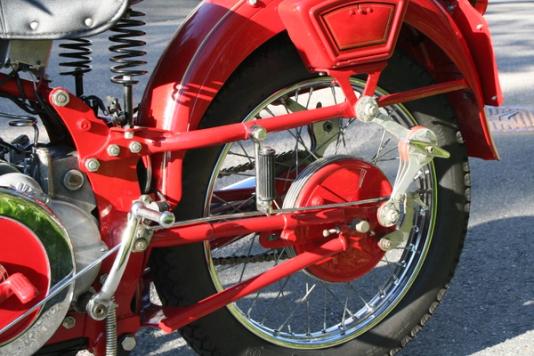
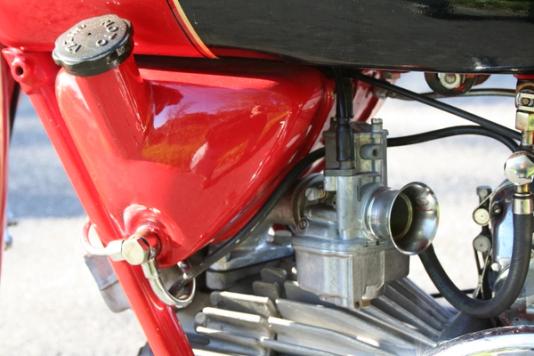
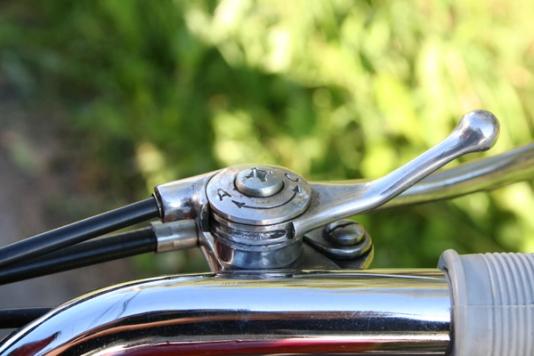
The Falcone was eventually produced in two model variants; the Tipo Sport with 23 hp and the Tipo Turismo with 18 hp. Different power and some minor external details are what mainly separate the two from each other. The Falcone is nothing less than a work of art in terms of engineering. This is precision engineering at a high level, with a wealth of detail that is unparalleled in its time. Contemporary tests of the model are characterized by strong subjective descriptions, where constant reference is made to the Falcone model's distinctiveness and charm. Perhaps the explanation lies in the fact that the model became so popular precisely here, when we know that Moto Guzzi owners are not quite like other motorcycle owners. They know, and always have known, to appreciate distinctiveness in terms of design in combination with unorthodox technical solutions!
Technical data: Moto Guzzi Falcone 500 Tipo Sport, 1950 model:
Engine: 1-cylinder 4-stroke, “Flat single” OHV.
Displacement: 498.4 cc
Power: 23 hp at 4500 rpm.
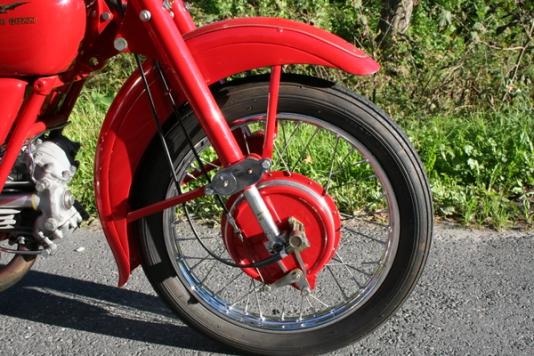
Front tires: 3.50 x 19
Rear tire: 3.50 x 19
Tank: 17.5 liters
Weight: 167 kg (dry)
Top speed: 135 km/h