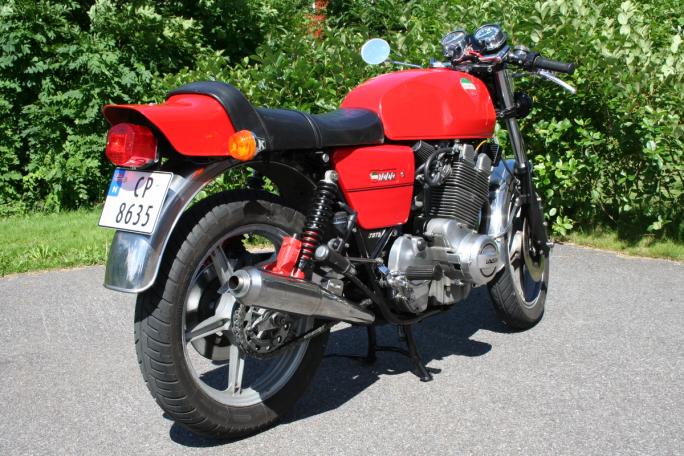
Laverda 1000 Jota
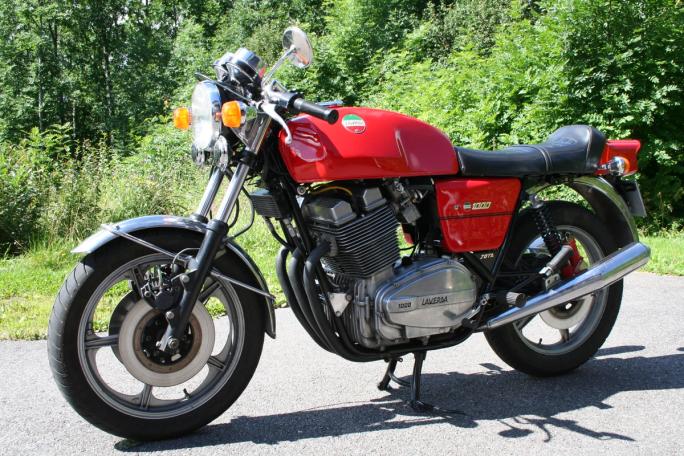
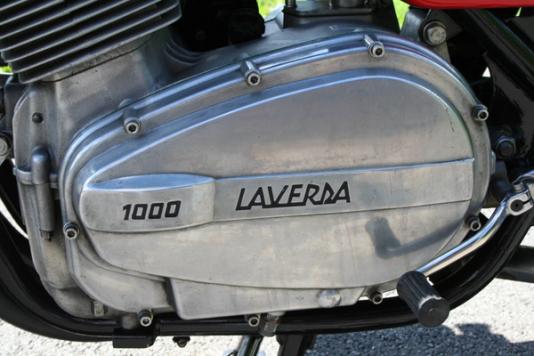
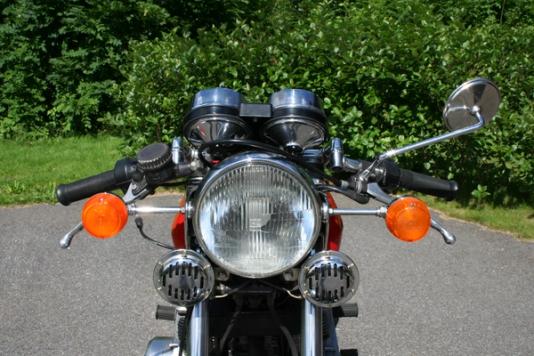
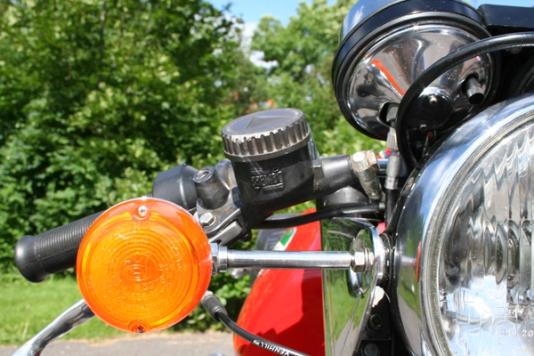
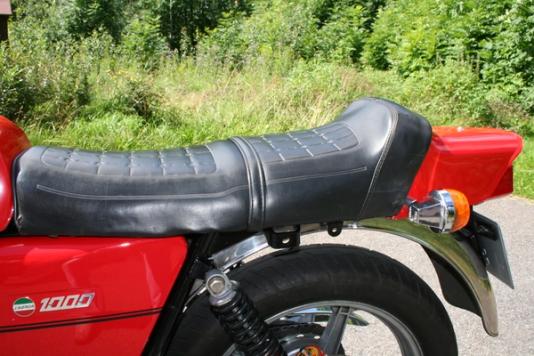
Laverda is mainly associated with fast and sporty motorcycles. For the uninitiated, however, the company started with the production of agricultural machinery as early as 1873. After World War II, Laverda focused on affordable means of transportation, and the first two-wheeler was a light motorcycle, a small 75 cc 4-stroke. A few decades later, however, Laverda would show its muscles, and in 1976 the superbike 1000 Jota was released. The magical 140 mph limit was now on the decline.
0/0
Laverda's history thus stretches back to 1873. This year, Pietro Laverda founded his company in Vicenza in northern Italy, under the name " Laverda Macchine Agricole". The production mainly consisted of agricultural implements and agricultural machinery for agriculture, as well as mechanical equipment for wine production. In 1905, the business expanded, and the factory was moved to Breganze. The factory expanded its product range and now employed over 100 workers. Wine presses, grain harvesters and lawn mowers were just some of the products from Laverda that made everyday life easier for farmers.
Leader in the production of agricultural machinery
Agriculture in Italy was developing strongly around the turn of the century, and more and more processes were mechanized. Laverda factory was thus constantly expanding with new inventions. When World War I broke out, the factory switched production to war material. After the war was over, the factory had to look for new products, and Laverda made, among other things, one of the first hydraulic presses to be put into use. This was an important tool for the mechanical industry, and opened a new market for the factory in Breganze. In the 1930s, Laverda was the leading manufacturer of agricultural machinery in Italy. In 1930, the two youngest grandsons of Pietro Laverda took over the management of the company. Pietro Jr. and G.Battista were two very capable and innovative people, and they contributed greatly to Laverda's continued success. As early as 1934, they presented a new and portable multi-function machine that became a success in grain production. Laverda was now the market leader in agricultural technology in Italy, and the factory was responsible for a significant export of machinery. In 1947 the first self-propelled combine harvester was introduced, and from now on the factory in Breganze invested heavily in the further development and production of large combine harvesters.
MC production in 1949
In 1948, Pietro's third grandson, Francesco Laverda started to make a prototype of a light motorcycle. The idea was to make a motorcycle for his own use. When the prototype was ready in 1949 and the test drive was completed, the bike proved so potent that the young Francesco received unsolicited orders for the model. Thus, Laverda's first commercial model became a fact. Throughout the 1950s, Laverda expanded its model program. This decade brought unexpected competition from the automotive industry. The Italian motorcycle manufacturers lost many customers, because many chose cars over motorcycles. For Laverda, this was not so dramatic, as they had more legs to stand on in terms of product selection. The motorcycle division was still a modest part of the company's total production. Laverda's motorcycle first faced competition from the two scooter manufacturers Lambretta and Vespa . At the same time, the car that was to become Italy's answer to the German Volkswagen arrived, more specifically the Fiat Topolino. It was affordable, simple and cheap to operate, and many chose cars over motorcycles. Laverda experienced that competition for customers became tougher, and motorcycle production was kept at a modest level until well into the 1960s.
Earl's Court Show in 1966
In the mid-1960s Laverda took the plunge and challenged the European manufacturers. The factory in Breganze had been working on developing a twin that could compete with the Norton Atlas, BSA Spitfire and Triumph Bonneville . When the Earls Court Motorshow opened its doors to the press and public in November 1966, Laverda was able to show off its new twin machine of a whopping 654 cc. The model had, among other things, an engine that offered hemispherical combustion chambers, an overhead camshaft and a 5-speed gearbox. The model attracted a lot of attention from both the press and the public. In 1967 an upgraded version of 750 cc was released. This model challenged Norton's newcomer Commando 750.
1st place in the US 24 hours
Laverda already had a long track record, and the new 750cc bike naturally had to be tested on the track. In 1969, it took 1st place in the tough OSS 24 hours race. Laverda immediately followed up on this success, and in 1971 came the bike that would become legendary in racing; the supertwin 750 SFC. The model was followed by a street version with the model designation 750 SF. Laverda was now well established as a manufacturer of big and fast machines, and more was to come!
Laverda 3C
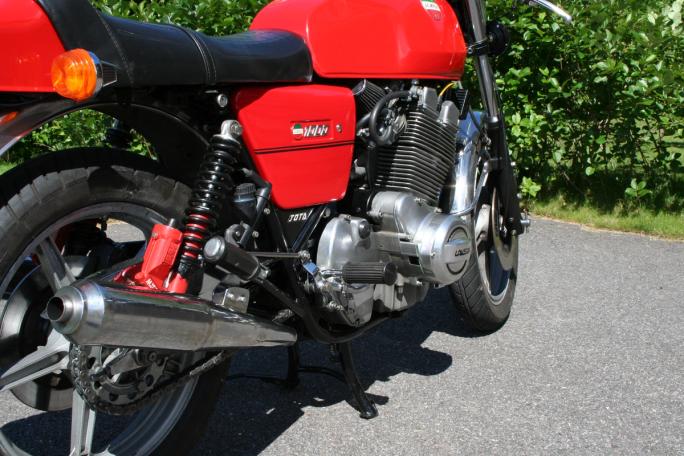
The 1970s appear in retrospect as an era characterized by fierce competition, especially between the Japanese motorcycle brands. Most English motorcycle manufacturers were now phased out, and the market was largely characterized by Japanese dominance with some elements of German and Italian machines. In 1973 Laverda was able to proudly show off its new 1000-cc engine with the simple model designation "3C". The prototype of this triple was shown at the Milan Fair as early as 1969. It was this model that formed the basis for the super sports machine 1000 Jota .
140mph
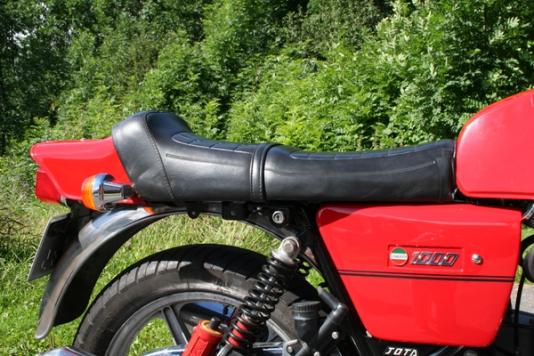
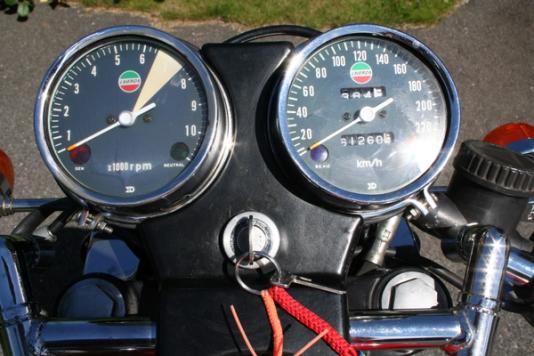
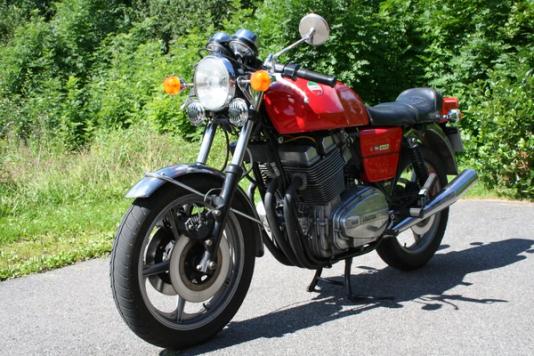
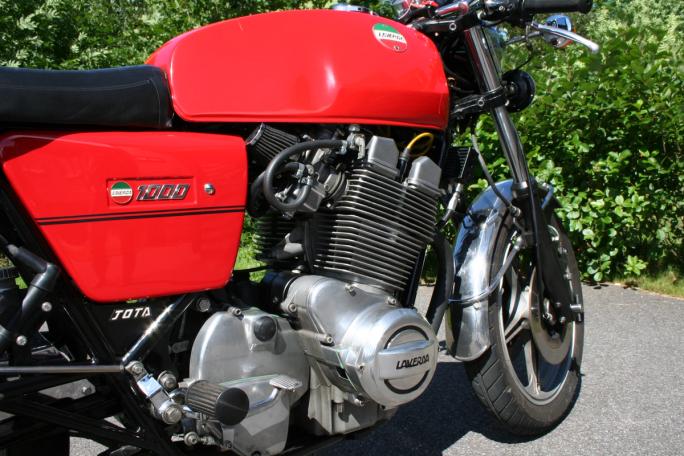
The 1000 Jota was described by the contemporary motorcycle press as raw, brutal and potent. It was very fast, and the first series-produced standard machine to break the magical 140 mph limit. This was far faster than its competitors. The fact that machines like Kawasaki Z-900 were being driven away attracted a lot of attention. Laverda 1000 Jota had everything an experienced motorcycle rider could want. The 3-cylinder 4-stroke had a brutal bottoming, and galloped lightning fast to over 220 km/h. The development of the Jota model actually started in the 1960s. In parallel with the successful 750 SF models and the 750 SFC racing edition, the development of the 1000 cc machine was going smoothly. This was intended for street use, and was to compete with the largest and heaviest sports machines on the market.
Marzocchi and Brembo
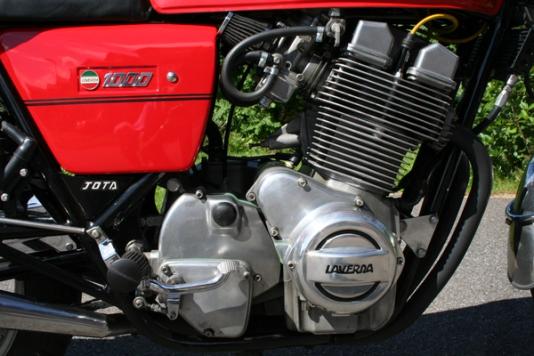
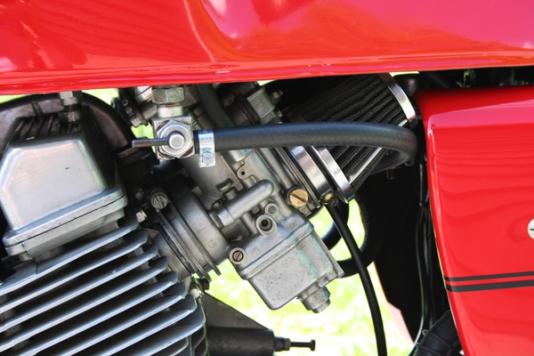
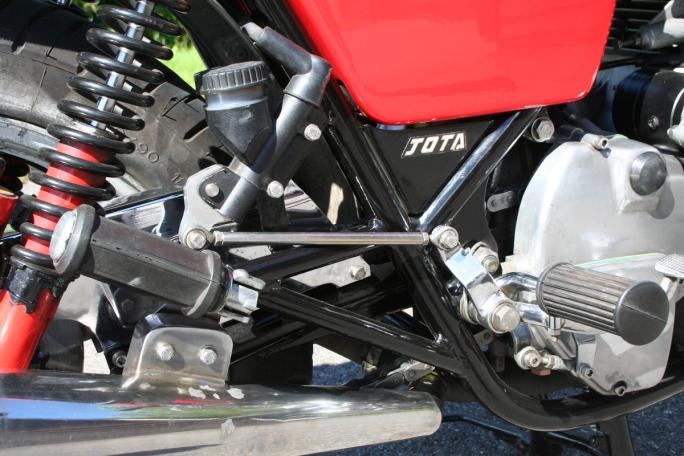
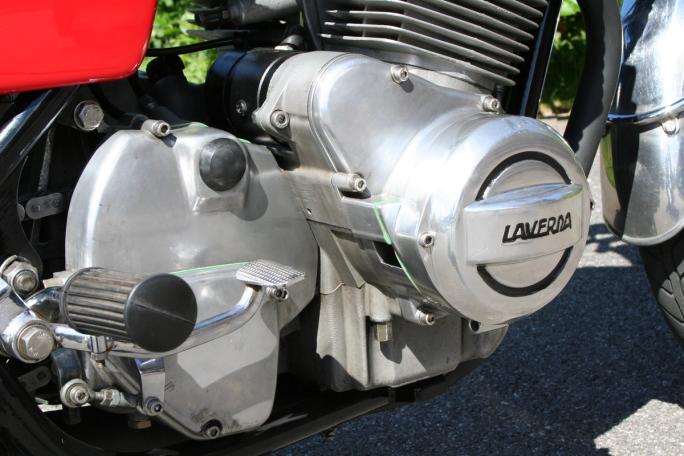
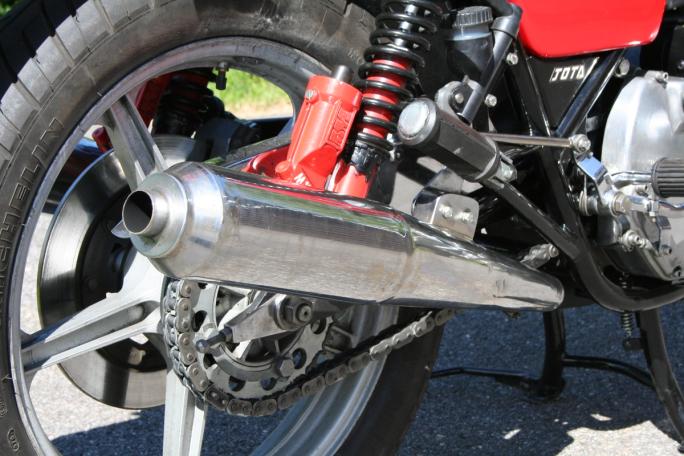
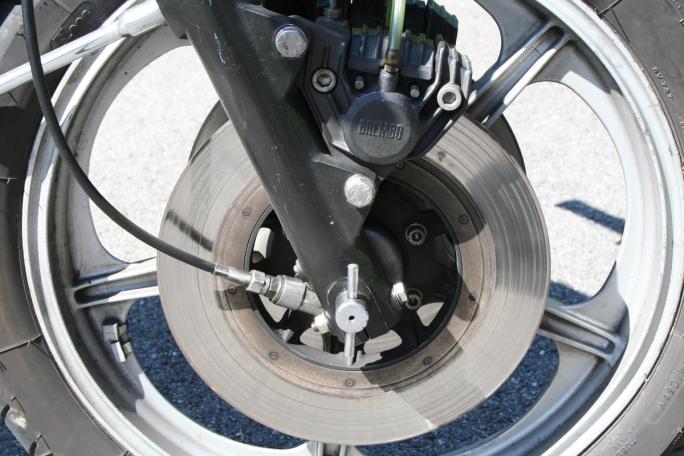
The bike now appears perfect, and the riding experience is, according to Bjørn, exactly as the motorcycle press described it in the 1970s. The 3-cylinder engine has a 180-degree crank setup. This means in practice that when the two outermost pistons are at their peak, the middle one is at its lowest. This provides rock-solid traction and a very special engine sound. The frame is made of strong round tube profiles, and the front fork and rear shock absorbers are supplied by Marzocchi. The three Brembo discs ensure that the Laverda is effectively stopped when necessary. Jota 1000 also has electronic ignition from Bosch as standard. Laverda definitely spared no expense when putting the Jota together. The result was a high-speed monster with top-notch handling.
Ultra-potent 1000-cubic
Laverda 1000 Jota became one of the hottest and most powerful motorcycles of the 1970s. Most of Laverda's competitors were relegated to a place in the Jota's side mirror. When it came to parameters such as 0-100, top speed, handling and braking capacity, the 1000 Jota was at the top. That also applied to the price tag. The 1000 Jota was a motorcycle reserved for motorcycle enthusiasts who knew how to appreciate a motorcycle other than the A4 and who were also willing to dig deep into their wallets!
Technical data Laverda 1000 3CL Jota , 1977 model:
Engine: 3-cylinder 4-stroke, DOCH, 180 degree crank setup
Displacement: 981 cc
Power: 90 hp at 7000 rpm.
No. of gears: 5
Tank: 20 liters
Top speed: 225 km/h