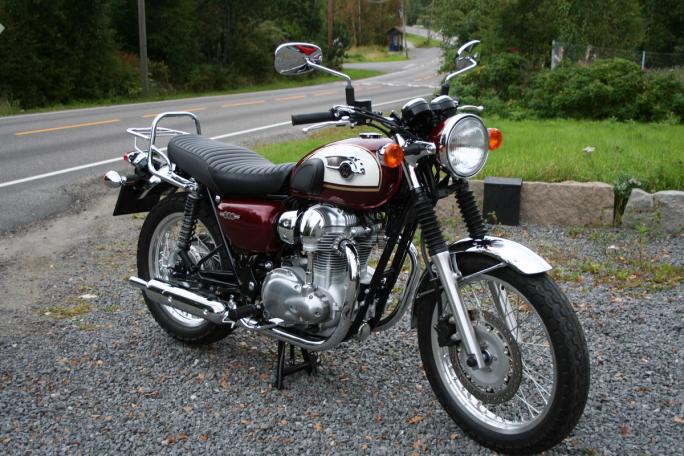
Kawasaki W800
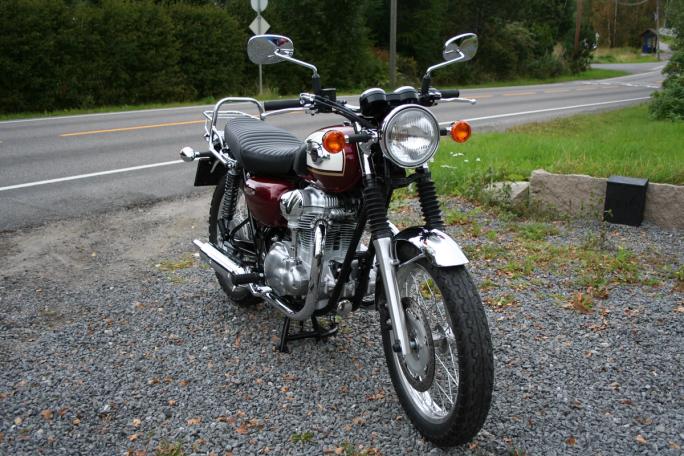
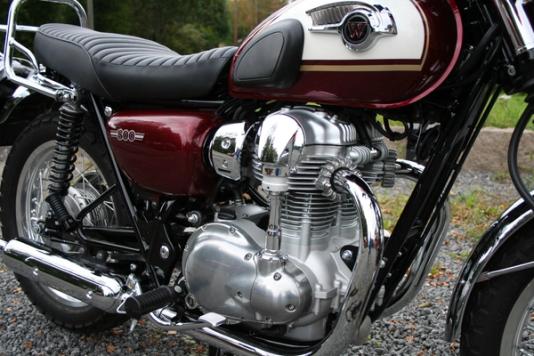
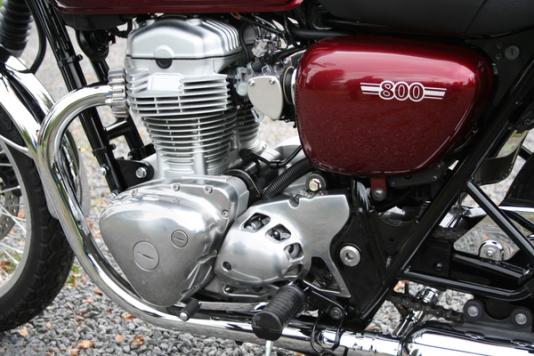
In the series about retro classics, it's now time for what is perhaps one of the most beautiful of them all, specifically Kawasaki W800. The model has its heritage from Kawasaki W1-650 back in the mid-1960s, a model that was incredibly more British in design than the original, BSA A10. I've taken the Kawa retro for a spin, and it was a great experience.
0/0
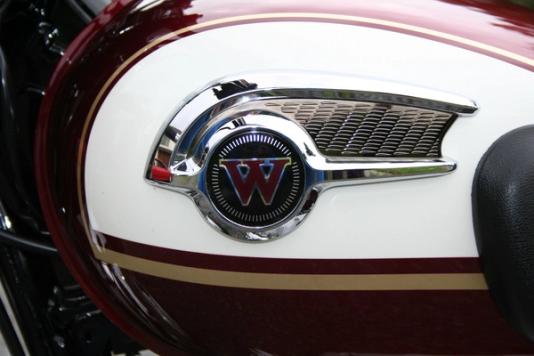
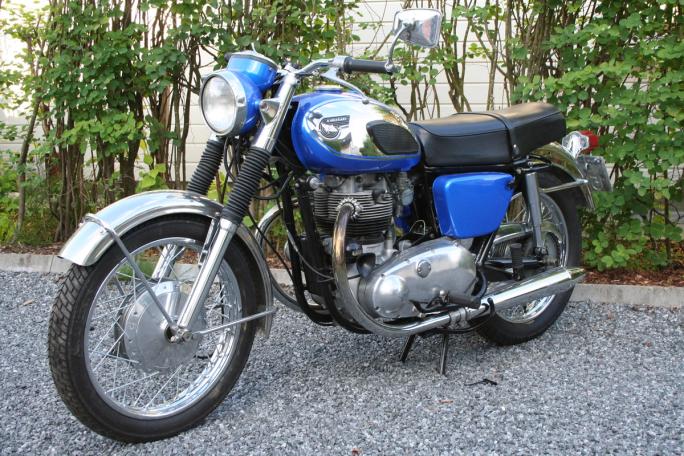
The story behind Kawasaki's retro classic W800 goes back to the early 1960s. Kawasaki was now on its way to becoming a full-fledged motorcycle manufacturer. On the way there, they went via Meguro, a motorcycle manufacturer that was well established. Kawasaki bought Meguro, built on the established twin model, and eventually replaced the "badge" on the gas tank. In 1965, Kawasaki launched the motorcycle that, according to the brochure, was "The biggest, fastest, most powerful Japanese motorcycle". Very pretentious, but at the same time a commitment to meeting customer expectations. What thoughts the management at Kawasaki had in mind at this time, besides the goal of a quick entry into the motorcycle market, is not known, but it seems that the concepts of "fast" and "powerful" were to become central. When they launched the H1-500, it was at least both fast and powerful, which would become typical of Kawasaki's models right up to the present day.
The legacy of W1-650
Any serious motorcycle manufacturer with respect for itself and its own motorcycle history offers retro classics. Kawasaki offers the W800. The legacy and the design from the 1960s are so complete that the bike in many ways goes way beyond its ancestors. If we didn't know better, we could easily be led to believe that "this was a nicely restored Englishman from the 60s". In other words, innertier. Paradoxically, the W800 is also the retro classic with the most peripheral ancestor. The W1-650 was a rare item here in Europe, and was barely seen on the street. In the USA it sold better, but was still a marginal model in the motorcycle park.
Caferacer kit as an option
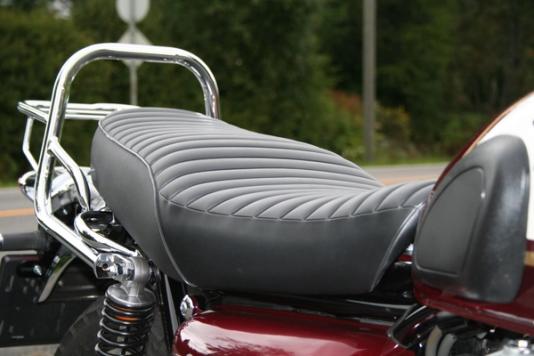
So what does the copy look like, 50 years after the original? Some claim that it is arch-British in its lines and details. We can't help but agree, it is rarely retro-classic. The W800 is almost more British in its design than was the case with the W1-650. And if you want to go all out, you can put on the table just over 10,000 kroner extra, and then you get a cafe racer kit consisting of, among other things, both a clubman saddle and handlebar cover. If you are one of those who don't want to take out the toolbox and assemble this yourself, you can have the bike delivered ready in the cafe racer version!
On the road
So how is the W800 out in the open countryside? In short, after a nice evening ride on everything from the highway to a trip to the local cafe to meet like-minded people, it goes like this:
-well dosed brakes
-directionally stable
-easy to drive and playful in the turns
-good torque at low revs
-precise in shifting
-good bottom draft
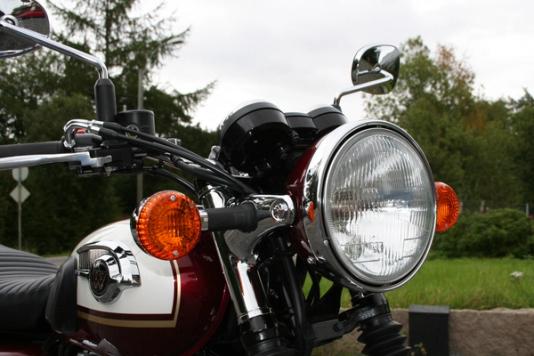
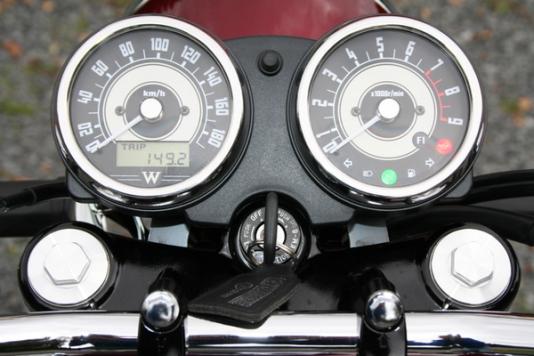
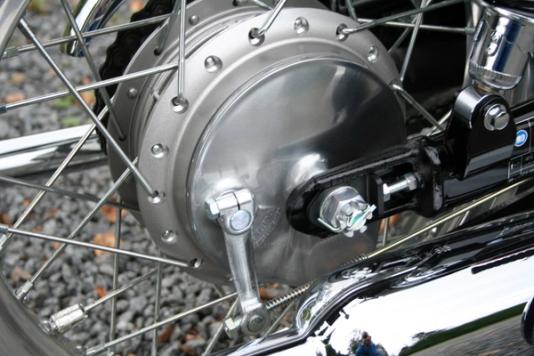
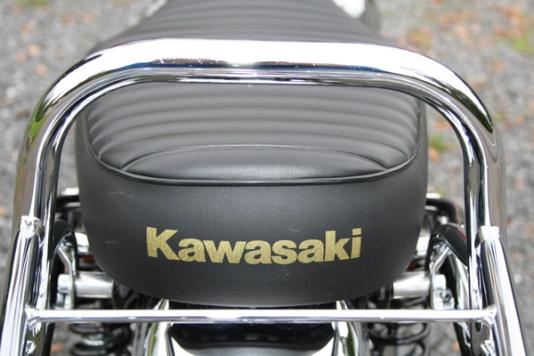
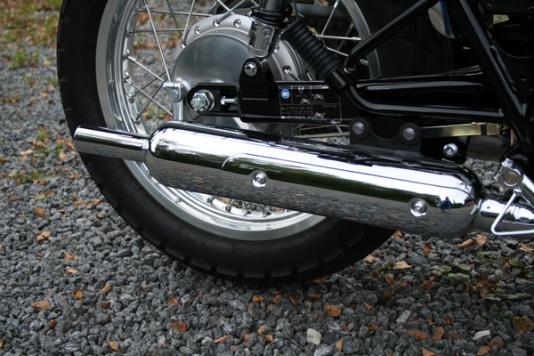
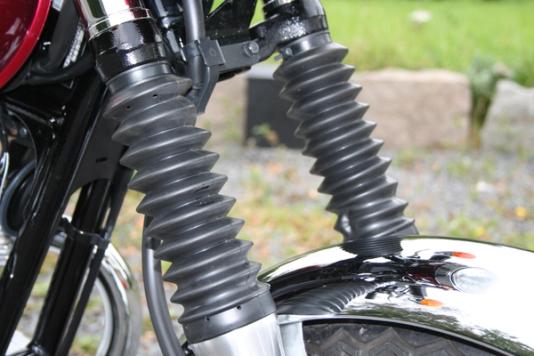
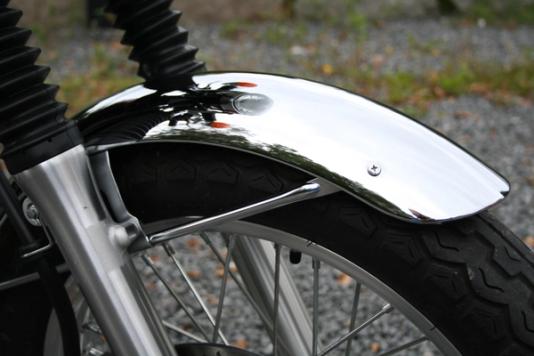
So some might argue that with 48 horsepower it's a bit slow. We'd argue the opposite. The bike is perfect on winding roads (and there are most of them here on the mountain), while it does the job on longer stretches out on the highway. And last but not least, most of us use our bikes for a shorter evening ride with friends to the nearest gathering place, often to a fast food restaurant or a cafe. Then an "old-fashioned" cafe racer, with modern technology, is appropriate, because Kawasaki has cracked the retro code. Spoke rims, round analog instruments, enough chrome, and round exhaust pipes are almost perfect!
Technical data Kawasaki W800, 2015 model:
Engine: 2-cylinder 4-stroke, OHC
Displacement: 773 cc
Power: 48 hp at 6500 rpm.
Torque: 60 Nm at 2500 rpm.
No. of gears: 5
Front tires: 100/90x19
Rear tires: 130/80x18
Tank: 14 liters
Weight: 217 kg
Top speed: 176 km/h