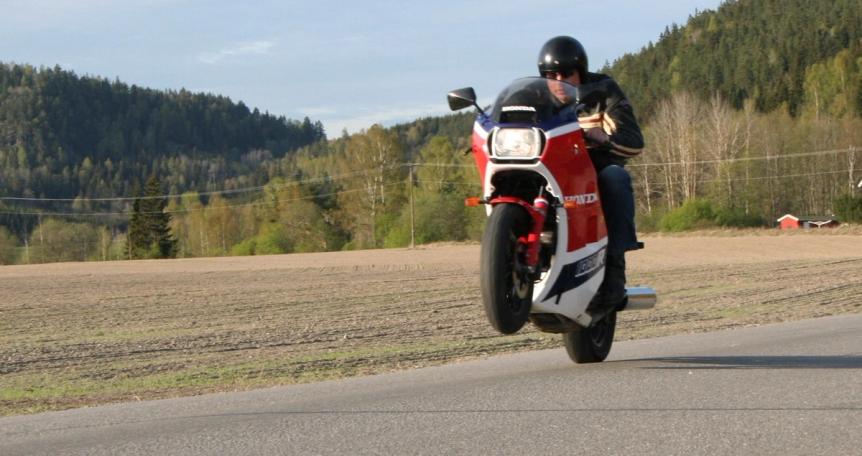
Honda VF1000R
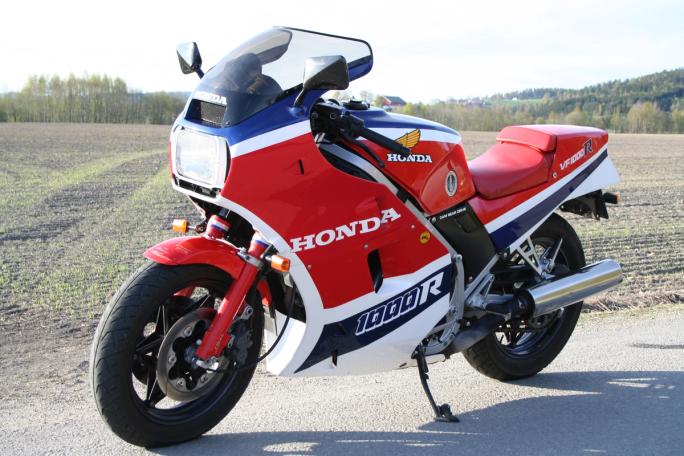
Honda VF1000R offered a hefty 122 hp
The motorcycles made in the 1980s now fit neatly into the ranks of veteran machines, and a number of models are on their way to achieving classic status. Among the more sophisticated machines from this period is Honda's groundbreaking V4, the VF1000R. Not only was the model groundbreaking in terms of technology, it also pushed the boundaries of what was possible in terms of top speed for a road machine, and the magical 150-mph mark was passed.
0/0
Motorcycle models that resemble production racers have always attracted attention, especially from those motorcycle customers who wanted a little extra performance. Honda CB1100R was just such a model, and with just over 4,000 produced, it was a rare commodity. Compared to the base model CB900F, it was significantly more expensive, and far more sophisticated in terms of technical solutions.
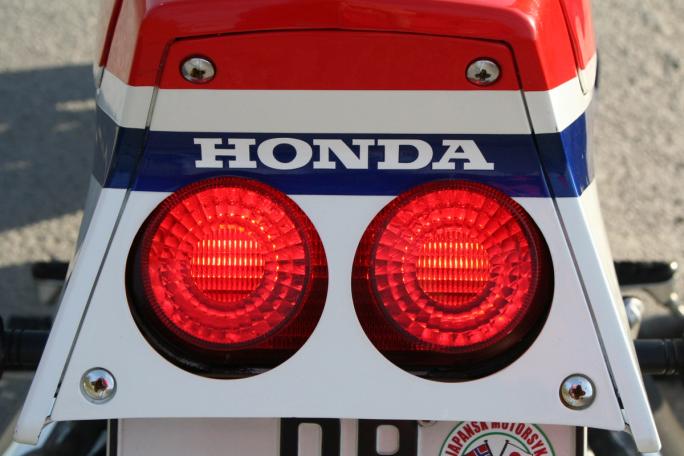
The V-engine was not without problems
Honda's inline-fours, with roots dating back to 1968, had been very successful. The engines were solid, strong and reliable. However, the 1980s ushered in a new era in Honda's development. The new VF series arrived in 1983, the same year that the CB1100R was discontinued. The new V-engine was now available in a number of models, including the VF500 and VF750. However, the new engine came out a bit askew. Due to the lack of optimization of the lubrication capacity, problems with unusually high camshaft wear arose. The fact that the surface hardening of the camshafts was also too poor meant that customers experienced engine failure. In retrospect, it is a bit strange that a manufacturer like Honda , with its strict requirements for quality, would make such a blunder. The small and mid-sized VF models thus gained a somewhat shabby reputation. Cylinder head failure was not exactly what Honda customers were used to. After all, Honda 's previous inline engines were considered to be almost flawless.
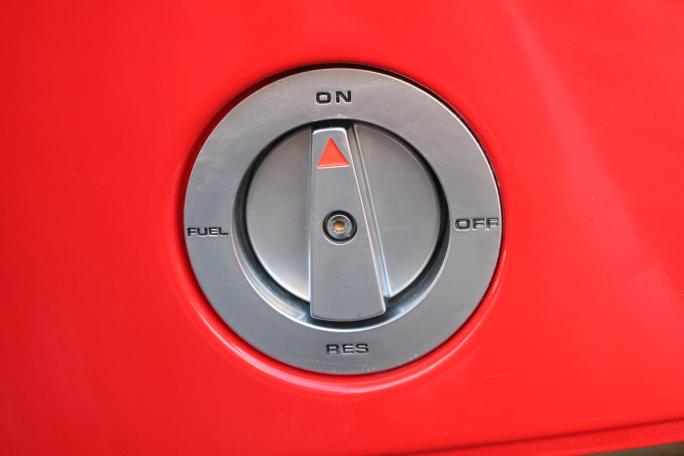
122 hp at 10,000 rpm
After a few successful years in production racing with the inline-four CB1100R, it was decided that the model would get a replacement. Honda now used the new V-engine, but in a slightly larger version than usual. The new V-4 engine had a capacity of 998 cubic centimeters. After just over a year of bad experiences for Honda with the V-engine, the new superbike that came in 1984 had the necessary improvements that were needed to avoid technical problems. Here, oil capacity and lubrication technology were given top priority.
Competed against Kawasaki GPZ900R
The VF1000R, with its 122 hp, was among the first standard machines to reach the magical 150 mph mark. However, Honda was not alone in reaching this top speed, and faced tough competition from the likes of the Yamaha FJ1100 and not least Kawasaki GPZ900R. The Kawasaki was at least as fast, and had better "handling", especially on winding roads thanks to several factors, including a shorter wheelbase and lower seat height compared to the Honda.
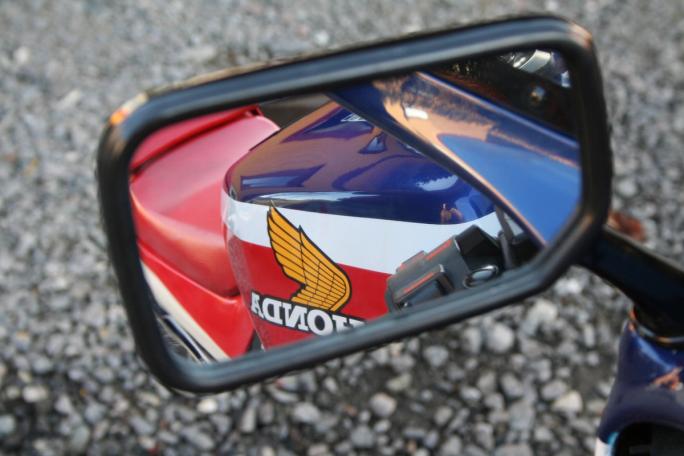
Heavy in the corners, tough on the straights
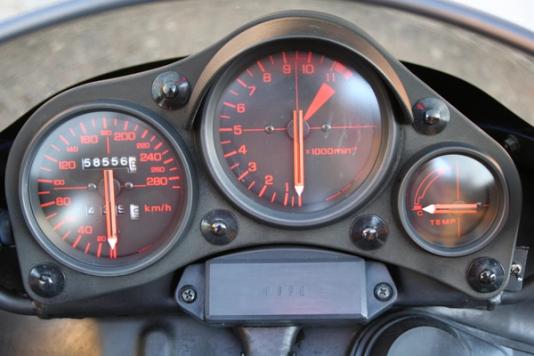
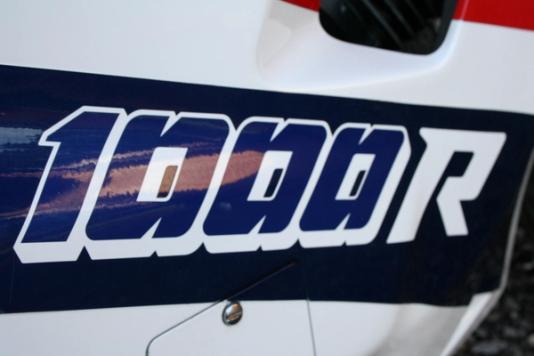
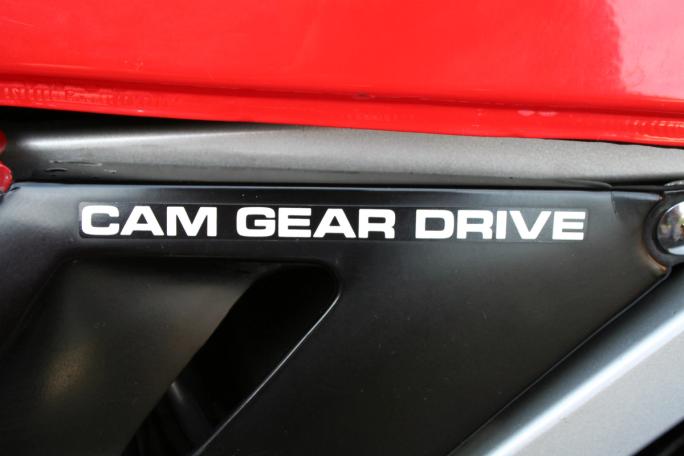
The VF1000R was highly sought after and popular. However, on the racetracks it was seen as a bit heavy. Opting for a 16-inch front wheel was no mean feat, and the model was too heavy to maneuver on the tracks, where the curves were often tight. Out on the road, however, the bike was a winner. The V-engine delivered solid torque throughout the range, and the rev counter effortlessly reached 10,000 rpm. The engine ran very smoothly and precisely, largely thanks to the camshafts being turned by gears instead of a timing chain. Honda made this clear by writing “Cam Gear Drive” on the side covers. A never-so-small technical finesse that Honda wanted to highlight.
Sporty and efficient full-face helmet
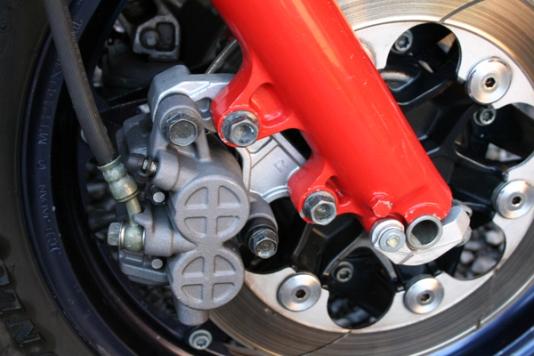
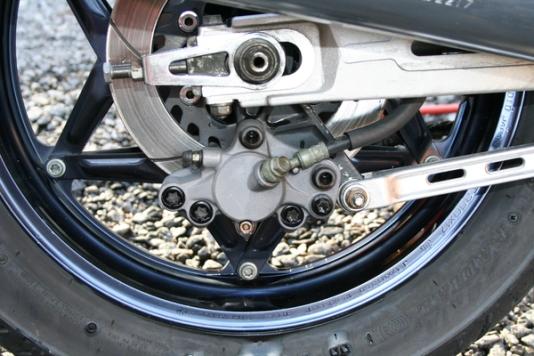
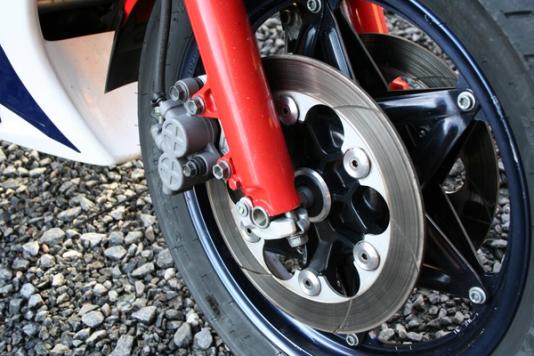
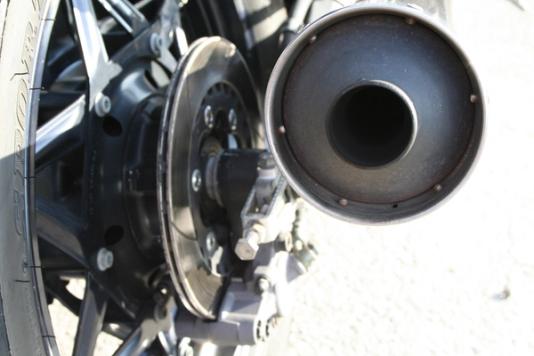
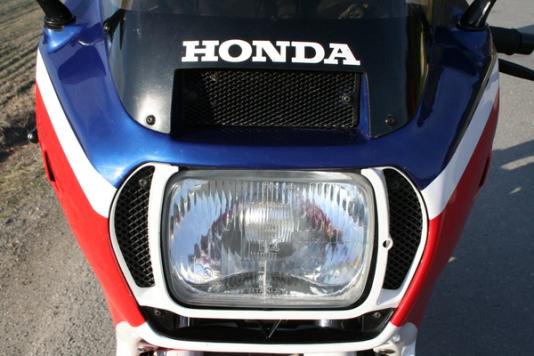
The VF1000R was built around a frame of square steel tubes. The brakes were of course of the floating type with 4 pistons in each brake caliper, in addition to an anti-dive function. In addition, the rear brake disc was ventilated to ensure sufficient cooling during hard braking. Compared to the CB1100R, the VF1000R had a longer wheelbase. This created a far more stable machine at high speeds on the straights. To further emphasize the sporty image, the model was equipped with a very effective and aerodynamic full fairing. The fact that this was tough to look at was of course no minus.
A/S Kellox's most expensive model in 1985
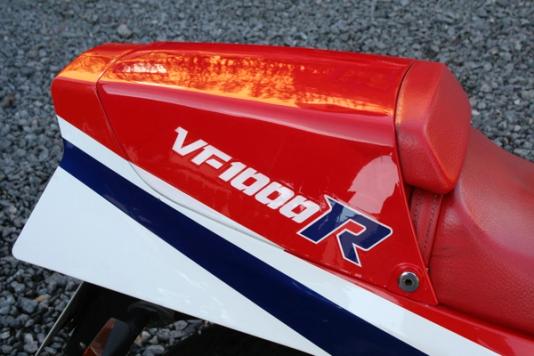
On highways without speed limits, the bike was at home, and the competitors were able to get by. The torquey V4 engine and the bike's total weight provided very good stability at high speeds. However, Honda VF1000R was a bike that only a few people had access to. In 1985, A/S Kellox priced it at 112,000, -, which made it the most expensive motorcycle model in Honda's sales brochure in Norway that year. The VF1000R was produced from 1984-1987, and was, depending on the model year, delivered in the colors Fighting Red, Candy Aleutian Blue, and Rothmans Teams Colour.
Technical data Honda VF1000R, 1984 model:
Engine: 90 degree V-4, 4V, DOCH, with liquid cooling
Displacement: 998 cc
Compression: 10.2:1
Power: 122 hp at 10,000 rpm.
No. of gears: 5
Front damping: air-assisted with 3-way adjustable rebound, TRAC
Rear suspension: pro-link w. 3-way adjustable rebound
Front brakes: dual floating discs
Rear brake: ventilated disc
Front tires: 120/80 x V16
Rear tires: 140/80 x V17
Tank: 23 liters
Weight: 238 kg (dry)
Top speed: 242 km/h