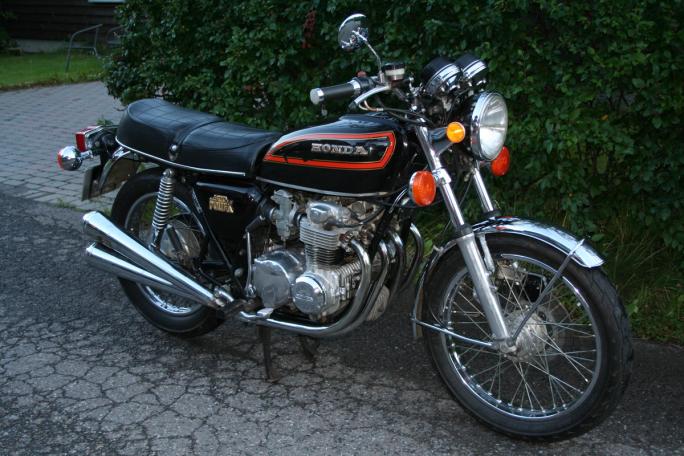
Honda CB500Four
The story surrounding Honda's super four CB750Four, which was shown to the press and public in October 1968, has been sufficiently covered in various periodicals and magazines, so we will largely leave that story aside. However, we must mention it briefly here because without it, the CB500Four would hardly have seen the light of day.
Debuted in 1971
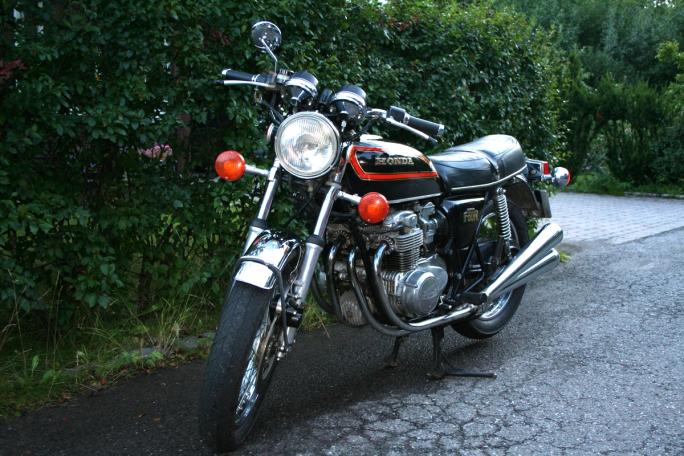
Inspired by the success of the 750cc CB750Four, and driven by the understanding of different market demands in different segments, Honda expanded its model range to a full series of four-cylinder four-strokes throughout the 1970s, including Honda CB500Four which arrived in 1971. The model became very popular, and sold well until its last year of production in 1978.
CB500 Four
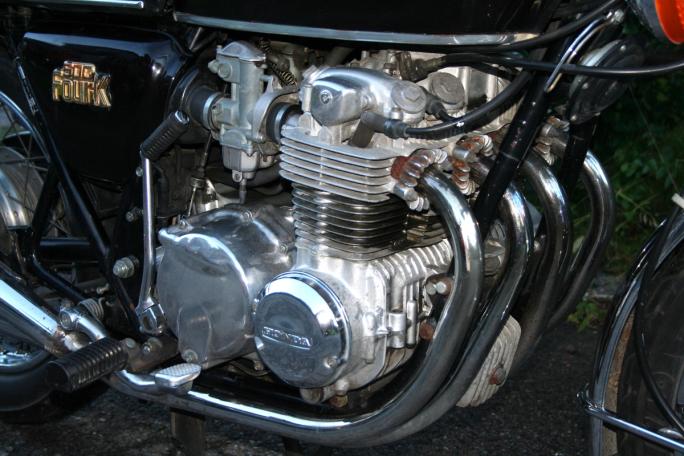
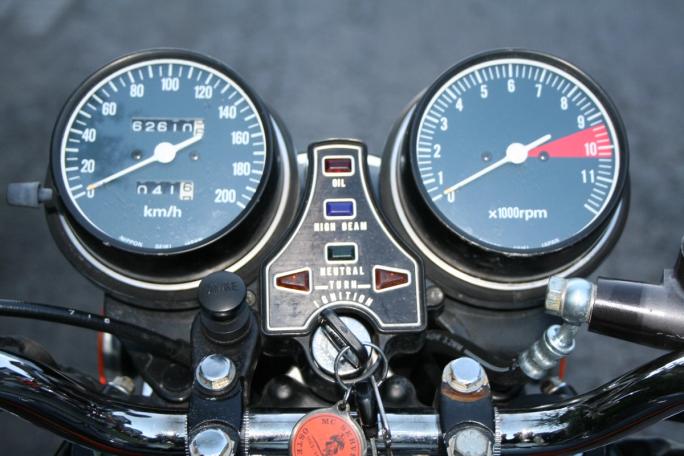
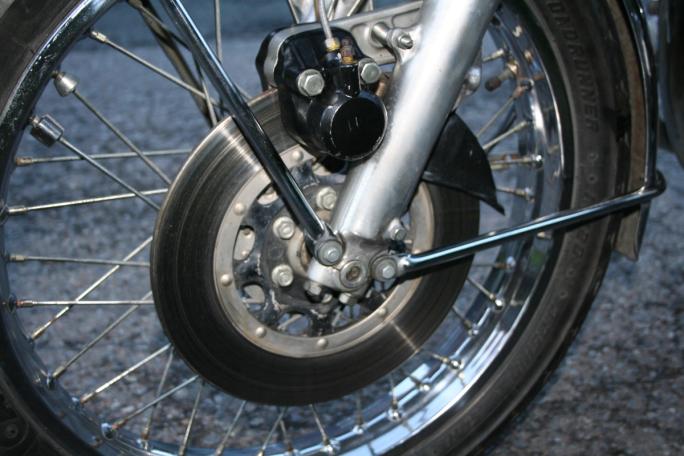
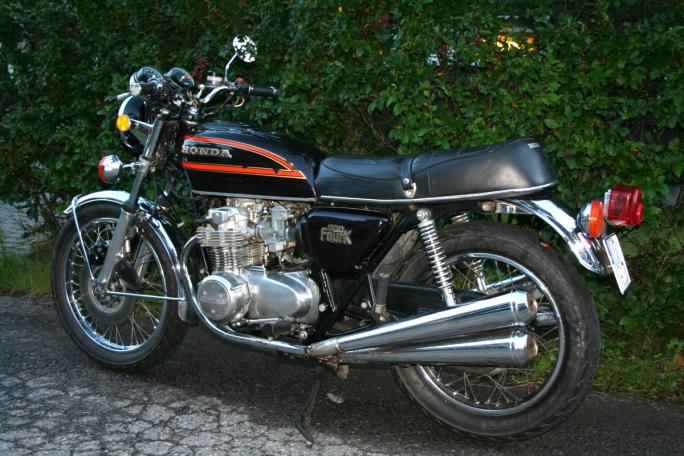
The 500cc was largely a "shrunk" 750, and had many features in common with its "big brother" CB750Four. Four cylinders, single overhead camshaft, rocker arms on the valves, four carburetors, four exhaust mufflers, single disc brake at the front, drum brake at the rear, electric start, and kick, like on the 750n. The instrumentation naturally consisted of two "clocks", a speedometer and tachometer. Sleekly and appropriately placed between these two instruments was a small console with various warning and indicator lights.
Wet swamp
One "difference" worth mentioning, however, is the wet sump on the CB500Four. The CB750Four was ultra-modern with one exception, the separate tank for engine oil hidden behind one side cover. The CB500Four, on the other hand, was equipped with a wet sump, and the engine oil was filled directly into the engine block.
Honda vs Kawasaki , Yamaha and Suzuki
With its barely 200 kg and its 48 horsepower, Honda CB500Four was actually an ideal motorcycle for everyday use. Not too heavy (most of the 750 cc bikes that rolled on the roads around 1970 weighed around 250 kg) and sufficiently fast. The engine was of course over-square and thus willing to rev. Compared to the 750 cc bikes, it did not have the same bottoming drag, but once it got the revs up, it was nimble in acceleration. Typical competitors of the time during the production period from 1971 to 1978 were, among others, the two three-cylinder 2-strokes Kawasaki H1-500 and Suzuki GT550, and the 4-stroke twin Yamaha XS650.
Oil crisis and emissions requirements
In competition with these, the Honda stood quite firmly, and after the oil crisis in 1973, where the American market in particular shrank sharply when it came to sales of 2-strokes due to stricter emission requirements, Honda took an increasingly large market share with its environmentally and consumer-friendly 4-strokes. Today, Honda CB500Four is a sought-after motorcycle, especially because with its 48 horses it can be driven on an A2 license. This makes the model accessible to young people, who often choose to convert it into a cafe racer. This bodes well for recruitment in the motorcycle community.
Technical data Honda CB500Four K3, 1978 model:
Engine: 4-cylinder 4-stroke, SOHC
Displacement: 498 cc
Power: 48 hp at 9000 rpm.
No. of gears: 5
Front tires: 3.25 x 19
Rear tires: 3.50 x 18
Tank: 16 liters
Weight: 196 kg (dry)
Top speed: 178 km/h