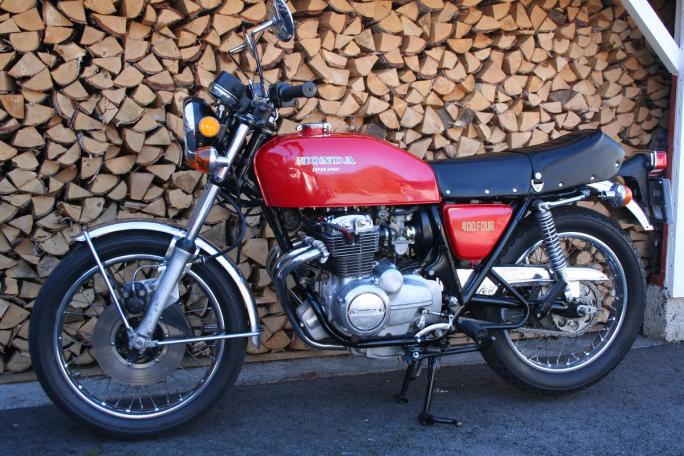
Honda CB400Four Super Sport
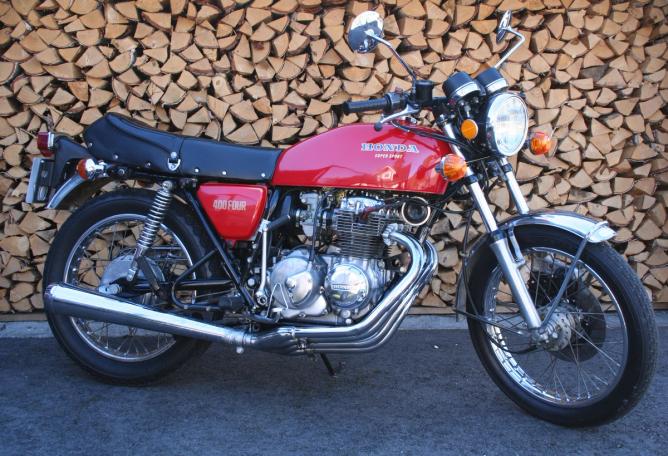
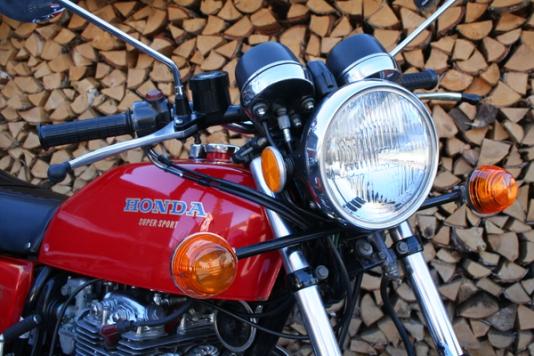
The Japanese motorcycle manufacturers understood early on the profitability of offering models in different segments and not least in different sizes in terms of displacement. In this respect, Honda was no exception, and we have taken a quick look at one of these, specifically the CB400Four Super Sport.
0/0
Honda really got into the game when they launched the twin 450 Black Bomber in 1965. It was a hit, but the design was typical of the 60s, a bit old-fashioned. However, when the Tokyo Motor Show opened its doors to the press and public in October 1968, Honda showed the way into the future. The super four CB750Four hit like a bomb, completely changing the rules of the game in terms of technology, design and performance.
Modern technology
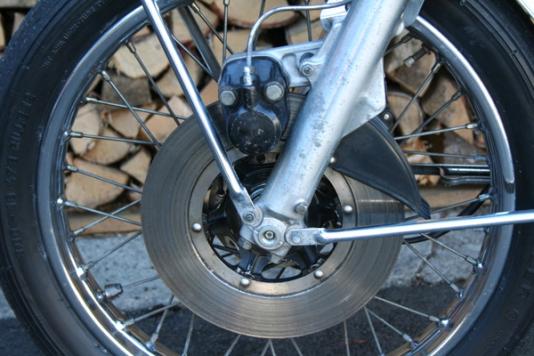
With the CB750Four, the modern superbike was born, and anyone who wanted to keep up had to think in the same vein as Honda . Multi-cylinder machines with modern technology such as electric start and disc brakes were part of what was needed, and quite quickly the three other Japanese motorcycle manufacturers Suzuki , Kawasaki and Yamaha followed suit. A number of small, medium and large models, with both 2-stroke and 4-stroke engines, flooded the market.
Large and small inline fours
Honda experienced a fantastic success with the CB750Four. Over a 10-year period, they sold over half a million of the model, divided into three versions: the CB750Four, CB750Four Super Sport and Hondamatic 750. The CB750Four went on sale in 1969, and in 1971 it was followed by a new inline-four, the CB500Four. The following year, in 1972, another new inline-four was released, the CB350Four. Rumor has it that the 350cc four was the one that Soichiro Honda was most pleased with.
CB400Four Super Sport
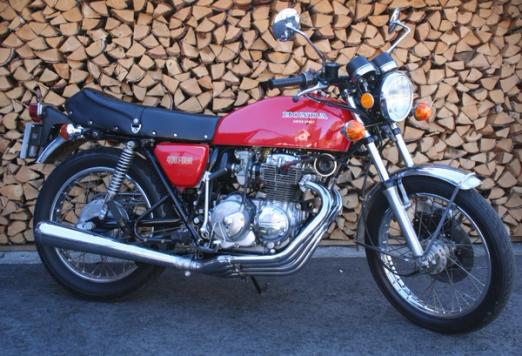
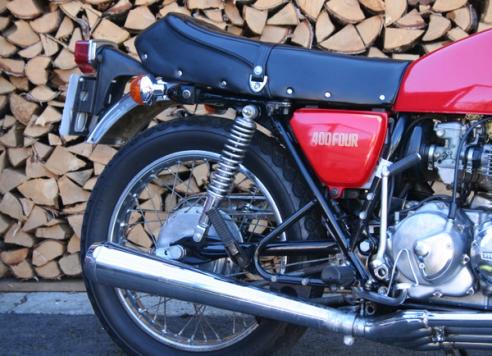
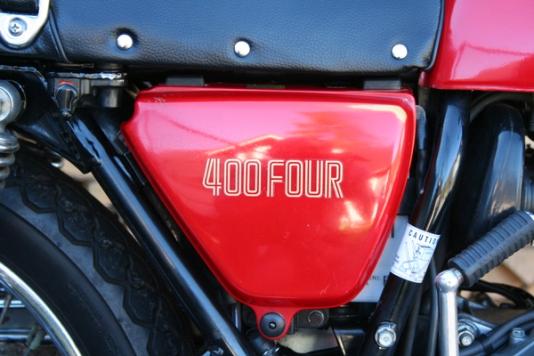
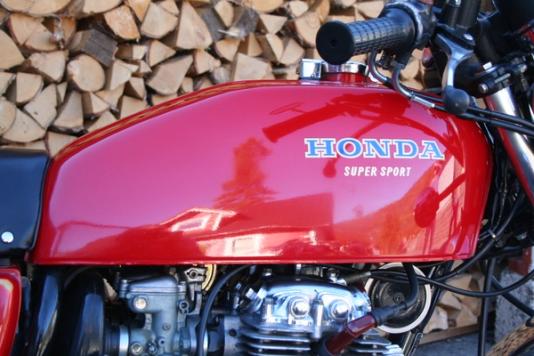
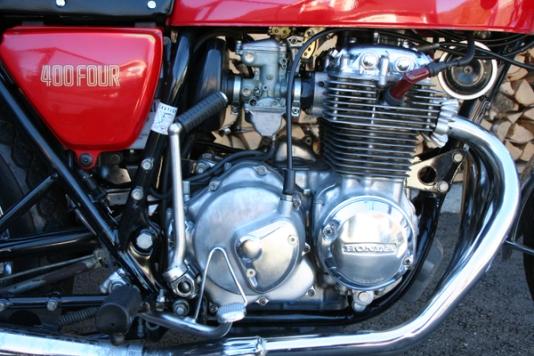
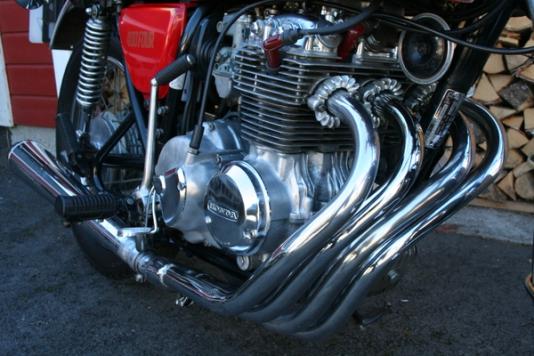
In 1975, Honda launched its fourth inline-four model, Honda CB400Four Super Sport. Just as the model name suggested, the little 400cc was a cafe racer-inspired model. Low handlebars, footrests placed far back, minimalist emblems on the fuel tank, and last but not least an incredibly spectacular 4-1 exhaust system emphasized the model's sporty image. The 400cc had a lot in common with the CB350Four in terms of the engine and some smaller components. The exterior, however, was quite different. The seat, exhaust system, fuel tank and side covers all differed from the 350n. The CB400Four Super Sport became very popular, and for those with a not too thick wallet, a tough four-stroke was now attainable. Easy to ride and capable of a top speed of almost 160 km/h was definitely "within". The model was in production until 1977. At that time, the time was ripe for the phasing out of the single-cam SOHC engine, in favor of the new DOHC engine that arrived towards the end of the 70s. At that time, Honda could look back on a 10-year period of great success related to the sales volumes of the five inline-fours CB350Four, CB400Four, CB500Four, CB550Four and not least the CB750Four.
Technical data Honda CB400Four Super Sport, 1975 model:
Engine: 4-cylinder 4-stroke, SOHC
Displacement: 408 cc
Power: 37 hp at 8500 rpm.
No. of gears: 6
Electrical system: 12 volts
Start: Kick and electric start
Front tires: 3.00 x 18
Rear tires: 3.50 x 18
Tank: 14 liters
Weight: 174 kg (dry)
Top speed: 158 km/h