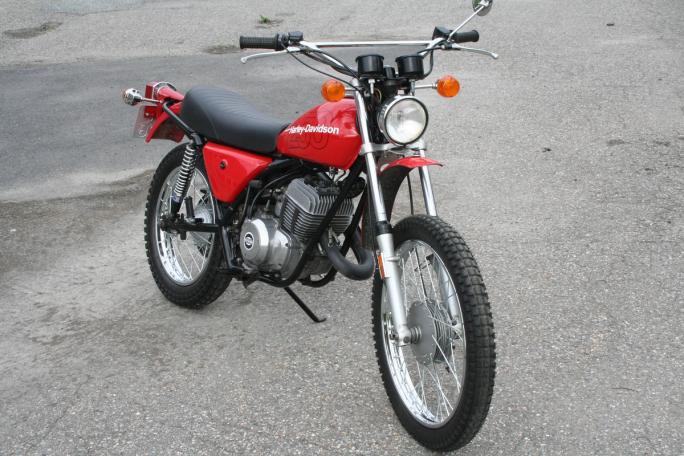
Harley-Davidson AMF SX250
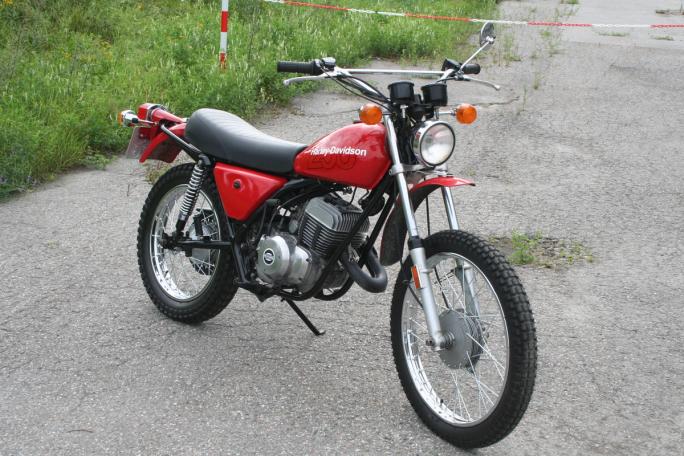
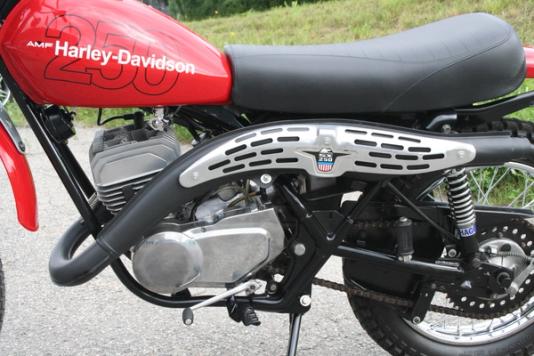
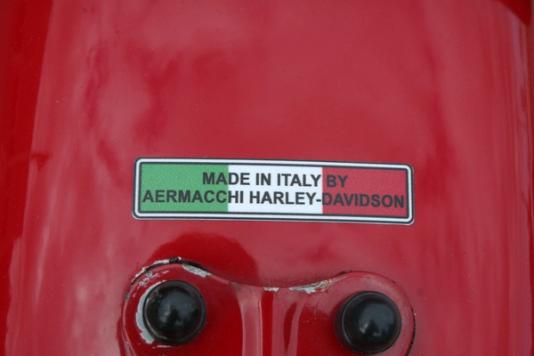
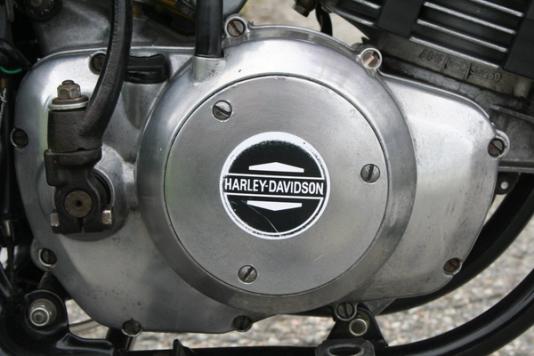
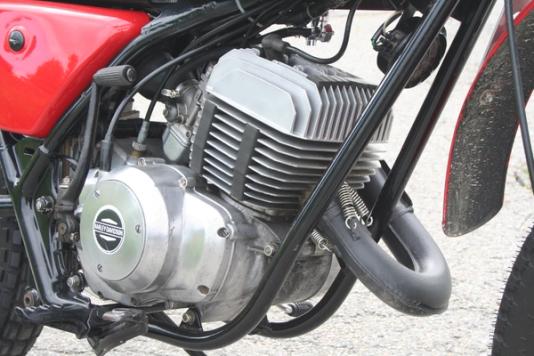
Who would have thought that a cross between an American and an Italian motorcycle manufacturer would produce an "offspring" that was confusingly similar to a Japanese-made off-roader? We've taken a closer look at just such a "brand hybrid", a very rare Harley-Davidson , manufactured in Italy, badged as Harley-Davidson , and owned by AMF. Complicated? No, not really.
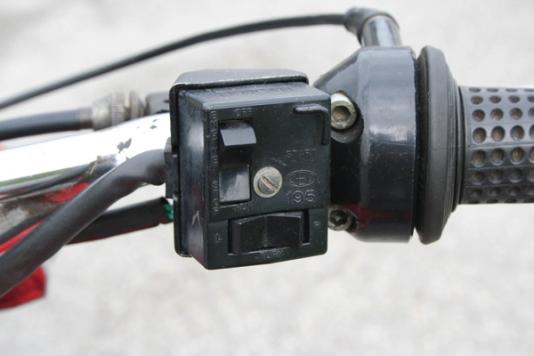
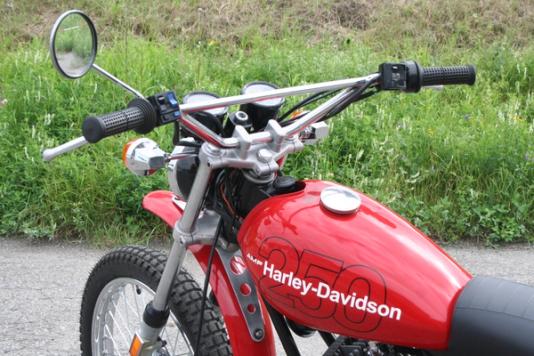
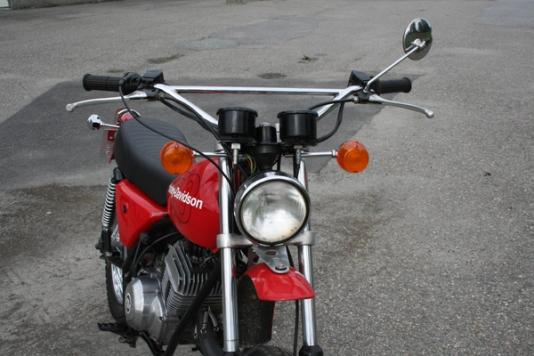
0/0
The latter half of the 1960s was a tough time for Harley-Davidson . In America, the Hells Angels spread fear among the common man with their, to put it mildly, debauched lifestyle, and Harley-Davidson became a style icon for better or worse. The AMA (American Motorcycle Association) eventually came out with the claim that their members made up 99% of all those who rode motorcycles in America at that time, and that they were law-abiding. This statement largely helped to define the Harley community as the 1%, i.e. criminal offenders.
You meet the nicest people on a Honda
At the same time, Honda launched a massive advertising campaign for its models under the slogan "You meet the nicest people on a Honda ". The wording was not accidental, quite the opposite. The nicest people were ordinary people, as far removed from the 1% as it was possible to get. The fact that Harley's machines were large, heavy and of dubious quality did not strengthen sales statistics, quite the opposite, and in a motorcycle market flooded with small, easy-to-ride and reliable machines manufactured in Japan, the competition became fiercer.
Aermacchi
In 1969, the shares in Harley-Davidson were taken over by the American Machine and Foundry Company, AMF. The purpose was to produce more motorcycles of better quality. Prior to the change of ownership, more precisely in 1960, Harley-Davidson began talks with the Italian Aermacchi with the aim of establishing cooperation on the production of small 1-cylinder 2- and 4-stroke engines. Aermacchi, which was located on Lake Varese north of Milan, was known for the construction of seaplanes and small motorcycles. The management in Milwaukee thought that this type of motorcycle could stem the competition from the Japanese manufacturers, and Harley-Davidson thus took over 50% of the shares in Aermacchi in 1961. However, the cooperation would present many challenges, ranging from different management philosophies to disagreements about salary conditions and last but not least government obstacles in the form of bureaucratic regulations regarding imports and type approvals.
AMF
As previously mentioned, Harley-Davidson was sold to AMF in 1969. Harley-Davidson was thus not a family-owned company, but a listed corporation. Such changes rarely go unnoticed in terms of company structure and product development. And, as if this were not enough, the “bomb from Japan”, Honda CB750Four, went on sale the same year that AMF took over the majority of shares in Harley-Davidson . The economic “backslope” in Milwaukee can best be described as steep. In retrospect, Harley-Davidson’s development under AMF’s ownership can be summarized as follows; increased production, weakened quality!
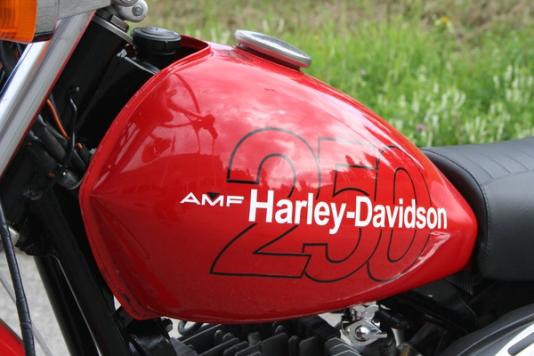
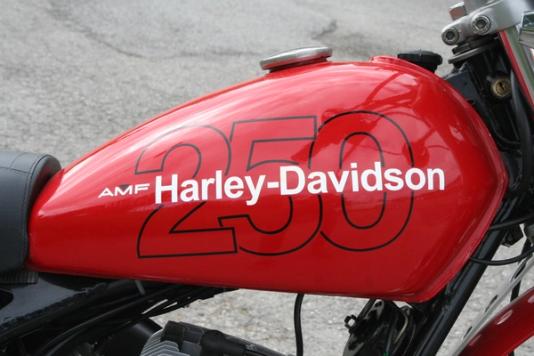
AMF Harley-Davidson SX250
The SX250 carries with it a somewhat mysterious history. A Harley-Davidson , owned by AMF, manufactured in Italy, and with a design that is confusingly similar to a Japanese off-roader, can best be described as a curiosity. A light off-roader with a 1-cylinder 2-stroke engine was as far from what the motorcycle community associated with Harley-Davidson as it was possible to get. The model was not chosen randomly, however. In the 1970s, America had a fairly liberal interpretation of road traffic laws and motorized traffic in the woods and fields.
Yamaha's DT as a role model
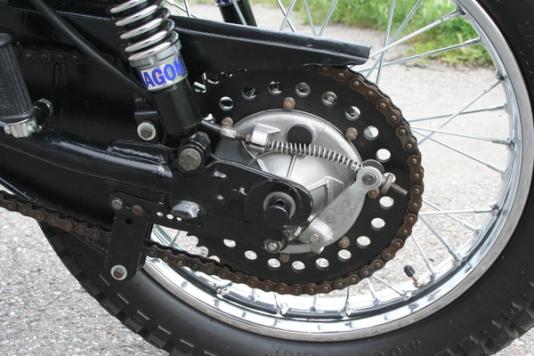
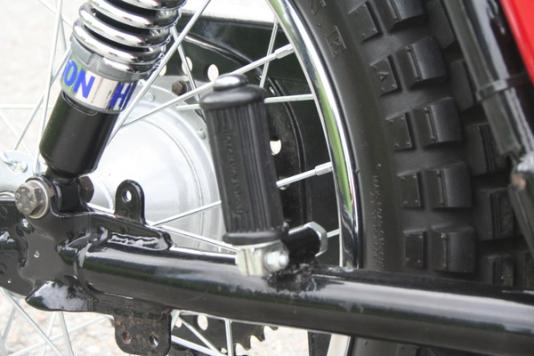
This boosted the sales of small off-road machines, and it is no secret that Yamaha's DT series, which was equipped with single-cylinder 2-stroke engines of 250 cc, 360 cc and 400 cc, was attempted to be copied by AMF Harley-Davidson and built by Aermacchi. Not so strange really, considering that Yamaha DT-250 was sold in close to 50,000 copies annually in the USA from 1970 onwards. Who wouldn't want a piece of the "off-road cake" in this market? The SX250 was basically not a bad motorcycle. Among other things, it could be kick-started even when it was in gear, had an adjustment solution on the swingarm developed by the English Rickman , and did not depend on battery power to get a spark to the spark plug. In short, the SX250 had few weaknesses and that the electrical system could be problematic was no surprise, it was Italian after all.
Opposing the dealer network
AMF thought it would be easy to push off-roaders with Harley logos on the gas tanks into a motorcycle market flooded with small, reliable and affordable motorcycles from Japan. They were wrong. The dealer network snorted at "the Italian" who represented everything but what Harley was known for; big, heavy big-twins for American highways.
New emission requirements
The 1973 oil crisis, with its subsequent emissions regulations, was the beginning of the end for two-stroke motorcycles. The SX250 was launched in 1975, with many odds against it. When AMF sold its stake in Aermacchi to Cagiva in 1978, it was to focus fully on improving both the quality and reputation of its big-twins. Thus, a rather unorthodox chapter in Harley-Davidson's history was closed.
Technical data AMF Harley-Davidson SX250, 1978 model:
Engine: 1-cylinder 2-stroke
Displacement: 243 cc
Power: 18 hp
Carburetor: Dell'Orto PHB32
Number of gears: 5
Electrical system: 6 volts
Front tires: 3.25 x 19
Rear tires: 4.00 x 18
Weight: 122 kg
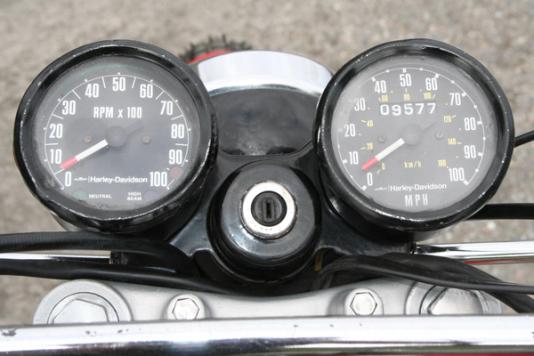
Top speed: 117 km/h