
Ducati 750 GT
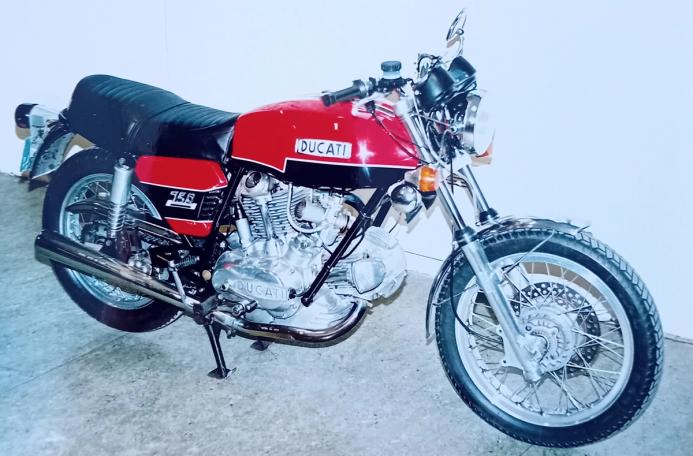
When Arnoldo Milvio and Fredmano Spairani joined the top management at Ducati Meccanica in 1969, the focus was on developing a V-twin that would take the brand into the next decade. The result came in the form of Ducati 750 GT in 1971. The model was Ducati's first series-produced V-twin for street use, and the twin marked the transition from single-cylinder engines to larger and more powerful motorcycles.
When Arnoldo Milvio and Fredmano Spairani joined the top management of Ducati Meccanica in 1969, the focus was on developing a V-twin that would take the brand into the next decade. The result came in the form of the Ducati 750 GT in 1971. The model was Ducati 's first series-produced V-twin for street use, and the twin marked the transition from single-cylinder engines to larger, more powerful motorcycles.
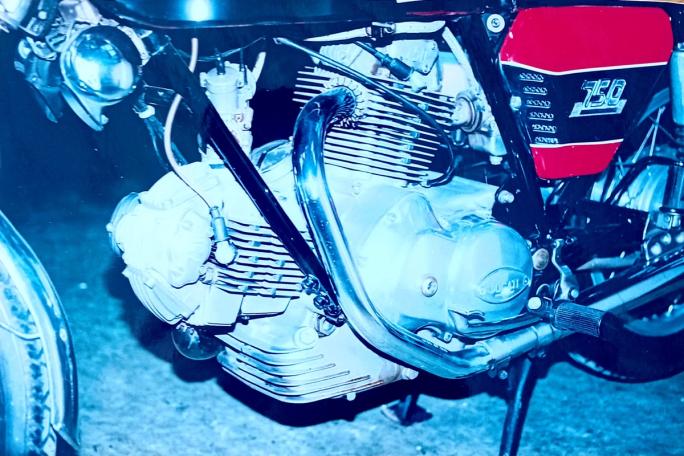
The 90-degree V-twin started a new era at Ducati , giving the brand a distinct identity
The engine in the 750 GT was designed by legendary Ducati engineer Fabio Tagliono. He opted for a 90-degree V-twin for optimal balance and less vibration, a concept that Ducati still uses. The 750cc engine proved very potent, and with an output of 60 hp the 750 GT reached a top speed of around 200 km/h. This placed the Ducati right at the top of the 750 class, and clearly ahead of its English and Japanese competitors.
The engine in the 750 GT was designed by legendary Ducati engineer Fabio Tagliono. He opted for a 90-degree V-twin for optimal balance and less vibration, a concept that Ducati still uses. The 750cc engine proved very potent, and with an output of 60 hp the 750 GT reached a top speed of around 200 km/h. This placed the Ducati right at the top of the 750 class, and clearly ahead of its English and Japanese rivals.
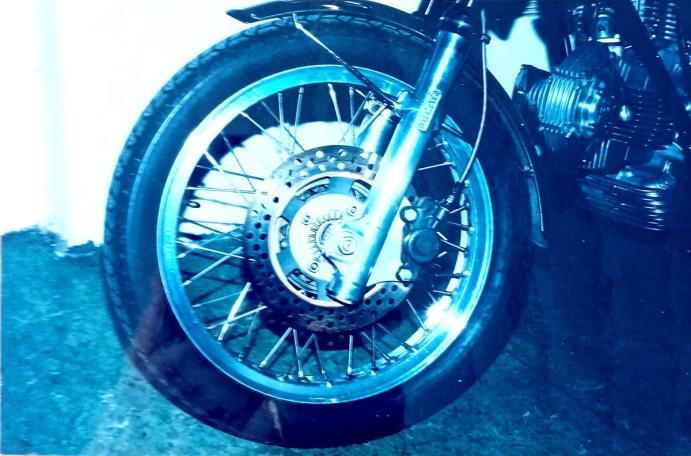
The 750 GT got disc brakes at the front, making it more modern than its competitors.
The 750 GT was the predecessor to the more sporty version, the 750 Sport which came in 1972, and not least the iconic 750 Super Sport which came in 1973. Ducati first gained international attention when they rode to victory in the "Imola 200" in 1972, and the event significantly increased interest in the V-twin model. The 750 GT was in production from 1971-1974.
The 750 GT was the predecessor to the more sporty version, the 750 Sport which came in 1972, and not least the iconic 750 Super Sport which came in 1973. Ducati first gained international attention when they rode to victory in the "Imola 200" in 1972, and the event significantly increased interest in the V-twin model. The 750 GT was in production from 1971-1974.
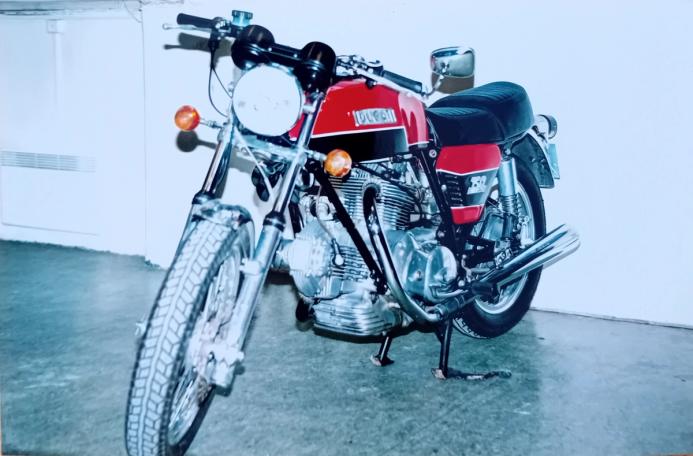
With the 750 GT, Ducati began the development that brought them to the top of superbikes.
- Technical data Ducati 750 GT, 1972 model:
- Engine: 2-cylinder 4-stroke, air-cooled 90-degree V-twin
- Displacement: 748 cc
- Power: 60 hp
- No. of gears: 5
- Carburetors: Amal Concetric / Dell`Orto 30 mm from 1973
- Front brakes: Lockheed disc brake / Scarab disc brake from 1973
- Rear brakes: drum
- Weight: 185 kg (dry)
- Top speed: about 200 km/h
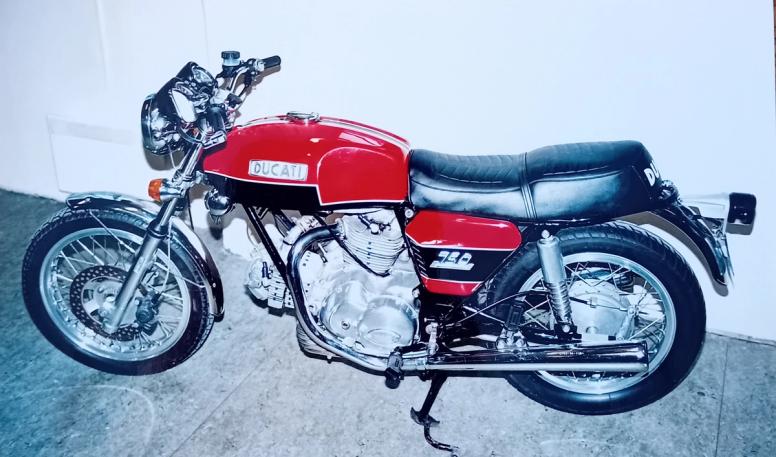
The 750 GT was in production from 1971-1974