
Bridgestone 350 GTR
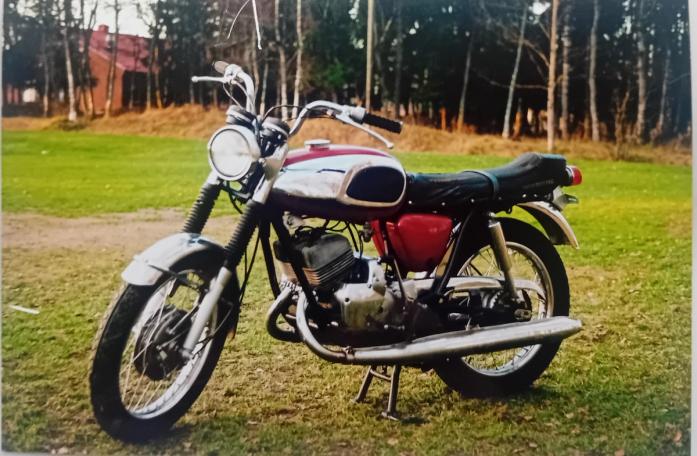
Bridgestone 350 GTR
Bridgestone is actually an English term derived from the surname of the founder, Soichiro Ishibashi. Ishi means stone and bashi means bridge. Soichiro therefore split his surname in two, reversed the parts, and translated it into English. Most people associate Bridgestone with the production of tires for cars and motorcycles. That the factory once made some of the best 2-stroke motorcycles available is probably less well known. Bridgestone was well into tire production when they also began producing pedal bicycles in 1946. Japan had been dealt a hard blow by the Allies towards the end of the war, and purchasing power in post-war Japan was poor. People still needed affordable and simple means of transportation, and thus there was a great demand for pedal bicycles. As reconstruction took shape and the economy strengthened, the demand for motorized means of transportation increased. In 1952, Bridgestone began producing motorcycles, and the model range gradually included a series of small 2-strokes of 49, 98, 175, 250 and 350 cc respectively. Bridgestone's motorcycles became known as fast, reliable and technically advanced. No expense was spared, only the best was good enough. Development and production costs were very high, and the price tag was accordingly. What essentially set Bridgestone apart from other Japanese brands was not the technical finesse per se, but the fact that each Bridgestone model was packed with modern technology by the standards of the time. In short, they were fast, advanced and sophisticated.
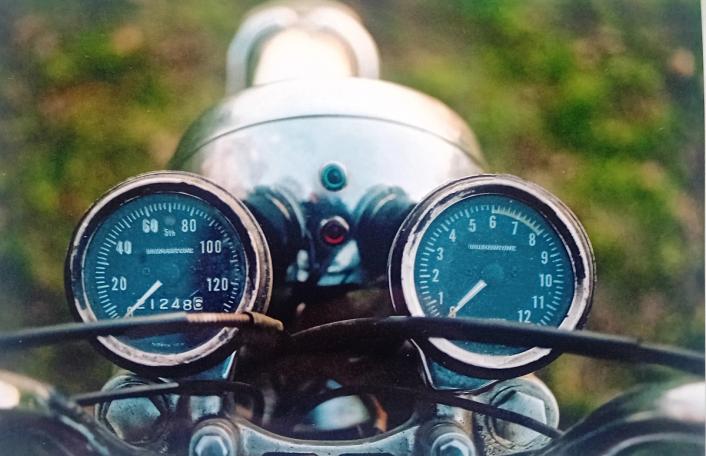
350 GTR
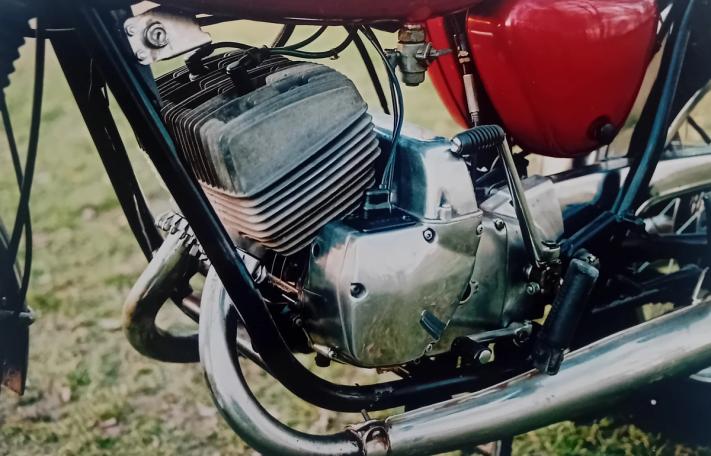
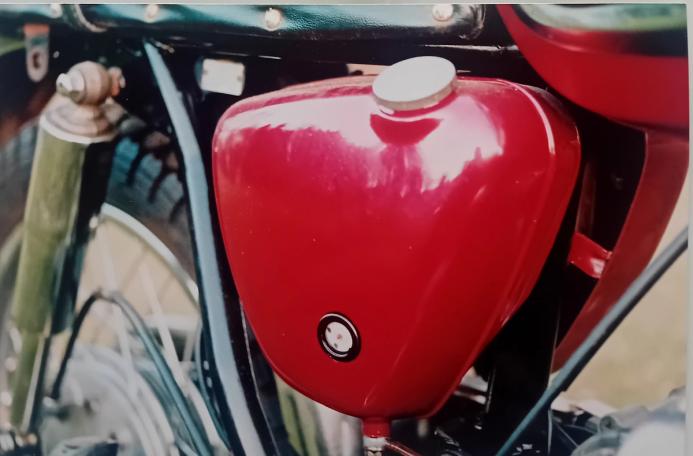
One of the last models that Bridgestone made was the 350 GTR. This went on sale in 1967, right after Suzuki's sales success, the 2-stroke T-20. Bridgestone 350 GTR sold much worse than the Suzuki due to its high price, but was far more advanced. Instead of using ports in the cylinder wall and carburetors mounted at the rear of the cylinder bank, Bridgestone used rotary valves on each end of the crankshaft with the carburetors located directly on the outside. This gave a much smoother flow of air and fuel, as well as a more tractable engine across the entire rev range. The cylinders were also made of hard chrome. This allowed for smaller tolerances between the piston and cylinder, which in turn minimized skirt knock. In addition, the engine was mounted in rubber mounts, which reduced unpleasant vibrations in the handlebars and footrests. The frame was reinforced in exposed areas, and the shock absorbers could be adjusted according to the rider's needs. Other "natural" features were 6 gears and a separate tank for 2-stroke oil with a pump for efficient lubrication. However, what was most striking was the power and performance.
170 km/h
According to the factory's claims, the nearly 40 wild 2-stroke horses were able to push the 350 GTR to over 170 km/h. In reality, both power and top speed were somewhat lower. In comparison, Suzuki T-20 had "only" 29 hp and a top speed of around 150 km/h. However, it should not be forgotten that this was 100 cc smaller. Although the power and performance of the 350 GTR were the subject of much attention, Suzuki T-20 also received due mention in the contemporary motoring press. The little two-stroke from the Suzuki factory could show a liter power of over 100 hp, and hung close in the blue smoke behind the 350 GTR. However, Bridgestone left its competitors behind, while at the same time being able to match 500-cubic meters without any significant problems. Undoubtedly good PR for a small 2-stroke that could "park" established 4-strokes with much larger displacement.
High price tag
Solid handling characteristics combined with technical sophistication and high performance brought the tire manufacturer to the forefront. In Japanese road racing, Bridgestone dominated the small classes throughout the 60s. However, the sales figures for Bridgestone's models, and especially the 350 GTR, were nothing to shout about. High development costs and expensive technical solutions made the price tag on Bridgestone far too high.
The boycott?
In 1968, Bridgestone management decided to discontinue motorcycle production in favor of a stronger focus on further developing tire production. Rumor has it that the real reason for the end of motorcycle production was related to threats from the other Japanese motorcycle manufacturers to cut Bridgestone off as a tire supplier. Whether there is any truth to this is not known for sure, and many of the other Japanese brands used tires from Dunlop. The “boycott theory” is probably a bit dubious. It is not necessarily completely unlikely, but a more reliable explanation for the production stop was probably the high price tag with the subsequent decline in sales.
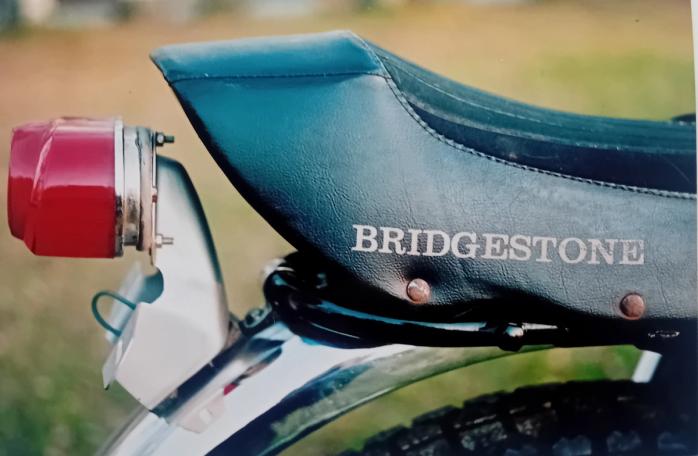
Bridgestone 350 GTR vs Suzuki T-20
In England in 1968 Bridgestone 350 GTR cost £340, which was £60 more than Suzuki T-20, and only slightly less than Triumph Bonneville . Thus those with a slim wallet chose the Suzuki, while those who wanted a heavy motorcycle chose the Bonneville. Not even a refined and fast 2-stroke could threaten the Bonneville's status. If one compares the sales figures for Bridgestone 350 GTR with Suzuki T-20, the latter was the one that pulled the longest straw in the small 2-stroke segment.
Technical data Bridgestone 350 GTR, 1966 model:
Engine: 2-cylinder 2-stroke
Displacement: 345 cc
Power: 37 hp at 7500 rpm.
No. of gears: 6
Front tires: 3.25 x 19
Rear tire: 3.25 x 19
Tank: 15 liters
Weight: 150 g (dry)
Top speed: 153 km/h