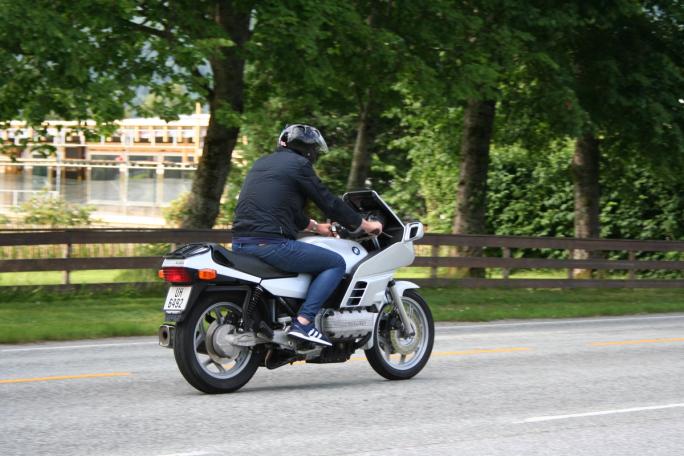
"The RSn invites you to a sporty driving style"
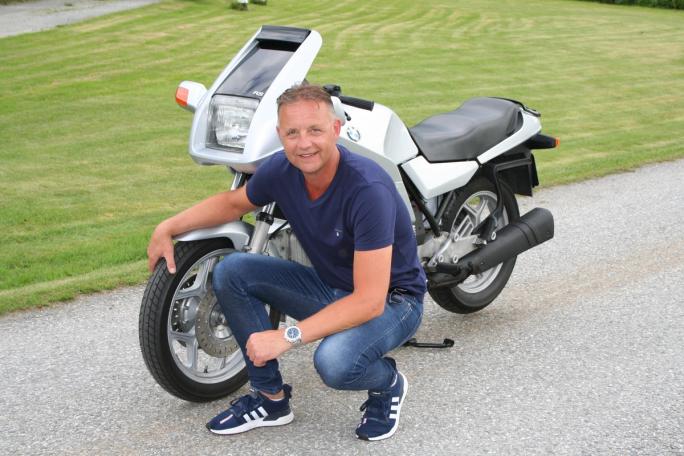
Kjell never forgot the first RSn, and jumped on it right away when this RSn came up for sale.
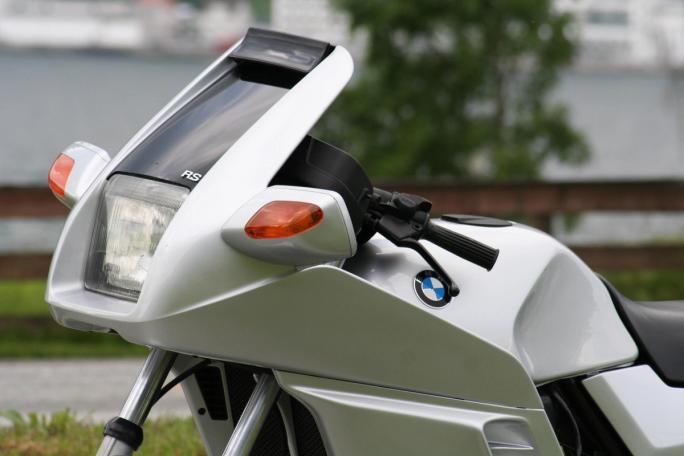
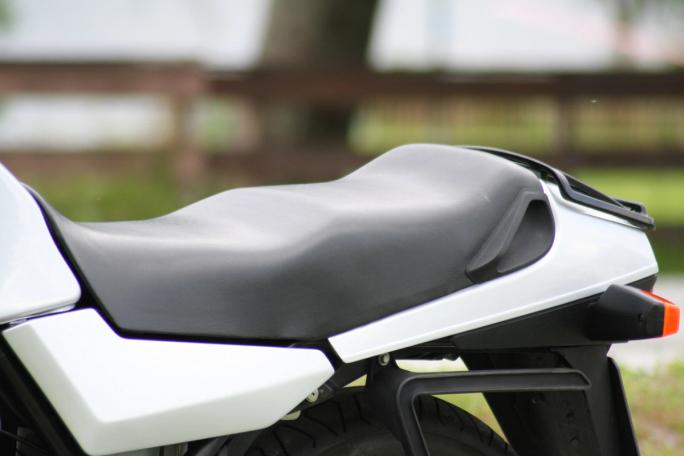
Kjell Kleiva Snipsøyr from Ørste once owned a silver K100RS a long time ago. The bike he bought at the time was restored and sold, but never forgotten. When an identical RS with the same silver color appeared, he just had to have it. Kjell is no small boy, and measures around 190 at the stocking. There are few bikes that offer ergonomics that allow a day's riding without becoming stiff and stiff due to a bad sitting position. "The fact that the RSn invites a sporty riding style is not a minus either," adds Kjell when describing the bike's features.
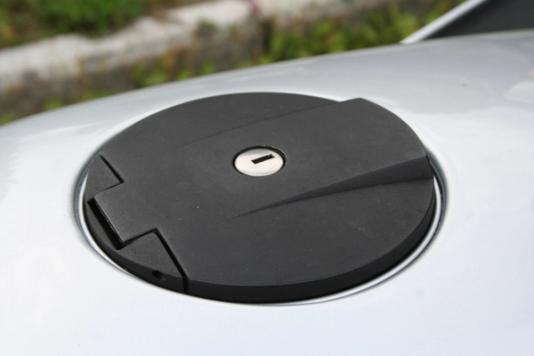
Recessed tank cap is a nice detail and makes tank bag installation easier.
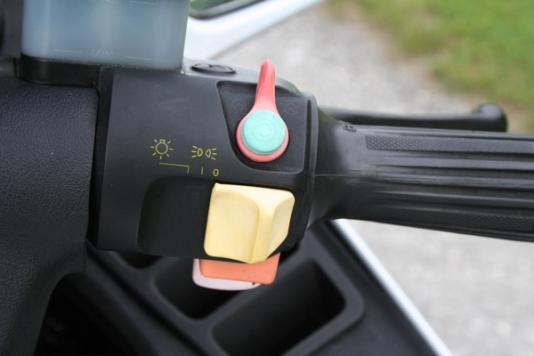
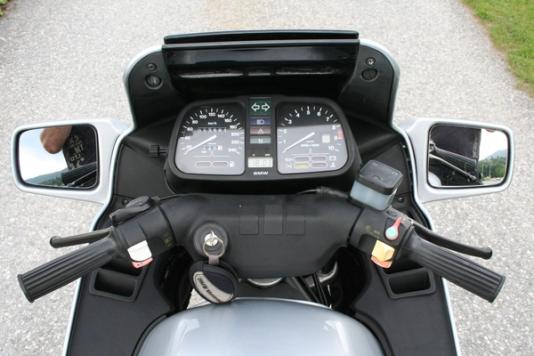
Inviting, functional and ergonomically correct driver environment
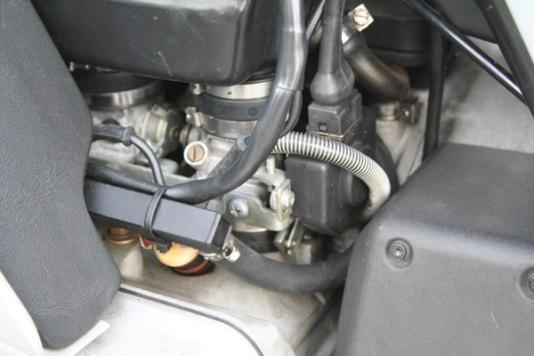
Fuel injection
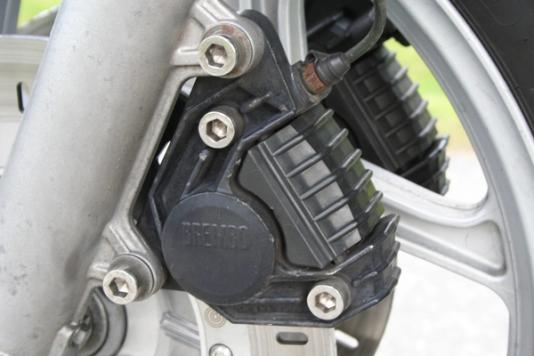
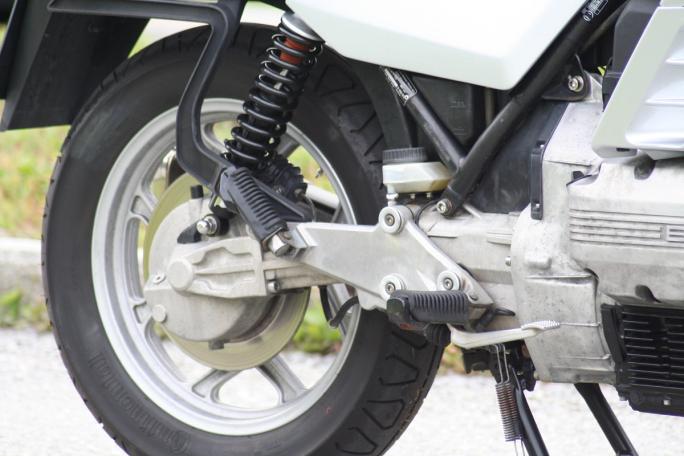
Double front discs with Brembo ensure solid braking capacity
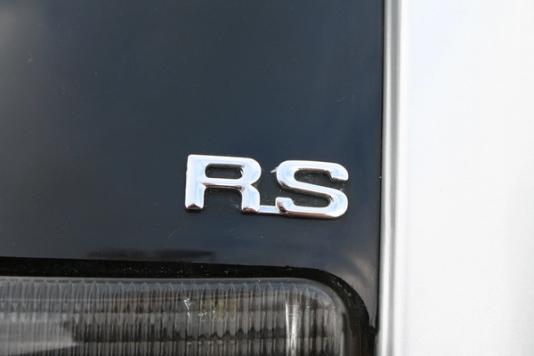
RS = Racing
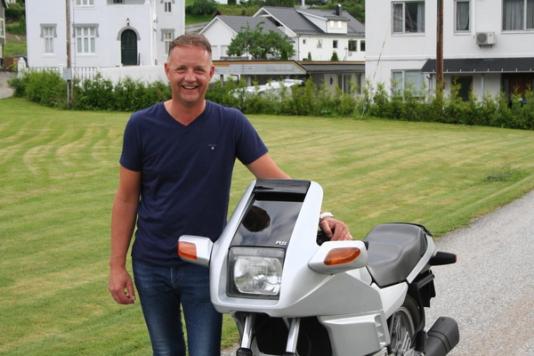
A happy owner of a great and solid used classic
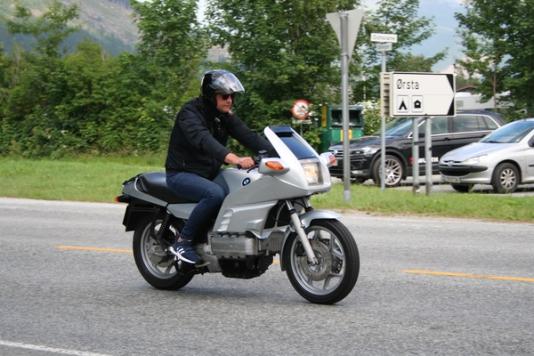
0/0
1983
When BMW announced that the very trademark in the motorcycle division, the boxer model R, would be phased out in favor of a new generation of modern motorcycles with inline engines, this triggered loud protests from BMW fans around the world. The reactions were perhaps not unexpected. BMW's boxer series, which had roots back to 1923, was the very incarnation of touring. Thus, it was decided that the R series would remain, side by side with the new K series. Time has shown that it was a wise decision, and in 1983, exactly 60 years after BMW made its first motorcycle with a boxer engine, the new inline-four K100 was ready.
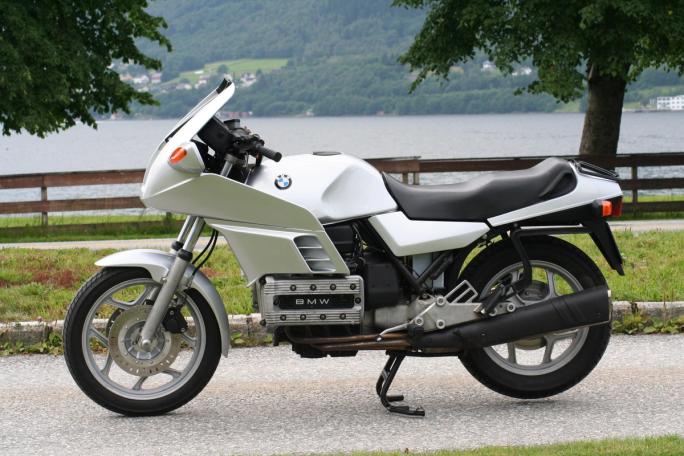
The K-Series; a new generation BMW
The first K model, the K100, which achieved veteran status in 2013, was launched in 1983. BMW took a long and important step in the development of a new generation of motorcycles. At the beginning of the 80s, many of the European motorcycle manufacturers were struggling in the fight against Japanese motorcycles. The Japanese motorcycle manufacturers offered models in all segments, and they were of a quality that few of their competitors could match. The American legend Harley-Davidson was also struggling hard at the beginning of the new decade, and the English motorcycle industry now consisted only of Norton and Triumph . BMW also had an internal challenge that lay inherent in the old boxer concept. The technology was old-fashioned, and with new requirements for reducing emissions, a blue light was now flashing on the horizon for the construction that had been BMW's hallmark since 1923. The road ahead was uncertain and challenging. For how could BMW maintain its image and reputation, while at the same time breaking new ground?
A small Peugeot engine in focus for development
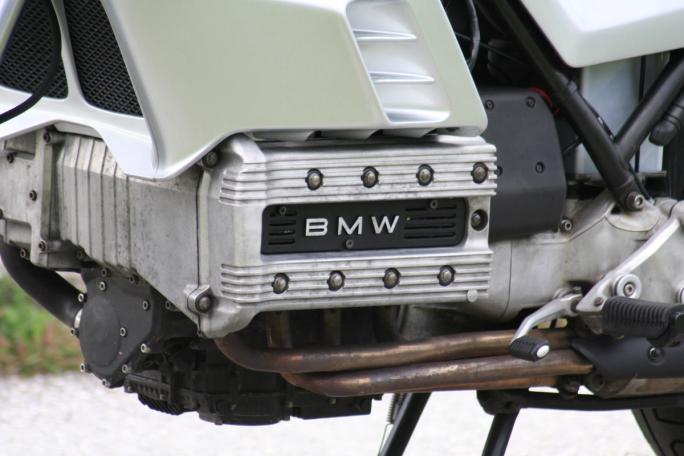
Solutions to big challenges are often found where no one is looking, and for BMW 's new generation of motorcycles, a small 4-cylinder car engine from the Peugeot 104 came to play a central role. Someone had thought of an idea, and then the ball started rolling. The team that led the development work included Josef Fritzenwenger, a guy who wasn't afraid to think outside the box. A new motorcycle with an inline-four as a drivetrain was in the works. The solution was as radical as it was sensational. The project was referred to as "The brick", and had an engine design that combined complex technical solutions.
Service-friendly construction
At the same time, it was designed and assembled so that service could be done by almost anyone and anywhere with simple tools, and without a number of parts having to be removed in advance of the actual service work. Or as we would say in good Norwegian; service-friendly! An inline-four mounted longitudinally in the frame was not really a novelty. American manufacturers such as Indian , Ace and Henderson used this type of solution as early as the 1920s, but for BMW this was radical to say the least. They also did it with their own twist, precisely by having the engine in the frame, with the cylinders out to the left and the crank out to the right. Double overhead cams and fuel injection were a given on the way into the future. In short, the 1000-cubic was very compact, with crank, gear and cardan shaft in a line that ended up in the cardan shaft housing in the center of the rear wheel. Very compact, hence the nickname "The brick", or brick if you will!
3 models, all forged over the same last
The K-series, like its R model brother, had a very low center of gravity, which contributed to stability and good handling. The K-series consisted of 3 models in its first year. The basic model K100 was a naked version without anything extra. For those who liked a bit of downforce in the corners and a lively ride, the K100RS was the right choice. It was equipped with an aerodynamic sports fairing, and the RS proved strong and stable even at high speeds.
K100RT
For the touring enthusiasts who were a significant part of BMW 's customer base, the K100RT was ready for the longest day stages. Full fairing, side bags and top case were among the standard equipment on the touring giant RT. Gradually, the K100 was supplemented by its "little brother" K75, a model with a 3-cylinder in-line engine that became very popular, including with our own police forces. A look back at the history of the K-series can be briefly summarized as follows: a box office success for BMW , a driving experience for the owners.
Technical data BMW K100RS, 1986 model:
Engine: 4-cylinder 4-stroke, DOHC
Displacement: 987 cc
Power: 90 hp at 8000 rpm.
Fuel injection: Bosch LE-Jetronic
No. of gears: 5
Front tires: 100/90x18
Rear tires: 130/90x17
Tank: 22 liters
Weight: 249 kg
0-100 km/h: 4.3 sec.
Top speed: 220 km/h