
BOOK TIPS
My recommendations of good books for learning more about classic motorcycles.
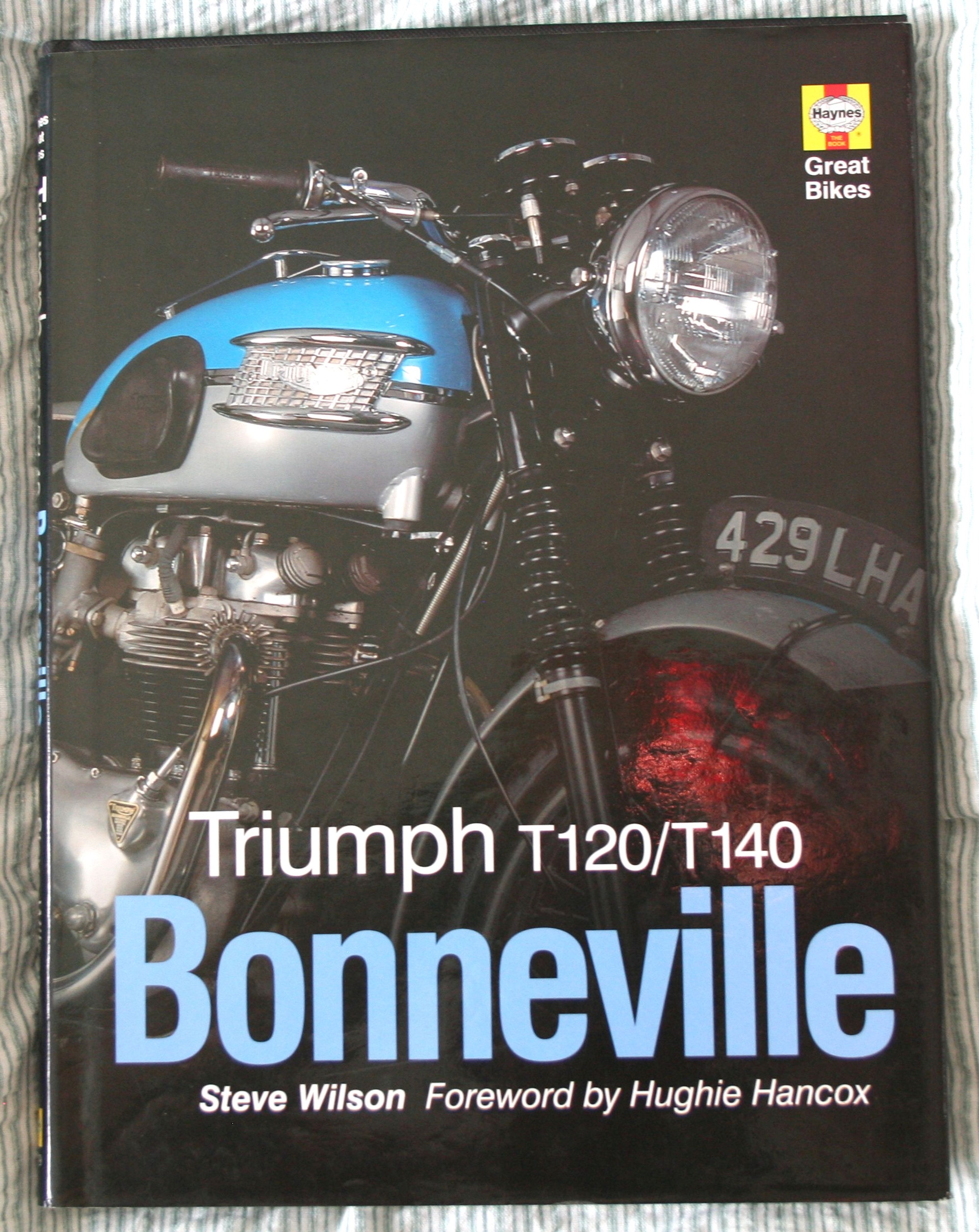
Triumph T120/T140 Bonneville
Author: Steve Wilson. Published by Haynes Great Bikes. Year of publication: 2000. ISBN: 1 85960 679 2. 159 pages. Richly illustrated with color photos and old advertising photos. With the launch of Bonneville in 1959 Triumph created a legend, and perhaps one of the most important trendsetters on 2 wheels throughout the history of motorcycles. Wilson takes us on a journey through the history of the model, from the 650-cubic T120 to the 750-cubic T-140. The book is one of the best and most interesting things I have read when it comes to describing a single motorcycle model, regardless of make and model, and is a "must read" for those with an interest in precisely "the Bonni". Enjoy reading!

Harley-Davidson Photographic History; Archive, Racing, Folklore
Author: Wolfgang Wiesner. Published by Motorbooks International. Year of publication: 1989. ISBN: 0-87938-343-7. 242 pages. Richly illustrated with 400 pictures. If you are interested in the history of the brand and not least the myth, this book is a "must". The book naturally starts with what the author refers to as the "Early days", and then the long lines are drawn forward towards the 1980s and the renewal with Softail and Evolution in 1984. The racing history is well described, and the same applies to the development of key models along the way, such as Sportster , and not least legendary big-twin engines such as Panhead and Shovelhead. The author has done a deep dive into Harley's history, and not least the ownership during the exciting and turbulent AMF period is very well documented. The book also provides solid insight into the influence that Willie G. Davidson had on the brand's development in the 1970s and 1980s. Happy reading!

Norwegian Tempo history
Author: Trygve Larsen. Published by: Norsk Tempoklubb . Year of publication: 2010. ISBN: 978-82-92546-17-8. 259 pages. Richly illustrated with both factory brochures, color photos, and black and white photos. Trygve Larsen has put considerable effort into describing the history of Tempo in Norway. It depicts everyday life, transportation and motorsport, where Tempo is in focus. The book gives the reader an insight into several aspects of motorcycle production in Sandnes, while also telling what significance Tempo had for most people in the years after World War II. The book is a piece of cultural history that is a "must" to read, whether you have owned a Tempo or not. Good reading!

Illustrated DUCATI Buyers Guide
Author: Mick Walker. Publisher: Motorbooks International. English text. Year of publication: 1994. ISBN: 0-87938-796-3. 156 pages. Illustrated with black and white pictures. Mick Walker's book has 19 chapters that take the reader through large parts of Ducati's history from the beginning until 1994. The book discusses a number of well-known models, and deals with developments and technical details related to the models discussed. The book is definitely recommended for those who are interested in Ducati , and not least for those who are considering buying a model produced up to the 1994 model year. It is also interesting if you want to understand how Ducati changed in the transition between the 1980s and 1990s, and what steps they took to position themselves when it came to producing motorcycles that took market share, whether they were to be used for road or racing. Good reading!

The complete illustrated encyclopedia of American Motorcycles
Author: Tod Rafferty. Publisher: Quadrillion Publishing Limited. English text. Year of publication: 1999. ISBN 0-7624-0528-7. 255 pages, richly illustrated with color photos. Rafferty takes us back in history, and shows us the breadth of American motorcycle production. At the beginning of the 20th century, new manufacturers were constantly emerging, and although Indian and Harley-Davidson have naturally received a lot of space in books and magazines, American motorcycle production consisted of a multitude of smaller and larger motorcycle brands. Rafferty introduces us to the different brands from A to Z, with beautiful photos taken by photographer Neil Sutherland. The book starts with ACE, which was based in Philadelphia, Pennsylvania, and takes us on a journey where we get to know the different manufacturers, all the way to the last one, Yale, which was produced in Toledo, Ohio. Good reading.

THE MOTORCYCLE BOOK
Authors: Mogens H. Damkier and Gunnar Skrydstrup. Publisher: Gyldendal. Danish text. Year of publication: 2000. ISBN: 87-0045518-0. Illustrated with color images. 158 pages. This is definitely the book for anyone who wants to learn more about the technical structure of motorcycles. The authors describe how 2-stroke and 4-stroke engines are constructed, they deal with the suspension system, ignition system, carburetor and brake systems, etc. The book also has a separate chapter on maintenance, and not least what to look for when buying a used motorcycle. It is easy to read and richly illustrated, and after reading it many will probably be able to do simple troubleshooting and repairs on their own motorcycle if necessary. Good reading!

The Ultimate Harley-Davidson
Author: Mac McDiarmid. Publisher: Hermes House. English text. Year of publication: 2012. ISBN-13: 978-1-84309-860-7. 255 pages. Few journalists and writers know Harley-Davidson as well as Mac McDiarmid. The British author has a long list of motorcycle books on his "conscience", and this book, "The Ultimate Harley-Davidson ", is among the most famous books from his extensive production. McDiarmid masters the art of combining historical research with technical details and excellent photographs. The book follows two tracks, where one deals with the brand, the models and the history. The second track takes us into the part of the motorcycle culture where Harley-Davidson has achieved an almost iconic cult status. The book provides a deeper insight into several of the most important models from Milwaukee, and a deep dive into a biker culture that is unparalleled in motorcycle communities around the world. Enjoy reading!

The Encyclopedia of MOTORCYCLES
Authors: Roy Bacon, Roger Hicks, Mac McDiarmid, John Tipler and Mick Walker. Publisher: Silverdale Books/Bookmart LTD. English text. Year of publication: 2001. ISBN: 1-85605-592-2. This reference work is a "must" for every motorcycle enthusiast with an interest in the history of motorcycles. The book takes us from 1885 until the turn of the millennium, with text reviews of 2300 motorcycle brands, richly illustrated with over 1200 color photos. The authors are well-known and very experienced, and have each published a number of motorcycle books that are sold internationally. Thus, the publisher has gathered a star team, which guarantees the quality and credibility of the book. It is not known whether the book includes all motorcycle manufacturers that have existed, but it does include our own pride Tempo , but only with a few lines of mention and without a photo. Not surprisingly, the most famous motorcycle brands have been given the most mention in terms of both text and photos. Good reading!

CAFE RACERS of the 1960s
Author: Mick Walker. Publisher: Windrow & Greene Ltd. Year of publication: 1994. ISBN: 1 8720004 19 9. 96 pages. English text. Just as the subtitle reads: Machines, riders and lifestyle, a pictorial review, Walker takes us through the peak of the cafe racer cult; the 1960s. This subculture within the MC scene grew up in England in the 1930s, and had its heyday in the 60s. English motorcycles were "still hot", and the rockers dominated the street scene on their race-inspired machines. Now there were cafe racers in every environment, and on every continent, but the real hotbed was, and is, The Ace Cafe on the North Circular Road in London. Here they still gather for a coffee and tire kicking. Walker takes us on a journey back in time, into an environment that has left its mark on MC culture. The book is richly illustrated with pictures of the people and the motorcycles. Sub-suppliers of motorcycle parts such as Triton and Dunstall have also been given their rightful place in the book. If you have the slightest interest in cafe racers, the book is a "must read". Enjoy.

Honda Gold Wing
Author: Ian Falloon. Publisher: Haynes Publishing. Year of publication: 2001. ISBN: 1 85960 660 1. 150 pages. English text. Falloon takes us back to the early 1970s when the idea for Gold Wing was conceived. The reader gets an insight into the history, from idea, via development and to the original GL1000 model, which materialized at the Paris Motor Show in the autumn of 1974. The path from the GL1000, which went on sale in 1975, goes through the various stages of development that include the GL1100, GL1200, GL1500 and GL1800 models that came in the year 2000, and which marked the model's 25th anniversary. Each model is duly mentioned, as are special versions, often referred to as LTD models. The book is recommended for all motorcycle enthusiasts, regardless of motorcycle genre, because few models have achieved the same status and position as Gold Wing . It is worth noting that the first model, the GL1000, had power and speed resources roughly in line with Kawasaki Z1 superbike of the time. Quite unusual for a touring machine, and not unimportant for the success Gold Wing would become for Honda . Good reading!

Pictorial History of Japanese Motorcycles
Author: Cornelis Vanderheuvel. Publisher: Bay View Books Ltd. Year of publication: 1997. ISBN: 1 870979 97 4. The book is 163 pages long, richly illustrated and with text that takes you in depth behind the key models from the Japanese motorcycle manufacturers. The book deals with the long lines within design and technology, and reminds the reader that there are also models that have been important but which have at the same time been little known. The book spans a 40-year period and starts by giving the reader an insight into the situation in Japan and Europe immediately after World War II, and how the motorcycle industry rose again from the ruins after the destruction of the war. The author takes us from there on a journey, divided into 10-year periods, which ends in the 1980s and the introduction of the modern R-machine. This is the book for those who want to understand the driving force behind the goals and motivation of the Japanese motorcycle manufacturers. The cover of the book features a picture of Kawasaki Z900, the motorcycle that Kawasaki marketed under the slogan "King of the Road", and for many enthusiasts the very symbol of Japanese power and elegance on 2 wheels. Enjoy your reading!

The Complete Book of MOTO GUZZI Every model since 1921
Author: Ian Falloon. Publisher: Motorbooks. English text. Year of publication: 2017. ISBN: 978-0-7603-5221-2. I'm not exaggerating when I say that this is the book that can make the most jaded Guzzi enthusiast sharpen their eyes. The 255 pages give you a unique insight into the history of this very distinctive Italian motorcycle brand. The book starts in 1920 in Mandello del Lario, where Carlo Guzzi and others realized the dream of producing their own motorcycle. Falloon has managed the masterpiece of weaving together a fairly detailed history, told chronologically, with great pictures, technical data and reviews of the models. The book is in many ways a combination of coffee table book and reference work, a perfect format for entertainment that should not be short-lived. The story is told from A to Z, from the first prototype GP that was ready in 1920 to the retro classic V7IIISport from 2017. The book provides, among other things, answers to why Moto Guzzi chose to call one of its models "Norway", a piece of Guzzi history that in itself is incredibly fascinating, I won't say more. Falloon has a number of motorcycle books on his conscience, and proves once again what capacity he is when it comes to knowledge about motorcycles. Solid craftsmanship. in short, and last but not least very interesting. Good read!

The Big Book of Tempo
Author: Sven Hauge. Publisher: Familieforlaget. Year of publication: 2016. ISBN: 978-82-8214-099-7. The book is 334 pages long, and provides a solid in-depth look at all the models that were produced by Øglænd. Here the reader will find everything worth knowing about Tempo's mopeds and motorcycles, from the first motorized 2-wheeler "The World" at 74 cc, to the largest of them, the scooter Progress 200. The book's strength is the combination of vital technical data, images and information about the various models. It definitely functions as a reference work on Tempo , puts the brand's history in a cultural-historical perspective, and gives the reader a unique insight into the means of transport that put the nation on wheels in the 10 years after World War II. Enjoy reading!

100 Harleys; Tod Rafferty's 100 Hottest Harleys
Author: Tod Rafferty. Publisher: Salamander Books Limited, London. English text. Year of publication: 2001. ISBN: 1-84065-312-4. The book is an incredibly beautiful little thing that measures only 10x15 cm. Since it is 416 pages long, it feels, despite its modest external dimensions, like a small brick. Tod Rafferty is almost a legend when it comes to publications about American vintage motorcycles, where the focus has been on American motorcycles. In addition to having been the editor of a number of American motorcycle magazines, he has written several books about Harley-Davidson . 100 Harleys is a beautiful and richly illustrated thing with perhaps the 100 most important models from Milwaukee in the period 1903-1996. Each model is given a short but interesting description, where, among other things, the significance it had in its time and development trends are central. This, in combination with nice color photos and key technical data, gives the reader an interesting insight into the significance of the models. If you are curious about Harley, and want to dive deep into the brand's most important models and history, then this is the right reference work. Enjoy reading!

The World Encyclopedia Of Military Motorcycles
The World Encyclopedia Of Military Motorcycles. Author: Pat Ware. Publisher: LORENZ BOOKS. Year of publication: 2010. ISBN: 0-7548-1960-4. As the title suggests, the book is the ultimate reference book for those interested in military motorcycles. The 256-page book with English text gives the reader a thorough introduction to how military motorcycles have developed over the past 100 years, from being simple militarized versions of civilian models to highly specialized machines built specifically for military use. The main part of the book deals, in alphabetical order, with the country of production and brands/models. Here you can read the history associated with more than 160 military models, as well as technical data, richly illustrated with 550 pictures. The book is definitely recommended. If there is anything to mention that is a letdown, it is that our own military motorcycle, Tempo 175, is not mentioned in a word. But, we are not a large military nation that has been in war and conflict around the world, with a great need for military motorcycles. Happy reading.

What Ever Happened To The British Motorcycle Industry
Author: Bert Hopwood Publisher: Haynes Publishing Year of publication: 1981 ISBN: 9780850596829 The 303-page book is packed with illustrations and pictures, written by none other than Herbert Hopwood. It is largely both memoir and autobiographical, and provides a deep dive into the inner circles of the largest British motorcycle manufacturer. The book is very interesting, but must of course be read with a critical eye as parts of it are strongly influenced by Hopwood's point of view on the decisions of key managers, and not least his criticism of these. The experiences he gained during his professional career are expressed in the book. He gives quite detailed characteristics of the top management at BSA , and his relationship with the legend Edward Turner, Mr. Triumph himself, is discussed in clear terms. There is nothing in between here. The book's long lines are exciting reading, and we are taken on a journey on different levels. It depicts power struggles, leadership, visions, marketing, technological innovations, restructuring and financing. The view on technology and innovation is given a new dimension, and not everything is as we are often told. Good reading.